

Loading, please wait...
Loading, please wait...

Chronic lymphocytic leukemia (CLL) remains a challenging hematologic malignancy characterized by the progressive accumulation of mature-appearing CD5-positive monoclonal B lymphocytes. Although circulating leukemic cells often appear quiescent, malignant cells within secondary lymphoid niches undergo vigorous proliferation. Consequently, dynamic communication with the lymphoid microenvironment is essential for their persistence and clonal expansion. Recent groundbreaking findings reveal that FOLR2 transfer in CLL from supportive nurse-like cells directly fuels malignant B-cell activation and sustained cell cycle entry.
Nurse-like cells (NLCs) represent a specialized subset of tumor-associated macrophages that differentiate from blood monocytes under the direct influence of neoplastic B cells. Within lymphoid tissues, NLCs establish an immunosuppressive, cytoprotective sanctuary for leukemic clones. Consequently, these stromal partners secrete key chemokines, such as CXCL12 and CXCL13, to attract circulating CLL cells into protective proliferation centers. Moreover, direct cellular contacts rescue leukemic B cells from spontaneous and therapy-induced apoptosis. Although investigators have long acknowledged the supportive capacity of NLCs, the precise metabolic and molecular transactions governing this mutualism remained incompletely understood until recently. Advanced molecular profiling now shows that NLCs express high levels of folate receptor beta (FOLR2). This prominent surface glycoprotein mediates the binding and cellular internalization of folates. Importantly, elevated FOLR2 density on NLCs correlates directly with enhanced viability and chemoresistance of primary leukemic cells in vitro, underscoring its functional significance.
Historically, researchers presumed that neoplastic B lymphocytes relied exclusively on intrinsic transport systems, such as the reduced folate carrier, to assimilate folates. However, unexpected observations demonstrate that leukemic B cells actively acquire intact, functional FOLR2 protein directly from the surface of adjacent NLCs. Rather than de novo transcription, this acquisition occurs predominantly through trogocytosis, an active intercellular process wherein cells extract and incorporate plasma membrane fragments from their interacting partners. Therefore, malignant B cells rapidly decorate their outer membranes with borrowed receptors during direct physical engagement with NLCs. Furthermore, under environmental stimulation, researchers observed an additional contact-independent mechanism of receptor sharing. This parallel transfer suggests that NLC-derived extracellular vesicles also transport functional receptor complexes across interstitial spaces. As a direct metabolic consequence of this receptor acquisition, recipient leukemic cells exhibit significantly increased folate uptake, overcoming local nutrient constraints within crowded lymphoid microenvironments.
The lymphoid niche provides a rich milieu of immunomodulatory cytokines and direct costimulatory cues that continuously shape leukemic behavior. Specifically, T follicular helper cells and accessory stromal elements deliver crucial CD40 ligand (CD40L) and interleukin-15 (IL-15) signals to neighboring B cells. When researchers experimentally reconstituted this lymphoid microenvironment using recombinant CD40L and IL-15, they observed a striking amplification of receptor sharing. Indeed, this cytokine combination markedly accelerated trogocytosis between NLCs and neoplastic clones. Consequently, the rate of FOLR2 transfer in CLL escalated sharply, resulting in robust, NLC-dependent leukemic cell activation and metabolic reprogramming. Crucially, single-cell analyses confirmed that FOLR2-positive CLL cells constitute the predominant subpopulation of actively cycling, Ki-67-positive leukemic cells. Therefore, cytokine stimulation and receptor scavenging operate synergistically. This cooperative interaction accelerates DNA replication and propels resistant clones into accelerated division cycles even under restricted nutrient conditions.
To confirm that these in vitro observations translate directly into authentic pathological contexts, researchers conducted comprehensive multiplex immunofluorescence analyses on diagnostic CLL lymph node specimens. Notably, histological mapping confirmed the widespread presence of FOLR2-expressing NLCs intimately intermingled with neoplastic B-cell aggregates within architectural pseudofollicles. More importantly, quantitative spatial evaluations revealed that tissue specimens from patients with aggressive, highly proliferative disease exhibited a significant enrichment of FOLR2-positive NLC networks. Concurrently, pathologists detected unambiguous membranous FOLR2 expression directly on intact CLL cells in situ. This clear clinical observation provides compelling morphological evidence that trogocytosis and extracellular vesicle transfer actively operate within human disease sanctuaries. Furthermore, spatial co-staining using macrophage markers such as CD163 uncovered distinct topological subpopulations of NLCs. This heterogeneity indicates that specialized macrophage niches coordinate localized folate distribution to sustain the most aggressive leukemic subclones.
The discovery of non-transcriptional folate receptor acquisition exposes an overlooked metabolic vulnerability in the leukemia-stroma axis. Because high-affinity folate receptor beta expression remains largely restricted to activated myeloid cells and hijacked cancer cells, targeting this pathway offers substantial therapeutic selectivity. For example, clinicians could potentially deploy monoclonal antibodies or antibody-drug conjugates directed against FOLR2 to eliminate protective NLCs while simultaneously purging trogocytic leukemic cells. Alternatively, small-molecule inhibitors that disrupt trogocytosis or interrupt actin-dependent membrane remodeling could prevent receptor transfer altogether. In addition, antifolate agents engineered to selectively enter cells via folate receptors could deliver targeted cytotoxicity directly to proliferative niches. Combining such microenvironment-directed therapies with existing Bruton tyrosine kinase inhibitors or BCL-2 antagonists may effectively dismantle sanctuary sites. Consequently, interrupting receptor acquisition could eradicate persistent minimal residual disease and delay drug resistance in patients facing relapsed chronic leukemia.
What is trogocytosis in chronic lymphocytic leukemia?
Trogocytosis is an active biological process where one cell extracts surface membrane fragments and associated intact proteins from another cell during physical contact. In chronic lymphocytic leukemia, neoplastic B cells utilize trogocytosis to strip functional folate receptor beta proteins directly from supportive nurse-like cells, rapidly gaining enhanced metabolic and survival capabilities without altering endogenous gene expression.
Why is FOLR2 acquisition advantageous for leukemic B cells?
Folate receptor beta exhibits high affinity for extracellular folates, which are indispensable cofactors for purine synthesis, pyrimidine synthesis, and one-carbon metabolism. By acquiring functional receptors from nurse-like cells, leukemic cells dramatically increase folate uptake. This metabolic advantage allows malignant lymphocytes to sustain robust nucleotide synthesis, activation, and continuous proliferation, especially within nutrient-depleted lymphoid tissue niches.
How might targeting FOLR2 improve current CLL therapies?
Current standard therapies effectively suppress circulating leukemic cells but often fail to eradicate resistant subclones residing inside lymphoid proliferation centers. Because FOLR2 is heavily concentrated on supportive nurse-like cells and actively cycling leukemic cells, therapeutic targeting with antibodies, immunotoxins, or high-affinity antifolate conjugates could selectively dismantle protective tissue niches without causing widespread systemic toxicity.
Disclaimer: This content is for informational and educational purposes only and does not constitute medical advice, diagnosis, or treatment. Healthcare professionals should exercise their independent clinical judgment. Refer to the latest local and national guidelines for clinical practice.
References
Domagala M et al. Intercellular transfer of FOLR2 from nurse-like cells fuels chronic lymphocytic leukemia cell activation and proliferation. Haematologica. 2026 Nov 12. doi: 10.3324/haematol.2026.301318. PMID: 43016395.
Fiorcari S, Atene CG, Maffei R, et al. Nurse-Like Cells and Chronic Lymphocytic Leukemia B Cells: A Mutualistic Crosstalk inside Tissue Microenvironments. Cells. 2021;10(9):2209.
Boissard F, Tosolini M, Ligat L, et al. Nurse-like cells promote CLL survival through LFA-3/CD2 interactions. Oncotarget. 2017;8(3):5225-5236.

Read summarized clinical updates, watch expert medical content, and earn CME certifications right from your smartphone.
Open your smartphone camera to scan and install.





New evidence demonstrates that chronic lymphocytic leukemia cells acquire folate receptor beta (FOLR2) directly from supportive nurse-like cells via trogocytosis. This intercellular transfer enhances folate uptake and fuels leukemic activation, highlighting a novel therapeutic vulnerability in the lymphoid niche.
Today
New PEX-NET registry data reveal that the right atrial pressure to cardiac output (RAP/CO) slope during exercise right heart catheterization is an independent predictor of long-term mortality in pulmonary hypertension, outperforming conventional resting measures.
Today

A review of the evolution of maternal and pediatric therapeutics over two decades, examining developmental pharmacokinetics, lactation pharmacology, pediatric formulations, and evidence-based guidance for clinicians managing pregnancy and childhood diseases.
Today

A landmark Nature study reveals that only 27% of individuals with obesity have active clinical disease. By incorporating waist circumference and organ dysfunction, this new diagnostic framework moves beyond BMI to prevent widespread misclassification and guide personalized metabolic intervention.
Today

Chronic nonbacterial osteomyelitis (CNO) is a pediatric autoinflammatory bone disorder. This review covers the French protocol, emphasizing whole-body MRI as the diagnostic gold standard, prudent biopsy avoidance, first-line NSAID treatment, and second-line biologic or bisphosphonate therapies for spinal lesions.
Today
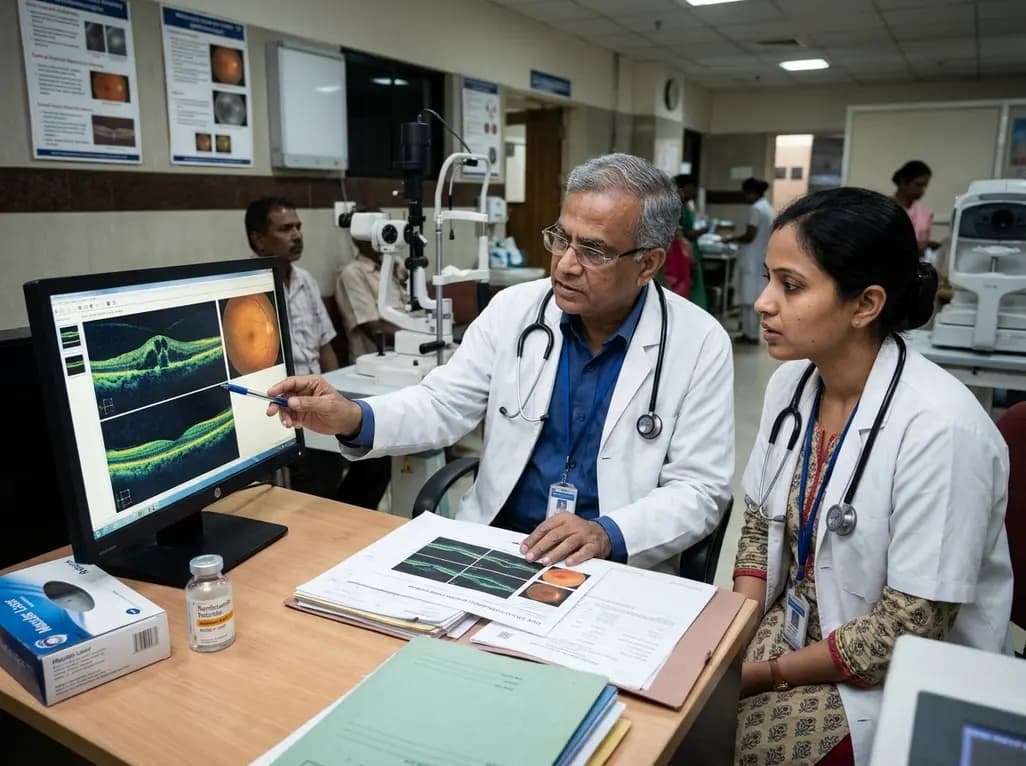
A real-world retrospective study demonstrates that combining intravitreal ranibizumab with focal/grid macular laser significantly improves visual acuity and central macular thickness compared to laser monotherapy in patients with center-involved diabetic macular edema.
Today
