

Loading, please wait...
Loading, please wait...

Anxiety disorders represent a pervasive challenge in clinical psychiatry, often imposing a persistent burden on patients. Although cognitive-behavioral interventions produce clear short-term benefits, clinicians frequently question their durability. Fortunately, robust clinical trial evidence supports the sustainability of exposure therapy for anxiety over extended timelines. Evaluating prospective multi-year outcomes allows physicians to understand long-term remission trajectories, healthcare consumption, and relapse rates. Consequently, these findings assist medical teams in making evidence-based recommendations for patients confronting debilitating anxiety syndromes.
To evaluate the sustainability of psychological gains, researchers followed 355 patients over five years post-intervention. This cohort represented 58% of the 616 eligible outpatients originally enrolled in a rigorous multicenter trial. During the active phase, clinicians treated participants with standardized exposure therapy for anxiety disorders. Patients presented with primary diagnoses of panic disorder, agoraphobia, or social anxiety disorder. In the original protocol, investigators randomized participants to temporally intensified or non-intensified exposure schedules. Therapists delivered all sessions with high methodological fidelity, centering on systematic prediction-error exercises. After completing therapy and an interim six-month follow-up, researchers reassessed symptoms dimensional scales and global functioning after five years. Notably, dimensional measures evaluated both disorder-specific pathology and broad transdiagnostic distress. Furthermore, the substantial sample size provides robust statistical power to detect subtle longitudinal changes. Specifically, tracking real-world functioning alongside symptom reduction offers an ecologically valid assessment of psychological health. As a result, this prospective evaluation delivers valuable real-world insight into the true longevity of structured outpatient behavioral interventions.
The trial demonstrated remarkable persistence of therapeutic gains across the five-year evaluation window. Specifically, reductions in anxiety severity and psychosocial impairments achieved during acute care remained intact over time. Moreover, investigators detected no significant clinical differences between the intensified and non-intensified exposure protocols. This equivalence proves that condensed treatment schedules produce benefits that are just as durable as standard weekly care. Overall remission rates remained strikingly stable between six months and five years post-treatment. In fact, most participants exhibited no reliable change in symptom severity during this prolonged period. Importantly, reliable relapse occurred in merely 4.9% of the evaluated cohort. Meanwhile, 6.5% of patients attained reliable new remission without receiving additional study interventions. In addition, psychosocial functioning scores reflected sustained restoration across vocational and personal activities. Therefore, high-fidelity behavioral interventions achieve persistent psychological wellness rather than transient symptom suppression. Consequently, these robust data reassure clinicians treating debilitating anxiety presentations across diverse practice settings.
The enduring success documented in this long-term study reflects contemporary principles of inhibitory learning. Historically, traditional conditioning paradigms attributed exposure efficacy to simple physiological habituation during prolonged fear confrontation. In contrast, modern protocols utilize prediction errors to violate rigid dysfunctional expectations systematically. Before entering an exposure scenario, patients articulate explicit negative predictions regarding potential catastrophe. Therapists subsequently design exercises that directly challenge and disprove these catastrophic outcomes. Consequently, this experiential discrepancy generates a substantial prediction error that strengthens novel safety associations. Because the brain does not erase original fear memories, these newly formed inhibitory memories compete against defensive habits. By prioritizing expectancy violations rather than temporary comfort, therapists equip individuals with versatile coping capabilities. Furthermore, patients develop sustainable behavioral self-regulation that endures against novel stressors in future years. Thus, inhibitory learning mechanisms explain why structured exposure establishes exceptional durability across extended clinical timelines.
Analyzing healthcare utilization throughout the follow-up period offers vital perspectives on personal and societal healthcare burdens. Remarkably, 63.4% of participants did not seek any additional treatment for mental disorders across five years. This observation illustrates that successful behavioral therapy confers lasting autonomy and curtails repeat medical consultations. Nevertheless, 36.6% of patients did access additional psychological or psychiatric care at some point during follow-up. Among individuals seeking extra support, major depression (64.2%) and recurrent anxiety (60.5%) were the most prominent drivers. However, only 6.0% sought subsequent interventions exclusively for anxiety disorders. This distinction indicates that secondary affective pathology often triggers healthcare re-engagement rather than pure anxiety recurrence. Additionally, investigators observed that patients seeking supplemental care demonstrated higher symptom severity across all prior time points. Therefore, post-treatment care utilization identifies individuals with entrenched baseline complexity rather than unexpected treatment failure. Consequently, targeted maintenance may benefit this specific high-risk subgroup.
These long-term findings deliver crucial actionable insights for both general practitioners and mental health specialists. First, the data challenge widespread misconceptions that psychotherapy benefits inevitably fade without ongoing clinical maintenance. On the contrary, high-quality exposure therapy provides durable protection spanning half a decade. Second, the therapeutic parity of intensified protocols provides helpful scheduling flexibility for busy patients. Third, physicians must recognize that occasional stress-induced fluctuations do not represent definitive treatment failure. Because reliable relapse occurred in under 5% of patients, temporary symptom spikes rarely warrant full-scale restarts. Instead, clinicians should encourage patients to practice independent exposure exercises to reinforce coping efficacy. Furthermore, medical teams must remain vigilant regarding non-responders who experience persistent symptoms. For these challenging cases, combining exposure with neuroplasticity-enhancing pharmacotherapy or digital booster modules may restore extinction learning. Ultimately, integrating structured exposure therapies into standard psychiatric care pathways optimizes clinical resource allocation while ensuring universal patient recovery.
Long-term clinical data show that reliable relapse occurs in only 4.9% of patients five years after exposure-based cognitive-behavioral therapy. Most individuals maintain their initial therapeutic improvements without symptom deterioration. Furthermore, 6.5% of patients achieve delayed remission during the follow-up period without requiring additional formal psychotherapy interventions.
Approximately 36.6% of patients seek supplementary mental health support within five years, primarily due to comorbid major depression (64.2%) and recurrent generalized anxiety (60.5%). Notably, only 6.0% seek therapy exclusively for anxiety. Patients needing additional care typically present with higher baseline disease severity throughout their initial clinical course.
Prediction-error learning maximizes the mismatch between catastrophic patient expectations and actual benign outcomes during exposure tasks. This cognitive discrepancy triggers robust inhibitory learning, establishing enduring safety memories that suppress conditioned defensive responses. Consequently, patients acquire generalized self-efficacy and resilience that persist against unexpected stressors across multi-year follow-up periods.
Disclaimer: This content is for informational and educational purposes only. It is not intended to be a substitute for professional medical advice, diagnosis, or treatment. Always seek the advice of your physician or other qualified healthcare provider with any questions you may have regarding a medical condition or before making any changes to your personal healthcare regimen. Refer to the latest local and national guidelines for clinical practice.
References

Read summarized clinical updates, watch expert medical content, and earn CME certifications right from your smartphone.
Open your smartphone camera to scan and install.





A 5-year follow-up study shows that exposure-based CBT for anxiety disorders yields durable remission, with 63.4% of patients requiring no further mental health treatment. Improvements in anxiety symptoms and functioning remain largely stable, emphasizing the long-term public health value of structured exposure.
Today

A prospective machine learning study demonstrates that an interpretable XGBoost model using 30 photoplethysmography features accurately estimates continuous blood pressure in intensive care units, achieving Grade A British Hypertension Society standards and reducing reliance on invasive arterial catheters.
Today
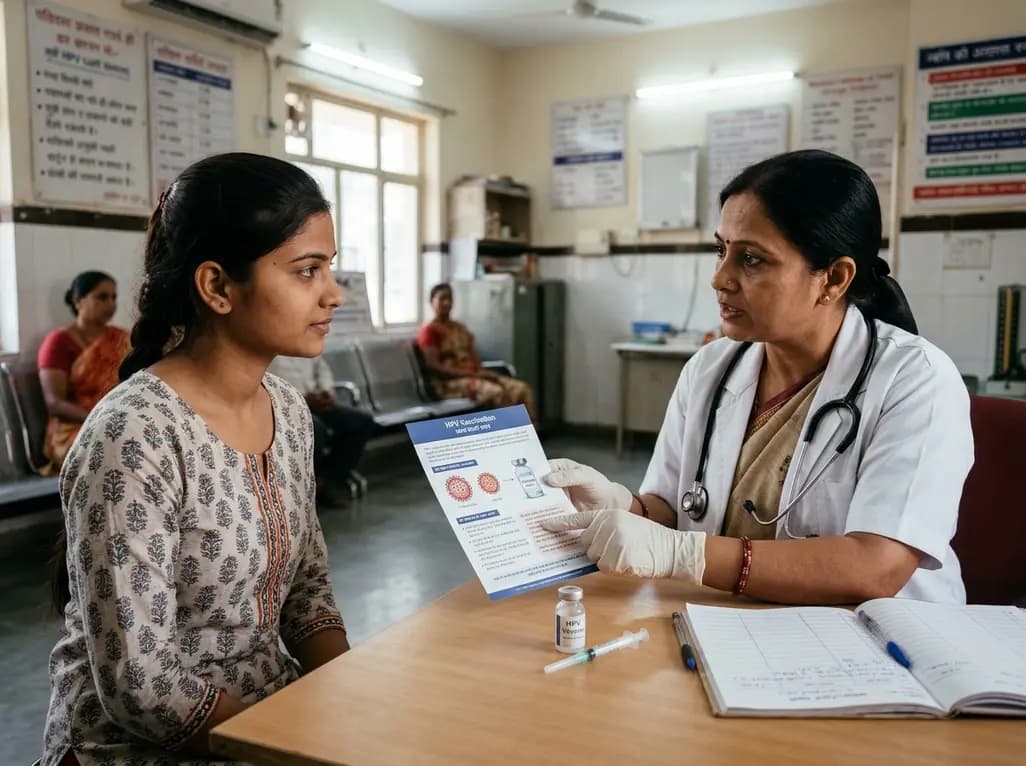
A qualitative study on the Dutch HPV vaccination catch-up campaign reveals that young adult hesitancy stems from information gaps and accessibility barriers rather than rampant misinformation. Clinicians can leverage these social listening insights to improve vaccine communication and address patient concerns.
Today

A multicenter longitudinal study of the CHARLS and HRS cohorts demonstrates that elevated cumulative pulse pressure and high-stable trajectories significantly increase incident sarcopenia risk in older adults, particularly in those with heart disease, linking arterial stiffness directly to progressive muscle loss.
Today

A 491-patient cohort study in Sudan reveals critical insights into war trauma reconstructive surgery, analyzing injury patterns, soft-tissue procedures, and a 25.5% complication rate in resource-limited conflict zones.
Today
A secondary analysis of the Living Healthier with Diabetes trial reveals that positive baseline technology attitudes significantly improve engagement with digital diabetes self-management apps, leading to enhanced self-care behaviors and better long-term glycemic control in adults with type 2 diabetes.
Today
