

Loading, please wait...
Loading, please wait...

Aging brings complex vascular and musculoskeletal changes that frequently intersect during clinical care. In particular, recent prospective investigations demonstrate that high cumulative pulse pressure acts as an independent driving force behind progressive muscle wasting. Consequently, stiffening arterial walls inflict persistent microvascular damage. Therefore, understanding this vascular-muscular axis provides clinicians with crucial insights into mitigating physical decline in vulnerable geriatric populations.
Pulse pressure represents the direct mathematical difference between systolic and diastolic blood pressure levels. Furthermore, it serves as a reliable surrogate marker for central aortic stiffness and vascular aging. In healthy individuals, elastic conduit arteries expand during systole to buffer high ejection forces and recoil smoothly during diastole. However, chronic vascular aging progressively stiffens major arterial walls. Consequently, systolic pressure rises sharply while diastolic pressure drops, generating widened pulse pressure waves over time. Cumulative exposure to this elevated mechanical strain transmits high-energy pulsatile flow deep into peripheral microvascular beds. In addition, skeletal muscle relies heavily on an intricate capillary network to maintain continuous nutrient perfusion and protein synthesis. When persistent pulsatile stress damages sensitive capillary endothelia, localized tissue hypoxia promptly follows. Therefore, muscle fibers undergo accelerated catabolism and diminished regenerative turnover. Tracking longitudinal exposure reflects lifelong vascular burden much more accurately than single blood pressure readings. Thus, sustained arterial stiffening actively accelerates neuromuscular remodeling and functional deterioration.
To evaluate long-term outcomes, investigators rigorously analyzed data from two major longitudinal cohorts of older adults. Specifically, the team examined 7,159 participants from the China Health and Retirement Longitudinal Study alongside 728 individuals from the United States Health and Retirement Study. The researchers quantified long-term exposure using area under the curve calculations and identified longitudinal patterns through latent class trajectory modeling. Furthermore, multivariable logistic regression models demonstrated that higher cumulative pulse pressure markedly increased incident sarcopenia risk. For instance, each 10 mmHg increment elevated sarcopenia risk by ten percent in the Chinese cohort and thirty percent in the American cohort. Moreover, individuals who maintained high-stable pulse pressure trajectories exhibited approximately twice the risk of developing sarcopenia compared to low-trajectory peers. Sensitivity analyses confirmed that these detrimental associations remained robust across multiple demographic strata. Additionally, Mendelian randomization analyses supported potential genetic causality. Therefore, chronic exposure to severe arterial stiffness directly predicts progressive loss of skeletal muscle mass and functional mobility.
Cardiovascular comorbidities significantly modify how vascular stiffness impacts musculoskeletal health. In the Health and Retirement Study cohort, researchers observed that the association between elevated pulse pressure and sarcopenia achieved statistical significance primarily among participants with pre-existing heart disease. Furthermore, formal interaction testing revealed both multiplicative and additive synergistic effects between arterial stiffness and cardiac pathology. Consequently, older adults battling both conditions experience accelerated rates of physical decline. Ischemic heart disease and chronic ventricular remodeling compromise central forward stroke volume and tissue perfusion. Meanwhile, rigid conduit arteries transmit destructive pulsatile forces that impair peripheral microcirculation. Therefore, the combination of central cardiac failure and vascular stiffening creates a devastating biological mismatch for peripheral tissues. In addition, chronic heart failure promotes systemic inflammation, releasing catabolic cytokines that suppress protein synthesis. As a result, patients with concurrent cardiovascular pathology face an exponentially higher hazard of debilitating frailty and progressive sarcopenia.
The biological bridge connecting widened arterial waveforms to skeletal muscle deterioration involves multiple cellular pathways. First, high pulsatile shear stress damages delicate capillary endothelia, blunting endothelial nitric oxide synthase activity. Consequently, impaired vasodilation restricts functional hyperemia during simple physical exertion. Without adequate exercise-induced blood flow, skeletal myocytes experience severe localized hypoxia and energy exhaustion. Furthermore, chronic endothelial injury triggers excessive vascular permeability, allowing pro-inflammatory molecules to infiltrate muscular interstitium. In response, activated resident macrophages release tumor necrosis factor-alpha and interleukin-6 directly around muscle fascicles. These inflammatory cytokines activate ubiquitin-proteasome pathways, triggering rapid breakdown of contractile myofibrillar proteins. Moreover, microvascular rarefaction impairs the delivery of vital nutrients and circulating anabolic amino acids to regenerating myocytes. Thus, myogenic satellite cells lose their proliferative capacity, preventing necessary structural repair. Consequently, patients exhibit progressive declines in grip strength, walking speed, and overall physiological vitality.
India currently faces an escalating dual burden of cardiovascular morbidity and rapid demographic aging. Primary care physicians regularly manage older individuals presenting with isolated systolic hypertension and severe arterial stiffness. However, routine clinical examinations frequently neglect objective evaluations of muscle mass and functional capability. Because elevated pulse pressure indicates chronic vascular remodeling, physicians should utilize high pulse pressure readings as an early warning sign for occult muscle wasting. Therefore, clinicians must adopt integrated screening protocols that assess both cardiovascular hemodynamics and physical performance. For instance, incorporating simple functional assessments like handgrip dynamometry and the chair stand test requires minimal clinical time. Additionally, early lifestyle counseling must emphasize resistance training and balanced dietary protein intake to preserve muscular integrity. Antihypertensive therapy choices also warrant careful consideration in this vulnerable population. Specifically, medications that reduce central arterial stiffness may offer dual cardiovascular and muscular protection. By addressing vascular stiffness and muscle health together, healthcare practitioners can delay disability effectively.
Widened pulse pressure transmits damaging pulsatile mechanical energy into fragile peripheral microvascular capillary beds. Consequently, the endothelial lining suffers structural injury, leading to impaired nitric oxide production and severe capillary rarefaction. Because skeletal muscles require continuous microcirculatory perfusion for adequate oxygenation and nutrient transport, sustained ischemia triggers catabolic inflammatory cascades. Ultimately, these ongoing cellular stresses accelerate myofibrillar breakdown, impair muscle satellite cell regeneration, and lead to progressive sarcopenia over time.
Pre-existing heart disease severely reduces cardiac output and compromises systemic forward perfusion. When rigid, non-compliant arteries transmit high-amplitude pulsatile pressure waves simultaneously, peripheral vascular resistance surges while tissue oxygenation drops precipitously. Furthermore, heart disease fosters systemic neurohormonal activation and elevated circulating pro-inflammatory cytokines such as interleukin-6. Together, these pathological disturbances accelerate muscle proteolysis and blunts muscular protein synthesis, leaving cardiac patients exceptionally vulnerable to rapid physical decline and severe sarcopenic frailty.
When clinicians identify a widened pulse pressure exceeding sixty millimeters of mercury, they should promptly evaluate the patient for subclinical muscle deterioration. Clinicians can easily perform bedside functional assessments, such as evaluating handgrip strength with a dynamometer or timing a five-repetition chair stand test. Additionally, physicians should review nutritional status, check dietary protein adequacy, and prescribe supervised resistance exercise. Selecting arterial-de-stiffening antihypertensives also helps optimize central hemodynamics and preserve long-term muscular performance.
Disclaimer: This content is for informational and educational purposes only and is not intended to provide medical advice, diagnosis, or treatment. Refer to the latest local and national guidelines for clinical practice.
References

Read summarized clinical updates, watch expert medical content, and earn CME certifications right from your smartphone.
Open your smartphone camera to scan and install.





A multicenter longitudinal study of the CHARLS and HRS cohorts demonstrates that elevated cumulative pulse pressure and high-stable trajectories significantly increase incident sarcopenia risk in older adults, particularly in those with heart disease, linking arterial stiffness directly to progressive muscle loss.
Today
Redox metabolism at the host-pathogen interface dictates Mycobacterium tuberculosis persistence and drug tolerance. Understanding these metabolic and oxidative pathways reveals novel host-directed interventions to overcome treatment failure and tissue damage in tuberculosis.
Today
Pelvic organ prolapse frequently coexists with urinary urgency and overactive bladder. This review examines how mechanical bladder outlet obstruction and trigonal traction cause urgency, outlines crucial diagnostic steps like pessary testing, and details conservative, medical, and surgical treatment algorithms.
Today

A 491-patient cohort study in Sudan reveals critical insights into war trauma reconstructive surgery, analyzing injury patterns, soft-tissue procedures, and a 25.5% complication rate in resource-limited conflict zones.
Today
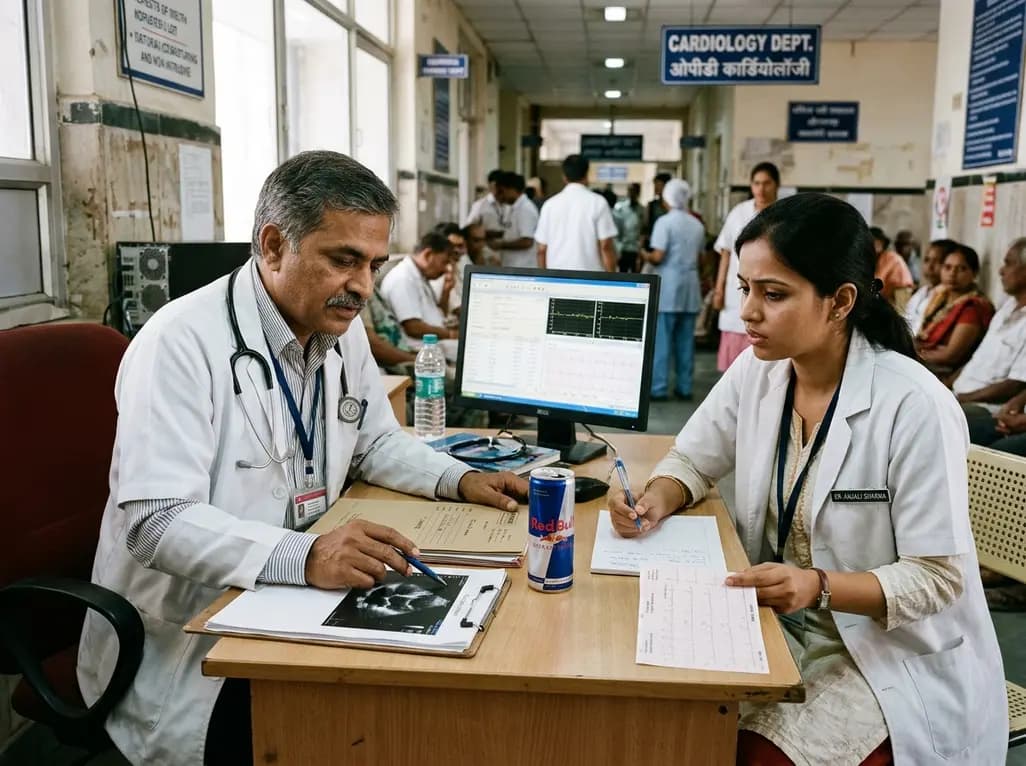
The Food Safety and Standards Authority of India has challenged Red Bull over its marketing claims, demanding scientific evidence for the term energy drink. With products packing massive amounts of caffeine and added sugar, clinicians must recognize the critical cardiovascular and metabolic implications for young patients.
Today
