

Loading, please wait...
Loading, please wait...

Modern clinicians increasingly utilize mobile health tools to improve glycemic control and patient adherence. Specifically, digital diabetes self-management programs offer structured behavioral education, remote coaching, and continuous self-tracking. However, patient engagement varies substantially across clinical populations. Therefore, understanding how pre-existing technology attitudes shape digital adherence remains critical. Notably, a secondary trial analysis now clarifies the decisive link connecting initial digital attitudes, sustained application use, and subsequent clinical biomarkers.
Patient perceptions regarding mobile devices significantly determine whether individuals will engage with virtual diabetes platforms. In the secondary analysis of the Living Healthier with Diabetes trial, investigators evaluated 129 adult participants who had access to a dedicated smartphone management application. Initially, researchers measured baseline technology attitudes with a validated four-item composite questionnaire. Consequently, this assessment revealed profound differences in subsequent patient behavior. Participants with more favorable baseline technology attitudes demonstrated significantly greater application use over the three-month intervention window. In addition, these engaged users maintained elevated usage metrics throughout the six-month observational follow-up. In contrast, individuals expressing ambivalence or anxiety toward mobile technology interacted infrequently with the software functions. Nevertheless, these trial findings indicate that subjective comfort with digital tools serves as a primary gatekeeper for therapy initiation. When patients harbor negative preconceptions about software complexity, they quickly abandon self-monitoring features. Conversely, high digital readiness fosters proactive exploration of lifestyle modules and regular glucose logging. Thus, initial digital enthusiasm directly accelerates therapeutic participation.
The original randomized investigation enrolled adults living with type 2 diabetes to compare diverse delivery modalities. Specifically, the trial evaluated virtual asynchronous training, smartphone-based self-management, and a combined sequential intervention. Moreover, researchers restricted this secondary evaluation to the study arms receiving full smartphone application access. Furthermore, investigators developed two distinct measurement metrics to quantify engagement accurately. First, they constructed a primary application use index that incorporated active usage days, daily minutes logged, and cumulative quarterly duration. Second, the authors created a comprehensive feature-use index summing activity across ten unique software functions. Additionally, these functions included dietary tracking, physical activity logging, glucose recording, and secure clinician messaging. At three months, nearly ninety percent of participants completed follow-up assessments. Similarly, over ninety percent retained complete clinical data at the six-month milestone. Statistical models adjusted for confounding variables, including age, gender, baseline values, and financial stress. Consequently, the authors demonstrated robust validity. As a result, the data conclusively link positive baseline perceptions to both total interaction time and broad feature utilization.
Greater software interaction yielded tangible clinical benefits for individuals managing their metabolic health. Specifically, frequent application usage correlated with marked improvements in validated diabetes self-care behaviors at three months. Patients who logged data consistently maintained superior adherence to nutritional recommendations, regular exercise routines, and prescribed medication regimens. Furthermore, this disciplined behavioral foundation translated into meaningful reductions in glycated hemoglobin concentrations. At the six-month follow-up, participants with sustained app engagement demonstrated statistically significant decreases in HbA1c values. In contrast, sporadic users who abandoned the digital interface failed to achieve similar glycemic reductions. Multivariable linear regression models confirmed that this association persisted independently of baseline glycemic severity. Therefore, digital engagement functions as a true therapeutic mediator rather than a simple marker of general enthusiasm. In addition, the diversity of feature use proved equally pivotal. Patients who engaged with multiple application modules experienced greater clinical stability than those who tracked only single parameters. Consequently, structured digital self-management empowers patients to understand daily glycemic fluctuations and make prompt lifestyle adjustments. Continuous digital feedback clearly reinforces long-term metabolic control and encourages proactive clinical communication.
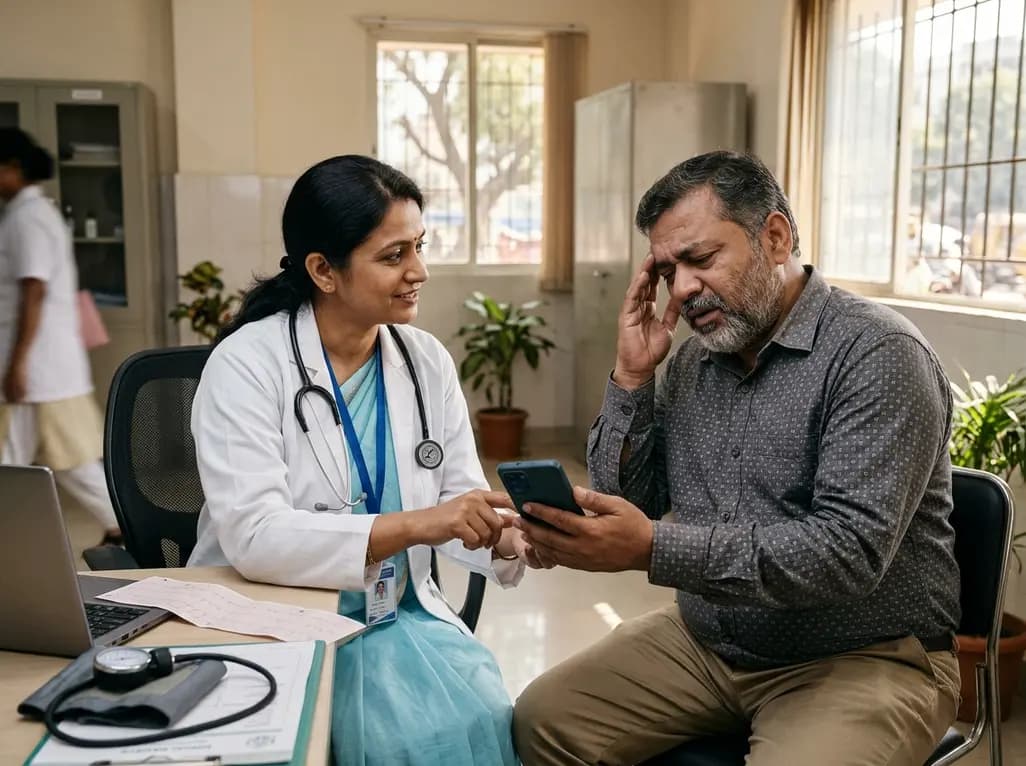
While digital interventions offer scalable chronic disease solutions, socioeconomic disparities can restrict clinical effectiveness. In India, clinicians encounter diverse patient populations with stark differences in digital literacy, regional language fluency, and economic stability. The analyzed trial highlighted that baseline financial security directly influenced engagement patterns. Similarly, urban and rural Indian patients exhibit vastly divergent comfort levels with mobile medical technology. Although smartphone ownership has expanded across rural Indian districts, many patients still lack confidence navigating complex interfaces. Consequently, physicians cannot presume universal digital adoption across their outpatient rosters. Furthermore, elderly Indian individuals with type 2 diabetes often rely on family members to manage mobile applications. When healthcare providers introduce digital interventions without assessing technological literacy, vulnerable patients may experience increased anxiety and treatment detachment. Therefore, Indian medical teams must assess individual technology readiness before recommending digital therapeutic platforms. In addition, developing regional language interfaces and simplified visual dashboards can mitigate existing digital disparities. Ultimately, equitable digital deployment ensures that technological advancements benefit all socioeconomic strata.
Integrating mobile health tools into routine diabetes management requires deliberate clinical workflows. First, physicians should administer brief screening questions to evaluate each patient’s baseline technology comfort and past digital experience. If an individual displays hesitance, clinic educators can provide hands-on onboarding sessions. During these orientation encounters, educators can demonstrate essential application functions, such as blood glucose logging and meal tracking. Furthermore, clinicians must establish realistic engagement goals rather than overwhelming patients with excessive data requirements. Encouraging patients to log specific metrics three days per week often promotes better sustained adherence than demanding daily comprehensive entries. In addition, healthcare practitioners must review transmitted patient data during subsequent clinical consultations. When patients observe that their doctor actively references their digital logs, their therapeutic motivation rises substantially. Conversely, if clinicians ignore uploaded application data, patient engagement rapidly declines. Moreover, integrating automated reminders and structured peer-support chats can sustain user interaction between formal hospital visits. Ultimately, proactive clinician guidance bridges the gap between digital potential and measurable metabolic improvement.
Baseline technology attitudes serve as a critical determinant of whether patients will engage with digital diabetes applications. When individuals feel comfortable and confident using mobile software, they interact more frequently with educational modules, tracking features, and messaging tools. Conversely, patients with high technology apprehension or low digital literacy frequently abandon self-management tools early. Therefore, assessing baseline attitudes helps clinicians identify individuals who require personalized onboarding and guided technical support before starting therapy.
Evidence confirms that consistent mobile app use significantly improves glycemic control and reduces HbA1c levels over time. When patients regularly log glucose measurements, dietary intake, and physical activity, they gain immediate visual feedback regarding their lifestyle habits. Consequently, this continuous awareness reinforces positive self-care behaviors and medication adherence. Multivariable analyses demonstrate that sustained engagement directly correlates with superior long-term metabolic improvements, independent of the patient’s initial baseline glycemic severity.
Physicians can evaluate patient readiness by asking brief questions about daily smartphone habits, prior application experience, and comfort with digital health tracking during initial consultations. Additionally, clinical teams can assess language preferences and potential barriers, such as visual limitations or unreliable connectivity. Identifying low digital confidence early enables practitioners to offer clinic-based orientation, assign family caregivers as co-users, or recommend simplified regional-language platforms to ensure sustained adherence.
Disclaimer: This content is for informational and educational purposes only... Refer to the latest local and national guidelines for clinical practice.
References
1. Oware KD et al. Associations Between Technology Attitudes, App Use, and Health Outcomes in a Diabetes Self-Management Education and Support Intervention: Secondary Analysis of a Randomized Controlled Trial. JMIR Mhealth Uhealth. 2026 Nov 17. doi: 10.2196/105830. PMID: 43044109.
2. Ory MG, et al. Comparative effectiveness of diabetes self-management education and support intervention strategies among adults with type 2 diabetes in Texas. Front Public Health. 2025;13:1543298.
3. ElSayed NA, et al. American Diabetes Association Standards of Care in Diabetes—2024. Diabetes Care. 2024;47(Suppl 1):S1-S343.
4. Chawla R, et al. RSSDI Guidelines for the Management of Type 2 Diabetes Mellitus 2022. Int J Diabetes Dev Ctries. 2022;42(Suppl 1):S1-S144.

Read summarized clinical updates, watch expert medical content, and earn CME certifications right from your smartphone.
Open your smartphone camera to scan and install.





A secondary analysis of the Living Healthier with Diabetes trial reveals that positive baseline technology attitudes significantly improve engagement with digital diabetes self-management apps, leading to enhanced self-care behaviors and better long-term glycemic control in adults with type 2 diabetes.
Today

A qualitative study on the Dutch HPV vaccination catch-up campaign reveals that young adult hesitancy stems from information gaps and accessibility barriers rather than rampant misinformation. Clinicians can leverage these social listening insights to improve vaccine communication and address patient concerns.
Today

A multicenter longitudinal study of the CHARLS and HRS cohorts demonstrates that elevated cumulative pulse pressure and high-stable trajectories significantly increase incident sarcopenia risk in older adults, particularly in those with heart disease, linking arterial stiffness directly to progressive muscle loss.
Today

A 491-patient cohort study in Sudan reveals critical insights into war trauma reconstructive surgery, analyzing injury patterns, soft-tissue procedures, and a 25.5% complication rate in resource-limited conflict zones.
Today
A descriptive qualitative study reveals that dietary and exercise relapses in mHealth apps stem from stress, cultural misalignment, and emotional disengagement. Clinicians must champion flexible, relapse-responsive digital therapeutics that foster gentle reentry and sustained glycemic control.
Today
