.webp&w=384&q=75)

Loading, please wait...
Loading, please wait...

The implementation of an ERAS protocol sleeve gastrectomy has significantly transformed the landscape of bariatric care. Researchers recently conducted a comprehensive 5-year retrospective study to evaluate the association between this protocol and patient outcomes. Specifically, the team compared 220 patients from 2018, who underwent surgery before the protocol, with 143 patients from the 2023-24 period. This comparison provides clear insights into the long-term efficacy of evidence-based perioperative pathways in a clinical setting.
Consequently, the analysis revealed a significant decrease in nearly all measured perioperative variables. For example, patients experienced a shorter overall length of stay (LOS) and reduced time in the post-anaesthesia care unit (PACU). Additionally, clinicians observed a marked reduction in opioid consumption and lower visual analogue pain scores among the post-ERAS group. Most importantly, the incidence of postoperative nausea and vomiting (PONV) also declined substantially. Therefore, the data suggests that these pathways improve physiological readiness and facilitate a smoother recovery for patients.
Furthermore, the implementation of these strategies did not compromise patient safety. The study noted that 30-day readmission and mortality rates remained similar between the two cohorts. In addition, the standardized approach helped minimize the variability in care that often exists in complex surgical units. Overall, this 5-year evaluation confirms that the ERAS protocol sleeve gastrectomy is a safe, effective, and efficient model for modern bariatric surgery.
The protocol utilizes multimodal analgesia techniques which significantly reduce the reliance on opioids while maintaining effective pain control for patients throughout the recovery process.
No, the 5-year study data indicates that readmission and mortality rates remain stable while improving other recovery metrics like hospital stay and pain management.
Disclaimer: This content is for informational and educational purposes only. It does not constitute medical advice or establish a doctor-patient relationship. Healthcare professionals should exercise their clinical judgment and refer to the latest local and national guidelines for clinical practice.
References
Wrightson D et al. Implementation of an Enhanced Recovery After Surgery protocol for sleeve gastrectomy at the 5-year mark and its association with perioperative outcomes. J Perioper Pract. 2026 May 19. doi: 10.1177/17504589261448156. PMID: 42154485.
Thorell A, et al. Guidelines for Perioperative Care in Bariatric Surgery: Enhanced Recovery After Surgery (ERAS) Society Recommendations: A 2021 Update. World J Surg. 2020;44(11):3191-3227. doi: 10.1007/s00268-020-05703-4.
Neville A, et al. Evaluating the Impact of Enhanced Recovery After Surgery Protocols on Surgical Outcomes Following Bariatric Surgery—A Systematic Review and Meta-analysis of Randomised Clinical Trials. Obes Surg. 2024;34:215–225. doi: 10.1007/s11695-023-07072-y.

Read summarized clinical updates, watch expert medical content, and earn CME certifications right from your smartphone.
Open your smartphone camera to scan and install.





A 5-year retrospective study demonstrates that ERAS protocols for sleeve gastrectomy improve perioperative outcomes and reduce opioid use safely....
5 months ago

Failing to account for competing events like mortality in longitudinal geriatric studies produces biased risk estimates and misleading inferences. This review highlights key methodological principles, insights from the Precipitating Events Project, and practical approaches for clinical research appraisal.
Today

A study in JAMIA Open shows lightweight open-source reasoning LLMs achieve up to 95% sensitivity and accelerate evidence synthesis screening by nearly twentyfold, presenting a cost-effective, scalable AI solution for biomedical research and systematic reviews.
Today
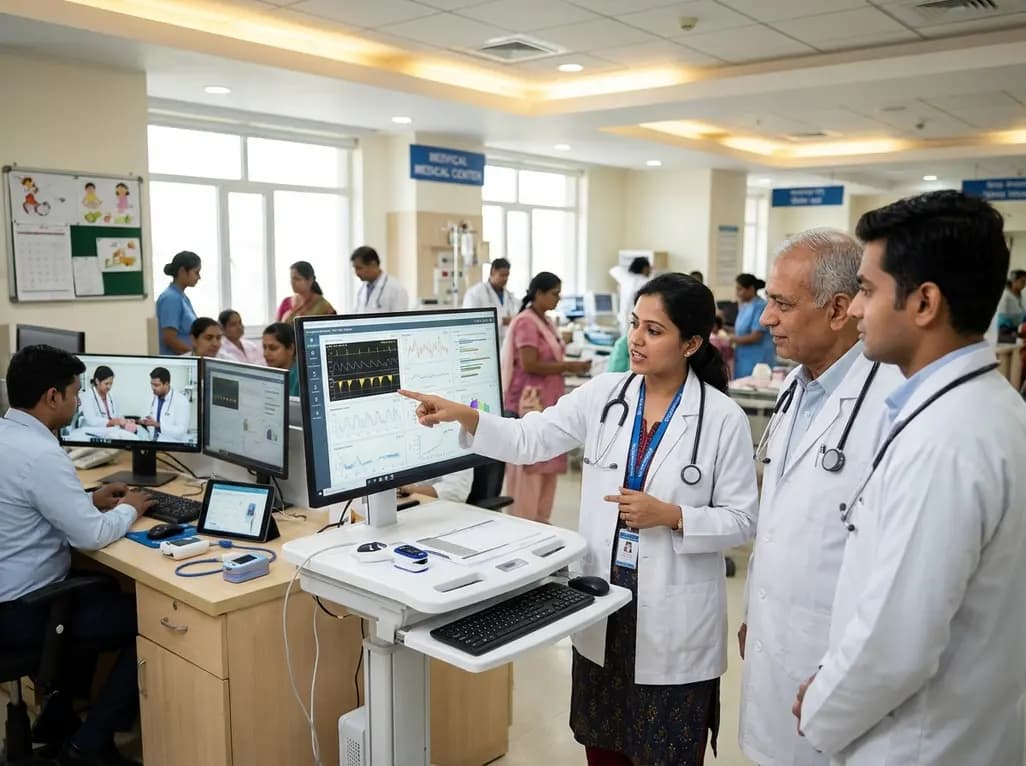
A landmark study details how an enterprise pediatric remote patient management model expanded from a single cardiology pilot to 16 diverse specialty programs by combining centralized digital operations with specialty clinical leadership.
Today

A comparative review of tension band wiring and intramedullary screw fixation in thumb metacarpophalangeal arthrodesis, evaluating union rates, hardware complications, and clinical outcomes.
Yesterday
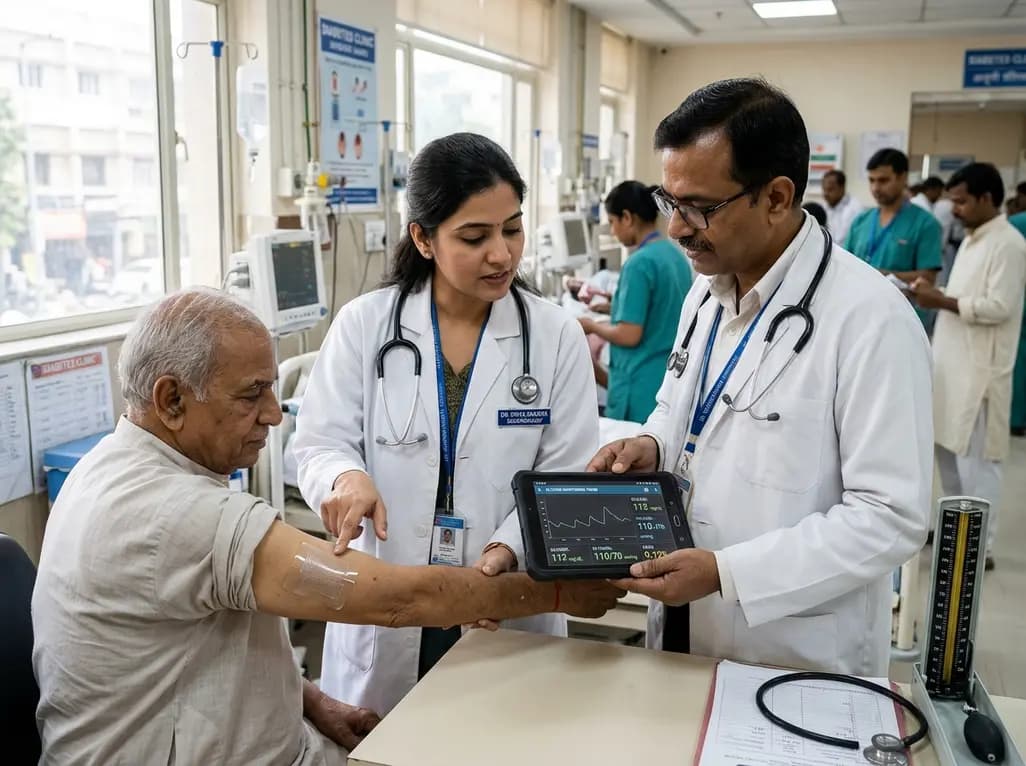
A breakthrough ultrathin multimodal sensor decouples physical hemodynamic monitoring from disposable electrochemical calibration, achieving long-term wearable glucose prediction with 81.36% accuracy and a 9.12% MARD. This offers a robust, drift-free solution for outpatient metabolic surveillance.
Today
