.webp&w=384&q=75)

Loading, please wait...
Loading, please wait...

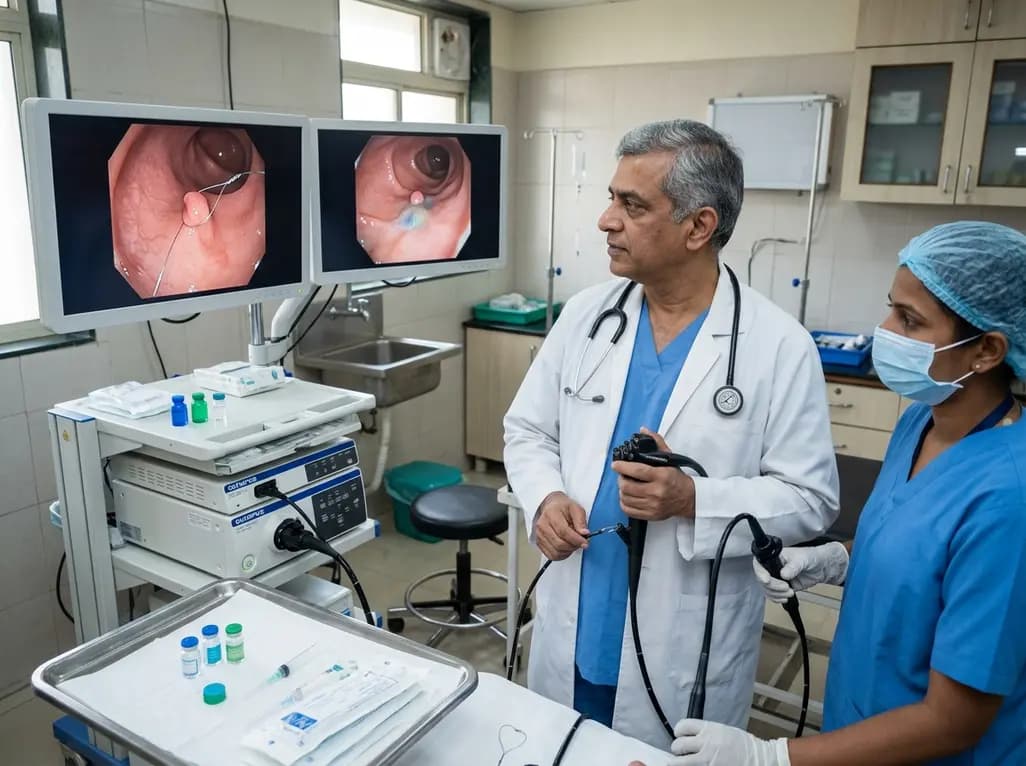
A colorectal anastomotic leak remains one of the most dreaded postoperative complications following colorectal resection. In clinical practice, leak rates reach up to 25%, significantly increasing patient morbidity, prolonged hospitalisation, and mortality. Traditionally, surgeons faced limited options, often resorting to aggressive re-laparotomy or permanent diverting stomas. However, advanced interventional endoscopy has introduced conservative, organ-preserving strategies. Among these tools, covered self-expanding metallic stents and endoscopic vacuum therapy have transformed modern surgical rescue pathways. A recent multicenter propensity-matched analysis sheds valuable light on how improvised vacuum devices perform directly against covered metallic stents in routine oncological practice.
Anastomotic failure represents a major clinical challenge that compromises oncological and reconstructive outcomes. When a leak occurs, pelvic sepsis frequently ensues, precipitating localized peritonitis, pelvic abscess formation, and systemic inflammation. Historically, immediate surgical revision was mandatory, but repeat operations carried substantial morbidity and frequently resulted in permanent ostomies. Consequently, surgeons have embraced minimally invasive approaches to preserve the anastomosis. Controlling the leak site while draining pelvic collections remains paramount. Both self-expanding metallic stents and endoscopic vacuum therapy provide targeted tissue preservation. Nevertheless, clinicians previously lacked comparative evidence to prioritize one endoscopic modality over another for standard institutional protocols.
Covered self-expanding metallic stents act primarily by mechanically sealing the luminal wall defect. By covering the mucosal breach, the stent diverts fecal flow, thereby preventing ongoing contamination. However, stents do not actively evacuate pre-existing purulent collections in the extraluminal pelvic cavity. In contrast, endoscopic vacuum therapy utilizes continuous or intermittent negative pressure applied directly to an open-pore sponge. This negative suction continuously drains purulent discharge, significantly reduces local edema, and actively stimulates granulation tissue proliferation. In resource-conscious surgical centers, clinicians frequently construct improvised EndoVAC systems using open-pore polyurethane foam connected to nasogastric tubing, achieving equivalent biological efficacy at a fraction of commercial costs.
A multicenter study conducted across three oncology centers evaluated 54 patients treated between 2006 and 2022. Investigators matched patients 1:1 using propensity scoring based on age, body mass index, and defect size. Interestingly, baseline variables such as tumor stage, surgical approach, and time to treatment showed no notable differences. Patients undergoing endoscopic vacuum therapy required more endoscopic exchanges than those receiving stents, averaging 4.6 procedures versus 2.1 procedures. However, the vacuum cohort experienced significantly fewer additional emergency interventions. Most importantly, the vacuum group achieved an 89% leak resolution rate compared to only 67% in the covered stent cohort. Furthermore, overall hospital stays decreased from 52 days to 41 days.
Preserving long-term intestinal continuity is a central objective of conservative leak management. In this multicenter cohort, endoscopic vacuum therapy achieved an ostomy reversal rate of 83%, compared with 55% in the metallic stent group. This advantage is clinically meaningful because chronic pelvic sepsis and persistent sinuses often prevent stoma closure. Furthermore, active tissue debridement via vacuum therapy limits dense fibrotic pelvic scarring. Consequently, the rectal compliance improves and allows successful subsequent reconstructive procedures. Survival curves also demonstrated a trend toward improved long-term survival in patients receiving negative-pressure therapy. Therefore, early adoption of vacuum therapy appears to offer superior functional preservation without increasing catastrophic re-leak rates.
Deploying endoscopic vacuum therapy requires proactive multidisciplinary coordination between surgical teams and endoscopy units. Clinicians should diagnose leaks rapidly using contrast-enhanced computed tomography and flexible sigmoidoscopy. If extraluminal collections exist, clinicians must position the sponge directly inside the cavity to collapse dead space. Furthermore, surgical teams should plan sponge exchanges every 48 to 72 hours to prevent tissue ingrowth into the foam. Stents remain a valuable alternative when cavities are absent, or when patients cannot tolerate repeated endoscopic interventions. Nevertheless, the cost efficiency of improvised systems makes vacuum sponge therapy highly feasible for high-volume tertiary centers aiming to lower morbidity without inflating institutional budgets.
Improvised vacuum systems use widely available polyurethane sponges attached to standard suction catheters, creating equivalent negative pressure mechanics. While functional mechanisms remain identical to commercial kits, improvised assemblies significantly reduce institutional costs. Consequently, surgeons can change sponges regularly without imposing unsustainable financial burdens on patients or healthcare facilities.
Endoscopic vacuum therapy relies on continuous sponge exchanges every three to four days to prevent tissue integration into open-pore foam. Therefore, patients naturally undergo multiple scheduled procedures. In contrast, covered stents remain in place for weeks, but they carry higher risks of migration and unresolved pelvic sepsis.
Yes, clinical evidence indicates that endoscopic vacuum therapy can successfully resolve leaks in patients both with and without protective diverting ostomies. However, a diverting stoma helps minimize persistent gross fecal contamination, accelerating cavity collapse and reducing the total number of required sponge exchanges.
Disclaimer: This content is for informational and educational purposes only. It is not intended as medical advice, diagnosis, or treatment recommendations. Always consult a qualified physician or healthcare provider regarding any clinical condition or intervention. Refer to the latest local and national guidelines for clinical practice.
References
Castaño-Llano R et al. Efficacy of improvised EndoVAC versus covered stent in colorectal anastomotic leaks: A multicenter study with a propensity analysis. Rev Gastroenterol Mex (Engl Ed). 2026 Oct 09. doi: undefined. PMID: 42855417.
Jung K, et al. Comparison of endoscopic vacuum therapy with standard care for colorectal anastomotic leakage: a systematic review and meta-analysis. Endoscopy. 2025;57(4):310-319.
Rausa E, et al. Comparison between Endoscopic Vacuum Therapy and Conventional Treatment for Leakage After Rectal Resection: A Systematic Review. Dis Colon Rectum. 2021;64(7):894-902.

Read summarized clinical updates, watch expert medical content, and earn CME certifications right from your smartphone.
Open your smartphone camera to scan and install.





A multicenter propensity-matched study evaluated improvised EndoVAC versus covered stents in managing colorectal anastomotic leaks. EndoVAC demonstrated superior defect resolution, shorter hospital stay, and fewer reinterventions despite requiring more sessions.
Today
A randomized controlled trial compared conventional cold snare polypectomy with submucosal injection for 3-9 mm polyps. Both techniques demonstrated exceptionally low incomplete resection rates, though injection lowered the need to convert to endoscopic mucosal resection when forced pull was avoided.
Today

Maternal anaemia contributes to nearly half of pregnancy-related fatalities across India. To prevent complications, Uttar Pradesh has added single-dose parenteral iron to its essential medicines list. This clinical transition aims to restore haemoglobin rapidly and protect high-risk mothers across rural facilities.
Today

A multi-expert study shows pairwise deep learning accurately assesses echocardiographic rotational alignment in apical four-chamber views, outperforming pointwise regression. This technique improves automated image quality control and standardizes functional cardiac assessment.
Today

A longitudinal study of 1,055 chronic low back pain patients reveals that higher patient activation fosters constructive pain medication attitudes, reduces disability, and decreases short- and long-term opioid use through collaborative, multimodal care.
Today

A landmark cross-sectional study in Asian adults with type 2 diabetes identifies novel urinary metabolites linked to mild cognitive impairment. Elevated urinary sucrose and altered metabolites highlight non-invasive pathways for early cognitive risk stratification and targeted metabolic management.
Today
