.webp&w=384&q=75)

Loading, please wait...
Loading, please wait...

Subspecialty care shortages represent a significant hurdle in modern healthcare, particularly regarding endocrinologist distribution diabetes outcomes. Recent data from Ohio reveals a stark geographical divide between Appalachian and non-Appalachian counties. While diabetes prevalence remains relatively consistent across the state, the availability of specialized care varies dramatically. Consequently, regions with fewer subspecialists face higher mortality rates and increased long-term complications.
Healthcare providers in rural and underserved regions often struggle with structural inequities. These barriers include limited medical facilities, transportation hurdles, and poor broadband connectivity. These factors frequently contribute to delayed diagnoses and higher rates of preventable hospitalizations. In contrast, urban centers often concentrate medical talent, creating "specialist deserts" in neighboring rural regions.
A recent cross-sectional study analyzed the practice locations of 263 endocrinologists across Ohio. Strikingly, 92.1% of these specialists practiced in non-Appalachian counties, leaving the Appalachian region with only 7.9% of the workforce. This disparity directly correlates with poorer health indicators. For example, Appalachian counties reported higher mean Prevention Quality Indicator (PQI) scores for long-term complications. Furthermore, the age-adjusted mortality rate for diabetes was significantly higher in these underserved areas.
Moreover, the study found that mean costs associated with diabetes care were higher in the Appalachian region. This suggests that the lack of early, specialized intervention leads to more expensive emergency care and management of advanced disease states. Although the prevalence and incidence of diabetes were similar across both regions, the outcomes differed vastly due to the lack of specialty involvement.
When patients lack access to specialized care, they often experience fragmented management. Rural communities require targeted policy interventions to attract specialists to underserved areas. Additionally, the expansion of telehealth services could bridge the distance between patients and endocrinologists. However, the effectiveness of digital health depends heavily on improving infrastructure in regions like Appalachia. Improving endocrinologist distribution diabetes access is essential for achieving health equity and reducing mortality.
Specialists like endocrinologists provide advanced management for complex cases and implement the latest therapeutic technologies. Without specialized oversight, patients may suffer from poorly controlled blood sugar, eventually leading to fatal complications or severe morbidity.
Appalachian counties show significantly higher rates of long-term diabetes complications and mortality. This occurs despite having a similar prevalence of the disease as urban areas, highlighting that the quality and accessibility of care are the primary drivers of the disparity.
Telehealth offers a promising solution to reach rural patients who cannot travel long distances. Nevertheless, its success requires robust internet connectivity and supportive reimbursement policies to ensure specialists can provide consistent care to remote populations.
Disclaimer: This content is for informational and educational purposes only. It does not constitute medical advice or establish a doctor-patient relationship. Always seek the advice of a qualified healthcare provider for medical concerns. Refer to the latest local and national guidelines for clinical practice.
References
Borgemenke S et al. Disparities in endocrinologist distribution and diabetes outcomes in Appalachian and non-Appalachian counties of Ohio. J Osteopath Med. 2026 Mar 20. doi: 10.1515/jom-2025-0182. PMID: 41855538.
GoodRx. Endocrinologist Deserts: A Critical Healthcare Gap for Millions in the U.S. Published December 2024. Accessed March 2026.
Borgemenke S, Hughes AS. Social Determinants and Health Disparities Pertaining to Diabetes in Appalachia. J Prim Care Community Health. 2023;14. doi:10.1177/21501319231192327.

Read summarized clinical updates, watch expert medical content, and earn CME certifications right from your smartphone.
Open your smartphone camera to scan and install.





Ohio study finds Appalachian counties have 92% fewer endocrinologists and higher diabetes mortality than non-Appalachian areas, despite similar prevalence....
7 months ago
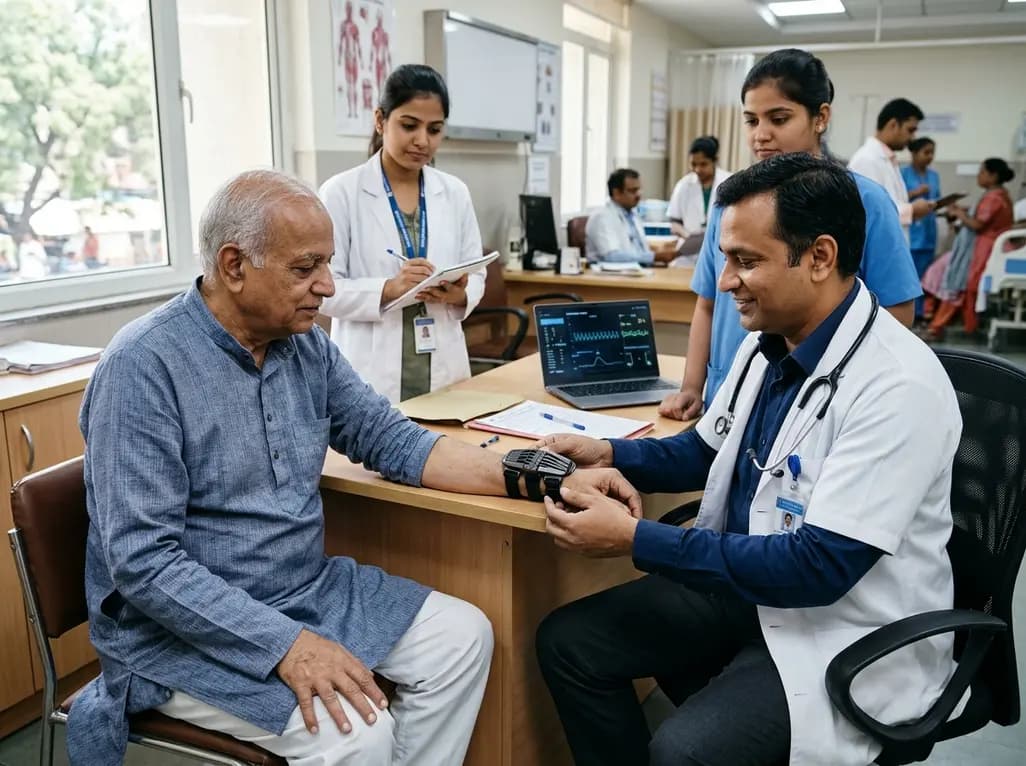
The TREM-AB open-label pilot study evaluated a wearable passive nonlinear vibration absorber for essential tremor. The Nonlinear Energy Sink bracelet reduced clinical Fahn-Tolosa-Marin tremor scores by 32.1% and electrophysiological tremor power by 49.2% with no adverse effects reported.
Today

A study in JAMIA Open shows lightweight open-source reasoning LLMs achieve up to 95% sensitivity and accelerate evidence synthesis screening by nearly twentyfold, presenting a cost-effective, scalable AI solution for biomedical research and systematic reviews.
Today
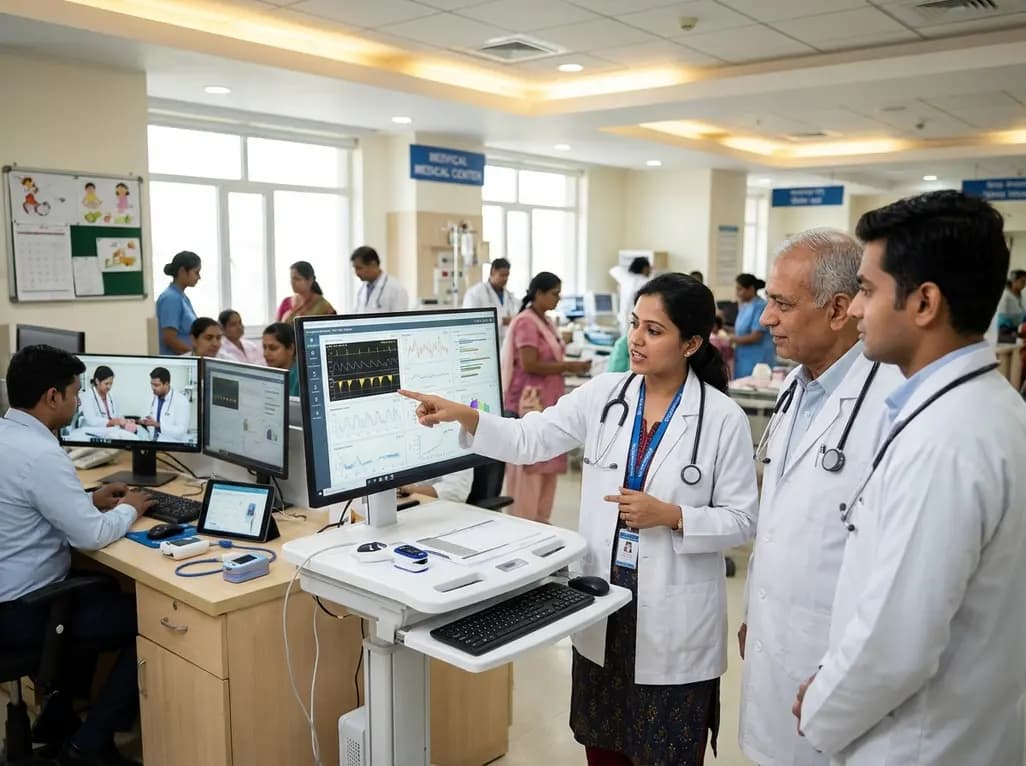
A landmark study details how an enterprise pediatric remote patient management model expanded from a single cardiology pilot to 16 diverse specialty programs by combining centralized digital operations with specialty clinical leadership.
Today

A comparative review of tension band wiring and intramedullary screw fixation in thumb metacarpophalangeal arthrodesis, evaluating union rates, hardware complications, and clinical outcomes.
Today
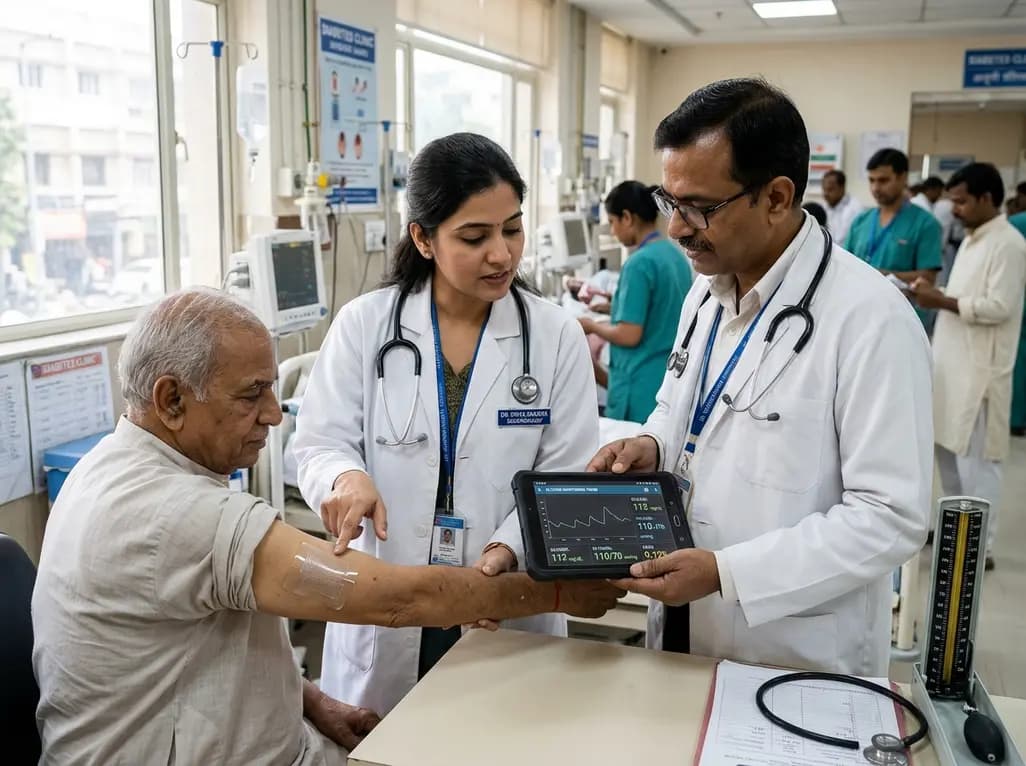
A breakthrough ultrathin multimodal sensor decouples physical hemodynamic monitoring from disposable electrochemical calibration, achieving long-term wearable glucose prediction with 81.36% accuracy and a 9.12% MARD. This offers a robust, drift-free solution for outpatient metabolic surveillance.
Today
