.webp&w=384&q=75)

Loading, please wait...
Loading, please wait...

Addressing effeminacy stigma in men is essential for healthcare providers who treat diverse queer populations. A recent qualitative study explores how Brazilian gay men in Canada navigate gender regulation and racialized scripts of masculinity. These men often encounter a unique intersection of racial and gender-based policing within their communities. Consequently, their health-relevant experiences and sense of belonging depend on how they perform masculinity in new social contexts. By understanding these dynamics, clinicians can better support the mental well-being of racialized migrants.
The research analysis illustrates how migration reconfigures colonial scripts of masculinity through whiteness and homonormativity. Specifically, participants described masculinity as a powerful social currency that dictates safety and desirability. To maintain this currency, many individuals engage in constant self-monitoring. However, this vigilance can lead to increased psychological stress and isolation. Furthermore, peer policing within 2SLGBTQIA+ contexts often reinforces these hierarchies. Therefore, the rejection of effeminacy is not merely a social preference but a structural barrier to health and community support.
Despite these challenges, the study also highlights moments of resilience. For instance, many Brazilian queer men reclaim effeminacy as a site of dignity and self-definition. They use language, affect, and embodiment to resist traditional colonial scripts. Moreover, these acts of resistance foster relational connections that improve overall well-being. Ultimately, the study calls for medical professionals to acknowledge how intra-community hierarchies shape the health outcomes of racialized migrants.
Clinicians must adopt intersectional frameworks when assessing the mental health of queer migrant patients. Identifying the social pressures related to effeminacy stigma in men can help doctors address underlying anxiety or depression. Additionally, healthcare providers should facilitate safe spaces where patients feel empowered to express their identities without judgment. Such affirming care is vital for improving health-seeking behavior among understudied populations like Brazilian queer men.
Effeminacy stigma refers to the social devaluation and policing of men who express traits or behaviors traditionally associated with femininity. In queer spaces, it often structures hierarchies of desirability and belonging.
It can lead to chronic minority stress, self-monitoring, and social isolation. These factors are known contributors to negative mental health outcomes, including anxiety and decreased access to supportive healthcare.
An intersectional approach considers how race, migration status, and gender identity overlap to create unique barriers to health. This helps clinicians provide more personalized and effective care.
Disclaimer: This content is for informational and educational purposes only and does not constitute medical advice. It is not intended to be a substitute for professional medical advice, diagnosis, or treatment. Always seek the advice of your physician or other qualified health provider with any questions you may have regarding a medical condition. Refer to the latest local and national guidelines for clinical practice.
References
Cerqueira Sanzi M et al. Colonial scripts and fragile queer masculinities: Brazilian gay men navigating effeminacy stigma in Canada. Cult Health Sex. 2026 May 06. doi: 10.1080/13691058.2026.2661887. PMID: 42089265.
Community Catalyst. The Need for Intersectionality in Promoting LGBT Immigrant Health Equity. 2017.
Frontiers in Public Health. Review of current 2SLGBTQIA+ inequities in the Canadian health care system. 2021.
"
Read summarized clinical updates, watch expert medical content, and earn CME certifications right from your smartphone.
Open your smartphone camera to scan and install.





A study on Brazilian gay men in Canada reveals how effeminacy stigma and colonial scripts of masculinity shape health, safety, and belonging in queer spaces...
5 months ago

Failing to account for competing events like mortality in longitudinal geriatric studies produces biased risk estimates and misleading inferences. This review highlights key methodological principles, insights from the Precipitating Events Project, and practical approaches for clinical research appraisal.
Today

A study in JAMIA Open shows lightweight open-source reasoning LLMs achieve up to 95% sensitivity and accelerate evidence synthesis screening by nearly twentyfold, presenting a cost-effective, scalable AI solution for biomedical research and systematic reviews.
Today
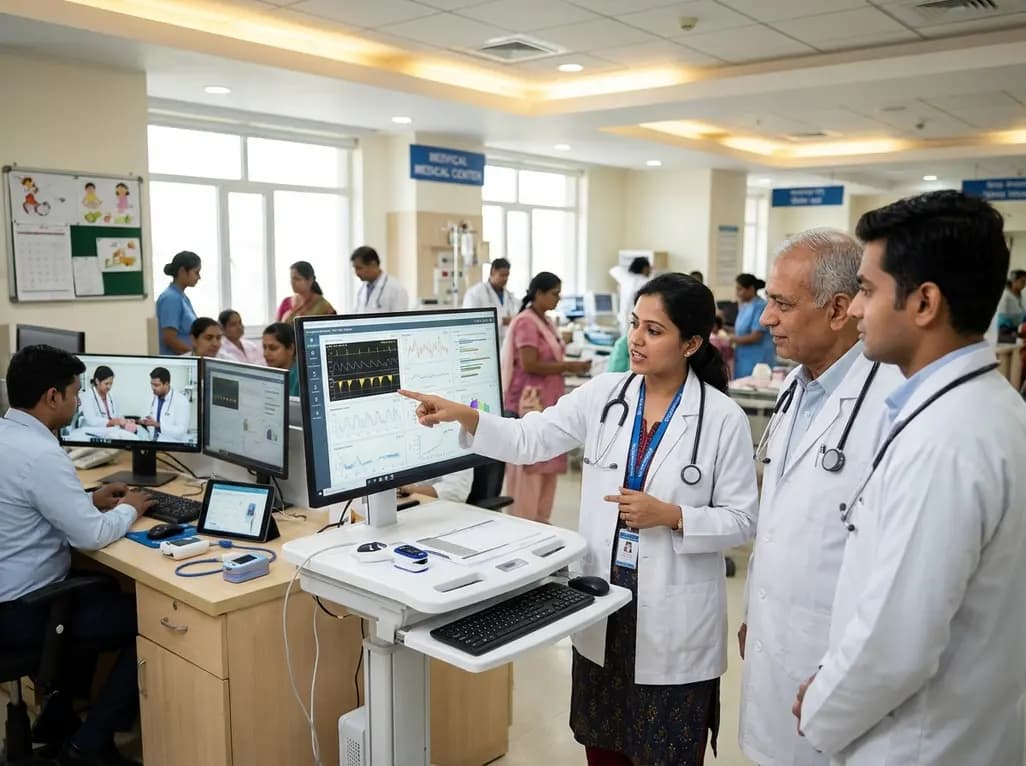
A landmark study details how an enterprise pediatric remote patient management model expanded from a single cardiology pilot to 16 diverse specialty programs by combining centralized digital operations with specialty clinical leadership.
Today

A comparative review of tension band wiring and intramedullary screw fixation in thumb metacarpophalangeal arthrodesis, evaluating union rates, hardware complications, and clinical outcomes.
Yesterday
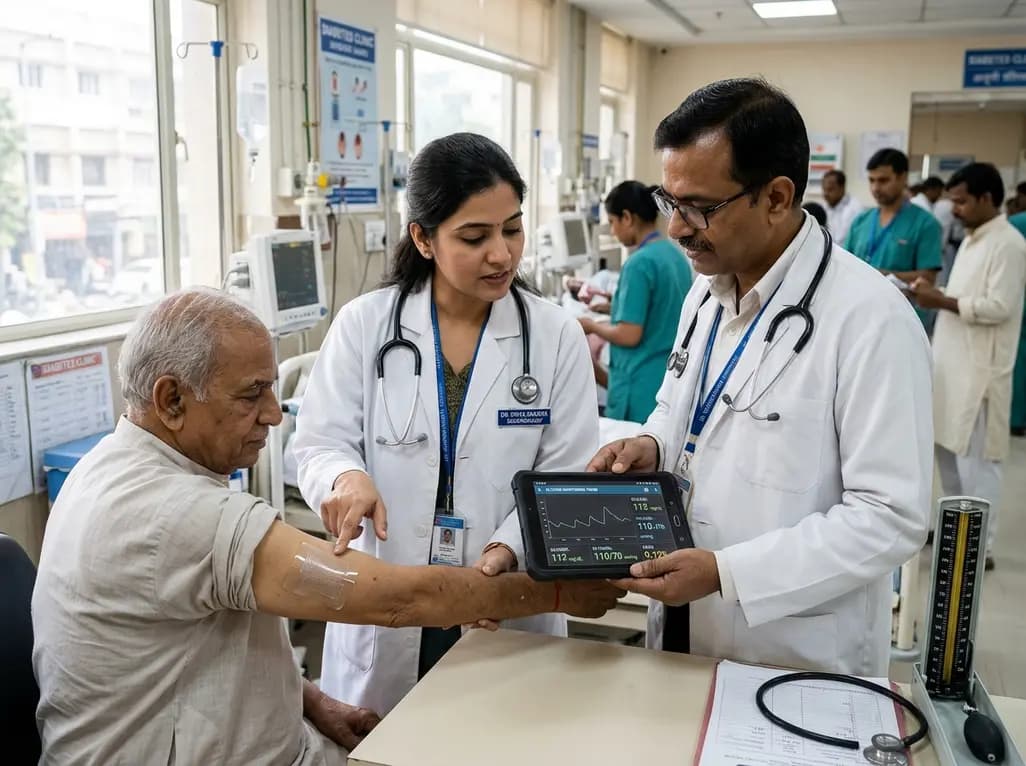
A breakthrough ultrathin multimodal sensor decouples physical hemodynamic monitoring from disposable electrochemical calibration, achieving long-term wearable glucose prediction with 81.36% accuracy and a 9.12% MARD. This offers a robust, drift-free solution for outpatient metabolic surveillance.
Yesterday
