.webp&w=384&q=75)

Loading, please wait...
Loading, please wait...

Neonatal encephalopathy secondary to perinatal asphyxia remains a formidable clinical challenge across modern pediatric and neonatal intensive care units. Therapeutic hypothermia serves as standard neuroprotective therapy for moderate to severe hypoxic-ischemic insults in term neonates. However, clinicians still struggle to predict long-term neurodevelopmental morbidity accurately during early infancy. Securing an early diagnosis of cerebral palsy allows medical teams to initiate targeted motor interventions during critical neuroplastic windows. Consequently, standardized neurological examinations and observational motor assessments have emerged as essential bedside screening modalities. A landmark retrospective cohort study evaluated whether structured follow-up tools reliably identify movement disorders in cooled infants. The investigators demonstrated that combining observational and clinical assessments provides robust prognostic precision. Clinicians can now stratify neuromotor risks earlier than previously thought possible, ensuring timely multidisciplinary supportive care.
Therapeutic hypothermia markedly reduces mortality and severe disability among term newborns suffering hypoxic-ischemic brain injury. Despite these established therapeutic benefits, a significant proportion of treated survivors still develop chronic neuromotor impairments. Historically, medical teams frequently delayed the formal diagnosis of cerebral palsy until children reached twelve to twenty-four months of age. Such delays often cause missed opportunities for neuroplastic rehabilitation when infant neural circuits show optimal plasticity. Therefore, establishing a reliable early diagnosis of cerebral palsy within the first nine months represents a major priority in neonatology. Standardizing assessment pathways reduces ambiguity for both healthcare providers and anxious caregivers during post-discharge surveillance. Furthermore, accurate prediction enables targeted resource allocation in high-risk pediatric follow-up clinics. Validated screening instruments address this need by systematically categorizing neurological signs during routine outpatient visits.
Prechtl General Movements Assessment provides a non-invasive, video-based method to evaluate the spontaneous motor repertoire of developing infants. Specifically, the presence or absence of normal fidgety movements between nine and twenty weeks post-term offers critical prognostic insight. The recent cohort analysis examined 112 infants born at term with moderate to severe encephalopathy managed with hypothermia. The study revealed that absent or atypical fidgety movements at three months post-term strongly correlated with subsequent motor impairment. Remarkably, this evaluation demonstrated a sensitivity of 89% and a specificity of 89% for identifying later motor disability. Absent fidgety movements reflect compromised endogenous motor pattern generators within damaged subcortical and cortical networks. In addition, video assessments eliminate handling stress, allowing clinicians to capture objective spontaneous movements during awake states. Integrating this brief observational tool into routine three-month visits substantially refines early neurodevelopmental stratification.
Alongside observational movement assessments, structured neurological scoring delivers complementary objective data regarding tone, reflexes, and developmental milestones. The Hammersmith Infant Neurological Examination provides a quantifiable, twenty-six-item scorable protocol easily performed during outpatient follow-up. In the cooled cohort, HINE scores showed significant divergence between infants who developed neuromotor disorders and those with typical outcomes. Clinicians recorded diagnostic associations at three, six, and nine months of chronological age with impressive statistical significance. Notably, the sensitivity ranged between 82% and 90%, while specificity reached exceptional levels between 95% and 100%. The examination systematically captures persistent primitive reflexes, cranial nerve abnormalities, and abnormal postural tone. Consequently, sequential HINE evaluations establish reliable longitudinal trajectories rather than relying on isolated snapshots. Clinicians obtain actionable metric data that clearly delineate progressive deviations from normal infant development.
Interpreting quantitative HINE scores requires population-specific cutoff values to maintain optimal diagnostic accuracy across different clinical subgroups. Earlier literature primarily defined cutoff thresholds in populations born preterm, which may not translate directly to term asphyxiated cohorts. In this term hypothermia cohort, researchers identified specific optimal threshold scores that reliably differentiated developmental outcomes across consecutive visits. A global HINE score below 47 at three months accurately separated infants who later received a definitive motor diagnosis. Subsequently, optimal diagnostic cutoff scores were established at less than 51 at six months and less than 64 at nine months. Recognizing these specific thresholds helps clinicians avoid false reassurance when scores remain depressed over sequential assessments. Moreover, setting tailored cutoff criteria accounts for the unique pattern of brain injury observed in hypoxic-ischemic encephalopathy. Pediatricians can therefore interpret post-hypothermia trajectory scores with greater diagnostic confidence.
Identifying high-risk infants early holds minimal value unless clinicians rapidly connect affected families with comprehensive developmental rehabilitation programs. When three-month assessments reveal absent fidgety movements or depressed HINE scores, providers should immediately trigger specialized referrals. Early physical and occupational therapy exploits active developmental windows, thereby optimizing musculoskeletal alignment and functional motor learning. Furthermore, early detection enables structured family counseling, which alleviates diagnostic uncertainty and empowers caregivers with proactive coping strategies. Multidisciplinary care teams can introduce assistive positioning devices, nutritional monitoring, and spasticity management long before severe contractures emerge. In addition, establishing standardized outpatient protocols ensures that subtle motor asymmetries receive prompt therapeutic attention. Ultimately, translating standardized screening scores into direct therapeutic action bridges the gap between neonatal neuroprotection and long-term functional independence.
The General Movements Assessment evaluates spontaneous motor patterns, particularly fidgety movements at three months. In infants treated with hypothermia, the absence or abnormal quality of these movements strongly indicates underlying motor pathway damage, achieving approximately 89% sensitivity and 89% specificity for predicting subsequent motor disability.
For term infants treated with therapeutic hypothermia, HINE scores below 47 at three months, below 51 at six months, and below 64 at nine months optimally differentiate those who develop cerebral palsy from typically developing peers, providing high specificity for early clinical identification.
Diagnosing neuromotor impairment within the first nine months allows clinicians to initiate targeted motor therapies during peak neuroplasticity. Prompt intervention improves functional outcomes, prevents secondary musculoskeletal contractures, optimizes developmental milestone acquisition, and provides caregivers with tailored guidance and essential psychological support early in development.
Disclaimer: This content is for informational and educational purposes only and should not be considered medical advice. Always consult a qualified healthcare professional regarding any medical condition or treatment. Refer to the latest local and national guidelines for clinical practice.
References
Moss SN et al. General Movements Assessment and Hammersmith Infant Neurological Examination for early diagnosis of cerebral palsy in infants born at term treated with therapeutic hypothermia. Dev Med Child Neurol. 2025 Sep. doi: 10.1111/dmcn.16277. PMID: 39977235.
Novak I, Morgan C, Adde L, et al. Early, Accurate Diagnosis and Early Intervention in Cerebral Palsy: Advances in Diagnosis and Treatment. JAMA Pediatr. 2017;171(9):897-907. doi: 10.1001/jamapediatrics.2017.1689.
Romeo DM, Bompard S, Serrao F, et al. Early Neurological Assessment in Infants with Hypoxic Ischemic Encephalopathy Treated with Therapeutic Hypothermia. J Clin Med. 2019;8(8):1247. doi: 10.3390/jcm8081247.

Read summarized clinical updates, watch expert medical content, and earn CME certifications right from your smartphone.
Open your smartphone camera to scan and install.





New evidence demonstrates that General Movements Assessment (GMA) and Hammersmith Infant Neurological Examination (HINE) reliably facilitate early diagnosis of cerebral palsy in term infants undergoing therapeutic hypothermia.
4 weeks back

A bioengineered oral nanozyme microsupplement converts pathological ROS into a protective polydopamine hydrogel shield. By curbing neutrophil extracellular traps and balancing T cells, this platform outperforms standard 5-ASA in preclinical colitis models, opening new paths for sustained remission.
Today

India experiences an exponential rise in robotic-assisted procedures, with Delhi NCR leading system installations and clinical volume. Discover how multidisciplinary surgical adoption, remote telesurgery breakthroughs, and standardized international consensus guidelines are shaping surgical care nationwide.
Today
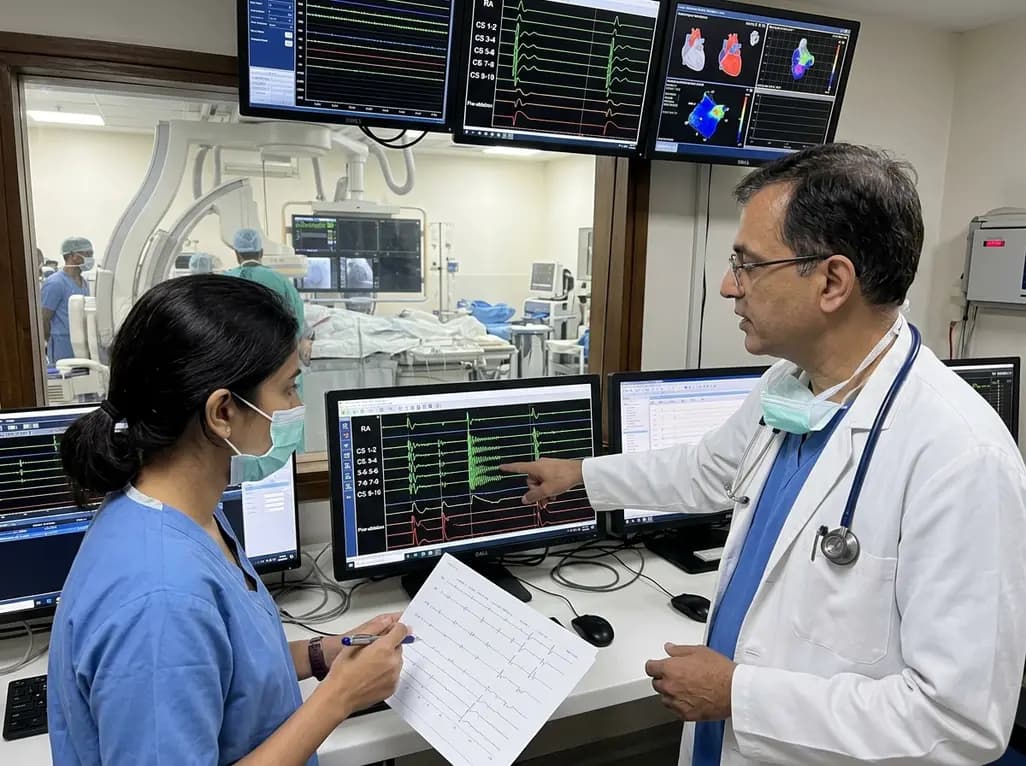
Radiofrequency catheter ablation of the cavotricuspid isthmus successfully terminates typical atrial flutter. This article reviews the mechanisms driving coronary sinus electrogram changes, wavefront activation pathways, and clinical criteria to verify bidirectional block during electrophysiology studies.
Today
A study comparing four knee flexion strength tests after ACL reconstruction using hamstring tendon autografts reveals marked variability in limb symmetry indices. Clinicians must recognize that different strength testing modalities yield divergent return-to-sport clearance rates.
Today

A breakthrough study leverages natural language processing to accurately identify incident medication-related osteonecrosis of the jaw and track antiresorptive drug holidays from clinical narratives in electronic health records, advancing osteoporosis pharmacovigilance and dental safety.
Yesterday
