.webp&w=384&q=75)

Loading, please wait...
Loading, please wait...

Early cancer detection remains crucial to lowering oncology mortality worldwide. Historically, clinicians have relied on invasive tissue biopsies and imaging modalities that frequently miss occult microscopic disease. However, molecular diagnostic advances now offer transformative noninvasive opportunities. Specifically, recent innovations in bioorthogonal chemistry have accelerated the development of a highly sensitive cancer urine test. By capturing subtle pathological alterations in physiological fluids, urinary diagnostics allow doctors to detect malignant activity before macroscopic structural changes appear. Consequently, this noninvasive diagnostic paradigm significantly enhances clinical monitoring and streamlines oncological decision-making.
Liquid biopsy has revolutionized modern clinical oncology by evaluating circulating tumor components. Although circulating tumor DNA provides valuable genomic insights, its low concentration in early malignancy frequently impedes reliable detection. Moreover, blood sampling requires venipuncture, which poses logistical hurdles in large-scale rural screening. In contrast, urinalysis represents an entirely noninvasive, patient-friendly diagnostic avenue that allows frequent sampling. Renal clearance concentrates specific physiological metabolic products, thereby providing an ideal window into systemic biochemistry. Nevertheless, conventional urinary biomarkers often suffer from rapid enzymatic degradation and variable physiological dilution. Furthermore, standard single-target optical probes frequently trigger false-positive results due to off-target background noise. Therefore, oncologists need highly selective molecular sensing platforms capable of distinguishing true neoplastic signals from benign physiological variations.
Optical imaging modalities typically rely on external light excitation to generate diagnostic signals. However, standard fluorescence induces substantial tissue autofluorescence and light scattering, which degrade diagnostic sensitivity. Chemiluminescence eliminates the need for an external excitation source by generating light directly through chemical reactions. Consequently, chemiluminescent probes demonstrate virtually zero background autofluorescence, facilitating exceptional signal clarity. Despite these advantages, adapting chemiluminescence for bioorthogonal diagnostics previously remained an elusive biochemical challenge. Conventional chemiluminophores often activate prematurely upon encountering non-specific hydrolytic triggers in biological fluids. To address this issue, researchers created an innovative chemiluminescent cancer urine test utilizing synthetic tetrazine probes. By incorporating a unique dark-state quenching mechanism, these reporters remain completely silent until they encounter both specific tumor triggers and bioorthogonal partners.
The molecular architecture of these chemiluminescent tetrazine probes couples a tetrazine acceptor to a phenoxy-1,2-dioxetane donor via vinylene linkers. Notably, the tetrazine unit mediates internal conversion to a non-emissive dark state. This electronic state suppresses photon emission even after phenolate formation occurs. Chemiluminescence restores only when the probe undergoes an inverse electron-demand Diels-Alder reaction with bicyclononyne. Therefore, researchers engineered a biomarker and bioorthogonality dual-locked probe that requires two separate chemical inputs to emit light. Specifically, the reporter emits luminescence only in the simultaneous presence of hydrogen peroxide and bicyclononyne. In this design, a cancer-activatable bioorthogonal urinary reporter releases renal-clearable bicyclononyne directly within the tumor microenvironment. Because the reporter requires dual activation, neither circulating oxidative stress nor physiological metabolites can induce premature background signals.
Preclinical evaluations demonstrate unprecedented analytical performance using this dual-locked bioorthogonal pair. In murine tumor models, the chemiluminescent system achieved an extraordinary in vivo tumor signal-to-background ratio of 438. This sharp contrast enables clinicians to visualize primary neoplastic masses with negligible background interference. Furthermore, the urinary assay demonstrated remarkable sensitivity during early pulmonary metastasis evaluations. When analyzing urine samples, the dual-locked system yielded up to a 23.9-fold chemiluminescent signal enhancement in metastatic cohorts compared to healthy controls. This robust signal amplification occurs because tumor-activated bicyclononyne filters rapidly into the bladder, where it reacts with the chemiluminescent probe. Therefore, the assay avoids the optical attenuation associated with deep-tissue photon propagation. In addition, the assay simplifies specimen processing, making point-of-care analysis practical for diverse clinical settings.
In India, cancer incidence continues to escalate, with late-stage diagnosis contributing heavily to poor overall survival rates. Many tertiary oncology centers across major metros encounter patients who present with advanced metastatic spread. Furthermore, primary healthcare centers in rural and semi-urban settings frequently lack access to expensive cross-sectional imaging modalities like PET-CT or MRI. A noninvasive urinary diagnostic platform could dramatically alter this clinical reality. Because urine collection is simple, painless, and culturally acceptable, patient compliance in community screening programs would increase significantly. Moreover, district laboratories could easily run chemiluminescent readouts using low-cost benchtop luminometers without complex infrastructure. Consequently, primary care physicians could deploy these dual-locked assays for initial risk stratification and early recurrence surveillance. In addition, timely detection enables oncologists to initiate aggressive systemic therapy sooner.
Although current preclinical results are exceptionally promising, several translational hurdles require thorough evaluation before clinical adoption. First, researchers must establish comprehensive pharmacokinetics and human biosafety profiles for both the caged reporter and the chemiluminescent probe. Second, investigators must validate the specificity of biomarker release across diverse human tumor types and benign inflammatory conditions. Chronic inflammatory diseases often generate elevated reactive oxygen species, which could theoretically influence background readings if not properly controlled. Therefore, upcoming clinical trials must calibrate reporting thresholds against standard histology. Furthermore, automated urinary testing devices could integrate smartphone-compatible optical sensors to facilitate decentralized remote patient monitoring. Such point-of-care innovations will empower clinicians to monitor therapeutic response in real time during chemotherapy regimens.
Conventional optical diagnostic agents frequently activate prematurely due to non-specific enzymatic hydrolysis or background oxidative stress in physiological fluids. In contrast, this dual-locked probe incorporates a tetrazine quencher that forces internal conversion into an electronically dark state. Light generation occurs only when hydrogen peroxide unmasks the donor and bicyclononyne undergoes bioorthogonal click reaction with the tetrazine acceptor. Consequently, this stringent requirement for two distinct tumor triggers eliminates false-positive signals.
Traditional fluorescence imaging requires an external light excitation source to induce emission. However, external excitation generates pronounced tissue autofluorescence, light scattering, and phototoxic effects, which severely impair signal clarity in deep biological tissues. Chemiluminescence instead releases photons through exergonic chemical bond cleavage without external illumination. Therefore, chemiluminescent probes achieve an essentially background-free optical environment. This clean optical profile provides remarkably high signal-to-background ratios and dramatically improves diagnostic sensitivity during early cancer evaluations.
Urine-based bioorthogonal reporters offer a minimally invasive method to detect systemic metastatic seeding before lesions appear on standard radiological scans. When primary or metastatic tumor cells release reactive molecules, they cleave the administered reporter to release renally cleared tags. These small chemical tags rapidly accumulate in the bladder, producing concentrated luminescence upon assay mixing. Consequently, oncologists can perform frequent, painless surveillance tests to detect disease recurrence and evaluate real-time responses to systemic therapy.
Disclaimer: This content is for informational and educational purposes only... Refer to the latest local and national guidelines for clinical practice.
References

Read summarized clinical updates, watch expert medical content, and earn CME certifications right from your smartphone.
Open your smartphone camera to scan and install.





Novel dual-locked chemiluminescent probes pair with cancer-activatable bioorthogonal reporters to enable highly sensitive urine-based cancer detection, achieving a 438 signal-to-background ratio in vivo and detecting early lung metastasis.
Today
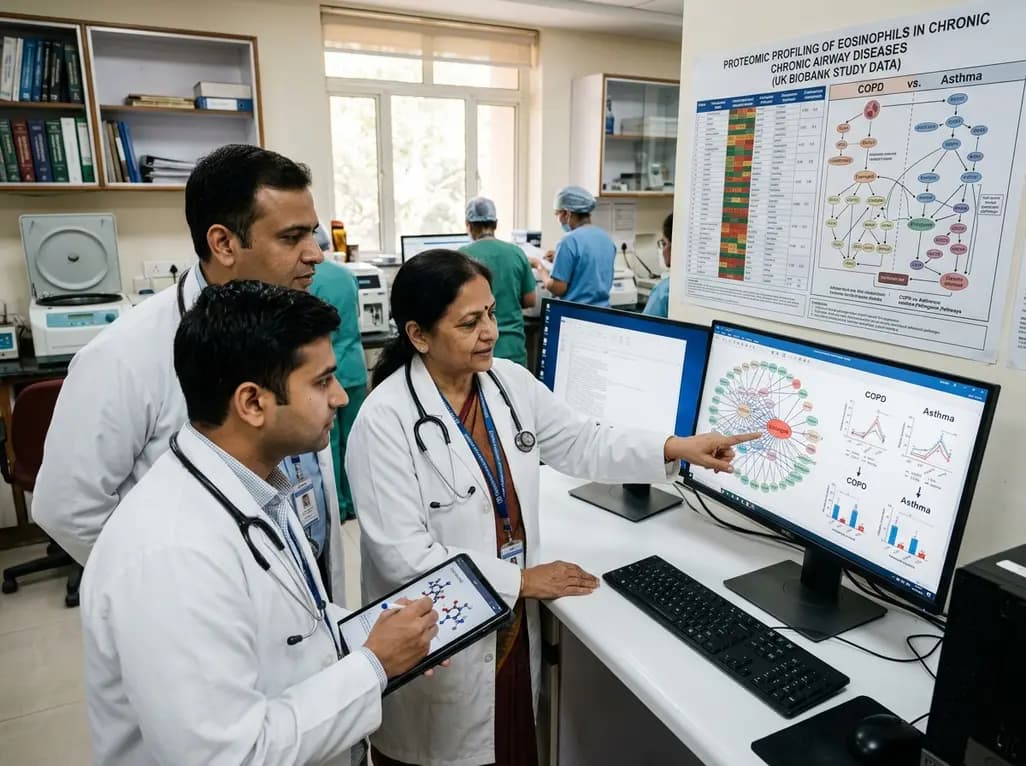
A large-scale UK Biobank proteomic study reveals that eosinophils play a unidirectional, causal role in COPD via expansive 378-protein networks, distinct from Th2 allergic pathways in asthma. These findings provide critical mechanistic clarity for clinical phenotyping and targeted biologic therapies.
Today

Maternal anaemia contributes to nearly half of pregnancy-related fatalities across India. To prevent complications, Uttar Pradesh has added single-dose parenteral iron to its essential medicines list. This clinical transition aims to restore haemoglobin rapidly and protect high-risk mothers across rural facilities.
Today
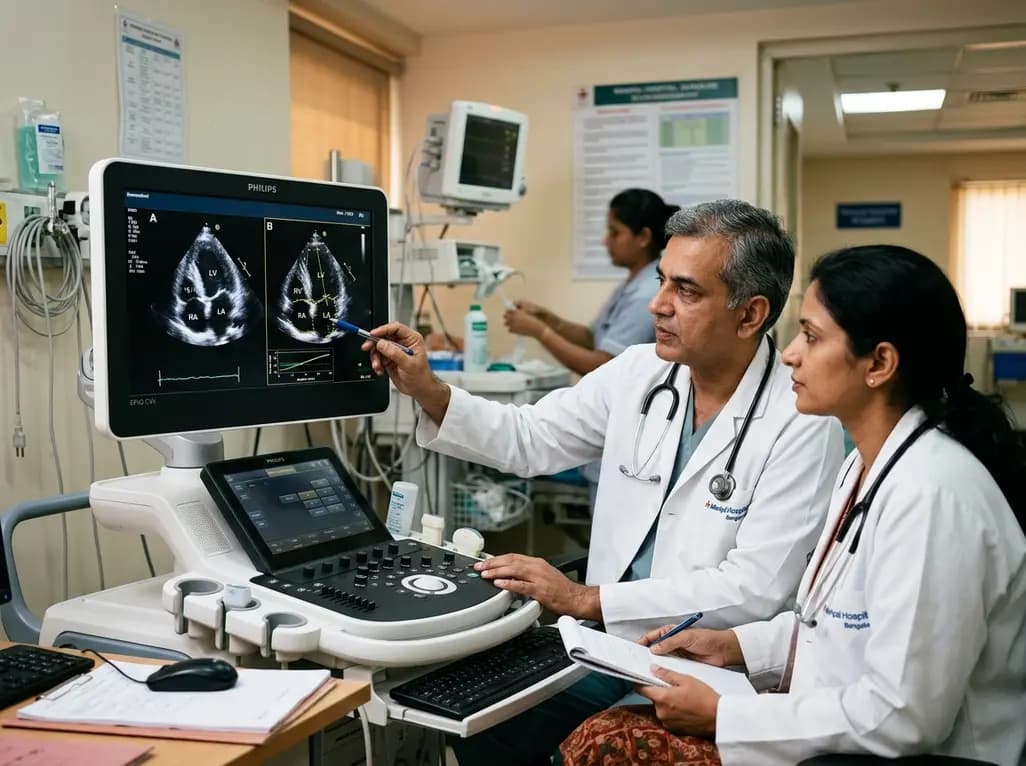
A multi-expert study shows pairwise deep learning accurately assesses echocardiographic rotational alignment in apical four-chamber views, outperforming pointwise regression. This technique improves automated image quality control and standardizes functional cardiac assessment.
Today

A longitudinal study of 1,055 chronic low back pain patients reveals that higher patient activation fosters constructive pain medication attitudes, reduces disability, and decreases short- and long-term opioid use through collaborative, multimodal care.
Today

A landmark cross-sectional study in Asian adults with type 2 diabetes identifies novel urinary metabolites linked to mild cognitive impairment. Elevated urinary sucrose and altered metabolites highlight non-invasive pathways for early cognitive risk stratification and targeted metabolic management.
Today
