

Loading, please wait...
Loading, please wait...

Childhood apraxia of speech represents a complex neurological pediatric speech sound disorder that impairs motor planning and programming. Children with this condition understand language and formulate intended thoughts, yet their motor speech pathways fail to sequence articulatory gestures accurately. Consequently, speech output exhibits vowel distortions, inconsistent segmental errors, disrupted prosodic rhythms, and impaired articulatory transitions. In multilingual pediatric populations, diagnosing and managing this condition presents unique clinical complexities. Clinicians frequently encounter children who communicate across two or more native languages simultaneously. Therefore, healthcare providers must differentiate genuine motor planning deficits from typical cross-linguistic phonetic transfer or developmental language acquisition patterns. When a child presents with motor planning breakdowns across distinct phonetic inventories, speech-language pathologists and pediatricians must implement specialized interventions. Traditional phonological therapies often fail because they target linguistic knowledge rather than motor execution. In contrast, motor-based interventions directly target the neuromuscular coordination required to plan and execute speech movements. Furthermore, pediatricians must recognize that true motor speech deficits manifest across all languages spoken by the child.
Dynamic Temporal and Tactile Cueing serves as an evidence-based, motor-learning intervention designed specifically for childhood apraxia of speech. Developed on the foundations of integral stimulation, this therapeutic method emphasizes the clinical maxim of looking, listening, and imitating target gestures. Instead of training isolated phonemes, the clinician focuses primarily on movement gestures between sounds. Therefore, the child learns to coordinate transitions between consonants and vowels within meaningful functional words. The clinician dynamically adjusts temporal delays and multisensory supports based on real-time performance. Initially, the therapist provides simultaneous visual, auditory, and tactile cues while producing words in unison. As the patient gains articulatory accuracy, the clinician systematically fades these prompts. Consequently, the child progresses from choral production to direct imitation, delayed imitation, and eventual spontaneous production. Furthermore, the protocol incorporates core principles of motor learning, including high-frequency practice, distributed repetition, and varied feedback schedules. High trial counts reinforce neural synaptic plasticity and establish stable sensorimotor representations in the developing brain. As a result, children acquire greater motor precision, speech intelligibility, and functional communication confidence.
A recent exploratory randomized crossover study investigated the application of Dynamic Temporal and Tactile Cueing in Cantonese-English bilingual children with confirmed childhood apraxia of speech. The researchers recruited three bilingual children aged 4;6 to 5;11 years who demonstrated verified motor planning impairments across both Cantonese and English. The investigative team structured the protocol into two rigorous six-week intervention phases, counterbalancing the sequence across participants. Specifically, each child received treatment delivered in Cantonese and treatment delivered in English across fifteen probe sessions. Clinicians collected comprehensive probe data to evaluate phoneme accuracy, prosodic contour, lexical tone accuracy, and overall intelligibility across trained words, untrained words, and generalization word lists. Additionally, the investigators utilized nonparametric effect size calculations, specifically Tau-U statistics, to compare baseline measures against intervention phases and posttreatment maintenance. This robust experimental framework allowed clinicians to examine whether motor improvements transferred cross-linguistically. Moreover, the investigators systematically assessed how language dominance and the sequential order of therapy influenced therapeutic gains. Consequently, this crossover trial provides crucial empirical evidence regarding bilingual motor speech rehabilitation.
The findings of this crossover investigation provide meaningful empirical insights into pediatric motor speech recovery. Across all three participants, Dynamic Temporal and Tactile Cueing produced clear, treatment-related gains in speech performance. The largest and most robust improvements occurred consistently in trained words following direct targeted therapy. Furthermore, children demonstrated modest within-language generalization to untreated lexical targets within the treated language. In contrast, generalization to shared probe word lists remained markedly limited across participants. Most notably, cross-linguistic generalization across segmental phonemes and prosodic domains was generally minimal. Although clinicians observed occasional small and variable changes in the untreated tongue, these shifts remained inconsistent. Treatment response patterns also varied significantly among individual children. Specifically, individual language dominance and the chronological order of treatment heavily shaped both acquisition rates and transient shifts in the non-treated language. Therefore, clinicians cannot assume that treating one language will automatically remediate motor speech deficits in another. Because motor speech neural representations appear language-specific, targeted clinical therapy must address each spoken language directly.
These empirical findings deliver crucial guidance for pediatricians, pediatric neurologists, and rehabilitation specialists practicing in multilingual societies. Multilingual families often receive outdated advice urging them to drop a native language in favor of a single majority language. However, contemporary neurodevelopmental evidence firmly refutes this restrictive strategy. Eliminating a home language harms cultural bonding, family socialization, and overall psychosocial wellbeing without providing cognitive advantages. Instead, clinicians must counsel families that children with childhood apraxia of speech can successfully learn and maintain multiple spoken languages. Nevertheless, because cross-linguistic transfer of motor speech skills is minimal, therapy cannot focus exclusively on one language. Healthcare providers must collaborate closely with speech-language pathologists to design dual-language intervention plans. When resources or clinician fluency are limited, therapists should partner with parents and bilingual interpreters to deliver structured motor practice in the home language. Furthermore, clinicians must prioritize functional, high-frequency vocabulary in each linguistic environment. Consequently, children build essential motor programs that enhance day-to-day communicative independence across home, school, and community environments.
Dynamic Temporal and Tactile Cueing is an evidence-based speech therapy method designed for childhood apraxia of speech. It uses integral stimulation, prompting the child to watch, listen, and imitate articulatory movements. Therapists dynamically provide simultaneous auditory, visual, and tactile cues, gradually fading support as motor control improves. This high-repetition, motor-learning technique focuses directly on movement transitions between sounds, helping children establish stable sensorimotor speech programs and significantly enhancing speech clarity and functional communicative independence.
Recent clinical evidence demonstrates that cross-linguistic generalization between different languages is extremely minimal in childhood apraxia of speech. Although children achieve substantial accuracy gains in the treated language, these motor skills do not reliably transfer to an untreated tongue. Different languages require distinct phonetic sequences, tone contours, and articulatory timing. Therefore, clinicians must deliver targeted motor-based therapy directly in each language spoken by the child to ensure balanced, comprehensive communication gains across all environments.
No, multilingual children with childhood apraxia of speech should not discontinue their home language. Eliminating a native language disrupts emotional bonding, cultural connection, and family communication without resolving underlying motor planning difficulties. Research confirms that bilingual children can successfully acquire speech motor skills in multiple languages simultaneously through structured intervention. Healthcare professionals should encourage parents to preserve their native language while collaborating with speech therapists to provide appropriate cueing and practice across both linguistic systems.
Disclaimer: This content is for informational and educational purposes only... Refer to the latest local and national guidelines for clinical practice.
References

Read summarized clinical updates, watch expert medical content, and earn CME certifications right from your smartphone.
Open your smartphone camera to scan and install.





A randomized crossover study examines Dynamic Temporal and Tactile Cueing in Cantonese-English bilingual children with childhood apraxia of speech, revealing strong direct treatment gains but minimal cross-linguistic generalization, emphasizing dual-language therapy.
Today

A national cross-sectional survey reveals marked disparities in infectious disease diagnostic capacity across hospital tiers, underscoring the urgent need for integrated referral networks and enhanced point-of-care testing to improve outbreak detection and patient outcomes.
Today

The GESS-AEEM consensus establishes a clear clinical implementation framework for testosterone therapy in postmenopausal women with hypoactive sexual desire disorder, focusing on transdermal dosing, precise laboratory monitoring, and safety communication.
Yesterday
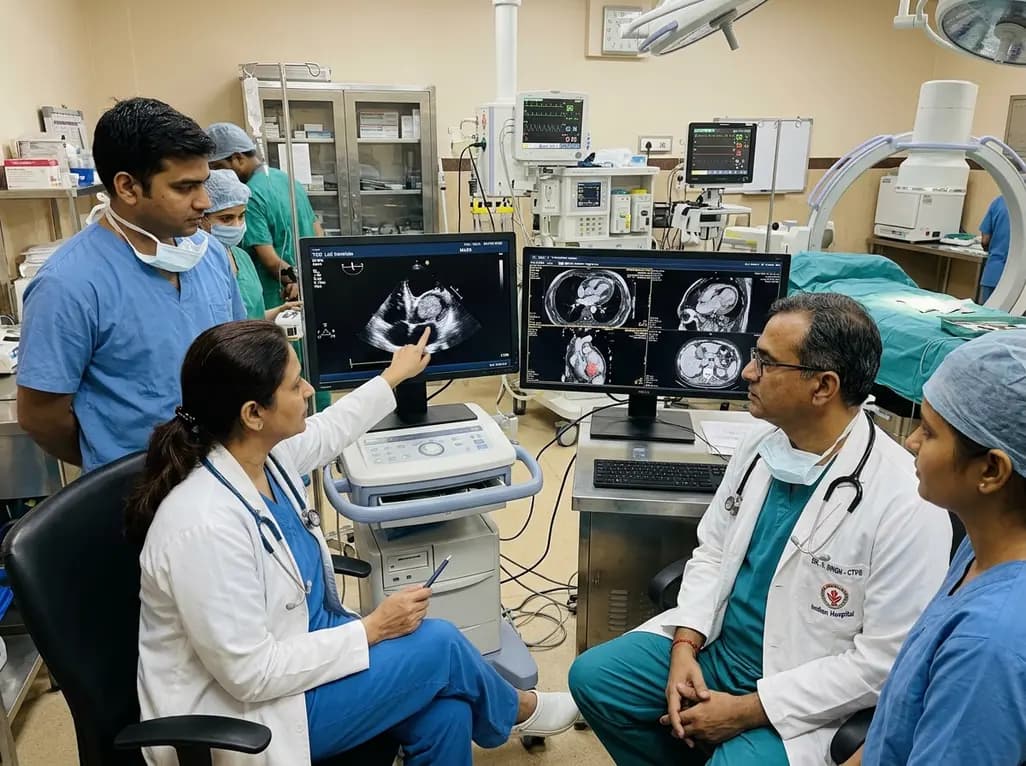
A rare case of an asymptomatic left ventricular hemangioma highlights the vital role of multimodal imaging in differentiating vascular tumors from thrombus. Complete surgical resection under transesophageal echocardiography guidance prevents thromboembolism and delivers optimal outcomes.
Today
A landmark study evaluates long-term quality of life in adolescents and adults with brachial plexus birth injury. Severe functional limitation and limited access to care significantly worsen outcomes, underscoring the urgent need for persistent, multidisciplinary management across adult healthcare transitions.
Today
An analysis of 1,000 posts by macro- and mega-influencers on Instagram and TikTok revealed that 78.5% contained nutrition misinformation, while only 24% of creators held valid credentials. This article examines the clinical risks of viral dietary fads and provides actionable guidance for healthcare professionals.
Today
