

Loading, please wait...
Loading, please wait...

Clinicians evaluating cognitive decline often encounter progressive motor planning challenges in their older patients. However, practitioners routinely overlook limb and buccofacial apraxia in clinical routines. The validated Dementia Apraxia Test directly resolves this significant diagnostic blind spot by providing structured praxis evaluation. Consequently, assessing motor planning yields vital insights into underlying neurodegenerative processes, helping physicians tailor multidisciplinary therapeutic interventions effectively.
Apraxia represents a profound neuropsychological impairment characterized by the inability to perform purposeful learned motor tasks. While clinicians readily associate this disorder with focal vascular events, neurodegenerative conditions exhibit distinct patterns of cortical disruption. Specifically, conditions like Alzheimer's disease and behavioral variant frontotemporal dementia degrade high-level sensorimotor integration over time. Patients struggle with imitation, pantomime, and complex gesture generation, even though primary motor strength remains entirely intact. Therefore, progressive praxis loss reflects cortical network failure rather than peripheral muscular weakness. Moreover, these deficits severely impair essential activities of daily living, such as dressing, eating, and personal grooming. Consequently, family caregivers bear an immense physical and emotional burden when functional independence declines unexpectedly. Furthermore, clinicians often misattribute motor errors to global apathy, executive dysfunction, or general confusion. As a result, patients miss targeted motor rehabilitation early in their disease trajectory. Recognizing apraxia as an independent neurocognitive domain allows geriatric specialists and neurologists to anticipate functional losses more accurately. Thus, comprehensive cognitive evaluations must include systematic movement assessments alongside memory testing.
Historically, diagnostic assessment batteries for motor apraxia emerged from acute stroke rehabilitation paradigms. However, acute cerebrovascular apraxia typically presents with acute, focal left hemisphere lesions producing static motor deficits. In contrast, neurodegenerative pathologies cause progressive, bilateral degeneration across frontoparietal and temporoparietal associative circuits. Because classical stroke assessments prioritize rapid functional screens of unilateral hemiplegia, they fail to detect subtle, progressive sensorimotor breakdowns. Furthermore, standard stroke tools do not address the complex interplay between semantic degradation, visual agnosia, and motor execution. Consequently, administering stroke-centric instruments to older adults with dementia yields misleading clinical data or excessive floor effects. In addition, many conventional tools demand prolonged sustained attention, which overwhelms cognitively frail individuals. Therefore, patients with mild dementia often experience unnecessary frustration during prolonged testing sessions. Neurologists and occupational therapists require streamlined, standardized tools specifically calibrated for neurodegenerative syndromes. By isolating distinct praxis subdomains, specialized assessments capture disease-specific phenotypes without causing patient exhaustion. Thus, adopting modern neurodegenerative instruments represents an urgent necessity for contemporary geriatric practice.
To overcome classical diagnostic limitations, researchers established the Dementia Apraxia Test as a dedicated evaluation instrument. This specialized instrument systematically measures limb and buccofacial praxis through brief, standardized testing modules. Specifically, the test evaluates meaningful pantomime, meaningless gesture imitation, and facial posturing through precise, structured prompts. In clinical trials, the assessment reliably differentiates Alzheimer's dementia from behavioral variant frontotemporal dementia through distinct praxis profiles. For instance, Alzheimer's pathology predominantly disrupts spatial hand configurations and complex finger postures. Conversely, frontotemporal degeneration frequently impairs buccofacial imitation and emblematic facial expressions while sparing manual dexterity early on. Therefore, differential diagnostic confidence increases substantially when clinicians combine standard memory metrics with structured motor assessments. Moreover, the test requires minimal administration time, making it exceptionally feasible in busy outpatient memory clinics. Clinicians can complete the protocol within ten to fifteen minutes without cumbersome testing hardware. Consequently, healthcare providers obtain actionable objective data that directly informs staging, prognosis, and rehabilitative planning.
Rigorous psychometric validation remains essential before clinicians adopt cognitive tools across diverse demographic populations. Recently, investigators translated and culturally adapted the instrument to establish the Korean version of the test. Researchers assessed 106 older adults, comparing fifty-five dementia patients directly against fifty-one cognitively intact controls. Crucially, the adapted instrument demonstrated outstanding discriminatory power, cleanly distinguishing between the clinical cohorts with statistical significance. The dementia cohort achieved a mean score of 44.55, whereas healthy peers reached 52.18 out of sixty points. Furthermore, item-level analyses confirmed excellent internal consistency, inter-rater reliability, and construct validity across both limb and facial subdomains. Cultural adaptations ensured that symbolic gestures and familiar pantomimed tools aligned perfectly with local daily routines. In addition, these findings mirror previous European studies, confirming the universal clinical relevance of neurodegenerative apraxia assessment. Ultimately, robust psychometric validation reassures clinicians that performance discrepancies reflect genuine neurodegenerative pathology rather than cultural or educational bias. Such rigorous cross-cultural adaptation establishes a reliable framework for global neurocognitive healthcare delivery.
Accurate identification of motor planning deficits fundamentally transforms daily clinical management for dementia patients. When clinicians identify apraxia early, they can educate family caregivers about the true nature of functional errors. For example, a patient struggling with feeding or dressing often experiences spatial disorientation rather than stubborn non-compliance. Therefore, targeted education prevents caregiver distress and mitigates counterproductive interpersonal conflicts at home. In addition, occupational therapists utilize detailed praxis subscores to design customized environmental adaptations and task simplification protocols. Therapists can introduce compensatory cues, simplified utensil handles, and structured clothing routines to maintain personal autonomy. Moreover, speech-language pathologists leverage buccofacial findings to manage concomitant dysphagia and communication breakdowns more effectively. Neurologists also benefit because tracking praxis degradation provides objective markers of cortical disease progression over time. Consequently, longitudinal praxis monitoring guides pharmacological choices and timely discussions regarding assisted living arrangements. Ultimately, incorporating dedicated praxis screening enriches multidisciplinary collaboration and elevates the standard of compassionate, person-centered dementia care.
The instrument evaluates distinct motor domains that map onto specific neuroanatomical degeneration patterns. Patients with Alzheimer's disease predominantly exhibit limb apraxia, struggling with complex spatial finger postures and tool pantomimes due to temporoparietal atrophy. Conversely, individuals with behavioral variant frontotemporal dementia manifest buccofacial apraxia, failing facial imitation tasks while preserving manual dexterity. Therefore, analyzing these divergent praxis patterns enables clinicians to distinguish between frontotemporal and Alzheimer's pathologies with high diagnostic accuracy.
Stroke-related batteries evaluate acute, unilateral motor deficits caused by focal vascular lesions, often emphasizing gross hemiplegic motor performance. In contrast, neurodegenerative dementias produce insidious, bilateral cortical network degeneration across associative frontoparietal pathways. Consequently, stroke assessments fail to detect subtle sensorimotor breakdowns and semantic gesture disruptions typical of dementia. Furthermore, stroke batteries are excessively lengthy, inducing cognitive fatigue and behavioral distress in frail older adults during formal outpatient consultations.
Recognizing apraxia helps multidisciplinary teams distinguish motor planning dysfunction from stubbornness, confusion, or general cognitive apathy. Consequently, clinicians can provide reassurance to frustrated family caregivers, reducing emotional burnout and interpersonal stress. Additionally, occupational therapists can implement practical compensatory strategies, such as adaptive utensils, simplified clothing fasteners, and visual step-by-step cues. These personalized environmental interventions maintain functional independence, mitigate accidental home injuries, and enhance overall quality of life for vulnerable elderly patients.
Disclaimer: This content is for informational and educational purposes only and should not be considered medical advice. Always consult a qualified healthcare professional regarding any medical condition or treatment. Refer to the latest local and national guidelines for clinical practice.
References

Read summarized clinical updates, watch expert medical content, and earn CME certifications right from your smartphone.
Open your smartphone camera to scan and install.





Apraxia is a frequent yet overlooked deficit in neurodegenerative disorders. The Dementia Apraxia Test provides clinicians with a standardized method to evaluate motor cognitive decline, distinguishing dementia patterns from stroke-related deficits and improving personalized geriatric and neurological management.
Today

The PhenX Toolkit offers over 1,000 consensus-based protocols to standardize phenotypes and environmental exposures. This open-access resource enhances scientific rigor, supports cross-study data pooling, and integrates with platforms like REDCap to empower biomedical researchers worldwide.
Today

A major ABCD study analysis reveals that prenatal co-exposure to cannabis and tobacco significantly impairs fluid cognitive abilities in middle childhood, whereas crystallized intelligence remains unaffected. The findings highlight urgent needs for targeted antenatal screening and intervention.
Today
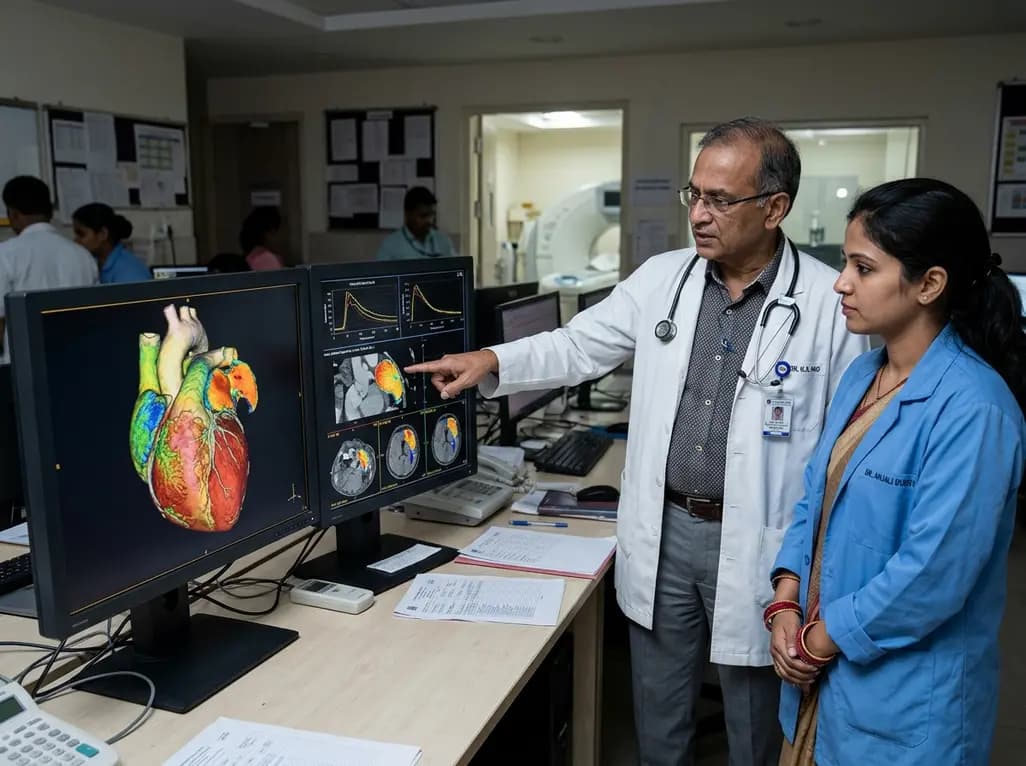
Dynamic contrast 4DCT enables precise mapping of left atrial appendage blood transport in atrial fibrillation. By quantifying regional stasis, wash-in kinetics, and residence time, this imaging advance offers clinician-tailored thromboembolic risk stratification beyond standard clinical scores.
Today

Deciding the optimal interval for staged bilateral hip arthroscopy in femoroacetabular impingement syndrome requires weighing the risks of rapid intervention against delayed joint degeneration. Shared decision-making balances functional rehabilitation milestones with bilateral symptom progression.
Today

India is poised to transform chronic disease management through wearable health technology. Discover how continuous remote monitoring and predictive algorithms empower clinicians to detect early cardiovascular signals, personalize metabolic interventions, and deliver equitable preventive care across populations.
Today
