

Loading, please wait...
Loading, please wait...

Biomedical research demands robust, transparent, and reproducible methodology to translate scientific discoveries into meaningful clinical practice. The PhenX Toolkit addresses this fundamental requirement by offering an open-access catalog of validated measurement protocols across genomics, clinical medicine, and epidemiology. Consequently, investigators can readily select harmonized instruments rather than designing custom questionnaires from scratch. Furthermore, standardizing phenotypic assessments bridges distinct research initiatives and facilitates cross-cohort analysis. Modern clinical investigations increasingly rely on such shared resources to maximize the impact of patient data globally.
The PhenX Toolkit functions as a centralized knowledgebase designed to eliminate methodological fragmentation across clinical and observational studies. Currently, the catalog contains 1010 consensus-based protocols that capture complex disease phenotypes, personal biomarkers, and environmental exposures. Expert working groups select each protocol through a structured evaluation process that incorporates broad community feedback. Therefore, every instrument demonstrates verified clinical utility, participant safety, and methodological validity across diverse populations. In addition, the catalog avoids redundant data collection by standardizing primary and secondary endpoints. Researchers investigating chronic disorders like diabetes, cardiovascular disease, or psychiatric conditions can identify vetted measurement tools with ease. Moreover, the platform provides explicit operational guidance, training criteria, and equipment specifications for each measure. This comprehensive documentation ensures that varied research teams implement protocols identically across different testing sites. As a result, multicentric trials achieve remarkable protocol compliance and minimize inter-observer measurement error. Standardized phenotypic metrics therefore form a durable bedrock for high-integrity biomedical discovery.
Pooling individual patient data across independent research cohorts often presents immense logistical and analytical hurdles. Disparate survey instruments, conflicting exposure metrics, and non-standard laboratory assays frequently prevent direct data synthesis. However, the systematic adoption of standardized measures overcomes these analytical barriers. When independent teams utilize identical protocols, they generate naturally interoperable datasets. Consequently, bioinformaticians can seamlessly combine distinct cohorts to amplify statistical power without introducing complex conversion biases. Furthermore, this harmonized approach empowers researchers to detect subtle gene-disease correlations and elusive gene-environment interactions. Rare disease registries particularly benefit from such protocol harmonization because individual centers rarely recruit sufficient participant numbers alone. Accordingly, pooling international datasets accelerates biomarker discovery and improves epidemiological risk modeling. Clinicians evaluating broad epidemiological patterns can thus draw conclusions from substantially larger, more reliable participant samples. Ultimately, consistent data collection transforms isolated studies into powerful cooperative scientific networks. Standardized measures also enable rapid meta-analyses that clarify clinical controversies across diverse global populations.
Effective implementation of clinical research tools requires seamless integration with existing digital infrastructure and data management systems. Therefore, the PhenX initiative actively collaborates with widespread clinical trial systems and health data terminologies. Specifically, the toolkit provides downloadable data dictionaries and ready-to-import modules configured for REDCap electronic data capture software. Clinical research coordinators can immediately upload these pre-structured forms into their institutional systems without programming manual data fields. In addition, each protocol links directly to established standardized terminologies, including Logical Observation Identifiers Names and Codes. This deliberate alignment ensures that phenotypic data conform to international FAIR data principles, ensuring records are findable, accessible, interoperable, and reusable. Moreover, compatibility with national genomic repositories simplifies formal data submission at the conclusion of funded trials. Consequently, research institutions reduce administrative setup overhead and accelerate participant enrollment timelines. By linking standardized protocols with modern biomedical informatics, research teams sustain data integrity throughout the entire study lifecycle.
Biomedical research sponsors increasingly require transparent, reproducible research designs to justify public and philanthropic investment. In this context, major funding agencies, including the National Institutes of Health, strongly endorse standardized phenotypic protocols. Indeed, over 700 formal funding opportunities specifically recommend these validated instruments in grant solicitations. Furthermore, peer-reviewed literature features more than 1300 citations acknowledging the practical utility of these standard consensus measures. Funding bodies emphasize that reproducible science protects research subjects by preventing redundant investigations and uninformative pilot projects. When investigators adopt proven instruments, peer reviewers gain immediate confidence in study design and endpoint measurement. Consequently, grant applicants secure a competitive scientific advantage during institutional review and evaluation. Additionally, adopting gold-standard protocols ensures clinical trial results withstand rigorous external scrutiny and independent replication attempts. Clinical investigators therefore satisfy stringent regulatory criteria while contributing meaningful, high-grade evidence to global medical literature. This systematic alignment between institutional policy and protocol standardization promotes fiscal accountability across major academic healthcare initiatives.
Standardized data collection methodologies hold profound clinical and academic value for researchers in evolving healthcare environments. Academic institutions and tertiary hospitals frequently launch extensive patient registries to monitor chronic disease trends. However, creating local survey instruments without validated benchmarks often limits future collaboration and cross-registry comparisons. In contrast, incorporating internationally benchmarked protocols ensures that local clinical registries remain globally comparable. For instance, Indian medical centers tracking cardiometabolic disorders, tuberculosis outcomes, or oncological trajectories can align their datasets with international cohorts. Furthermore, using pre-validated instruments reduces questionnaire development expenses and accelerates local ethics review timelines. Clinicians running translational research programs can thus focus their resources directly on patient recruitment and clinical care. Moreover, young investigators receive valuable guidance on validated measurement parameters, promoting good clinical practice and sound scientific methodology. As medical research moves toward open data sharing, standardized phenotypic frameworks provide the essential infrastructure for lasting scientific progress.
The PhenX Toolkit serves as an open-access repository of consensus-based, validated protocols designed to standardize phenotypic and exposure measurements in clinical research. By offering reliable survey instruments, laboratory methods, and physical assessments, the toolkit ensures consistent data collection across separate cohorts. Consequently, research teams can minimize measurement errors, accelerate protocol development, and facilitate seamless cross-study data pooling without requiring custom instrument design.
The toolkit facilitates cross-study analysis by establishing uniform operational definitions and standardized data collection procedures across independent investigations. When multiple clinical studies utilize the same validated measurement tools, investigators can combine individual participant data without encountering conflicting variable formats. Furthermore, these shared metrics align with international FAIR data principles, significantly enhancing statistical power and enabling robust meta-analyses across diverse geographic populations.
Yes, investigators can easily integrate PhenX protocols directly into digital collection platforms like REDCap. The toolkit provides downloadable data dictionaries, structured instrument zip files, and clear coding standards mapped to LOINC vocabularies. Consequently, clinical trial coordinators can upload comprehensive, pre-formatted case report forms in minutes, avoiding manual data entry errors and drastically reducing initial study preparation timelines for academic institutions.
Disclaimer: This content is for informational and educational purposes only... Refer to the latest local and national guidelines for clinical practice.
References
Huggins W et al. PhenX Toolkit: a knowledgebase that enables consistent data collection and facilitates cross-study analysis and data reuse. Nucleic Acids Res. 2026 Nov 03. doi: undefined. PMID: 42973429.
Cox LA, Hwang S, et al. Using the PhenX Toolkit to Select Standard Measurement Protocols for Your Research Study. Curr Protoc. 2021;1(5):e147. doi: 10.1002/cpz1.147. PMID: 34038028.

Read summarized clinical updates, watch expert medical content, and earn CME certifications right from your smartphone.
Open your smartphone camera to scan and install.





The PhenX Toolkit offers over 1,000 consensus-based protocols to standardize phenotypes and environmental exposures. This open-access resource enhances scientific rigor, supports cross-study data pooling, and integrates with platforms like REDCap to empower biomedical researchers worldwide.
Today

A major ABCD study analysis reveals that prenatal co-exposure to cannabis and tobacco significantly impairs fluid cognitive abilities in middle childhood, whereas crystallized intelligence remains unaffected. The findings highlight urgent needs for targeted antenatal screening and intervention.
Today
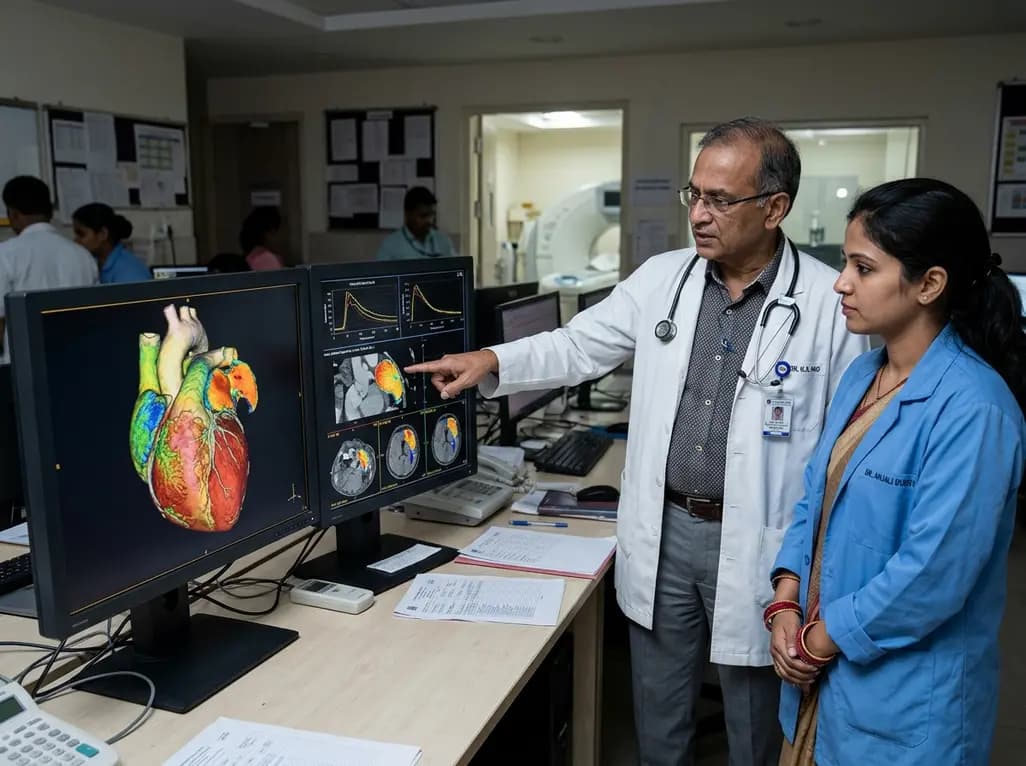
Dynamic contrast 4DCT enables precise mapping of left atrial appendage blood transport in atrial fibrillation. By quantifying regional stasis, wash-in kinetics, and residence time, this imaging advance offers clinician-tailored thromboembolic risk stratification beyond standard clinical scores.
Today

Deciding the optimal interval for staged bilateral hip arthroscopy in femoroacetabular impingement syndrome requires weighing the risks of rapid intervention against delayed joint degeneration. Shared decision-making balances functional rehabilitation milestones with bilateral symptom progression.
Today

India is poised to transform chronic disease management through wearable health technology. Discover how continuous remote monitoring and predictive algorithms empower clinicians to detect early cardiovascular signals, personalize metabolic interventions, and deliver equitable preventive care across populations.
Today
