

Loading, please wait...
Loading, please wait...

Femoroacetabular impingement syndrome frequently affects young, active patients across both hip joints. When conservative therapies fail to provide relief, staged bilateral hip arthroscopy becomes an essential consideration for orthopaedic preservation. However, deciding the optimal interval between the two surgical procedures presents a significant dilemma. Simultaneous bilateral intervention imposes tremendous rehabilitation challenges and physiological stress. Consequently, surgeons widely favor sequential scheduling. Nevertheless, clinical evidence supporting a definitive staging timeline remains conflicting and nuanced.
Femoroacetabular impingement syndrome develops from abnormal morphology of the femoral head-neck junction, the acetabular rim, or both. This mechanical abutment produces repetitive shear stresses across the chondrolabral junction during dynamic hip flexion and internal rotation. Consequently, patients experience debilitating groin pain, limited range of motion, and persistent mechanical catching.
Although many individuals initially seek care for unilateral symptoms, radiographic abnormalities occur bilaterally in up to eighty percent of cases. Furthermore, altered gait mechanics from the initial symptomatic joint shift abnormal weight-bearing loads onto the contralateral limb. As a result, subclinical pathology in the opposite hip can rapidly convert into symptomatic labral tearing and chondral degradation.
Clinicians must therefore perform a comprehensive physical and radiographic evaluation of both joints at initial consultation. In addition, practitioners should assess contralateral stability, range of motion, and pre-existing joint space narrowing before formulating a definitive surgical roadmap. Recognizing bilateral involvement early empowers surgical teams to design tailored management plans that align with the patient’s functional lifestyle, sporting aspirations, and occupational demands.
Surgeons historically debate whether to address bilateral symptomatic pathology simultaneously or in a sequential manner. Simultaneous bilateral hip surgery theoretically offers single anesthesia exposure and a unified recovery period. However, bilateral traction time, prolonged surgical positioning, and severe postoperative functional dependency present substantial clinical hurdles. Patients face extreme difficulty with early mobility, crutch ambulation, and perineal hygiene when both lower extremities undergo concurrent operative intervention.
Therefore, staged bilateral hip arthroscopy serves as the preferred strategy for most preservation surgeons. Staging allows the first operated hip to achieve stable healing, baseline muscular control, and independent weight-bearing before loading the opposite limb. Furthermore, sequential scheduling reduces cumulative intraoperative physiological stress, minimizes fluid extravasation risks, and lowers anesthesia complications.
Nevertheless, staging introduces challenging logistical decisions regarding the precise interstage interval. Surgeons must weigh the physical advantages of an established recovery against the ongoing functional decline of the pending hip. Consequently, deciding when to schedule the second arthroscopy requires thorough evaluation of functional independence and tissue recovery milestones.
Selecting a compressed surgical interval, such as four to six weeks, appeals to highly driven athletic cohorts. Competitive athletes and demanding professionals frequently operate under rigid seasonal or employment schedules. For these individuals, a brief interstage period limits overall time away from sport and consolidates rehabilitation milestones. Moreover, rapidly addressing the second hip prevents chronic compensatory loading that could jeopardize the newly repaired joint.
However, rapid intervention carries tangible clinical drawbacks. Shorter intervals risk overtreating a contralateral hip whose symptoms might have resolved once primary hip biomechanics normalized. In addition, performing secondary surgery while the primary hip remains guarded can severely impede bilateral recovery. The patient must bear substantial load through a recently operated limb that still lacks dynamic neuromuscular control and complete soft-tissue healing.
Furthermore, rapid sequential procedures can exhaust patient psychological resilience. Postoperative pain management, aggressive daily physical therapy, and restricted mobility demand immense cognitive effort. Consequently, accelerated timelines require rigorous patient selection, intact baseline strength, and extensive preoperative education regarding the rigorous physical demands of back-to-back rehabilitation.
Conversely, extending the interval beyond several months or years provides full healing time for the primary joint. Patients restore excellent quadriceps power, regain hip abductor strength, and re-establish symmetrical pelvic control before undergoing second-stage surgery. In addition, extended staging eliminates ambiguity regarding whether contralateral discomfort represents transient compensatory soreness or true structural failure.
Unfortunately, excessive delays introduce progressive joint degradation. Prolonged mechanical impingement subjects the unoperated joint to ongoing intra-articular damage, progressive labral tearing, and irreversible chondral delamination. Furthermore, sustained abnormal gait patterns overload the newly reconstructed hip, potentially compromising its long-term graft or labral repair integrity.
Moreover, existing literature reveals that delaying secondary surgery in the presence of established chondral lesions increases the risk of osteoarthritis progression. As cartilage deteriorates, future joint preservation outcomes decline significantly. Therefore, while surgeons safely permit sufficient functional recovery, indefinite delays in symptomatic patients can turn a treatable prearthritic condition into advanced articular wear that precludes joint preservation.
Despite increasing procedural volumes, current clinical literature provides conflicting thresholds for optimal staging intervals. Existing comparative studies often lack sufficient statistical power to detect small differences in revision rates or osteoarthritis progression. Furthermore, retrospective datasets rarely stratify patients by baseline symptom severity or contralateral chondrolabral status at primary presentation.
Because definitive clinical guidelines remain absent, the surgical interval must remain a shared decision between surgeon and patient. Orthopaedic surgeons should carefully balance individual patient goals, functional demands, symptom severity, and radiographic pathology. Specifically, clinicians must assess whether contralateral symptoms limit active physical therapy for the index hip. If severe contralateral pain prevents effective rehabilitation, an earlier secondary intervention becomes clinically justified.
Conversely, if contralateral symptoms remain mild or intermittent, conservative monitoring and targeted core rehabilitation offer a prudent first-line strategy. Clinicians should maintain regular clinical follow-up and repeat cross-sectional imaging if new mechanical catching develops. Prospective, multi-center trials stratifying patients by initial bilateral symptom burden will ultimately clarify evidence-based staging protocols.
Successful outcomes following sequential interventions require structured rehabilitation protocols tailored to bilateral pathology. Before proceeding to contralateral surgery, patients should demonstrate satisfactory progression through their primary hip rehabilitation program. Specifically, clinicians must confirm pain-free unassisted ambulation, restored single-leg balance, and adequate hip abductor strength on the primary side.
In addition, physical therapists should emphasize core stability, lumbopelvic motor control, and symmetrical kinetic chain mechanics throughout the interstage period. Addressing soft-tissue restrictions in the hip flexors, adductors, and lumbar spine prevents secondary pelvic tilt compensation. Furthermore, clear communication between the orthopaedic surgeon, sports physical therapist, and patient ensures optimal timing of operative milestones.
Ultimately, patient expectations and mental preparation strongly influence recovery trajectories. Clinicians must educate candidates on the cumulative physical commitment demanded by sequential procedures. By combining meticulous surgical technique, personalized timing criteria, and objective functional milestones, surgical teams can maximize return to sport and protect long-term hip preservation in active individuals.
Current clinical evidence does not define a universal waiting interval between procedures. Surgeons typically recommend an interval between six weeks and six months depending on recovery progress. Patients should regain unassisted ambulation, adequate pelvic stability, and symmetrical hip abductor power before undergoing contralateral surgery. Therefore, clinicians tailor the staging timeline according to individual rehabilitation milestones, persistent contralateral mechanical symptoms, and specific occupational or athletic demands.
Undergoing contralateral surgery prematurely forces the newly repaired primary hip to bear excessive weight before achieving complete tissue healing. Consequently, patients risk reinjury, increased pain flare-ups, and compromised functional rehabilitation. Furthermore, rapid staging risks overtreating a contralateral joint whose mild symptoms might have fully resolved through restored gait biomechanics. Clinicians must ensure the initial hip possesses sufficient strength to support safe crutch ambulation.
Yes, delaying surgical correction for a persistently symptomatic hip allows repetitive mechanical abutment to continue unabated. Over time, prolonged shear stress damages the acetabular labrum and causes irreversible articular cartilage delamination. Furthermore, chronic compensatory gait alterations place detrimental mechanical loads on the previously repaired hip. If osteoarthritis advances significantly during a prolonged waiting period, the joint may no longer benefit from arthroscopic preservation techniques.
Disclaimer: This content is for informational and educational purposes only and should not be considered medical advice or a substitute for professional healthcare guidance. Refer to the latest local and national guidelines for clinical practice.
References

Read summarized clinical updates, watch expert medical content, and earn CME certifications right from your smartphone.
Open your smartphone camera to scan and install.





Deciding the optimal interval for staged bilateral hip arthroscopy in femoroacetabular impingement syndrome requires weighing the risks of rapid intervention against delayed joint degeneration. Shared decision-making balances functional rehabilitation milestones with bilateral symptom progression.
Today

New qualitative research explores stakeholder views across human and animal health to contextualize appropriate antimicrobial use. Defining clear, practical stewardship standards across sectors is critical to combat global antimicrobial resistance and improve prescribing practices.
Today

A major ABCD study analysis reveals that prenatal co-exposure to cannabis and tobacco significantly impairs fluid cognitive abilities in middle childhood, whereas crystallized intelligence remains unaffected. The findings highlight urgent needs for targeted antenatal screening and intervention.
Today
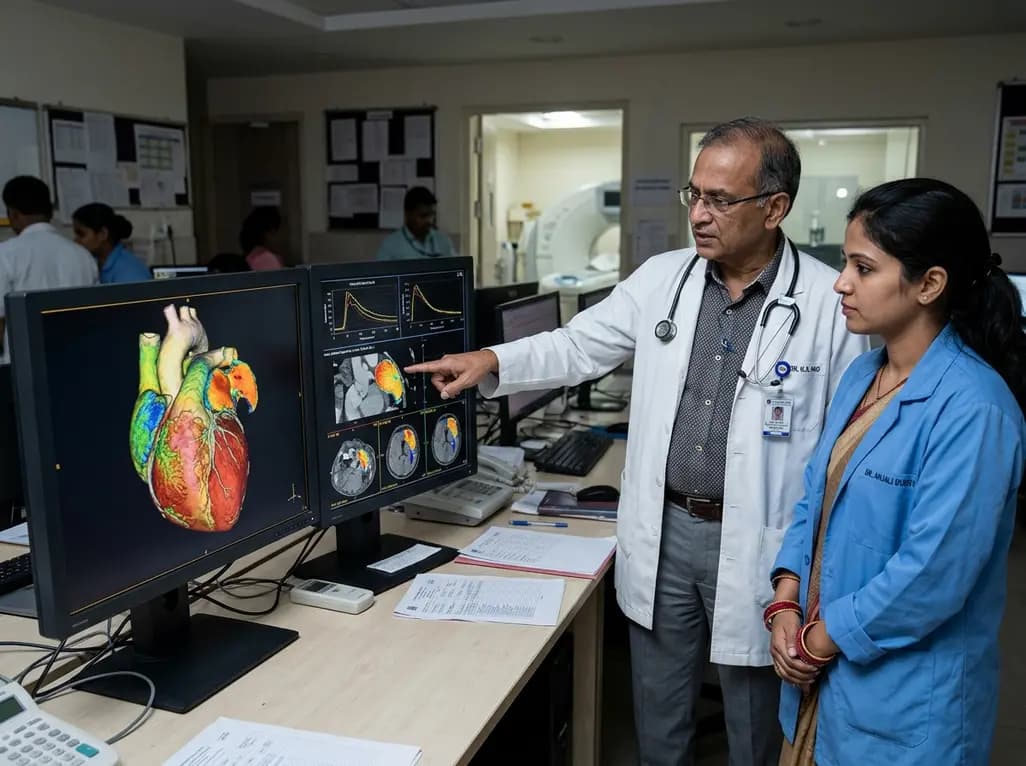
Dynamic contrast 4DCT enables precise mapping of left atrial appendage blood transport in atrial fibrillation. By quantifying regional stasis, wash-in kinetics, and residence time, this imaging advance offers clinician-tailored thromboembolic risk stratification beyond standard clinical scores.
Today

India is poised to transform chronic disease management through wearable health technology. Discover how continuous remote monitoring and predictive algorithms empower clinicians to detect early cardiovascular signals, personalize metabolic interventions, and deliver equitable preventive care across populations.
Today
