.webp&w=384&q=75)

Loading, please wait...
Loading, please wait...
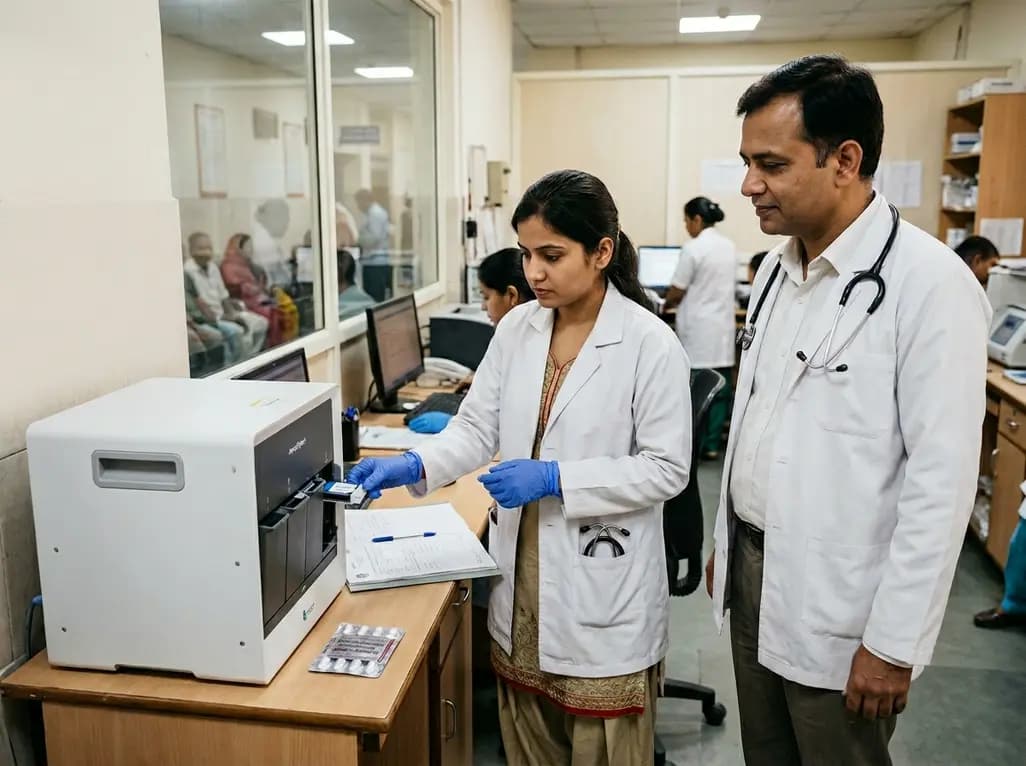
Delhi has made remarkable strides in combating tuberculosis, showcasing clinical and administrative progress that surpasses the national average. Recently, Delhi Lieutenant Governor Taranjit Singh Sandhu reviewed the progress of the TB Mukt Bharat Abhiyan alongside senior health officials. Consequently, the review highlighted that Delhi has achieved an impressive 88% upfront Nucleic Acid Amplification Test (NAAT) rate. Furthermore, the capital has achieved 47% coverage in TB Preventive Treatment (TPT). Both statistics place Delhi significantly ahead of the national average. Thus, this indicates a highly proactive approach to early detection and infection control across urban populations. These strategies are essential because early diagnosis represents the primary defense against the spread of Mycobacterium tuberculosis in dense urban areas. By utilizing modern technology and focused administrative supervision, Delhi is effectively executing the national vision of eliminating this disease. Consequently, the capital is establishing a strong framework for other states to emulate. This review explores the key strategies, clinical implementations, and direct administrative support mechanisms that have propelled these impressive diagnostic and therapeutic rates.
The TB Mukt Bharat Abhiyan serves as the central pillar of India's ambitious strategy to eliminate tuberculosis. Nationally, this initiative drives active case-finding, community mobilization, and the integration of advanced diagnostics. In Delhi, the local administration has successfully translated this national campaign into highly impactful localized actions. By organizing numerous localized health camps and engaging local community leaders, the government has demystified tuberculosis testing and treatment. Additionally, community-based approaches have helped eliminate the social stigma associated with the disease. Healthcare providers in Delhi are working directly with marginalized groups and high-risk wards to ensure that no patient is left untreated. Furthermore, the program leverages artificial intelligence to map vulnerable pockets and deploy resources effectively. This targeted approach ensures that clinical teams screen asymptomatic individuals who might otherwise skip regular diagnostic evaluations. As a result of these coordinated efforts, the city has maintained continuous treatment protocols despite dense populations. Medical practitioners are seeing a tangible improvement in patient compliance and self-reporting across public clinics.
Upfront molecular testing has revolutionized tuberculosis diagnostics by replacing slower conventional sputum microscopy. Currently, Delhi leads the nation by ensuring that 88% of presumptive tuberculosis cases undergo upfront NAAT testing. This technology uses nucleic acid amplification to detect the genetic material of Mycobacterium tuberculosis within a very short timeframe. Because NAAT yields rapid and highly accurate results, clinicians can confirm diagnoses within hours rather than weeks. In addition, NAAT testing simultaneously identifies drug-resistant strains of the bacterium, which is crucial for determining effective therapy. Consequently, patients with drug-resistant tuberculosis receive appropriate second-line medications without delay. This rapid diagnostic protocol is especially vital in urban centers where delayed diagnoses can lead to widespread community transmission. To support this high testing rate, Delhi has significantly expanded its laboratory infrastructure and distributed rapid test kits across primary health centers. This systematic expansion of NAAT testing ensures that medical teams provide early, accurate diagnoses directly at the primary care level.
While prompt treatment cures active tuberculosis, preventing the progression from latent infection to active disease is equally critical. Delhi has prioritized TB Preventive Treatment (TPT), achieving an impressive 47% coverage among eligible high-risk populations. This rate is significantly higher than the national average, showcasing Delhi's focus on prophylactic clinical care. Typically, TPT involves administering preventive drug regimens to close household contacts of active TB patients. This approach is particularly critical for vulnerable populations, including young children, malnourished individuals, and immunocompromised patients. By systematically providing preventive therapy, the government aims to break the transmission cycle within households. Clinicians closely monitor adherence to TPT regimens to ensure optimal treatment outcomes. This preventative strategy helps reduce the future burden of active tuberculosis cases across the capital. As TPT coverage expands, healthcare providers can prevent latent tuberculosis infections from developing into active, highly transmissible respiratory illnesses. This dual strategy of treatment and prevention is transforming Delhi's clinical landscape.
Despite these achievements, some clinical and operational challenges persist, particularly in conducting X-ray screenings in high-risk wards. To resolve these bottlenecks, the Lieutenant Governor has instructed health officials to expedite diagnostic workflows and improve chest X-ray access. Handheld X-ray devices with integrated artificial intelligence software are being deployed to streamline screenings in densely populated areas. Additionally, financial and nutritional support is a critical component of successful tuberculosis management. Under the Ni-kshay Poshan Yojana, the government provides financial assistance directly to patients to improve their nutritional status. Recent policy updates have doubled these financial benefits, ensuring that patients can afford nutritious food during therapy. Because malnutrition weakens the immune system, nutritional support is vital for complete recovery. Direct Benefit Transfer (DBT) mechanisms help deliver these financial resources swiftly and transparently. By combining clinical treatment with robust financial and nutritional assistance, Delhi is addressing the social determinants of health that fuel the TB epidemic.
Q1: What is the primary benefit of upfront NAAT testing in tuberculosis management?
Upfront Nucleic Acid Amplification Testing (NAAT) provides rapid and highly accurate detection of Mycobacterium tuberculosis genetic material. This testing method significantly reduces diagnostic delays compared to traditional sputum culture microscopy. Additionally, NAAT can identify drug-resistant strains early. This early identification allows clinicians to prescribe precise, effective treatment regimens immediately. Ultimately, this helps prevent the transmission of drug-resistant tuberculosis within the community.
Q2: How does TB Preventive Treatment (TPT) help in controlling tuberculosis?
TB Preventive Treatment (TPT) is a clinical intervention that targets individuals with latent tuberculosis infection. It is primarily administered to close household contacts of confirmed active TB cases and immunocompromised populations. By using targeted antibiotic regimens, TPT effectively prevents latent infections from progressing into active, transmissible tuberculosis. This preventative approach is essential for breaking the community transmission cycle in densely populated urban environments.
Q3: How does the Ni-kshay Poshan Yojana support tuberculosis recovery?
The Ni-kshay Poshan Yojana provides direct financial assistance to registered tuberculosis patients to support their nutritional needs. Because tuberculosis recovery is closely linked to nutritional health, the government recently doubled this monthly financial aid. These funds are delivered through Direct Benefit Transfer (DBT) to ensure seamless delivery. Adequate nutrition strengthens the immune system, which enhances treatment efficacy and improves overall recovery rates.
Disclaimer: This content is for informational and educational purposes only. It does not constitute medical advice or replace professional judgment. Refer to the latest local and national guidelines for clinical practice.
References

Read summarized clinical updates, watch expert medical content, and earn CME certifications right from your smartphone.
Open your smartphone camera to scan and install.





Delhi has made remarkable strides under the TB Mukt Bharat Abhiyan, achieving 88% NAAT testing and 47% TB Preventive Treatment coverage. This puts the capital city well ahead of the national averages in early tuberculosis detection and prevention, marking a crucial step toward a TB-free India.
3 months ago

Failing to account for competing events like mortality in longitudinal geriatric studies produces biased risk estimates and misleading inferences. This review highlights key methodological principles, insights from the Precipitating Events Project, and practical approaches for clinical research appraisal.
Today

A study in JAMIA Open shows lightweight open-source reasoning LLMs achieve up to 95% sensitivity and accelerate evidence synthesis screening by nearly twentyfold, presenting a cost-effective, scalable AI solution for biomedical research and systematic reviews.
Today
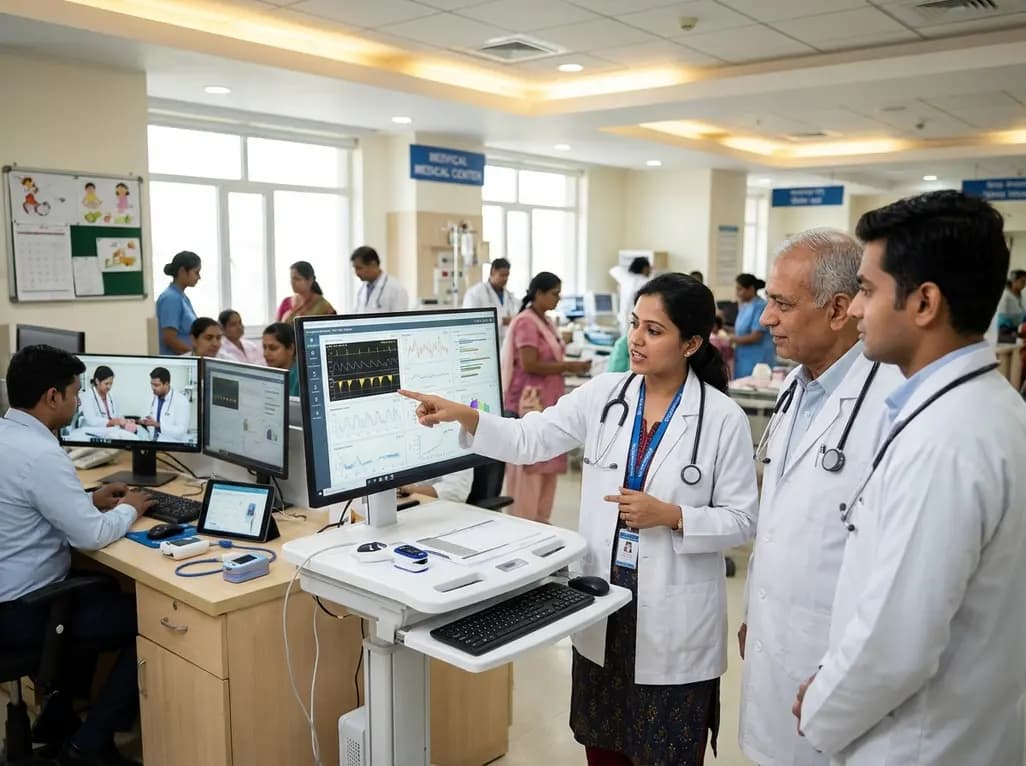
A landmark study details how an enterprise pediatric remote patient management model expanded from a single cardiology pilot to 16 diverse specialty programs by combining centralized digital operations with specialty clinical leadership.
Today
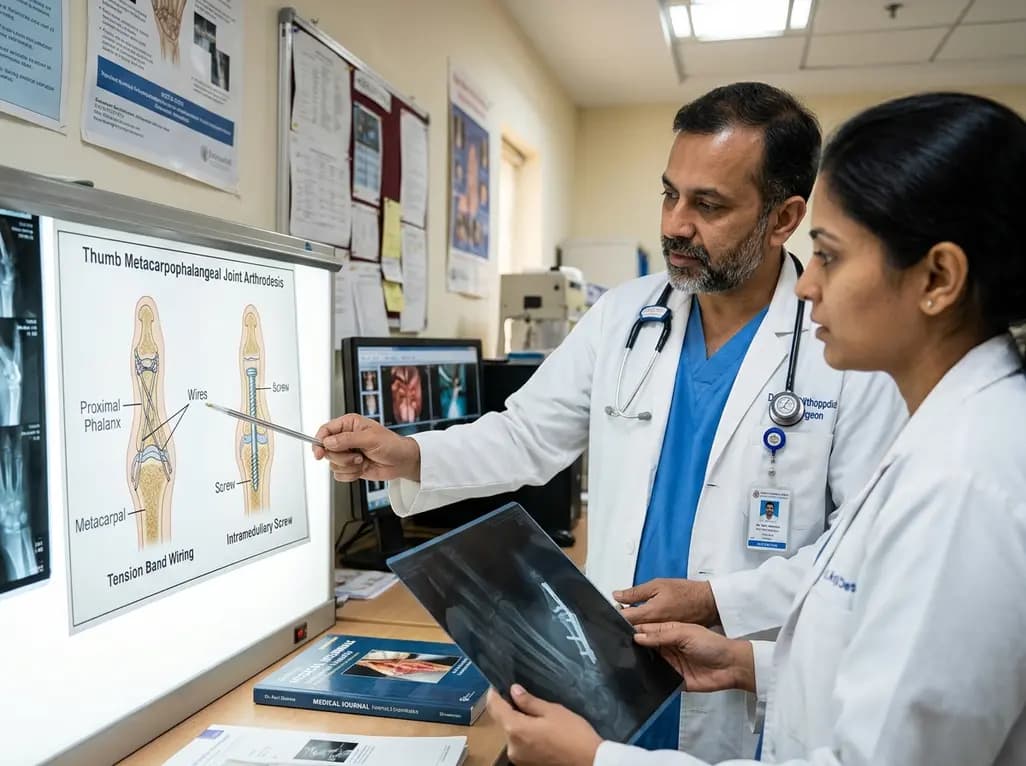
A comparative review of tension band wiring and intramedullary screw fixation in thumb metacarpophalangeal arthrodesis, evaluating union rates, hardware complications, and clinical outcomes.
Today
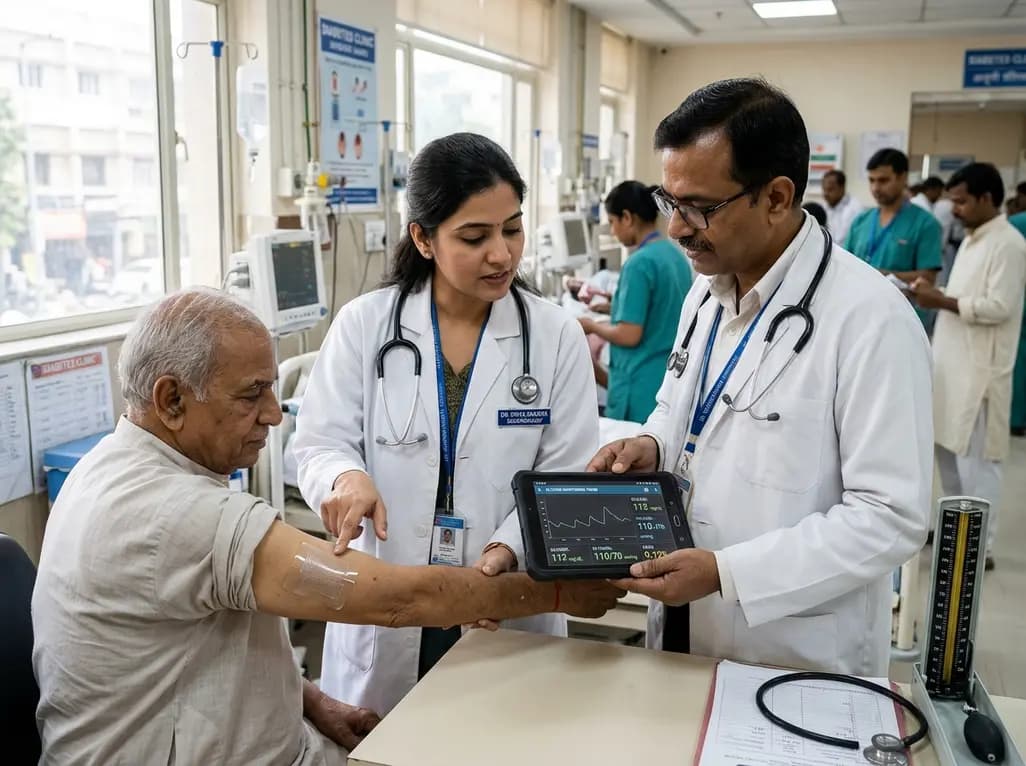
A breakthrough ultrathin multimodal sensor decouples physical hemodynamic monitoring from disposable electrochemical calibration, achieving long-term wearable glucose prediction with 81.36% accuracy and a 9.12% MARD. This offers a robust, drift-free solution for outpatient metabolic surveillance.
Today
