.webp&w=384&q=75)

Loading, please wait...
Loading, please wait...

Deep brain stimulation has revolutionized neurotherapeutics for advanced movement disorders. However, the efficacy and safety of DBS in GBA Parkinson's disease remain active clinical questions. Glucocerebrosidase gene variants represent the most common genetic contributor to Parkinson's disease. Consequently, clinicians frequently encounter mutation carriers during surgical evaluations. These patients often present with an earlier onset and rapid progression. Therefore, understanding short-term and long-term surgical trajectories is essential. A recent systematic review and meta-analysis now provides pivotal evidence regarding post-surgical clinical outcomes.
Heterozygous variants within the glucocerebrosidase gene alter cellular lipid metabolism and lysosomal clearance. Consequently, these enzymatic deficits accelerate pathological alpha-synuclein oligomerization within the central nervous system. Patients carrying these mutations typically manifest severe non-motor complications earlier in their disease course. In addition, neuropsychiatric disturbances, autonomic failure, and rapid motor progression frequently occur. Movement disorder specialists therefore face unique clinical challenges when managing advanced motor fluctuations in this subgroup. Levodopa therapy often induces troublesome dyskinesias and erratic motor responses quite early. As a result, clinicians frequently consider advanced neuromodulatory interventions to restore functional motor control. However, historical concerns regarding rapid post-surgical dementia have caused understandable hesitancy among neurosurgeons. Many centers previously debated whether surgical neurostimulation could compromise already vulnerable cortical networks. Thus, establishing clear, evidence-based guidance has become an urgent clinical priority for multidisciplinary teams. Furthermore, genetic subtyping increasingly shapes long-term clinical expectations in routine tertiary practice. Clinicians must actively differentiate benign risk variants from severe enzymatic mutations.
The recent meta-analysis systematically evaluated motor responsiveness across several international cohorts. Specifically, investigators analyzed changes in off-medication Unified Parkinson's Disease Rating Scale scores across long follow-up periods. Patients carrying glucocerebrosidase mutations achieved marked, sustained reductions in motor severity following bilateral stimulation. Furthermore, the magnitude of motor symptom improvement was statistically indistinguishable from non-carrier controls. Surgical therapy delivered robust relief from severe resting tremors, muscular rigidity, and debilitating bradykinesia. In addition, neurostimulation permitted significant, durable reductions in the levodopa equivalent daily dose. This pharmacological sparing effect helped minimize peak-dose dyskinesias and troublesome motor fluctuations in both groups. Consequently, surgical modulation of basal ganglia circuits provides genuine motor efficacy regardless of underlying genotype. Therefore, clinicians should not view mutation status as a barrier to achieving meaningful motor relief. The primary motor goals of surgical intervention remain entirely achievable in this distinct patient cohort. Moreover, activities of daily living and motor complication scores show parallel post-surgical stabilization across both populations.
While motor trajectories remain equivalent, long-term cognitive outcomes reveal meaningful clinical divergence between the groups. During the initial twelve months post-implantation, global cognitive function remains largely preserved in mutation carriers. However, extended longitudinal evaluations demonstrate a noticeable acceleration in cognitive deterioration over five years. Specifically, investigators observed significantly greater score reductions on the Mattis Dementia Rating Scale among carriers. In addition, executive function, working memory, and verbal fluency declined at faster rates. Importantly, extensive neurobiological evidence suggests that this decline stems from progressive Lewy body pathology rather than stimulation injury. The presence of glucocerebrosidase mutations accelerates cortical synuclein deposition throughout neocortical networks. Therefore, deep brain stimulation does not inherently cause dementia in these patients. Instead, the surgical intervention unmasks an underlying, genetically driven neurodegenerative trajectory over time. Consequently, caregivers and families frequently experience growing psychosocial distress as executive deficits emerge. Neurologists must maintain rigorous longitudinal surveillance to detect early signs of mild cognitive impairment. Furthermore, timely identification of cognitive decline enables proactive supportive measures before severe disability occurs.
These meta-analytic findings carry profound clinical implications for preoperative assessment and multidisciplinary decision-making. First, routine genetic testing should inform pre-surgical evaluation rather than serve as an absolute exclusionary filter. Identifying a glucocerebrosidase variant provides invaluable predictive insights that enable highly personalized patient counseling. Specifically, clinicians must clearly communicate that motor improvements will likely match those seen in non-carriers. However, teams must transparently discuss the elevated five-year probability of progressive cognitive deterioration. In addition, multidisciplinary teams must thoughtfully select the most appropriate anatomical stimulation target. While subthalamic nucleus stimulation achieves substantial medication reduction, globus pallidus internus stimulation may spare cognitive reserves. Furthermore, preoperative neuropsychological testing must be comprehensive, establishing an accurate baseline for executive performance. Clinicians should also evaluate baseline psychiatric stability, as depression and hallucinations can complicate outcomes. Therefore, transparent communication fosters realistic expectations and strengthens the therapeutic alliance between families and medical teams. Ultimately, families who receive comprehensive preoperative guidance adapt more successfully to evolving non-motor challenges.
Optimizing long-term health outcomes for mutation carriers necessitates an aggressive, proactive postoperative management paradigm. Neurologists must institute regular cognitive reassessments alongside routine deep brain stimulation programming visits. Furthermore, programming strategies should avoid excessive electrical field spread into adjacent associative and limbic circuits. In addition, clinicians must promptly recognize and treat emerging neuropsychiatric and autonomic symptoms. Pharmacological therapies, such as cholinesterase inhibitors, warrant early consideration whenever cognitive decline impairs daily living. Similarly, clinicians should maintain vigilance for hallucinations, mood disorders, and sleep disturbances throughout the disease course. Moreover, allied health professionals provide indispensable contributions to holistic long-term care plans. Physical, occupational, and speech therapists help patients preserve functional mobility and communication abilities. Consequently, comprehensive rehabilitation programs significantly delay institutionalization and reduce overall caregiver burden. Looking forward, emerging molecular therapies targeting glucocerebrosidase pathways offer promising prospects for halting neurodegeneration. Thus, combining advanced neuromodulation with disease-modifying pharmacotherapy may soon become the definitive standard of care.
A GBA mutation is not an absolute contraindication for deep brain stimulation. Patients achieve robust and durable motor improvements alongside significant medication reductions. However, clinicians must carefully evaluate baseline cognitive status and provide detailed pre-surgical counseling regarding the elevated risk of accelerated cognitive decline over long-term follow-up.
GBA mutations impair lysosomal glucocerebrosidase activity, which promotes widespread alpha-synuclein aggregation across cortical and subcortical regions. This aggressive neurodegenerative process drives progressive cognitive impairment independently of the surgical intervention. Consequently, deep brain stimulation treats motor circuitry effectively but cannot alter the underlying genetic trajectory toward cortical Lewy body dementia.
Both subthalamic nucleus and globus pallidus internus targets provide substantial motor relief in GBA carriers. However, many movement disorder specialists prefer globus pallidus stimulation for patients with subtle baseline cognitive vulnerability. This target often causes less cognitive and executive disruption while still delivering effective tremor and dyskinesia control.
Disclaimer: This content is for informational and educational purposes only... Refer to the latest local and national guidelines for clinical practice.
References

Read summarized clinical updates, watch expert medical content, and earn CME certifications right from your smartphone.
Open your smartphone camera to scan and install.





A meta-analysis demonstrates that deep brain stimulation provides equivalent motor relief and medication reduction in GBA Parkinson's disease compared to non-carriers, but carriers face higher risks of long-term cognitive decline by five years post-surgery.
Today

A crossover study demonstrates that locally deployed large language models with exact-match knowledge augmentation significantly elevate outpatient prescription review accuracy to 97.2%, curbing hallucinations and securing patient data without requiring complex cloud infrastructure.
Today

A new scoping review protocol systematically maps global evidence on how climatic shifts, ambient heat, and pollution impact human fertility. Discover key physiological mechanisms, clinical preconception strategies, and critical public health alignments under Sustainable Development Goals 3 and 13.
Today

Pharmacogenomics and artificial intelligence are revolutionizing cardiology by tailoring therapies to individual genetic profiles and clinical data, reducing adverse drug events, and improving cardiovascular patient outcomes.
Today
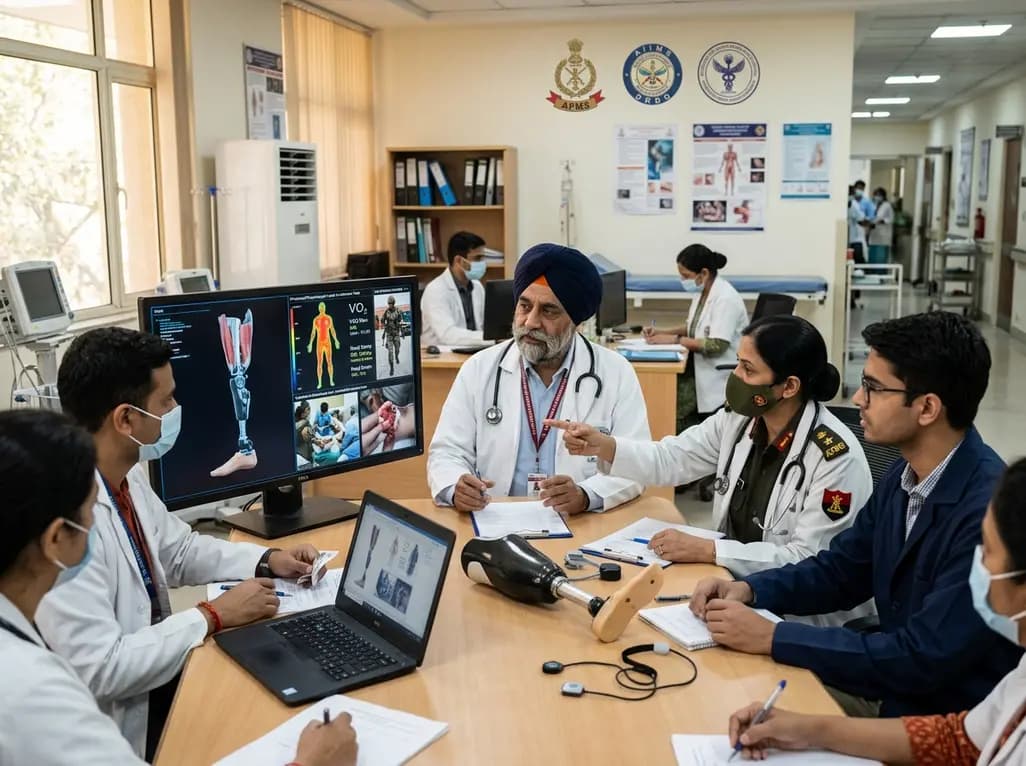
India's premier scientific bodies have joined the Armed Forces Medical Services to solve unique physiological and operational challenges faced by soldiers. The national collaboration covers combat casualty care, artificial intelligence diagnostics, bionic prosthetics, and extreme-environment physiological resilience.
Today

A retrospective cohort study evaluates the short- and long-term impacts of SARS-CoV-2 infection on patients with Graves' disease receiving antithyroid drug therapy, highlighting thyroid status destabilization, clinical symptom exacerbations, and post-viral sequelae.
Today
