

Loading, please wait...
Loading, please wait...

Severe endometrial injury represents a devastating clinical challenge that frequently culminates in secondary amenorrhea, persistent intrauterine adhesions, and refractory infertility. Clinicians often encounter these complex injuries following postpartum interventions, vigorous curettage, or untreated pelvic infections. Because conventional treatments fail to address multiple pathological cascades simultaneously, therapeutic success remains frustratingly modest. Achieving true endometrial regeneration requires a multifunctional intervention that halts ongoing inflammation, eradicates chronic subclinical infection, promotes functional vascularization, and eliminates fibrotic tissue deposition. Recently, biomaterial scientists designed an innovative injectable platform to meet these demanding clinical criteria.
The human endometrium exhibits remarkable cyclic regenerative capacity under physiological conditions. However, severe mechanical trauma or severe infectious insults can permanently obliterate the vital basal stem cell niche. When basal stromal cells undergo irreversible depletion, fibrous tissue rapidly replaces functional glandular architecture. Consequently, patients develop Asherman syndrome, characterized by dense synechiae, an unresponsive endometrial lining, and tragic reproductive failure. Hysteroscopic adhesiolysis currently serves as standard surgical management. Unfortunately, postoperative re-adhesion rates remain notoriously elevated, especially in moderate-to-severe cases. Furthermore, adjunctive hormonal treatments using high-dose exogenous estrogens or mechanical barrier devices demonstrate limited therapeutic efficacy. These traditional approaches fail because they treat isolated symptoms rather than orchestrating comprehensive microenvironmental repair. The pathological intrauterine niche sustains persistent inflammatory signals, defective microvascular perfusion, and ongoing microbial colonization. Therefore, clinicians urgently require advanced bioengineering strategies that actively reverse this hostile milieu while facilitating physiological tissue restoration and reproductive recovery.
To overcome these persistent regenerative hurdles, researchers developed an advanced thermosensitive hydrogel composite. The novel platform embeds copper-based metal-organic framework nanoparticles, designated as HKUST-1, into a porcine acellular dermal matrix framework. Porcine acellular dermal matrix provides an exceptionally biomimetic scaffold that supplies critical structural cues. It preserves natural collagen architectures, glycosaminoglycans, and cell-binding motifs that encourage cellular homing. Simultaneously, the hydrogel remains liquid at room temperature, allowing smooth catheter delivery directly into the uterine cavity. Upon reaching physiological body temperature, the formulation rapidly solidifies into a stable, conforming hydrogel barrier. This physical transition prevents immediate mechanical synechiae formation while keeping the matrix intact against uterine contractions. Meanwhile, the incorporated HKUST-1 nanoparticles systematically degrade to release bioactive copper ions over an extended therapeutic window. Thus, this synergistic system pairs mechanical cavity support with controlled biochemical signaling, establishing an optimal foundation for comprehensive tissue reconstruction.
Chronic intrauterine infection and uncontrolled inflammation inevitably halt endogenous repair processes. Fortunately, the composite hydrogel exerts powerful antimicrobial actions that eliminate broad-spectrum bacterial pathogens upon contact. Copper ions disrupt bacterial cell membranes and induce lethal intracellular reactive oxidative cascades within invading microbes. Consequently, this local bactericidal effect swiftly purges persistent infectious reservoirs that provoke chronic endometritis. Beyond direct pathogen eradication, the hydrogel actively directs immune cell behavior. In vitro studies demonstrate that sustained copper exposure drives macrophage polarization away from the cytotoxic M1 phenotype and toward the pro-resolving M2 phenotype. These reprogrammed M2 macrophages synthesize regenerative cytokines and suppress chronic tissue degradation. In addition, transcriptomic evaluations confirm that the material coordinates vital cellular programs governing ion transport and matrix remodeling. By suppressing damaging immune activity, the hydrogel transforms a toxic wound bed into a nurturing, highly receptive environment for robust endometrial regeneration.
Adequate microvascular perfusion remains the cornerstone of lasting tissue reconstruction. Damaged uterine cavities typically suffer from severe capillary rarefaction, which starves regenerating glandular epithelium of oxygen and vital nutrients. In experimental cellular models, this innovative hydrogel dramatically boosts endothelial cell migration and promotes the formation of mature tubular networks. Subsequently, when researchers tested the composite in a validated rat uterine injury model, histological evaluations revealed extensive CD31-positive neovascularization. This newly restored microcirculation efficiently oxygenates the ischemic basal layer. Simultaneously, the therapy markedly suppresses excessive collagen type I deposition and disrupts the vicious cycle of myofibroblast differentiation. Instead of forming rigid fibrotic scars, the recovering endometrium produces organized, healthy extracellular matrix. The treated animals demonstrated significantly elevated gland density and restored mucosal thickness. Hence, the platform successfully replaces rigid fibrous synechiae with vascularized, functional uterine tissue.
A structurally healed endometrium offers little clinical value if it remains hormonally insensitive. Crucially, the PADM@HKUST-1 composite hydrogel upregulates estrogen receptor and progesterone receptor expression across regenerated stromal and epithelial layers. This molecular restoration ensures that the repaired tissue responds dynamically to systemic endocrine signals during the estrous cycle. Most impressively, these morphological and endocrine gains translate into dramatic improvements in functional fertility. In the animal model, the number of successfully implanted embryos rose remarkably from eight in damaged controls to fourteen in the hydrogel cohort. This substantial surge confirms authentic functional competence and blastocyst receptivity. Additionally, animals treated with the hydrogel carried gestations without displaying systemic organ toxicity or reproductive anomalies. Consequently, this dual-action bioengineering strategy provides an exceptionally translatable blueprint for reproductive medicine. It bridges mechanical barrier function with active biological healing, offering renewed hope for patients facing intractable uterine infertility.
Controlled copper ion release activates key hypoxia-inducible factor signaling pathways within endothelial cells. Consequently, this process accelerates vascular endothelial growth factor transcription and stimulates capillary sprouting. Furthermore, bioactive copper exerts potent broad-spectrum antibacterial effects that clear persistent subclinical pathogens. By curbing local microbial threats and promoting capillary ingrowth, sustained copper delivery stabilizes the fragile regenerative niche, which allows damaged stromal cells to thrive and re-epithelialize without initiating pathological scar formation.
Persistent unmitigated inflammation preserves cytotoxic M1 macrophages that secrete profibrotic cytokines like transforming growth factor-beta. Therefore, driving phenotypic transition toward reparative M2 macrophages directly halts the cascade of fibroblast activation and excessive extracellular matrix deposition. Moreover, M2 macrophages release essential pro-healing mediators and scavenge cellular debris. This phenotypic shift transforms a hostile, chronically inflamed endometrial cavity into an inductive environment, thereby preventing dense intrauterine synechiae and creating a receptive ground for future blastocyst implantation.
Decellularized matrix hydrogels naturally retain essential native extracellular matrix molecules, including glycosaminoglycans, fibronectin, and baseline collagen architectures. Thus, they provide authentic structural cues and biochemical ligands that synthetic polymers lack. Furthermore, their native microarchitecture promotes spontaneous cellular adhesion, natural cell migration, and physiological enzymatic degradation without provoking foreign body responses. As a result, when investigators deliver these biomaterials into the injured uterine cavity, they present ideal biocompatibility, degrade safely, and support functional tissue organization without causing toxic byproduct accumulation.
Disclaimer: This content is for informational and educational purposes only... Refer to the latest local and national guidelines for clinical practice.
References

Read summarized clinical updates, watch expert medical content, and earn CME certifications right from your smartphone.
Open your smartphone camera to scan and install.





A novel copper metal-organic framework hydrogel remodels the uterine microenvironment to stimulate robust endometrial regeneration, reduce intrauterine fibrosis, and restore reproductive fertility, offering a groundbreaking strategy for managing refractory endometrial damage and Asherman syndrome.
Today
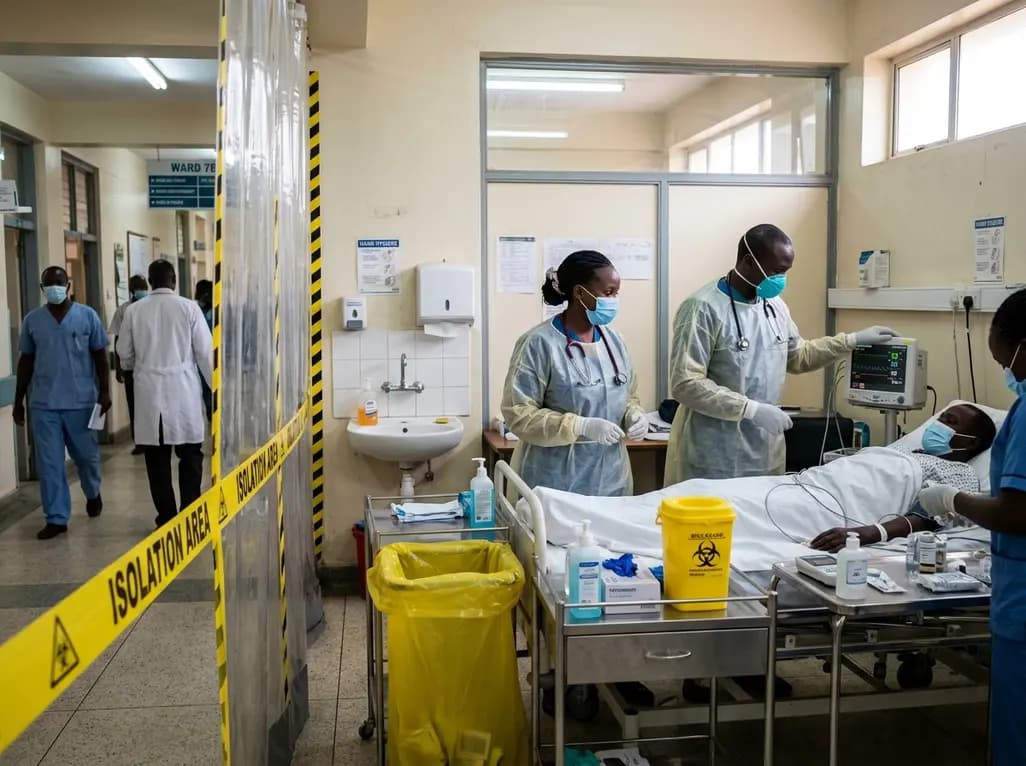
Kenya's confirmation of its eighth Ebola infection highlights the acute risk of secondary transmission in hospital environments. Clinicians must maintain high vigilance, enforce strict infection prevention protocols, and implement rapid triage mechanisms for viral hemorrhagic fevers across healthcare settings.
Today
A prospective study demonstrates that combining placental shear wave elastography with Doppler ultrasonography detects increased parenchymal stiffness and impaired perfusion in preeclampsia, offering valuable non-invasive insights for clinical risk stratification and maternal-fetal surveillance.
Today

A study reveals that the MYLK c.4079G>A, p.(Gly1360Asp) variant is linked to high-penetrance heritable thoracic aortic disease and early-onset aortic dissection, showing a founder effect in Finnish cohorts. Findings emphasize early cascade screening and vigilant surveillance.
Yesterday
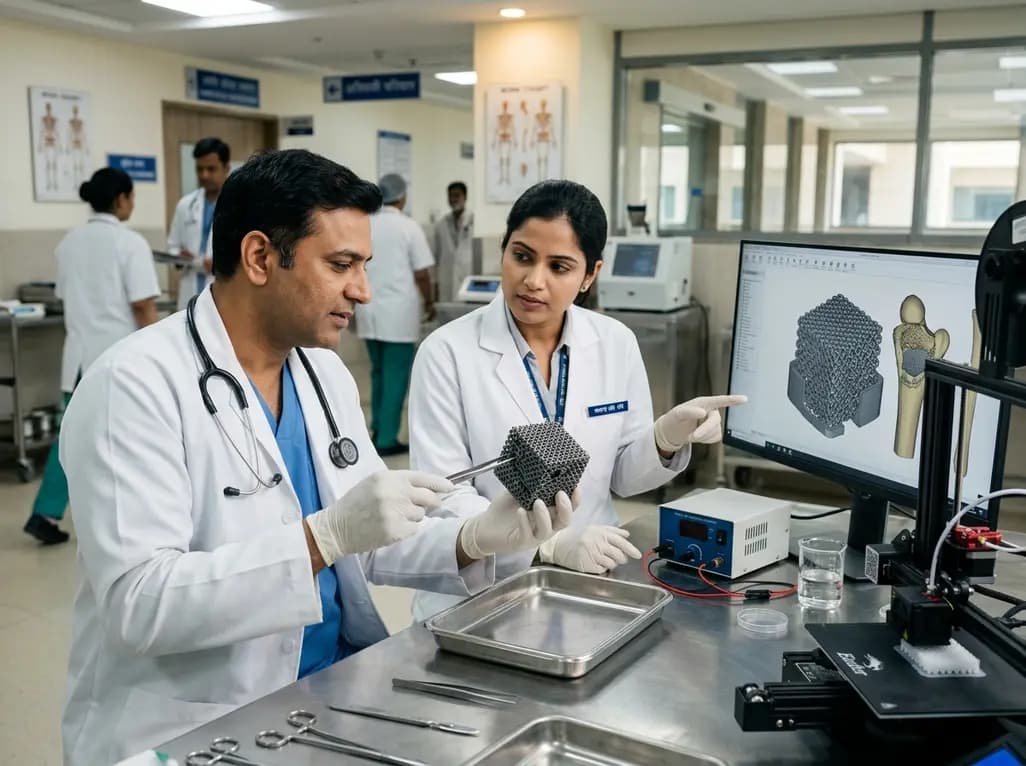
A novel sacrificial-template technique combines FDM polymer 3D printing and micro-arc oxidation to fabricate orientation-controlled porous titanium scaffolds. These bioactive constructs offer tailored stiffness, exceptional multidirectional load resistance, and robust osseointegration for bone defect repair.
Today
A novel label-free electrochemical biosensor utilizing magnetic nanocomposites enables ultrasensitive TERT C228T mutation detection (LOD: 0.67 pM) for rapid risk stratification in papillary thyroid cancer, offering promising point-of-care utility for endocrine oncology.
Today
