.webp&w=384&q=75)

Loading, please wait...
Loading, please wait...

Adolescence represents a critical developmental window marked by profound neurobiological reorganization, cognitive maturation, and heightened vulnerability to psychiatric disorders. Understanding how early cognitive performance predicts later psychopathology has long challenged clinicians and neuroscientists. Longitudinal evidence now shows that baseline cognitive profiles can forecast divergent adolescent mental health trajectories. By tracking large longitudinal cohorts, researchers have uncovered structural brain changes and molecular mechanisms that mediate these outcomes. Consequently, clinicians can better understand why some youths develop persistent externalizing behaviors while others experience remitting internalizing distress. These findings provide a biological framework for early risk stratification and targeted intervention.
During the transition from childhood to adolescence, the human brain undergoes widespread structural remodeling. Laboratory studies demonstrate that synaptic pruning and myelination sculpt cortical networks to refine executive capabilities. However, when these neurodevelopmental processes encounter disruptions, psychiatric symptoms often emerge. Prior research suggested broad links between early cognitive deficits and subsequent behavioral problems, yet findings frequently conflicted. Recent multimodal analyses from the Adolescent Brain Cognitive Development (ABCD) and IMAGEN cohorts resolve these inconsistencies. Researchers tracked thousands of participants longitudinally to delineate how executive functioning interacts with neuroanatomy over time. Importantly, they observed distinct neurodevelopmental paths distinguishing youths who develop psychiatric conditions from neurotypical controls. Clinicians must recognize that cognitive test scores do not merely reflect academic potential. Instead, they serve as sensitive barometers of ongoing cortical maturation and circuit refinement.
A central finding in recent research is the inverted U-shaped relationship between baseline executive function and subsequent symptom trajectories. Interestingly, this non-linear pattern manifests specifically in high-symptom individuals rather than the general population. In youths whose externalizing symptoms (n = 963) or internalizing problems (n = 1762) cross clinical thresholds, moderate baseline executive performance correlates with distinct symptom courses compared to extreme scores. Conversely, healthy control cohorts (n = 4291) fail to show this inverted U-shaped phenomenon. This divergence indicates that pathological trajectories engage unique neurodevelopmental dynamics. For example, individuals with moderate executive function often exhibit delayed-onset or fluctuating behavioral phenotypes. Therefore, evaluating executive function along a continuum offers nuanced prognostic value for adolescent mental health trajectories. Clinicians should avoid linear assumptions when interpreting neurocognitive assessments in symptomatic adolescents.
Structural neuroimaging reveals that specific regional volumetric changes mediate the link between baseline cognition and psychiatric trajectories. Specifically, volumetric remodeling in the left lateral occipital cortex (LOC) mediates outward-directed behaviors, such as aggression, conduct issues, and impulsivity. Meanwhile, structural changes in the right lateral occipital cortex and the inferior frontal gyrus (pars triangularis) mediate internalizing trajectories, including anxiety and depressive withdrawal. The pars triangularis plays an established role in cognitive control and emotional regulation, explaining its association with internalizing distress. The lateral occipital cortex, traditionally viewed as a visual processing hub, participates extensively in salience detection and social-emotional cue integration. Thus, atypical structural maturation in these discrete regions alters how adolescents process environmental stressors and regulate behavioral outputs.
Integrating transcriptomic and genomic datasets with neuroimaging has illuminated the molecular drivers behind these cortical alterations. Genetic analyses highlight synaptic biology pathways, emphasizing the adenylate cyclase 1 (ADCY1) gene. This gene produces an enzyme crucial for cyclic adenosine monophosphate (cAMP) signaling, synaptic plasticity, and developmental synaptic pruning. Dysregulation in ADCY1-mediated pruning pathways alters dendritic spine elimination during pubertal development. Consequently, this molecular disruption affects volume loss in the lateral occipital cortex and inferior frontal gyrus. Furthermore, ADCY1 expression levels correlate closely with both intermediate executive performance and downstream mental health outcomes. By linking genetic variation in synaptic pruning to regional cortical volume and clinical phenotypes, these findings establish a clear biological continuum from molecules to observable adolescent psychopathology.
Preadolescent cognitive assessments demonstrate remarkable prognostic precision when integrated into machine learning classifiers. Longitudinal models show that baseline cognitive measures predict late-onset externalizing problems with an area under the curve (AUC) of 0.87. Similarly, early cognitive testing identifies remitting internalizing trajectories with an AUC of 0.79. Such high classification metrics surpass conventional standalone psychological evaluations. Consequently, these objective neurocognitive metrics empower clinicians to distinguish transient emotional distress from chronic psychopathology before severe clinical deterioration occurs. Early identification allows healthcare teams to deliver targeted psychological support, cognitive remediation, and family-based interventions during plastic developmental windows. Ultimately, incorporating standardized cognitive screening into routine adolescent health evaluations could transform preventive psychiatry into an objective, data-driven discipline.
In developing healthcare landscapes such as India, adolescent psychiatric morbidity presents substantial public health and socioeconomic challenges. Academic pressures, rapid urbanization, and limited specialized mental health resources often delay the diagnosis of emerging behavioral disorders. Applying cognitive and neurodevelopmental screening tools in primary pediatric settings can bridge this diagnostic gap. Because advanced neuroimaging remains costly and inaccessible for many Indian centers, validated digital cognitive tasks offer a scalable alternative. Identifying preadolescent youths at risk for adverse adolescent mental health trajectories facilitates timely psychosocial counseling and school-based support. Furthermore, educating pediatricians and primary care physicians on neurocognitive predictors reduces stigma and promotes early consultation. Establishing standardized screening protocols across Indian schools and clinics could significantly lessen the long-term burden of chronic psychiatric illnesses.
Executive functions reflect prefrontal circuit integrity, enabling emotional regulation and impulse control. Baseline cognitive scores exhibit an inverted U-shaped relationship with subsequent psychopathology in vulnerable adolescents, predicting whether symptoms persist, remit, or emerge late in development.
Longitudinal neuroimaging identifies the left lateral occipital cortex as the primary mediator for externalizing behaviors like aggression. In contrast, volumetric alterations in the right lateral occipital cortex and the pars triangularis specifically mediate internalizing symptoms like anxiety and depression.
The ADCY1 gene regulates calcium-sensitive adenylate cyclase activity, which orchestrates cAMP signaling and synaptic pruning during puberty. Aberrant ADCY1 expression alters cortical remodeling in frontal and occipital regions, predisposing individuals to executive deficits and psychiatric symptoms.
Disclaimer: This content is for informational and educational purposes only and should not be considered as medical advice. Healthcare professionals should exercise their independent clinical judgment when diagnosing and treating patients. Refer to the latest local and national guidelines for clinical practice.
References

Read summarized clinical updates, watch expert medical content, and earn CME certifications right from your smartphone.
Open your smartphone camera to scan and install.





Groundbreaking cohort studies reveal that baseline executive function and structural maturation in the lateral occipital cortex and pars triangularis predict adolescent mental health trajectories, mediated by synaptic pruning genes like ADCY1.
4 weeks back

A bioengineered oral nanozyme microsupplement converts pathological ROS into a protective polydopamine hydrogel shield. By curbing neutrophil extracellular traps and balancing T cells, this platform outperforms standard 5-ASA in preclinical colitis models, opening new paths for sustained remission.
Today

India experiences an exponential rise in robotic-assisted procedures, with Delhi NCR leading system installations and clinical volume. Discover how multidisciplinary surgical adoption, remote telesurgery breakthroughs, and standardized international consensus guidelines are shaping surgical care nationwide.
Today
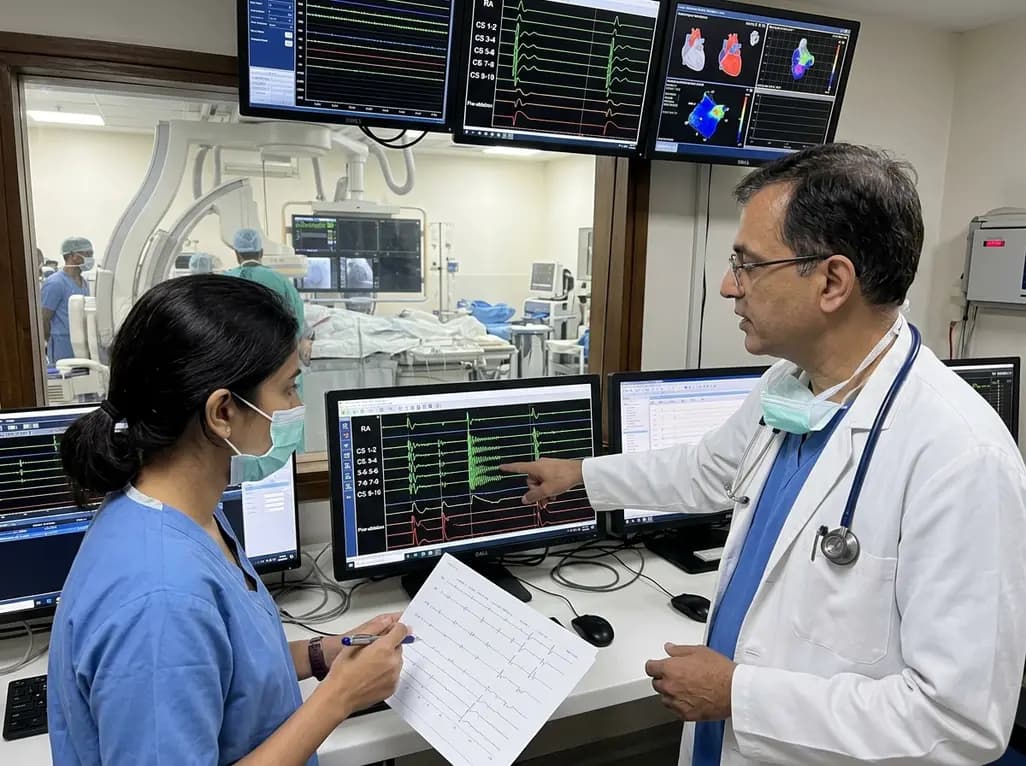
Radiofrequency catheter ablation of the cavotricuspid isthmus successfully terminates typical atrial flutter. This article reviews the mechanisms driving coronary sinus electrogram changes, wavefront activation pathways, and clinical criteria to verify bidirectional block during electrophysiology studies.
Today
A study comparing four knee flexion strength tests after ACL reconstruction using hamstring tendon autografts reveals marked variability in limb symmetry indices. Clinicians must recognize that different strength testing modalities yield divergent return-to-sport clearance rates.
Today

A breakthrough study leverages natural language processing to accurately identify incident medication-related osteonecrosis of the jaw and track antiresorptive drug holidays from clinical narratives in electronic health records, advancing osteoporosis pharmacovigilance and dental safety.
Yesterday
