

Loading, please wait...
Loading, please wait...

Orthodontic camouflage for skeletal Class III discrepancies in non-growing patients represents one of the most formidable clinical challenges in modern clinical dentistry. Clinicians routinely strive to achieve predictable mandibular arch distalization without inducing adverse reciprocal effects, such as excessive lingual tipping of the mandibular incisors or severe counterclockwise rotation of the occlusal plane. While clear aligner therapy has rapidly expanded its indications, executing full-arch mandibular distalization solely with thermoplastic appliances often lacks absolute anchorage, resulting in anchorage loss and unwanted tipping movements. To overcome these inherent biomechanical shortcomings, practitioners increasingly combine clear aligners with temporary anchorage devices. Recent biomechanical investigations reveal that incorporating buccal shelf mini-implants alongside customized clear aligners provides an effective, robust foundation for predictable camouflage therapy while minimizing common collateral tissue stresses.
Conventional clear aligner mechanics rely extensively on sequential distalization and intermaxillary Class III elastics to retract the mandibular dentition. However, conventional intermaxillary elastics exert reciprocal anterior-posterior and vertical force vectors on the maxillary dentition. Consequently, patients frequently exhibit maxillary incisor extrusion, procline excessively, or suffer unwanted forward rotation of the mandible. Furthermore, pushing lower molars posteriorly without rigid anchorage commonly produces tipping rather than true bodily translation. When teeth tip distally instead of translating through alveolar bone, clinicians observe rapid relapse, unstable intercuspation, and localized periodontal ligament compression. Additionally, clear aligners tend to deform slightly under heavy elastic traction, altering the programmed vector of force delivery. Therefore, achieving absolute anchorage independent of the dental arch remains essential. Placing bone screws into extra-alveolar cortical bone bypasses the reciprocal strain on opposing arches entirely. This approach permits unobstructed full-arch distalization along the mandibular basal bone while preventing unwanted anterior extrusion.
The mandibular buccal shelf presents an optimal anatomical site for extra-alveolar miniscrew placement due to its dense cortical bone thickness and lateral location relative to molar roots. Because the screws sit buccally adjacent to the mandibular first and second molars, they do not interfere with the distal trajectory of dental roots during en masse tooth retraction. Integrating buccal shelf mini-implants directly into clear aligner mechanics enables clinicians to apply direct extra-alveolar traction to precision cuts, button attachments, or power arms on the aligner. As a result, the mandibular arch receives a directed, stable vector of force that facilitates pure posterior translation. Furthermore, extra-alveolar anchorage drastically reduces dependence on intermaxillary elastics, eliminating patient compliance issues and avoiding reciprocal maxillary anterior protrusion. This direct biomechanical pathway transforms complex Class III camouflage into an engineered, highly controlled movement protocol, significantly reducing unexpected aligner disengagement and posterior open bites.
To precisely quantify tooth displacement and stress distribution, finite element analysis offers invaluable predictive insights into clinical biomechanics. Recent three-dimensional computational research evaluated four distinct loading protocols for mandibular distalization using clear aligners. Group A served as an unassisted control without skeletal anchorage, whereas Groups B, C, and D evaluated bilateral buccal shelf skeletal anchorage with elastic traction vectors inclined at 10°, 20°, and 30° relative to the occlusal plane, respectively. The computational data demonstrated that adding skeletal anchorage dramatically elevated the distalization efficiency of mandibular molars. Specifically, distalization efficiency surged from a meager 42.9% in the aligner-only group to 72.4% at a 10° traction angle. Most remarkably, efficiency peaked at 84.6% when elastics operated at a 20° traction inclination before marginally tapering to 83.6% under a 30° traction inclination. This computational breakthrough proves that skeletal anchorage fundamentally redefines the efficacy of clear aligner distalization.
Beyond distal displacement percentage, the quality of tooth movement determines long-term orthodontic stability and periodontal longevity. In the finite element analysis, Group C (20° traction inclination) generated the greatest magnitude of mandibular first molar distalization at 0.55 mm. More importantly, this specific angle produced the lowest degree of undesirable crown-tipping inclination across the dental arch. Mandibular incisor tipping was successfully restricted to just 3.4°, while molar tipping was limited to a minimal 1.7°. These minimal angular shifts confirm predominant bodily translation through the alveolar housing rather than uncontrolled coronal tipping. In contrast, steeper traction inclinations (such as 30°) or flatter trajectories (10°) introduced unfavorable vertical force components that elevated tipping moments. Additionally, the 20° vector produced minimal occlusal plane distortion, registering only 2.9° anterior rotation and -0.5° posterior rotation. Consequently, aligning traction near 20° provides an ideal balance between horizontal retraction forces and vertical intrusive control.
Applying heavy or poorly angled orthodontic forces can elevate local stress levels within the periodontal ligament and surrounding cortical plates, potentially increasing the risk of root resorption or miniscrew failure. Fortunately, computational stress evaluations demonstrate that incorporating skeletal anchorage with aligners maintains biomechanical safety across all configurations. Although the steeper 30° traction model demonstrated slightly increased von Mises stress on the skeletal screw (reaching 7.2 MPa) and a peak periodontal ligament stress of 0.095 MPa, these values remained well within physiological thresholds. Across all examined traction angulations, stress patterns within the alveolar bone and periodontal ligament remained uniform and safe. Furthermore, the uniform force distribution provided by full-coverage aligners effectively dissipates localized stress concentrations. By buffering intense orthodontic forces evenly across the entire arch, aligners combined with extra-alveolar miniscrews safeguard periodontal structures while maintaining sufficient mechanical force to distalize dense mandibular molars.
For dental clinicians and orthodontic specialists treating borderline skeletal Class III discrepancies, adopting extra-alveolar skeletal anchorage transforms aligner predictability. In demographic populations where bimaxillary protrusion or mandibular prognathism frequently presents with thin symphyseal cortical plates, avoiding incisor tipping is clinically paramount. Practitioners should evaluate cone-beam computed tomography scans meticulously before placement to identify the thickest cortical bone of the buccal shelf, typically opposite the distobuccal root of the lower second molar. When designing aligner staging, specialists should construct traction hooks or precision cuts oriented to deliver elastic traction vectors approximately 20° relative to the functional occlusal plane. Moreover, closely monitoring patient compliance, soft tissue clearance around the screw heads, and aligner tracking every four to six weeks ensures that planned distalization translates smoothly into clinical success without adverse tissue impingement.
Why are buccal shelf miniscrews preferred over interdental miniscrews for Class III correction?
Buccal shelf miniscrews are positioned outside the dental roots in dense mandibular cortical bone. Interdental screws frequently obstruct the planned pathway of tooth roots during extensive posterior movements. By utilizing extra-alveolar bone, clinicians achieve complete, unobstructed mandibular arch distalization without having to reposition screws during active therapy.
How does elastic traction inclination influence clear aligner distalization outcomes?
The angle of traction governs the balance between horizontal translation and vertical intrusion forces. A 20-degree inclination directs the resultant vector closely through the dentition's center of resistance. This geometric relationship minimizes uncontrolled crown tipping and occlusal plane rotation, delivering superior bodily movement compared to flatter or steeper vectors.
Does combining clear aligners with mini-implants increase periodontal ligament stress dangerously?
No, finite element analyses show that periodontal ligament stresses remain well within physiological limits. Although steeper angles slightly elevate von Mises stress, the uniform adaptation of full-coverage thermoplastic aligners efficiently dissipates mechanical forces across multiple teeth, protecting individual roots and surrounding alveolar bone from localized trauma.
Disclaimer: This content is for informational and educational purposes only and does not constitute medical advice or replace professional medical judgment. Always seek the advice of a qualified healthcare provider with any questions you may have regarding a medical condition or treatment. Refer to the latest local and national guidelines for clinical practice.
References
1. Hasan LA et al. Treatment of Class III malocclusion with clear aligners and buccal shelf mini-implants: A finite element study. J World Fed Orthod. 2026 Nov 24. doi: undefined. PMID: 43078765.
2. Chang CH, Lin JS, Roberts WE. Failure rates for 2694 extra-alveolar temporary anchorage devices in orthodontic patients. Int J Orthod Implantol. 2019;55:14-26.
3. Elshebiny T, Palomo JM, Baumgaertel S. Anatomic assessment of the mandibular buccal shelf for miniscrew insertion in white patients. Am J Orthod Dentofacial Orthop. 2018;153(4):505-511.
4. Kang F, Xu Y, Zhao X, Lu Z, Li D, Zhao J, Li Y, Li M, Qi K. Distalization of the mandibular first molar with clear aligners: a 3D finite element study. Front Bioeng Biotechnol. 2025;13:1665588.

Read summarized clinical updates, watch expert medical content, and earn CME certifications right from your smartphone.
Open your smartphone camera to scan and install.





A finite element study reveals that combining clear aligners with buccal shelf mini-implants significantly enhances mandibular molar distalization for Class III malocclusion camouflage. Discover how a 20-degree traction angle optimizes bodily tooth movement while preserving occlusal plane stability.
Today
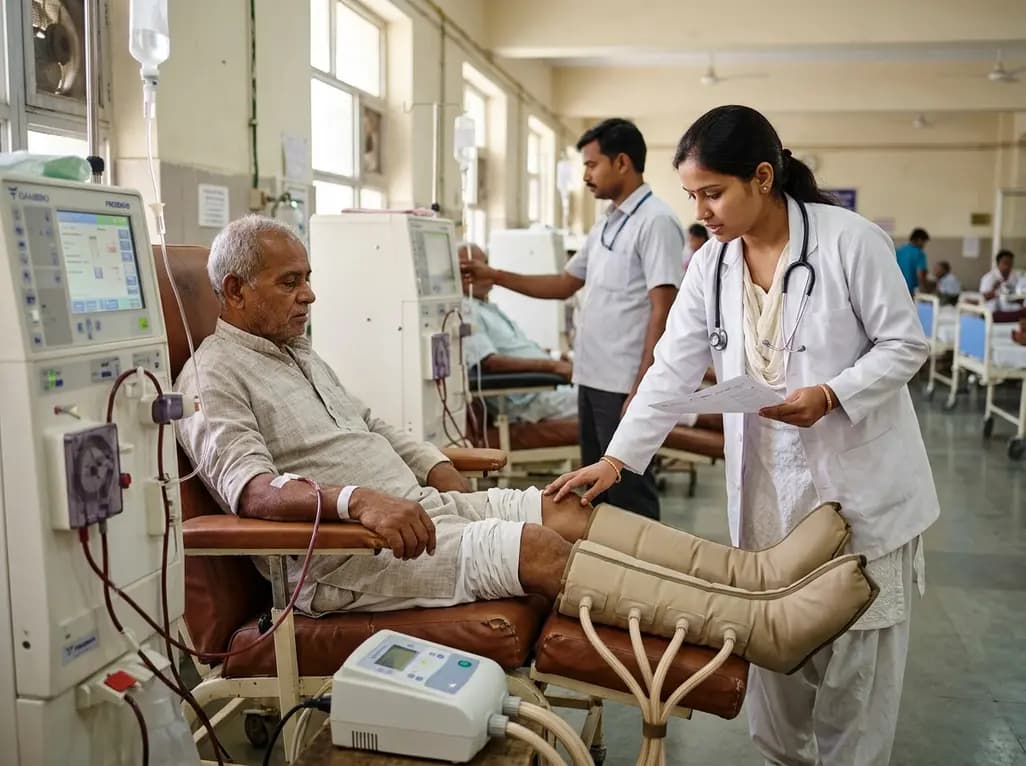
A pilot randomized trial demonstrates that applying intermittent pneumatic compression during hemodialysis sessions significantly enhances 6-minute walking capacity and improves specific quality of life domains, offering a non-invasive supportive therapy for end-stage kidney disease patients.
Today

A matched cross-sectional study shows prior COVID-19 infection significantly increases maternal sleep disturbances, shortens sleep duration, and elevates psychological symptoms in pregnant women compared to uninfected peers, underscoring the urgent need for structured antenatal screening and support.
Today

A cross-sectional study of 948 police officers reveals an active-but-sedentary pattern. While 84.4% met WHO activity guidelines, 31.9% sat for ≥6 hours daily. Operational roles had lower sedentary odds, whereas desk assignments heightened sitting risks, emphasizing role-specific occupational health interventions.
Today
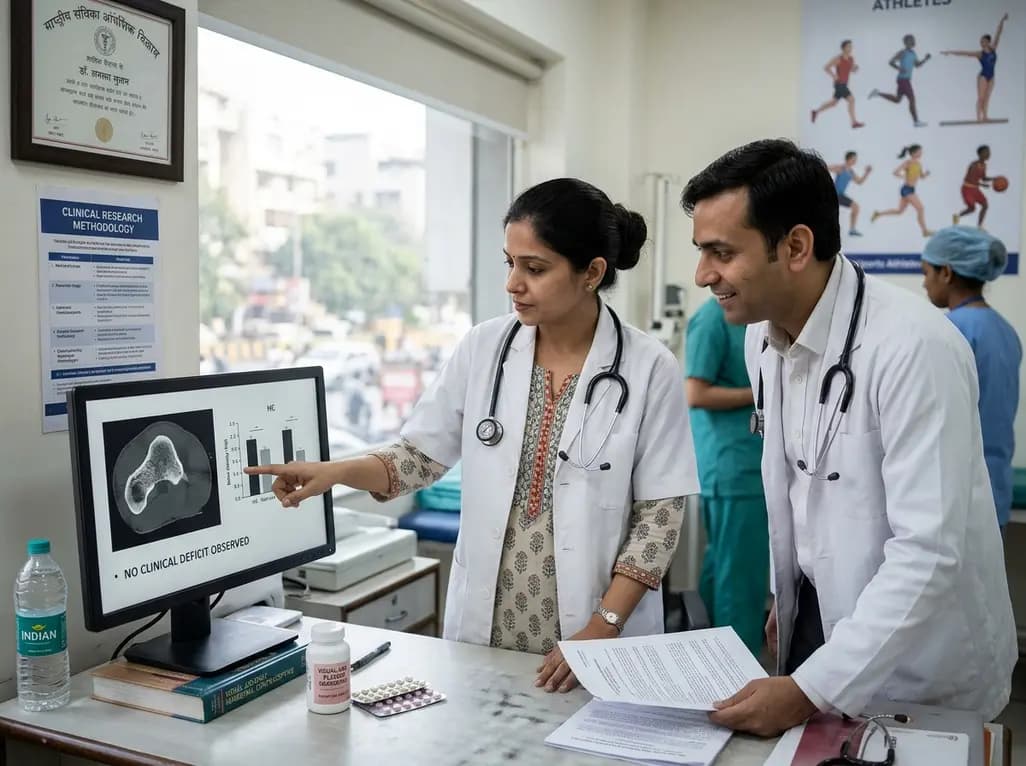
A recent Canadian study evaluates the relationship between hormonal contraceptive use, sport discipline, and volumetric bone density in elite female athletes. Using HR-pQCT, researchers found no clinically meaningful deficits, offering reassuring evidence for sports medicine and gynecology clinicians.
Today

A real-world panel study reveals that an automated diet management app significantly improves BMI, blood pressure, and lipid profiles in employees. Frequent meal self-monitoring yielded distinct sex- and age-specific cardiometabolic benefits, highlighting the clinical potential of digital lifestyle interventions.
Today
