

Loading, please wait...
Loading, please wait...

Major depressive disorder represents a pervasive psychiatric condition that impairs emotional regulation and intellectual capability. Importantly, cognitive impairment in MDD affects up to 40% of young patients, creating substantial obstacles in school and daily socialization. Clinicians frequently encounter adolescents who struggle with reduced processing speed, impaired working memory, and diminished executive control. However, the precise neuropathological mechanisms driving these neurocognitive deficits remain largely elusive. Advanced proton magnetic resonance spectroscopy provides an exceptional non-invasive method to examine in vivo neurometabolic balance. By quantifying cellular membrane turnover and energy storage, researchers can clarify biological signatures underlying mood disorders.
To understand cognitive impairment in MDD, investigators recruited 105 right-handed, psychotropic-naive youth diagnosed with major depression and 68 demographically matched healthy controls. The researchers administered the MATRICS Consensus Cognitive Battery to quantify neurocognitive function across multiple validated domains. Based on performance thresholds, the team identified 39 patients with cognitive impairment, defined by scores 1.5 standard deviations below normative averages in two or more domains. Meanwhile, 67 participants demonstrated preserved intellectual functioning and formed the non-impaired cohort. Subsequently, all subjects underwent single-voxel proton magnetic resonance spectroscopy. Spectroscopists focused acquisition on two primary cerebral regions: the anterior cingulate gyrus and the putamen. These neural nodes actively govern emotional appraisal, attentional control, and executive functioning. Therefore, metabolic evaluations within these coordinates yield critical insights into localized cellular integrity. The investigators specifically evaluated choline-to-creatine ratios to monitor cellular membrane dynamics and energetic stability. Consequently, this study design enabled robust metabolic comparisons between cognitively compromised patients, cognitively intact patients, and healthy individuals.
The spectroscopic analyses demonstrated pronounced regional neurometabolic discrepancies among the diagnostic cohorts. Most notably, youth in the cognitively impaired group exhibited significantly higher choline-to-creatine ratios in the right anterior cingulate gyrus than non-impaired patients and healthy controls. Choline signals on magnetic resonance spectroscopy primarily reflect cellular membrane turnover, including levels of phosphocholine and glycerophosphocholine. Thus, elevated choline concentrations indicate accelerated cell membrane breakdown, altered phospholipid synthesis, or localized neuroinflammation. In contrast, total creatine serves as an internal reference standard representing cellular energy reserves. Consequently, an elevated choline-to-creatine ratio signals severe metabolic stress within the anterior cingulate cortex. This cortical region coordinates complex executive functions, including conflict resolution and error detection. Therefore, neurochemical disturbance within this hub impairs higher-order cognitive processing. Furthermore, right-hemispheric localization highlights asymmetrical vulnerability during youth brain development. Because untreated adolescent brains undergo extensive synaptic pruning, excessive membrane turnover may reflect aberrant neurodevelopmental remodeling. These objective metabolic alterations substantiate the biological basis of executive deficits in depressed youth.
Beyond cortical abnormalities, the researchers detected widespread metabolic disturbances within subcortical basal ganglia structures. Specifically, both cognitively impaired and non-impaired depressed cohorts demonstrated significantly higher choline-to-creatine ratios in the left putamen compared to healthy controls. This shared elevation suggests that putamen dysfunction represents a fundamental neurobiological characteristic of depression regardless of cognitive status. The putamen regulates motor coordination, reward anticipation, and frontostriatal loop communication. Consequently, striatal neurochemical disturbances may generate psychomotor slowing and pervasive motivational deficits. Furthermore, the clinical investigators identified a significant positive correlation between depressive episode frequency and left putamen choline ratios within the cognitively impaired group. Each recurring depressive episode appears to inflict cumulative metabolic stress upon striatal tissues. Persistent membrane phospholipid remodeling or progressive microglial activation likely accompanies repeated depressive episodes. Therefore, these findings underscore the urgent clinical need to achieve sustained remission quickly. Preventing disease recurrence protects subcortical structures from progressive neurobiological insult during formative developmental periods.
Examining the association between neurometabolic ratios and clinical cognition clarifies depressive pathophysiology. The anterior cingulate gyrus maintains dense reciprocal connections with the dorsolateral prefrontal cortex, parietal regions, and striatum. Consequently, neurochemical disruption within the anterior cingulate propagates across distributed executive networks. Elevated choline turnover indicates unstable cellular membranes and reactive gliosis. In addition, localized neuroinflammation suppresses brain-derived neurotrophic factor and impairs synaptic plasticity. These cellular deficits hinder the dynamic neural synchronization required for complex mental flexibility. Meanwhile, concomitant striatal abnormalities within the left putamen impair frontostriatal communication. This striatal impairment diminishes sustained mental effort, working memory capacity, and processing speed. As a result, affected youth exhibit broad cognitive deficits across academic and everyday tasks. Moreover, identifying these underlying metabolic mechanisms challenges the traditional belief that depression represents solely a psychological disorder. Instead, objective neurochemical alterations actively drive subjective cognitive complaints. Understanding these pathways provides reassurance to patients while guiding clinician focus toward neuroprotective interventions.
These spectroscopic discoveries offer meaningful practical implications for modern psychiatric care. Currently, routine psychiatric consultations focus almost exclusively on emotional complaints, often ignoring cognitive dimensions. However, residual cognitive impairment frequently prevents full academic and occupational reintegration even after affective recovery. Therefore, clinicians must routinely implement objective neurocognitive batteries when evaluating depressed youth. Furthermore, magnetic resonance spectroscopy may eventually serve as a stratified biomarker to detect patients at high risk for persistent executive dysfunction. Because episode frequency exacerbates putamen metabolic strain, aggressive prevention of depressive recurrence remains vital. In addition to standard pharmacotherapy, clinicians should explore interventions that modulate brain metabolic status. For instance, repetitive transcranial magnetic stimulation directly targets fronto-cingulate networks. Similarly, evidence-based cognitive remediation therapy strengthens disrupted neural circuits. In the future, adjunctive neuroprotective or anti-inflammatory compounds might also reduce membrane stress. By embracing these multifaceted strategies, clinicians can protect neurocognitive function and foster long-term functional recovery.
An elevated choline-to-creatine ratio typically indicates accelerated cellular membrane turnover, altered lipid metabolism, or localized glial proliferation. Because creatine remains relatively stable as an energetic reference marker, rising choline ratios highlight localized neurochemical stress, neuroinflammation, or heightened membrane degradation within specific cerebral regions such as the anterior cingulate cortex.
Major depressive disorder impairs youth cognition by disrupting prefrontal and striatal networks responsible for executive control, working memory, and attention. Metabolic stress in the anterior cingulate gyrus diminishes functional connectivity across distributed cortical circuits. Consequently, affected young patients experience reduced mental processing speed, academic underachievement, and difficulties with sustained focus.
Early intervention is vital because recurrent depressive episodes cause cumulative neurobiological damage. Each mood recurrence positively correlates with elevated putamen choline-to-creatine ratios, indicating progressive striatal stress. Prompt, sustained treatment helps prevent recurrent depressive episodes, thereby preserving frontostriatal circuitry, supporting neurodevelopmental maturation, and protecting vulnerable adolescent brains from lasting cognitive decline.
Disclaimer: This content is for informational and educational purposes only and should not be considered as medical advice or used for diagnostic or treatment purposes. Make clinical decisions based on each patient's individual presentation and medical history. Consult a qualified healthcare provider for specific medical guidance. Refer to the latest local and national guidelines for clinical practice.
References
Luo S et al. The abnormal choline to creatine ratio of the right anterior cingulate gyrus is linked to cognitive impairment in youth with major depressive disorder. J Affect Disord. 2025 Jul 15. doi: 10.1016/j.jad.2025.03.161. PMID: 40157512.
MacMaster FP et al. Anterior cingulate cortex choline levels in female adolescents with unipolar versus bipolar depression: a potential new tool for diagnosis. J Affect Disord. 2014;168:323-329.
Henigsberg N et al. Lower Choline-Containing Metabolites/Creatine (Cr) Rise and Failure to Sustain NAA/Cr Levels in the Dorsolateral Prefrontal Cortex Are Associated with Depressive Episode Recurrence under Maintenance Therapy: A Proton Magnetic Resonance Spectroscopy Retrospective Cohort Study. Front Psychiatry. 2017;8:277.

Read summarized clinical updates, watch expert medical content, and earn CME certifications right from your smartphone.
Open your smartphone camera to scan and install.





A new neuroimaging study reveals that elevated choline-to-creatine ratios in the right anterior cingulate gyrus correlate directly with cognitive impairment in youth suffering from major depressive disorder, highlighting crucial metabolic biomarkers.
Today

A 2026 cohort study in Turku University Hospital reveals that specialist palliative care for end-stage liver disease dramatically reduces emergency department visits in the final month of life (48.8% vs 74.1%) and prevents deaths in acute tertiary wards, supporting early integration in decompensated cirrhosis.
Today

A recent survey reveals significant gaps in antenatal providers' adherence to pregnancy oral health guidelines despite positive attitudes. Integrating regular oral screenings, clinician education, and interprofessional dental referrals during prenatal care is crucial to prevent adverse pregnancy outcomes.
Today

A cross-sectional study in Bangladesh demonstrates that an explainable stacking ensemble machine learning model achieves 98.37% accuracy in cardiovascular disease detection. Using local clinical and behavioral data, the model highlights cholesterol, rhythm abnormalities, and blood pressure as leading predictors.
Today

Laser-based powder bed fusion of Ti6Al4V enables custom orthopedic implants. Recent research reveals that heat treatment modulates ductility and wettability, while surface powder morphology drives mesenchymal cell attachment, highlighting crucial design factors for long-term osseointegration.
Today
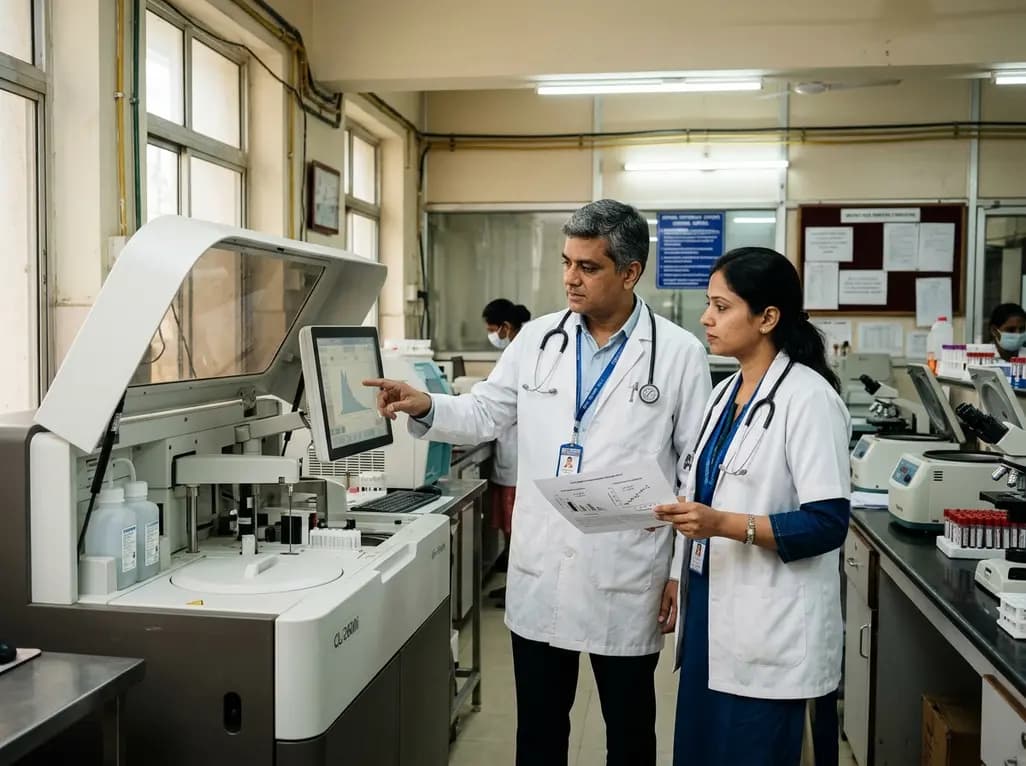
A multicenter study evaluated the CL-2600i immunochemistry analyzer across 640 serum samples, testing endocrinology, infectious disease serology, sepsis markers, and fertility panels. The system demonstrated high analytical trueness, repeatable results with CVs under 5%, and strong correlation with routine platforms.
Today
