.webp&w=384&q=75)

Loading, please wait...
Loading, please wait...
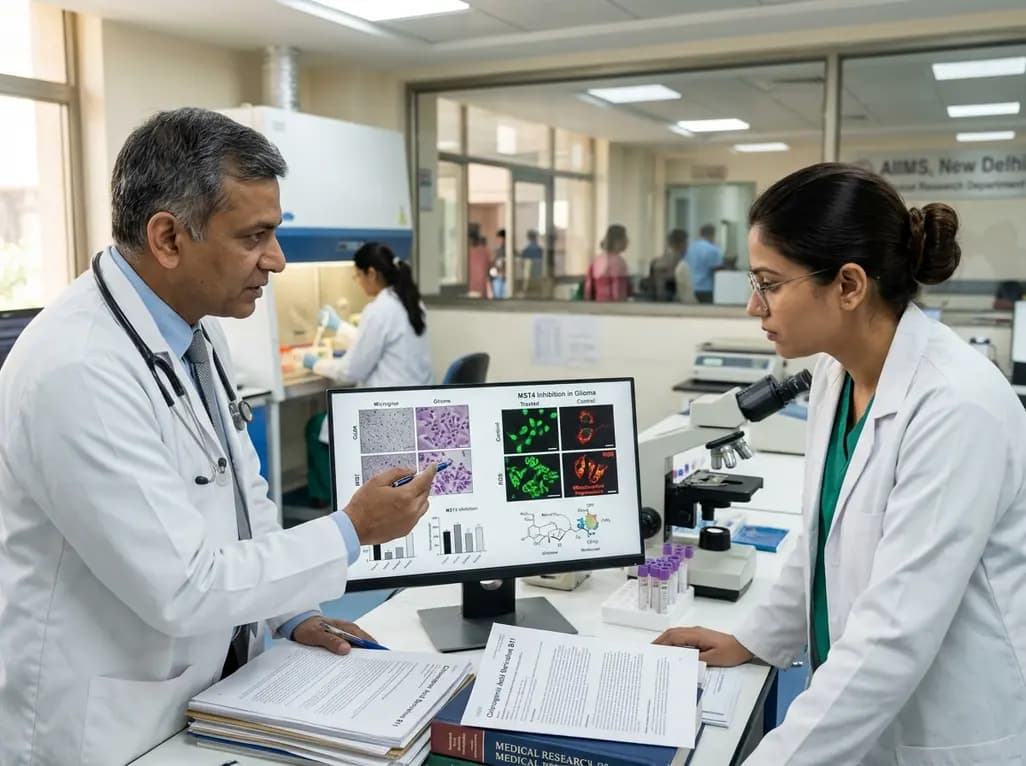
Malignant gliomas represent one of the most lethal central nervous system neoplasms worldwide. Despite aggressive multimodal management consisting of maximal surgical resection, radiotherapy, and temozolomide chemotherapy, tumor recurrence remains virtually inevitable. Neuro-oncologists frequently encounter formidable hurdles such as diffuse parenchymal infiltration, blood-brain barrier impermeability, and intrinsic therapy resistance. Consequently, researchers have evaluated diverse natural phytocompounds for alternative antineoplastic mechanisms. Natural polyphenols, especially chlorogenic acid, display notable biological activities across varied tumor types. However, native chlorogenic acid exhibits significant pharmacokinetic limitations that hinder clinical translation. These shortcomings include poor oral bioavailability, rapid metabolic clearance, promiscuous off-target bindings, and modest tumoricidal potency. To circumvent these translational obstacles, medicinal chemists designed chlorogenic acid derivative B11 through rational structural modification. This novel analog exhibits improved pharmacodynamic properties and higher specificity against aggressive glial cell lines. Therefore, evaluating this engineered derivative offers compelling insights into precision oncology strategies for refractory cerebral malignancies.
Structural modification converted native chlorogenic acid into an optimized small-molecule candidate with superior antitumor potency. Investigators evaluated the cellular cytotoxicity of chlorogenic acid derivative B11 across standard human glioma lines, specifically U118MG and LN229. Standard CCK-8 proliferation assays demonstrated that B11 achieves an inhibitory concentration significantly lower than unmodified chlorogenic acid. Furthermore, longitudinal growth curves and colony formation assays confirmed that B11 strongly suppresses clonogenic survival. The synthetic modification enhances molecular interactions within neoplastic cells while maintaining structural stability. Additionally, cell cycle analysis demonstrated pronounced proliferative arrest following compound exposure. Because wild-type chlorogenic acid requires prohibitive micromolar concentrations to elicit modest cell cycle changes, B11 represents an essential therapeutic leap. As a result, chemical derivatization addresses the fundamental pharmacokinetic liabilities of natural polyphenol scaffolds. These findings confirm that targeted synthetic refinement generates potent bioactive agents capable of arresting aggressive astrocytic tumor expansion.
Identifying specific intracellular binding partners is vital for rational drug development. Through kinase activity assays, surface plasmon resonance, and isothermal titration calorimetry, researchers demonstrated that B11 binds directly to mammalian sterile 20-like kinase 4. Moreover, computerized molecular docking confirmed that the compound docks stably into the catalytic pocket of MST4. This kinase acts as an established oncogenic driver that accelerates glioblastoma survival, cellular migration, and invasion. By establishing direct physical binding, B11 inhibits downstream kinase phosphorylation cascades in glioma cells. Subsequent RNA-sequencing alongside Gene Ontology and KEGG pathway enrichment analyses corroborated these findings. Consequently, MST4 interference shifted tumor transcription profiles away from oncogenic maintenance toward cellular stress cascades. Thus, B11 acts not as a nonspecific cytotoxic agent, but as a defined molecular antagonist of MST4. This mechanistic validation highlights the significance of targeting aberrant serine/threonine kinases in cerebral neoplasms.
Targeting MST4 triggers a catastrophic redox imbalance within malignant glioma cells. Transcriptomic profiling and biochemical assays revealed marked perturbations in oxidative stress regulatory networks. Specifically, B11 exposure substantially alters mitochondrial ultrastructure and disrupts inner membrane integrity. Treated cells show reduced levels of optic atrophy 1 and superoxide dismutase 1. Simultaneously, cytoplasmic release of cytochrome C increases markedly, indicating classical intrinsic apoptotic pathway activation. Furthermore, B11 suppresses nuclear factor erythroid 2-related factor 2 expression, which weakens the endogenous antioxidant defense system of the tumor. As a direct result, intracellular reactive oxygen species surge to cytotoxic thresholds. This oxidative storm damages structural macromolecules, promotes DNA double-strand breaks, and initiates irreversible cell death. Therefore, B11 exploits the intrinsic oxidative vulnerability of malignant glioma through targeted redox manipulation.
Translating in vitro antineoplastic findings into animal models represents an essential preclinical milestone. In xenograft tumorigenesis models, systemic administration of B11 produced dramatic reductions in tumor volume and weight. Immunohistochemical analyses of excised tumors validated the mechanism observed in vitro, demonstrating suppressed MST4 and Nrf2 expression. Importantly, treated animals maintained stable overall body weights throughout the intervention period. The treated cohorts exhibited no observable behavioral abnormalities, hepatic injury, or acute organ toxicities. Consequently, B11 demonstrates a high therapeutic index in vivo. Natural product derivatives frequently encounter toxicity hurdles during synthetic functionalization, yet B11 preserves a favorable safety margin. These animal data suggest that pharmacological MST4 inhibition effectively arrests intracranial tumor proliferation without exerting systemic harm. Accordingly, B11 emerges as an attractive candidate for further pharmacokinetic and pharmacodynamic optimization.
Current neuro-oncology treatment paradigms urgently demand novel therapeutic agents with non-overlapping mechanisms of action. Although standard alkylating agents target genomic DNA, glioblastoma clones frequently upregulate repair enzymes such as MGMT. Conversely, small molecules like B11 engage distinct signaling vulnerabilities through MST4 inhibition and ROS induction. In the future, neuro-oncologists might combine such kinase-directed antioxidants with conventional radiotherapy and chemotherapy. Furthermore, surgeons and neuro-oncologists require compounds that penetrate the blood-brain barrier effectively to eradicate infiltrative margins. Although early xenograft results remain encouraging, future studies must elucidate pharmacokinetic distribution within human neural tissues. Additionally, comprehensive toxicological assessments in higher mammals are necessary before initiating phase 1 clinical trials. Nevertheless, the discovery of B11 demonstrates how chemical re-engineering of traditional phytocompounds can yield targeted therapies against deadly intracranial cancers.
Standard chlorogenic acid suffers from low systemic bioavailability, rapid metabolism, and non-specific cellular actions. In contrast, researchers created B11 through rational structural modification to enhance molecular binding affinity. Consequently, B11 achieves significantly lower half-maximal inhibitory concentrations against glioma cells, suppresses MST4 kinase specifically, and demonstrates superior stability in experimental models without producing overt host toxicity.
MST4 kinase promotes glioblastoma proliferation, cellular invasiveness, and adaptive survival under environmental stress. When B11 selectively binds and inhibits MST4, it downregulates critical antioxidant defenses, including Nrf2 and superoxide dismutase 1. Consequently, intracellular reactive oxygen species surge, causing profound mitochondrial disruption, cytochrome C release, and the irreversible execution of apoptotic cell death.
Although preclinical murine models confirm robust efficacy, several developmental hurdles remain. Investigators must systematically evaluate the ability of B11 to cross the human blood-brain barrier in therapeutic concentrations. Additionally, researchers must characterize comprehensive pharmacokinetics, establish dose-limiting toxicities in large animals, and assess potential synergy with standard temozolomide chemoradiotherapy protocols in human subjects.
Disclaimer: This content is for informational and educational purposes only... Refer to the latest local and national guidelines for clinical practice.
References

Read summarized clinical updates, watch expert medical content, and earn CME certifications right from your smartphone.
Open your smartphone camera to scan and install.





Preclinical data demonstrate that chlorogenic acid derivative B11 suppresses glioma proliferation by selectively inhibiting MST4 kinase. This intervention alters mitochondrial architecture, elevates reactive oxygen species, and impairs tumor growth without causing systemic toxicity.
Today

A comprehensive integrative multi-omic study combines NHANES epidemiology, Mendelian Randomization, and transcriptomic analysis to uncover complex causal associations, metabolic pathways, and novel machine learning diagnostic biomarkers linking gastric cancer and diabetes.
Today

India's national digital health service achieved a historic milestone of fifty crore virtual consultations. Notably, female patients account for over fifty-seven percent of utilisation, demonstrating improved healthcare accessibility for remote communities, chronic disease management, and primary triage.
Today

The phase II DAPA-AIC trial demonstrates that dapagliflozin 10 mg daily significantly preserves left ventricular ejection fraction compared to placebo over four months in adults undergoing anthracycline chemotherapy, highlighting a potential preventive strategy in cardio-oncology.
Today
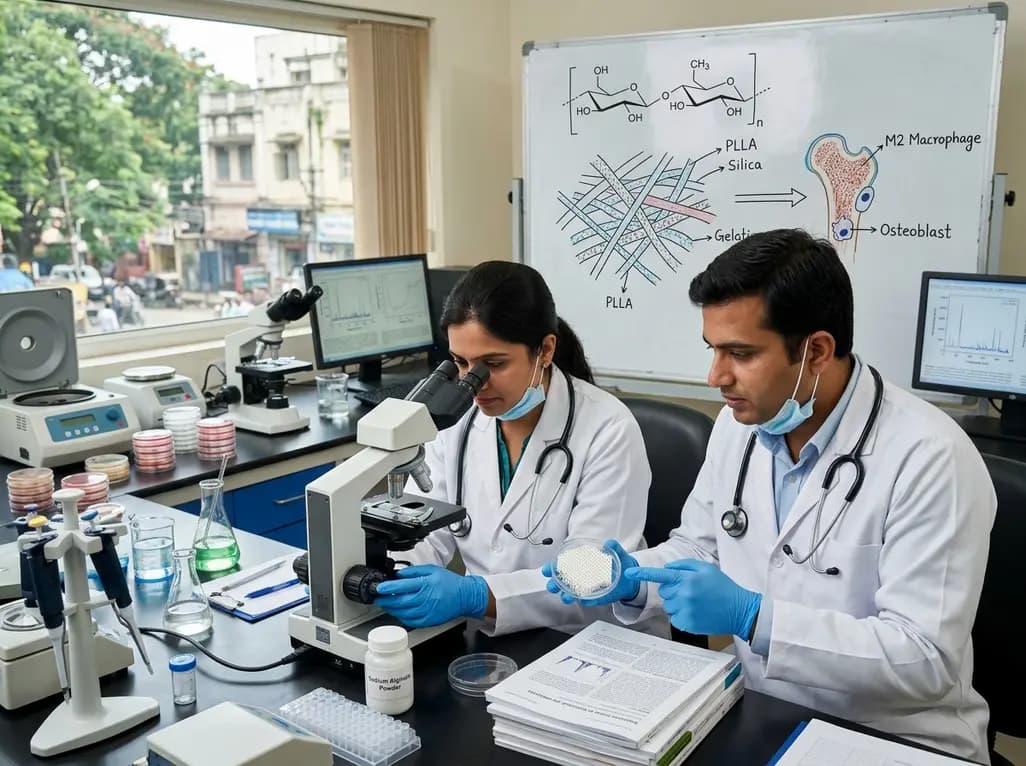
Dual-nanofiber interpenetrating network scaffolds combining silica and PLLA/gelatin nanofibers with sodium alginate achieve complementary mechanical stability, immunomodulatory M2 macrophage polarization, and enhanced osteogenesis for advanced bone repair.
Today
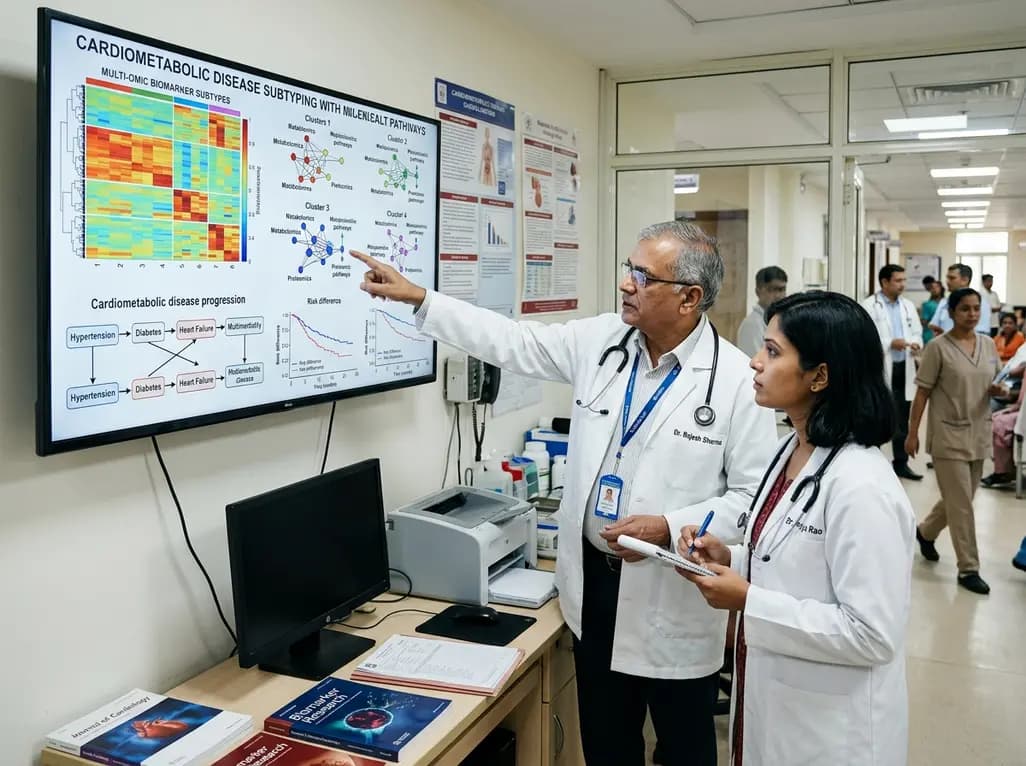
A large UK Biobank study identified four routine biomarker subtypes that predict cardiometabolic disease progression to multimorbidity. Integrating multi-state modelling, metabolomics, and proteomics revealed distinct biological pathways, offering new avenues for tailored clinical risk stratification.
Today
