.webp&w=384&q=75)

Loading, please wait...
Loading, please wait...

Treating patients with newly diagnosed glioblastoma remains one of the most formidable challenges in modern clinical oncology. For two decades, the standard protocol has relied primarily on maximal surgical resection followed by concurrent chemoradiotherapy and maintenance temozolomide. However, virtually all tumors recur, leading to poor long-term outcomes and limited median overall survival. Immune checkpoint inhibitors have revolutionized systemic cancer care in melanoma and non-small cell lung cancer. In contrast, checkpoint monotherapies have repeatedly failed to demonstrate survival benefits in high-grade gliomas. This clinical failure stems largely from the profoundly immunosuppressive intracranial microenvironment and low baseline T-cell infiltration. Therefore, neuro-oncologists must explore novel upfront combinations that convert immunologically cold brain lesions into active inflammatory targets. The phase 1b clinical trial investigated an innovative multimodal approach combining surgery, gene-mediated cytotoxic immunotherapy, standard chemoradiation, and adjuvant programmed death-1 blockade. Specifically, investigators evaluated the safety and biological activity of CAN-2409, also known as aglatimagene besadenovec, delivered directly at the time of primary surgery. Furthermore, the trial assessed subsequent immune activation after adjuvant nivolumab administration. Consequently, these findings offer critical mechanistic insights into how clinicians can overcome local immune evasion and prime systemic antitumor immunity in newly diagnosed glioblastoma.
The multi-institutional, open-label trial enrolled forty-one adult patients presenting with suspected high-grade glioma on preoperative neuroimaging. Before resection, surgeons secured informed consent and prepared the delivery protocol. Crucially, neuropathologists confirmed high-grade glioma on intraoperative frozen sections before neurosurgeons injected CAN-2409 directly into the tumor resection cavity. CAN-2409 uses a replication-defective adenoviral vector encoding the herpes simplex virus thymidine kinase gene. Following neurosurgical closure, patients received oral valacyclovir prodrug therapy. The viral enzyme metabolizes valacyclovir into toxic nucleotide analogs, directly destroying residual glioma cells and creating an in situ vaccine effect. Subsequently, all participants commenced standard-of-care chemoradiotherapy comprising external beam radiation and concurrent daily temozolomide. Additionally, the protocol incorporated adjuvant nivolumab, initiating systemic anti-PD-1 therapy to sustain tumor-infiltrating lymphocyte activity. Notably, thirty-five patients completed the planned multimodal schedule across participating academic medical centers. Throughout the therapeutic window, clinicians monitored safety profiles, surgical wound healing, and dose-limiting toxicities. In addition, the investigative team tracked systemic blood counts, metabolic panels, and potential autoimmune phenomena. Overall, the multimodal regimen demonstrated acceptable tolerability without excessive neurological morbidity or unexpected synergistic safety signals.
The clinical trial yielded valuable insights into survival patterns and critical prognostic biomarkers. Historically, O6-methylguanine-DNA methyltransferase (MGMT) promoter methylation correlates with enhanced alkylating chemotherapy sensitivity and improved glioblastoma prognosis. In this study, investigators identified clear survival divergence based on molecular status and surgical cytoreduction. Most notably, a distinct cohort of long-term survivors emerged among patients who achieved gross total resection and possessed methylated MGMT promoters. Within this favored subgroup, median overall survival reached an impressive 30.6 months. In contrast, historical benchmarks for similar patient cohorts receiving standard temozolomide chemoradiotherapy typically range around twenty-four to twenty-six months. Conversely, patients with unmethylated MGMT promoters or those undergoing subtotal resection experienced significantly shorter median survival durations. Specifically, unmethylated patients undergoing gross total resection achieved a median overall survival of only 13.2 months. Furthermore, individuals with methylated tumors who underwent subtotal resection achieved a median survival of 12.6 months. Therefore, maximal surgical debulking remains an indispensable foundation for immunotherapeutic efficacy. Moreover, these comparative metrics highlight that upfront viral oncolytic gene therapy and checkpoint blockade exert differential benefits depending on tumor genetics and residual disease burden.
To elucidate the biological drivers of therapeutic response, researchers gathered serial blood samples and primary tumor specimens. The team utilized high-dimensional single-cell mass cytometry, plasma proteomics, RNA sequencing, and T-cell receptor repertoire profiling. Consequently, the investigators discovered marked systemic immune activation following local CAN-2409 delivery and subsequent nivolumab infusions. Proteomic analysis revealed prominent post-treatment elevations in circulating inflammatory chemokines, including CXCL9, CCL19, interferon-gamma, and granzyme A. These molecular changes signify vigorous effector T-cell recruitment and activation. In addition, deep sequencing identified specific mutated gene pairs at baseline, such as MED15 and HRC, that correlated significantly with patient survival. Longitudinal tracking revealed that long-term survivors maintained sustained elevations in circulating memory T-cell subsets and expanded cytotoxic clones. In contrast, non-responders exhibited early immune exhaustion signatures and restricted peripheral T-cell diversity. Furthermore, local viral gene therapy effectively triggered immunogenic cell death, converting cold intracranial lesions into inflamed targets. As a result, subsequent systemic anti-PD-1 administration could sustain and amplify this primed immune response. Thus, these multi-omic data establish that combining local gene therapy with checkpoint inhibitors stimulates meaningful, quantifiable antitumor immune dynamics in human glioblastoma.
These phase 1b findings carry substantial relevance for ongoing neuro-oncology clinical development and personalized therapy paradigms. Glioblastoma has long resisted systemic immunotherapy due to formidable obstacles, including blood-brain barrier impermeability, low tumor mutational burden, and potent local immunosuppression. However, delivering an oncolytic viral vector directly into the resection cavity neatly bypasses the blood-brain barrier. Furthermore, it initiates immune priming precisely at the site of residual microscopic disease before radiotherapy commences. Nevertheless, clinicians must interpret these promising survival outcomes with appropriate scientific caution. The trial enrolled forty-one patients without a randomized control group, limiting definitive comparative efficacy assessments. Additionally, the survival advantage clustered predominantly within favorable prognostic groups, specifically patients with methylated MGMT promoters who achieved complete surgical resection. In contrast, patients with unmethylated MGMT promoters or incomplete surgical resection experienced standard survival trajectories. Consequently, future clinical investigations must focus heavily on predictive biomarker stratification to select patients most likely to benefit. Moreover, oncologists should explore innovative combinations incorporating myeloid-targeting agents or novel immune modulators to overcome resistance in unmethylated tumors. Ultimately, multimodal upfront intervention represents a rational, feasible framework for revitalizing brain tumor immunotherapy.
CAN-2409 is an adenoviral vector delivering herpes simplex virus thymidine kinase directly into the surgical resection bed. When patients subsequently ingest oral valacyclovir, the enzyme metabolizes the drug into cytotoxic triphosphate molecules. This process destroys residual glioma cells and simultaneously triggers immunogenic cell death, priming systemic and intracranial antitumor immunity.
Patients who achieved gross total surgical resection and harbored methylated MGMT promoter tumors experienced the longest survival. In this specific subgroup, median overall survival reached 30.6 months following the multimodal regimen. Conversely, individuals with subtotal resection or unmethylated MGMT promoters derived substantially less survival extension from this combined experimental approach.
The investigators reported acceptable overall tolerability without unexpected synergistic toxicities from combining viral gene therapy, chemoradiation, and checkpoint blockade. Most recorded adverse events remained manageable and aligned with established profiles of standard temozolomide chemoradiotherapy or nivolumab monotherapy, thereby confirming the clinical feasibility of this upfront multimodal strategy.
Disclaimer: This content is for informational and educational purposes only... Refer to the latest local and national guidelines for clinical practice.
References

Read summarized clinical updates, watch expert medical content, and earn CME certifications right from your smartphone.
Open your smartphone camera to scan and install.





A phase 1b trial evaluated upfront multimodal therapy combining CAN-2409 gene therapy, chemoradiation, and adjuvant nivolumab in newly diagnosed glioblastoma. The regimen proved well-tolerated and stimulated systemic immune responses, with long-term survivors achieving a median overall survival of 30.6 months.
Today

A crossover study demonstrates that locally deployed large language models with exact-match knowledge augmentation significantly elevate outpatient prescription review accuracy to 97.2%, curbing hallucinations and securing patient data without requiring complex cloud infrastructure.
Today

A new scoping review protocol systematically maps global evidence on how climatic shifts, ambient heat, and pollution impact human fertility. Discover key physiological mechanisms, clinical preconception strategies, and critical public health alignments under Sustainable Development Goals 3 and 13.
Today

Pharmacogenomics and artificial intelligence are revolutionizing cardiology by tailoring therapies to individual genetic profiles and clinical data, reducing adverse drug events, and improving cardiovascular patient outcomes.
Today
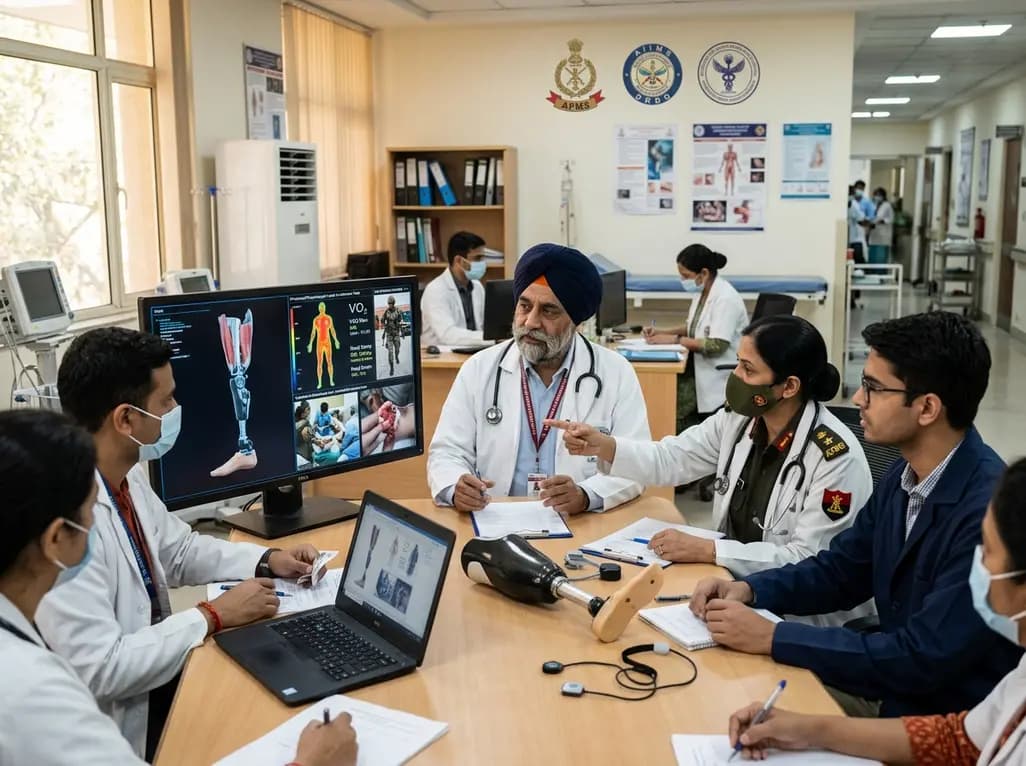
India's premier scientific bodies have joined the Armed Forces Medical Services to solve unique physiological and operational challenges faced by soldiers. The national collaboration covers combat casualty care, artificial intelligence diagnostics, bionic prosthetics, and extreme-environment physiological resilience.
Today

A retrospective cohort study evaluates the short- and long-term impacts of SARS-CoV-2 infection on patients with Graves' disease receiving antithyroid drug therapy, highlighting thyroid status destabilization, clinical symptom exacerbations, and post-viral sequelae.
Today
