.webp&w=384&q=75)

Loading, please wait...
Loading, please wait...

For decades, clinicians and organizational psychologists conceptualized occupational burnout as a uniform entity marked primarily by emotional exhaustion, depersonalization, and reduced personal accomplishment. However, modern clinical practice increasingly reveals significant heterogeneity among affected individuals. Farber's typological model revolutionized this perspective by identifying distinct burnout subtypes, demonstrating that patients arrive at chronic exhaustion through fundamentally different psychological pathways. Specifically, the model classifies three primary profiles: frenetic, underchallenged, and worn-out. The frenetic subtype involves excessive ambition, frantic dedication, and an inability to set boundaries, which ultimately depletes energy reserves. In contrast, the underchallenged subtype emerges from chronic monotony, lack of intellectual stimulation, and professional stagnation. Furthermore, the worn-out subtype reflects severe resignation, feelings of helplessness, and complete disengagement in the face of ongoing stress. Historically, standard psychometric instruments failed to capture these qualitative nuances. Consequently, clinicians often applied generalized interventions that missed individual etiology. Recent research validates the Burnout Clinical Subtype Questionnaire (BCSQ-12), offering clinicians objective methods to classify these profiles accurately. Understanding these variations enables healthcare practitioners to provide targeted interventions.
To establish reliable clinical screening tools, investigators translated and psychometrically validated the brief 12-item Burnout Clinical Subtype Questionnaire (BCSQ-12) within a robust sample of 616 working adults. The researchers utilized exploratory factor analysis with Varimax rotation to evaluate the structural integrity of the translated tool. Consequently, the statistical evaluation confirmed a robust three-factor structure that mirrors the theoretical domains originally posited by Farber. Each factor demonstrated satisfactory internal consistency, reliable item loadings, and strong construct validity across diverse employment sectors. Additionally, the study performed hierarchical and K-means cluster analyses to establish empirical clusters among working professionals. These mathematical models successfully delineated four distinct participant clusters: non-burned-out, frenetic, underchallenged, and worn-out. Moreover, the investigators administered standard complementary psychological scales, including the Patient Health Questionnaire-9 and the Utrecht Work Engagement Scale. They also utilized the Copenhagen Psychosocial Questionnaire to gauge job demands. Importantly, the BCSQ-12 proved highly sensitive in distinguishing between different work patterns and psychological stress profiles. Therefore, this concise 12-item questionnaire provides clinicians with an efficient diagnostic instrument for routine practice.
The empirical cluster analyses demonstrated sharp divergences in symptomatology, interpersonal resources, and occupational demands across the identified cohorts. For instance, frenetic workers exhibited exceptionally high dedication, working significantly longer weekly hours while absorbing immense task overloads. Although these individuals initially retained moderate work engagement, their chronic overcommitment generated substantial physical tension and early cognitive fatigue. Conversely, individuals in the underchallenged cluster presented with profound boredom, apathy, and low occupational satisfaction despite manageable work hours. These employees reported feeling undervalued, underutilized, and professionally trapped, which cultivated steady emotional disconnection. Most alarmingly, the worn-out cluster manifested the highest levels of depressive morbidity, emotional detachment, and occupational cynicism. Individuals within this group reported minimal work engagement alongside substantial subjective strain and overwhelming feelings of neglect. In addition, perceived social support varied dramatically across the groups. Frenetic employees maintained relatively intact interpersonal support systems, whereas worn-out individuals experienced marked social alienation and isolation. Thus, these disparate symptomatologic presentations demonstrate that distinct burnout subtypes exhibit markedly different psychological profiles and coping mechanisms.
A groundbreaking aspect of recent investigation involves evaluating structural personality impairment using the Operationalized Psychodynamic Diagnosis Structure Questionnaire (OPD-SQ). Structural impairment reflects fundamental deficits in self-regulation, emotional integration, reality testing, and interpersonal attachment capacity. In this investigation, researchers uncovered significant differences in structural personality vulnerabilities across the distinct burnout cohorts. Specifically, individuals in the worn-out subtype displayed the highest levels of structural impairment across all OPD-SQ subscales. These patients struggled markedly with internal affect regulation, self-worth maintenance, and interpersonal communication. Consequently, their fragile internal psychological structure rendered them profoundly vulnerable to chronic stressors, accelerating their descent into severe resignation and depression. In contrast, individuals classified into the frenetic subtype demonstrated relatively intact structural functioning and better emotional regulation capacities. However, their structural vulnerabilities centered around excessive performance-based self-esteem and maladaptive perfectionism. The underchallenged cohort occupied an intermediate position, exhibiting moderate structural deficits tied to identity diffusion. Therefore, assessing structural impairment through psychodynamic frameworks provides invaluable clinical insight into why employees manifest distinct burnout pathologies.
When analyzing the balance between personal resources and environmental demands, researchers observed a clear pattern of progressive clinical deterioration across subtypes. Frenetic employees maintain substantial internal energy reserves and active problem-solving strategies, despite experiencing intense job demands. However, if systemic stressors persist without adequate boundaries, these individuals gradually exhaust their psychological coping reserves. Subsequently, persistent disappointment and lack of organizational recognition may transition individuals into an underchallenged or detached state. During this phase, motivation plummets, and passive coping mechanisms replace active problem-solving. Ultimately, prolonged occupational futility drives the individual into the worn-out subtype, characterized by total psychological surrender, severe depressive symptoms, and depleted resilience. Furthermore, statistical analyses revealed an inverse relationship between burnout severity and psychological resources. As individuals progress from frenetic to worn-out profiles, social support, self-efficacy, and structural personality resilience steadily diminish. Meanwhile, perceived job strain and subjective helplessness rise exponentially. Therefore, clinicians must recognize this trajectory as an evolving spectrum of occupational distress rather than isolated syndromes.
Recognizing distinct clinical profiles mandates a fundamental shift away from generic stress-management advice toward tailored clinical interventions. Because each subtype arises from distinct psychological dynamics, therapeutic strategies must directly address specific maintaining factors. For frenetic patients, cognitive behavioral therapy should focus on setting assertive boundaries, mitigating maladaptive perfectionism, and preventing physical overexertion. Physicians must guide these patients to decouple self-worth from occupational hyper-achievement while scheduling mandatory rest periods. In contrast, underchallenged individuals require interventions centered on cognitive restructuring, career realignment, and identifying intrinsic sources of meaning. For these patients, therapy must address chronic boredom and help them negotiate task variety or pursue professional development. Finally, worn-out patients require intensive, trauma-informed, and psychodynamically oriented psychotherapeutic support. Because these individuals experience severe depressive symptoms and structural personality impairments, clinicians must first rebuild basic self-regulation and restore self-efficacy. Pharmacotherapy may also serve as a necessary adjunct when severe depressive comorbidity is present. Ultimately, adopting subtype-specific care pathways optimizes clinical recovery.
Farber identified the frenetic, underchallenged, and worn-out subtypes. Frenetic individuals overcommit and work frantically until energy reserves deplete. Underchallenged individuals experience chronic boredom, lack of motivation, and intellectual stagnation. Meanwhile, worn-out individuals exhibit total resignation, severe emotional detachment, and helplessness due to prolonged, unmanaged occupational stress.
Structural impairment assesses deficits in personality functioning, emotional regulation, and interpersonal attachment. Recent research indicates that worn-out employees suffer from the highest structural impairment, leaving them vulnerable to severe depression and helplessness. In contrast, frenetic employees maintain higher structural integration but struggle primarily with performance-driven self-esteem regulation.
Generic stress interventions often fail because each subtype possesses unique psychological drivers. Frenetic patients require boundary setting and perfectionism management, whereas underchallenged individuals need intellectual stimulation and role restructuring. Worn-out patients require intensive psychotherapy to rebuild self-efficacy, treat depressive symptoms, and restore impaired structural personality functions.
Disclaimer: This content is for informational and educational purposes only and does not constitute medical advice, diagnosis, or treatment. Healthcare professionals should exercise their independent clinical judgment. Refer to the latest local and national guidelines for clinical practice.
References
Perlinger J et al. Burnout subtypes in the German working population: Differentiation by symptomatology, work-related factors and structural impairment according to the OPD. PLoS One. 2026. doi: 10.1371/journal.pone.0352860. PMID: 42406791.
Montero-Marín J et al. Burnout clinical subtypes questionnaire: Psychometric properties. BMC Psychiatry. 2011;11:74. doi: 10.1186/1471-244X-11-74.
Ehrenthal JC et al. Development and validation of the OPD Structure Questionnaire (OPD-SQ). Z Psychosom Med Psychother. 2012;58(2):115-132.

Read summarized clinical updates, watch expert medical content, and earn CME certifications right from your smartphone.
Open your smartphone camera to scan and install.





A comprehensive validation study of the BCSQ-12 differentiates three clinical burnout subtypes—frenetic, underchallenged, and worn-out—highlighting critical variations in symptomatology, job demands, and psychodynamic structural impairment to guide tailored clinical interventions.
4 weeks back

A bioengineered oral nanozyme microsupplement converts pathological ROS into a protective polydopamine hydrogel shield. By curbing neutrophil extracellular traps and balancing T cells, this platform outperforms standard 5-ASA in preclinical colitis models, opening new paths for sustained remission.
Today
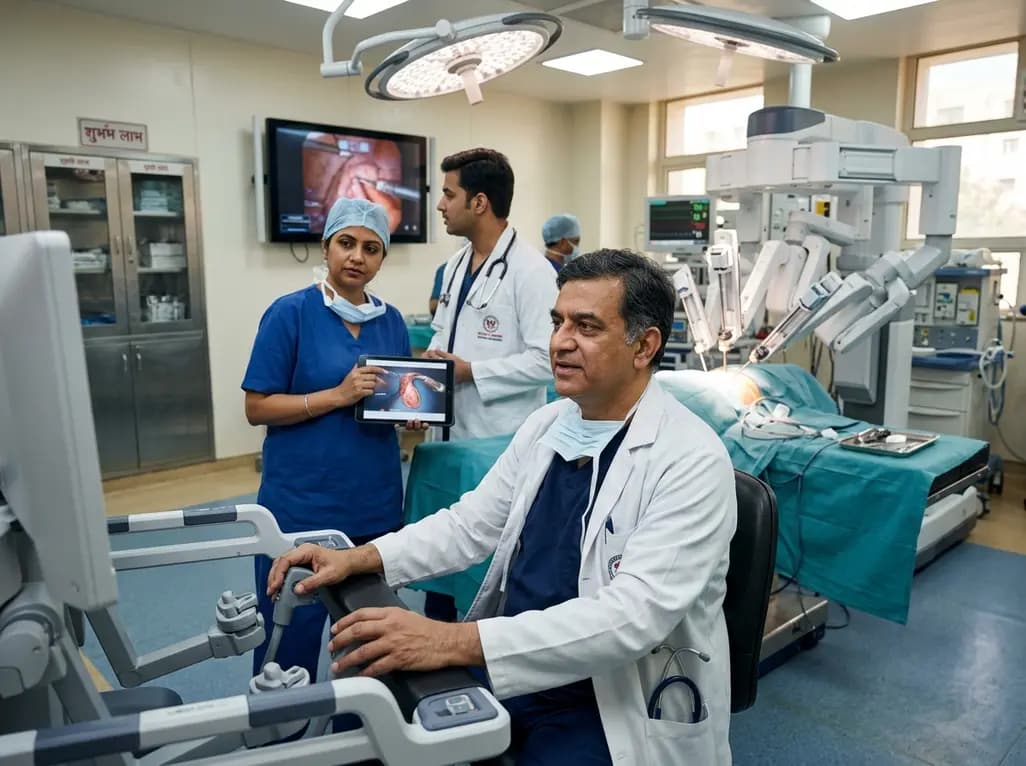
India experiences an exponential rise in robotic-assisted procedures, with Delhi NCR leading system installations and clinical volume. Discover how multidisciplinary surgical adoption, remote telesurgery breakthroughs, and standardized international consensus guidelines are shaping surgical care nationwide.
Today
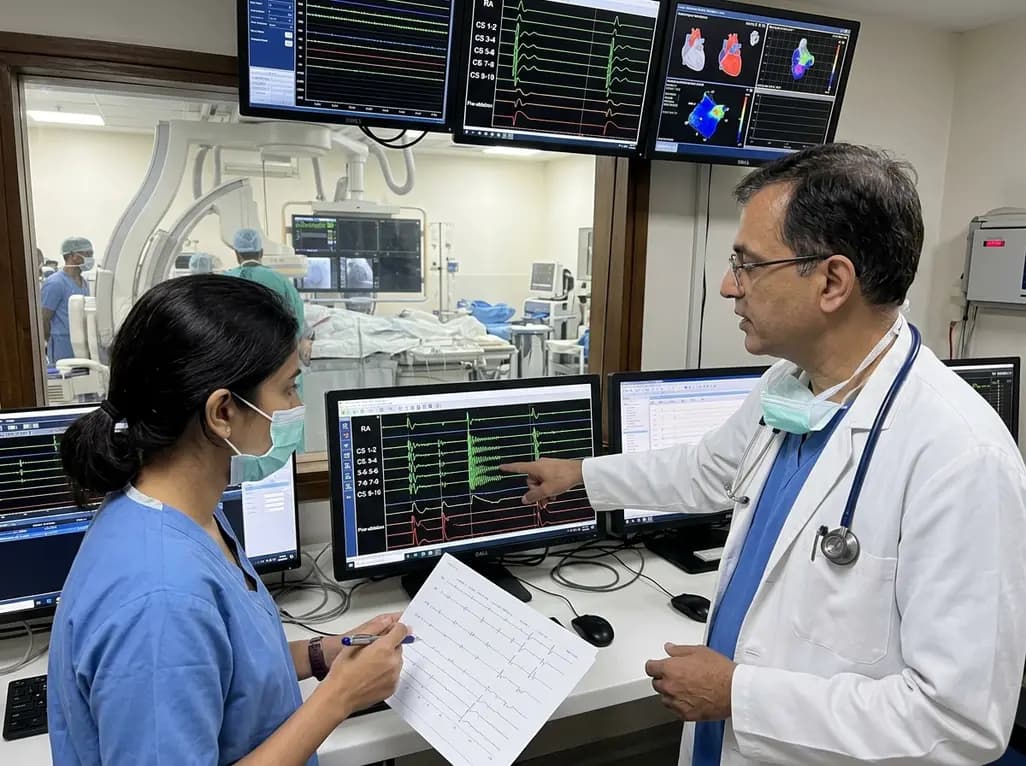
Radiofrequency catheter ablation of the cavotricuspid isthmus successfully terminates typical atrial flutter. This article reviews the mechanisms driving coronary sinus electrogram changes, wavefront activation pathways, and clinical criteria to verify bidirectional block during electrophysiology studies.
Today
A study comparing four knee flexion strength tests after ACL reconstruction using hamstring tendon autografts reveals marked variability in limb symmetry indices. Clinicians must recognize that different strength testing modalities yield divergent return-to-sport clearance rates.
Today
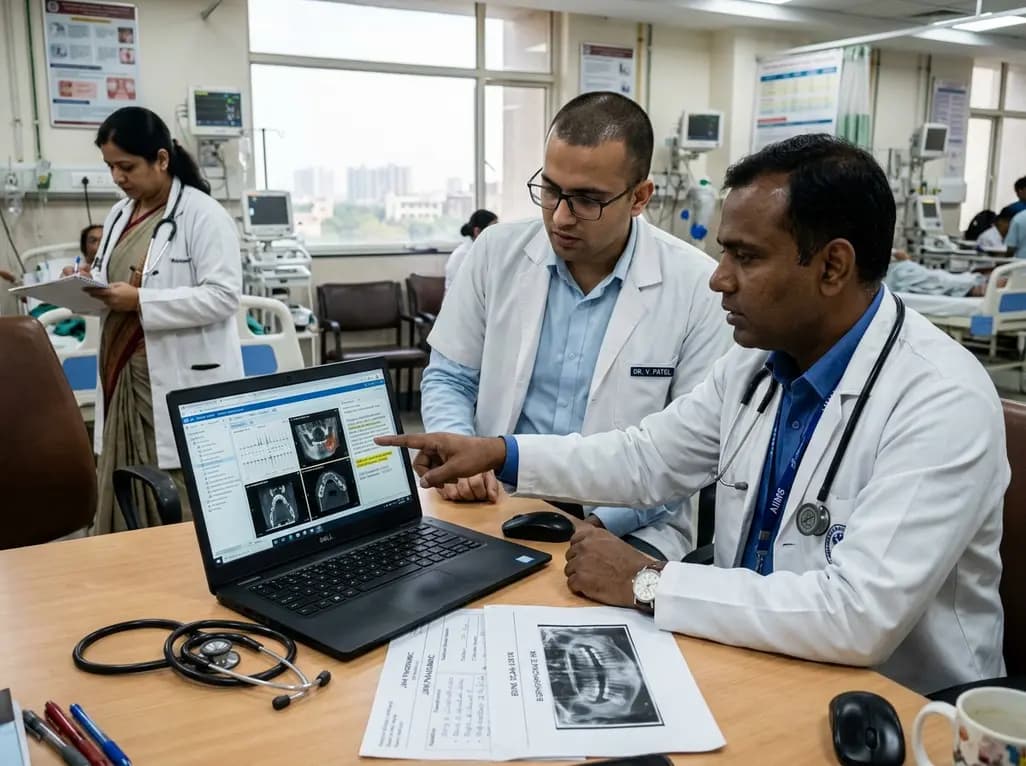
A breakthrough study leverages natural language processing to accurately identify incident medication-related osteonecrosis of the jaw and track antiresorptive drug holidays from clinical narratives in electronic health records, advancing osteoporosis pharmacovigilance and dental safety.
Yesterday
