.webp&w=384&q=75)

Loading, please wait...
Loading, please wait...
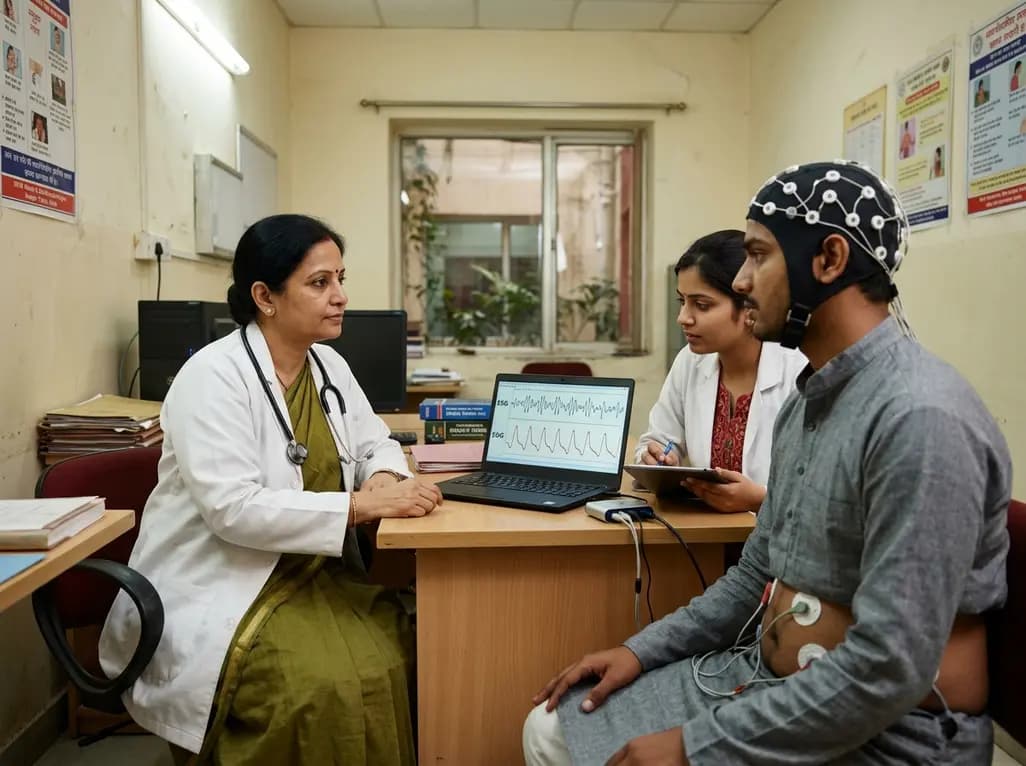
Major depressive disorder represents one of the most burdensome psychiatric conditions worldwide, yet predicting individual clinical outcomes remains challenging. Clinicians conventionally evaluate antidepressant treatment response over four to six weeks of empirical pharmacological therapy. However, emerging research from the Indian Institute of Technology Kanpur (IIT-K) and Ganesh Shankar Vidyarthi Memorial (GSVM) Medical College shows that combining electrophysiological signals from the brain and stomach can predict treatment outcomes within just seven to ten days.
Depression affects approximately 5 percent of the global adult population and nearly 4.5 percent of individuals across India. In routine psychiatric practice, clinicians frequently encounter substantial heterogeneity in how individual patients respond to standard pharmacotherapy. In fact, more than 30 to 50 percent of patients fail to achieve remission after their initial first-line pharmacological intervention. Consequently, patients endure multiple sequential medication trials over several months before discovering an effective regimen.
This prolonged trial-and-error cycle increases the risk of functional impairment, workplace absenteeism, treatment discontinuation, and self-harm. Therefore, developing objective biological markers that forecast therapeutic efficacy within days rather than weeks addresses a vital unmet clinical need. By recognizing non-responders early, psychiatrists can rapidly modify dosages, switch drug classes, or initiate evidence-based augmentation strategies without unnecessary delays.
The groundbreaking multicentric study published in the journal Frontiers in Psychiatry investigated non-invasive electrophysiological recordings to evaluate treatment trajectories. Specifically, the researchers recorded electrical activity from the brain using electroencephalography (EEG) and gastric slow waves using electrogastrography (EGG). They combined these physiological recordings with detailed clinical symptom profiles to construct an integrated predictive model.
Additionally, the research team recruited 206 participants, including 144 treatment-naive patients diagnosed with major depressive disorder. Baseline recordings were captured at the initiation of treatment and repeated approximately seven days later. By evaluating how neural oscillations and gastric myoelectric rhythms shifted during the first week of pharmacotherapy, the researchers demonstrated that the bidirectional brain-gut axis provides immediate, highly sensitive clues regarding therapeutic receptivity.
During the model development phase, the analytical framework identified patients who were unlikely to experience a satisfactory antidepressant treatment response with notable accuracy. Specifically, the algorithm achieved 84 percent sensitivity in correctly detecting non-responders alongside a 78 percent specificity. Furthermore, when validated on an independent patient cohort, the predictive model sustained a strong 77.3 percent overall accuracy, demonstrating 80 percent specificity and 71.4 percent sensitivity.
These robust validation metrics confirm that early physiological signals reflect genuine biological changes rather than statistical artifacts. Moreover, the first author noted that distinct clinical symptom subtypes correlated with unique patterns of brain and gastric electrophysiology. Consequently, this multi-modal approach effectively differentiates discrete biological phenotypes of depression, providing an objective framework to overcome the diagnostic limitations of purely subjective clinical interviews.
Integrating dual EEG and EGG recordings offers several practical advantages for routine clinical environments. Both modalities are entirely non-invasive, radiation-free, scalable, and relatively inexpensive compared to advanced neuroimaging techniques such as functional magnetic resonance imaging. Therefore, secondary and tertiary healthcare centers in low-resource settings could realistically deploy these diagnostic setups.
Furthermore, identifying non-responders within seven to ten days completely reshapes the timeline of psychiatric management. For example, if the algorithmic model indicates a high probability of treatment failure during the first week, the physician can promptly optimize the therapeutic plan. Clinicians might consider early augmentation with psychotherapeutic interventions, switch to dual-mechanism antidepressants, or introduce targeted neuromodulation. Thus, biological subtyping allows psychiatric care to shift from reactive adjustments to proactive, precision-guided clinical decision-making.
Although these findings offer remarkable promise, the authors emphasized the necessity of extensive prospective validation across diverse demographic groups. Subsequent clinical trials must evaluate whether brain-gut electrophysiological markers remain equally reliable across varied antidepressant drug classes, such as selective serotonin reuptake inhibitors, serotonin-norepinephrine reuptake inhibitors, and atypical agents. In addition, investigating whether comorbid gastrointestinal disorders alter EGG baseline rhythms will further refine the model's clinical specificity.
Ultimately, combining digital electrophysiology with artificial intelligence paves the path toward personalized psychiatry. By grounding treatment selection in measurable neuro-visceral dynamics, clinicians can significantly reduce patient distress, enhance medication adherence, and optimize long-term clinical recovery rates.
Q1: Why is waiting four to six weeks for antidepressant evaluation problematic in clinical practice?
Depression significantly impairs daily functioning, cognitive performance, and emotional well-being. Waiting four to six weeks to discover that a medication is ineffective prolongs patient suffering and increases the likelihood of treatment discontinuation or clinical deterioration. Early prediction enables clinicians to adjust medications within ten days, substantially accelerating recovery.
Q2: How does electrogastrography provide meaningful data for psychiatric treatment monitoring?
The gut and brain maintain continuous bidirectional communication through the autonomic nervous system and enteric pathways. Electrogastrography non-invasively records gastric myoelectric activity, which reflects autonomic tone and neurochemical signaling. When combined with cerebral electroencephalography, gastric signals reveal systemic physiological changes induced by antidepressant therapy during early intervention.
Q3: Can these electrophysiological tests replace conventional psychiatric clinical assessments?
No, electrophysiological tests are designed to complement rather than replace comprehensive psychiatric evaluations. Clinicians integrate the objective algorithmic predictions derived from electroencephalography and electrogastrography with standardized symptom rating scales, patient medical history, and clinical judgment to formulate safe, personalized, and effective therapeutic strategies for major depressive disorder.
Disclaimer: This content is for informational and educational purposes only. It does not constitute medical advice or replace professional judgment. Refer to the latest local and national guidelines for clinical practice.
References

Read summarized clinical updates, watch expert medical content, and earn CME certifications right from your smartphone.
Open your smartphone camera to scan and install.





IIT Kanpur and GSVM Medical College researchers discovered that combining early EEG and EGG electrophysiological signals can accurately predict antidepressant response within 7 to 10 days. This novel brain-gut biomarker approach helps clinicians identify non-responders early and tailor psychiatric interventions.
4 weeks back

A bioengineered oral nanozyme microsupplement converts pathological ROS into a protective polydopamine hydrogel shield. By curbing neutrophil extracellular traps and balancing T cells, this platform outperforms standard 5-ASA in preclinical colitis models, opening new paths for sustained remission.
Today
India experiences an exponential rise in robotic-assisted procedures, with Delhi NCR leading system installations and clinical volume. Discover how multidisciplinary surgical adoption, remote telesurgery breakthroughs, and standardized international consensus guidelines are shaping surgical care nationwide.
Today
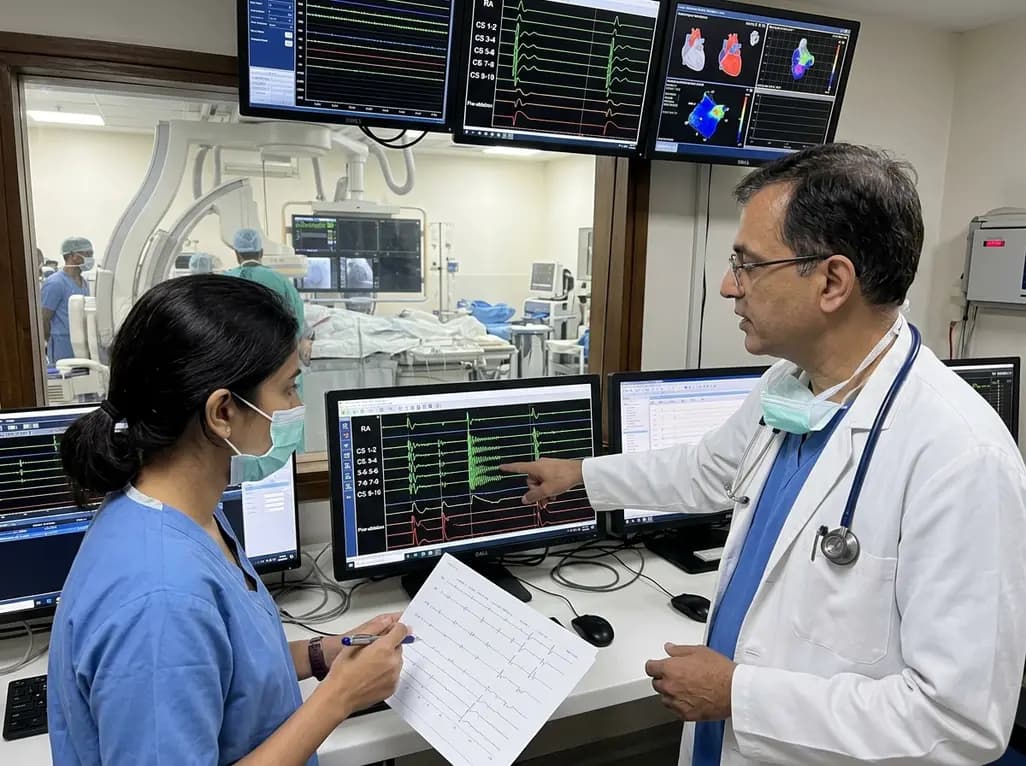
Radiofrequency catheter ablation of the cavotricuspid isthmus successfully terminates typical atrial flutter. This article reviews the mechanisms driving coronary sinus electrogram changes, wavefront activation pathways, and clinical criteria to verify bidirectional block during electrophysiology studies.
Today
A study comparing four knee flexion strength tests after ACL reconstruction using hamstring tendon autografts reveals marked variability in limb symmetry indices. Clinicians must recognize that different strength testing modalities yield divergent return-to-sport clearance rates.
Today
A breakthrough study leverages natural language processing to accurately identify incident medication-related osteonecrosis of the jaw and track antiresorptive drug holidays from clinical narratives in electronic health records, advancing osteoporosis pharmacovigilance and dental safety.
Yesterday
