.webp&w=384&q=75)

Loading, please wait...
Loading, please wait...
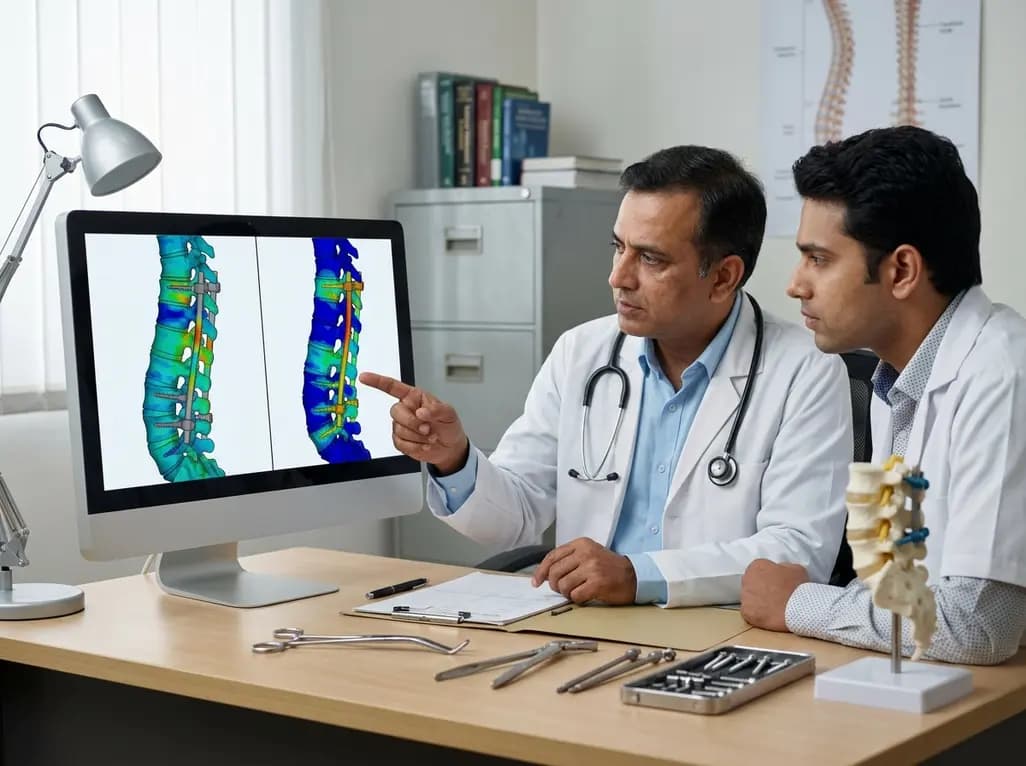
The field of spinal surgery has witnessed a paradigm shift in how surgeons plan and execute complex deformity corrections. Central to this progress is spinal rod biomechanical modeling, a computational approach that allows for the simulation of intricate surgical maneuvers before the first incision is ever made. Traditionally, many biomechanical models relied on linear-elastic constitutive equations, which assume that materials return to their original shape once a load is removed. However, surgical reality often involves forces that push materials beyond their elastic limit. When a surgeon contours a rod or applies significant corrective force to a rigid spinal curve, the metal frequently undergoes permanent deformation. Modern research now emphasizes the necessity of incorporating nonlinear elastoplastic behavior into these models to accurately represent the physical interaction between the rod, the implants, and the patient's anatomy.
In the current clinical landscape, the choice of alloy for spinal rods significantly influences the mechanical stability of the final construct. Cobalt-chromium-molybdenum (CoCrMo) alloys remain the gold standard due to their high stiffness and fatigue resistance. Nevertheless, the quest for even greater rigidity has led to the exploration of alternative alloys with higher Young’s moduli. While stiffer rods can theoretically offer better maintenance of correction, they also change the stress distribution throughout the spinal column. Biomechanical simulations suggest that although high-stiffness materials reduce the risk of rod bowing, they simultaneously increase the load transferred to the bone-screw interface. This trade-off is critical because excessive force at the pedicle screw can lead to catastrophic failures like screw pull-out or vertebral body fractures. Consequently, modeling must account for how different alloys respond under the unique stresses of adolescent idiopathic scoliosis or adult degenerative conditions to optimize long-term fusion success.
A pivotal finding in recent multibody modeling studies is the identification of specific force thresholds where rods transition from elastic to plastic behavior. When average corrective forces exceed the range of 187 to 318 N, the rod material typically begins to yield. This yielding is not just a theoretical concern; it translates directly into a significant loss of the intended surgical correction. Furthermore, as the rod undergoes elastoplastic deformation, the internal stresses do not resolve linearly, which can complicate the postoperative recovery phase. For the operating surgeon, knowing these thresholds helps in deciding whether to use auxiliary rods or if the current plan places too much strain on a single longitudinal element. By integrating these specific force parameters into preoperative planning software, clinicians can anticipate the exact point of material failure and adjust their corrective strategy accordingly, ensuring that the final spinal alignment remains stable over time.
The density of fixation implants—specifically the number of pedicle screws used per level—plays a massive role in how forces are distributed across the spinal rod. Low fixation density often concentrates stress on fewer points, which accelerates the onset of rod yielding. Simulations demonstrate that when fewer screws are utilized, the individual force at each bone-implant interface is significantly higher, often surpassing the 300 N mark. This localized stress not only threatens the integrity of the rod but also increases the likelihood of proximal junctional kyphosis or distal failure. In contrast, increasing implant density allows for a more homogenous distribution of the corrective load, which can keep the rod within its elastic range for a longer period. Therefore, advanced modeling tools are essential for determining the minimum effective implant density required to achieve correction without risking the structural integrity of the instrumentation or the health of the surrounding bone.
Integrating elastoplastic behavior into preoperative planning represents a significant leap forward for surgical precision in India and globally. By using patient-specific multibody models, surgeons can now visualize the potential for rod deformation based on the patient's unique bone mineral density and the severity of the spinal curve. This level of detail allows for a truly personalized approach to instrumentation, where the diameter, material, and contour of the rod are selected with mathematical certainty. Moreover, these models provide a safe environment to test "what-if" scenarios, such as the impact of adding a cross-link or extending the fusion by one level. As these computational tools become more accessible, they will likely reduce the incidence of revision surgeries, which are often necessitated by hardware failure or loss of correction. Ultimately, the goal is to bridge the gap between computational biomechanics and the operating room, leading to more predictable and durable outcomes for patients undergoing major spinal reconstruction.
Despite advancements in material science, rod fracture remains one of the most challenging complications in adult spinal deformity surgery. These fractures often occur due to metal fatigue resulting from repetitive loading and microscopic plastic deformation. By utilizing spinal rod biomechanical modeling that accounts for elastoplasticity, researchers can better understand the fatigue life of different constructs. For instance, a rod that has yielded during the initial correction is more susceptible to fatigue failure than one that remained within its elastic limit. Understanding the interplay between initial surgical stress and long-term cyclic loading allows surgeons to identify patients at high risk for hardware failure. Proactive measures, such as the use of multi-rod constructs or the selection of more ductile materials, can then be implemented during the primary procedure. This comprehensive approach to biomechanical analysis ensures that the instrumentation is robust enough to withstand the physiological demands of the patient until solid biological fusion is achieved.
Elastoplastic behavior is crucial because it accurately reflects the permanent deformation that occurs when rods are bent or subjected to high corrective forces. Traditional linear-elastic models often underestimate the actual stresses within the construct and fail to predict when a rod will lose its corrective shape. By accounting for yielding, surgeons can more accurately predict postoperative alignment and the long-term stability of the spinal instrumentation.
Lower implant density increases the mechanical burden on each individual screw and the connecting segments of the rod. This concentration of force often leads to the rod exceeding its elastic limit at lower overall corrective loads, typically between 187 and 318 N. Higher implant density distributes these forces more evenly, which helps keep the rod within its elastic range and reduces the risk of permanent deformation and hardware failure.
Multibody modeling allows surgeons to simulate the entire surgical procedure in a virtual environment, providing insights into the reaction forces at the bone-implant interface. This helps in selecting the most appropriate rod material and diameter for the patient's specific anatomy. It also enables the identification of high-stress zones where screws might loosen or rods might fracture, allowing for pre-emptive adjustments to the surgical plan to improve patient outcomes.
Disclaimer: This content is for informational and educational purposes only and does not constitute medical advice. It is not intended to be a substitute for professional medical judgment, diagnosis, or treatment. Always seek the advice of your physician or other qualified healthcare provider with any questions you may have regarding a medical condition. Refer to the latest local and national guidelines for clinical practice.
References
Wang X et al. Biomechanical modeling of elastoplastic behavior of spinal rod in spinal instrumentation. Comput Methods Biomech Biomed Engin. 2026 Jul 11. doi: 10.1080/10255842.2026.2698064. PMID: 42434810.
Aubin CE et al. Biomechanical modeling of posterior instrumentation of the scoliotic spine. Comput Methods Biomech Biomed Engin. 2003 Feb;6(1):27-39. doi: 10.1080/1025584031000072237. PMID: 12623435.
Shah KN et al. Biomechanical comparison between titanium and cobalt chromium rods used in a pedicle subtraction osteotomy model. Orthop Rev (Pavia). 2018 Mar 29;10(1):7437. doi: 10.4081/or.2018.7437. PMID: 29721245.
"
Read summarized clinical updates, watch expert medical content, and earn CME certifications right from your smartphone.
Open your smartphone camera to scan and install.





This expert analysis explores the transition from linear-elastic to elastoplastic modeling in spinal instrumentation. By understanding material thresholds and yielding points, surgeons can better predict deformity correction success and minimize bone-implant interface complications.
3 months ago

Failing to account for competing events like mortality in longitudinal geriatric studies produces biased risk estimates and misleading inferences. This review highlights key methodological principles, insights from the Precipitating Events Project, and practical approaches for clinical research appraisal.
Today

A study in JAMIA Open shows lightweight open-source reasoning LLMs achieve up to 95% sensitivity and accelerate evidence synthesis screening by nearly twentyfold, presenting a cost-effective, scalable AI solution for biomedical research and systematic reviews.
Today
A landmark study details how an enterprise pediatric remote patient management model expanded from a single cardiology pilot to 16 diverse specialty programs by combining centralized digital operations with specialty clinical leadership.
Today
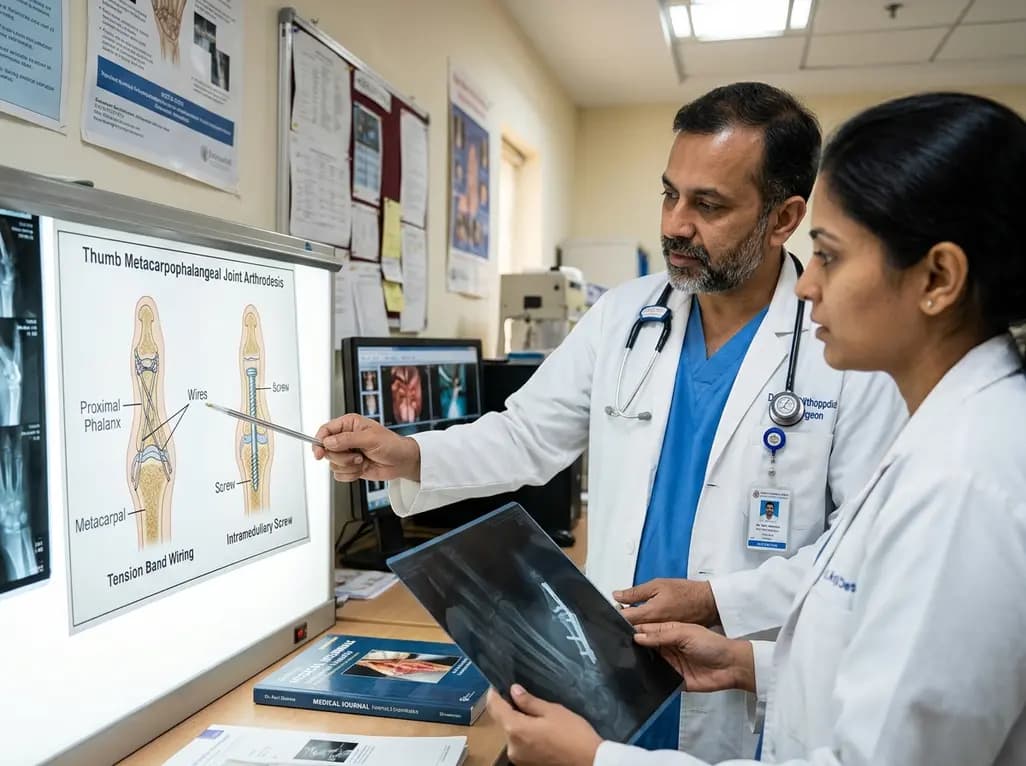
A comparative review of tension band wiring and intramedullary screw fixation in thumb metacarpophalangeal arthrodesis, evaluating union rates, hardware complications, and clinical outcomes.
Yesterday
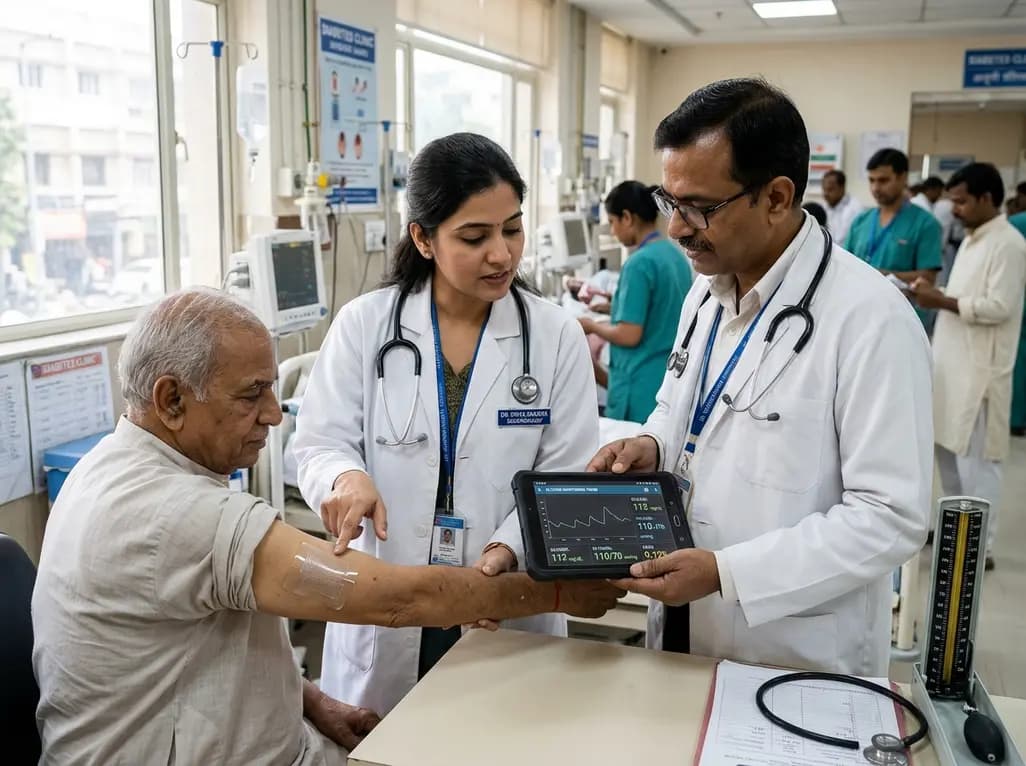
A breakthrough ultrathin multimodal sensor decouples physical hemodynamic monitoring from disposable electrochemical calibration, achieving long-term wearable glucose prediction with 81.36% accuracy and a 9.12% MARD. This offers a robust, drift-free solution for outpatient metabolic surveillance.
Today
