

Loading, please wait...
Loading, please wait...

Late-infantile metachromatic leukodystrophy is a devastating, autosomal recessive lysosomal storage disease caused by deficient arylsulfatase A enzyme activity. Without functional enzyme levels, sulfatides progressively accumulate within the central and peripheral nervous systems. Consequently, affected infants endure rapid demyelination, profound motor regression, and premature death. Recently, clinical breakthroughs have positioned atidarsagene autotemcel gene therapy as an invaluable, disease-modifying modality capable of addressing both central and peripheral neural degradation.
Peripheral neuropathy represents an early, relentless manifestation of late-infantile metachromatic leukodystrophy. The toxic accumulation of galactosyl-sulfatides in Schwann cells disrupts paranodal architecture and triggers segmental demyelination. Consequently, electrophysiological studies reveal marked slowing of motor and sensory conduction velocities across multiple extremities. Clinicians often detect these abnormalities well before overt functional decline appears. Untreated children experience relentless nerve damage, precipitating hypotonia, loss of deep tendon reflexes, severe neuropathic pain, and irreversible quadriplegia. While historical interventions focused entirely on palliative symptom relief, newer molecular approaches now target the underlying enzymatic pathology. Standard hematological stem cell transplantation usually yields disappointing outcomes for the peripheral nervous system. Specifically, allogeneic transplants rarely supply sufficient enzyme concentrations across the blood-nerve barrier to reverse or stabilize Schwann cell damage. Therefore, pediatric neurologists have urgently sought therapeutic interventions that establish sustained, robust enzyme bioavailability to halt this progressive neuromuscular decline.
A pivotal post hoc analysis investigated whether atidarsagene autotemcel gene therapy successfully mitigates demyelinating peripheral neuropathy. Researchers evaluated fifteen pre-symptomatic infants treated with ex vivo autologous hematopoietic stem cell gene therapy across prospective interventional studies. They systematically compared these outcomes against sixteen untreated natural history controls using standardized longitudinal electrophysiological protocols. The study examined motor conduction in the ulnar and deep peroneal nerves alongside sensory conduction in the median and sural nerves. Untreated infants suffered catastrophic, progressive declines in nerve conduction velocities, illustrating typical disease acceleration. In contrast, children receiving gene therapy demonstrated remarkable preservation of peripheral nerve conduction. By 36 months of age, treated patients exhibited estimated motor conduction velocities approximately 15 meters per second higher than untreated historical controls. Consequently, this objective electrophysiological preservation translated into meaningful clinical resilience, demonstrating that targeted genetic modification significantly attenuates peripheral demyelination.
The investigators carefully assessed whether pre-existing nerve pathology altered therapeutic efficacy following gene delivery. Strikingly, baseline nerve conduction velocity Z-scores did not dictate clinical outcomes at two years post-therapy. Even infants with detectable baseline demyelinating neuropathy attained meaningful nerve stabilization following stem cell engraftment. However, age at administration remained an essential determinant of long-term neurophysiological health. Patients treated at an earlier chronological age maintained significantly higher conduction velocities in both the motor ulnar and sensory median nerves at two years. Early intervention prevents cumulative axonal attrition before irreversible architectural collapse occurs within peripheral nerves. Therefore, timely clinical identification remains critical for maximizing the neurodevelopmental trajectory of affected infants. Because clinical symptoms often manifest rapidly after the first year of life, timely intervention offers the greatest potential for durable neuroprotection.
The mechanism of atidarsagene autotemcel gene therapy relies on genetically engineered autologous CD34-positive hematopoietic stem cells. These modified stem cells engraft in bone marrow and generate myeloid progeny capable of widespread tissue migration. Notably, peripheral blood myeloid CD15-positive cells showed sustained, supraphysiological arylsulfatase A enzyme production. In the study, post-treatment enzyme activity directly correlated with motor conduction velocities in the deep peroneal nerve at two years. Furthermore, higher enzyme concentrations corresponded with slower conduction decay or modest velocity increases in multiple motor and sensory nerves over prolonged follow-up. Histopathological analysis of dermal nerves from skin biopsies corroborated these functional electrophysiological findings. Treated children exhibited structural stabilization and reduced metachromatic lipid deposits compared to untreated peers. Because ex vivo lentiviral vectors achieve far higher enzyme expression than allogeneic donor cells, gene therapy provides superior metabolic cross-correction within peripheral Schwann cells.
These electrophysiological findings carry profound ramifications for pediatric neurology, hematology, and biochemical genetics. By demonstrating that gene therapy rescues peripheral nerve architecture, the data resolve long-standing skepticism regarding peripheral nervous system treatability in lysosomal storage diseases. However, because early intervention strongly correlates with superior nerve conduction velocities, late clinical identification remains a catastrophic barrier to optimal care. When clinicians await symptomatic motor decline, extensive central and peripheral demyelination has already taken place. Consequently, integrating metachromatic leukodystrophy into standard newborn screening panels represents an urgent medical priority. Rapid multiplex tandem mass spectrometry assays can identify deficient enzyme levels shortly after birth. Early detection ensures immediate referral to specialized cellular therapy centers, permitting timely stem cell harvest and autologous infusion. Ultimately, newborn screening provides a crucial window where metabolic correction can completely preserve peripheral nerve integrity and normal motor development.
Atidarsagene autotemcel gene therapy is an ex vivo autologous hematopoietic stem cell gene therapy. The treatment uses a lentiviral vector to insert functional arylsulfatase A genes into patient stem cells, achieving sustained, supraphysiological enzyme activity across systemic tissues, including the peripheral nervous system.
The therapy delivers genetically modified myeloid cells that secrete active arylsulfatase A enzyme throughout neural tissues. Peripheral Schwann cells take up this enzyme via cross-correction, which halts harmful sulfatide accumulation, preserves protective myelin sheaths, and prevents severe demyelination in peripheral motor and sensory nerves.
Early intervention is vital because sulfatide accumulation causes irreversible myelin breakdown and progressive axonal loss before overt clinical symptoms emerge. Treating infants at an earlier chronological age yields significantly higher nerve conduction velocities and superior neuromuscular stability compared to later therapeutic administration.
Disclaimer: This content is for informational and educational purposes only. It is not intended to be a substitute for professional medical advice, diagnosis, or treatment. Always seek the advice of your physician or other qualified health provider with any questions you may have regarding a medical condition. Never disregard professional medical advice or delay in seeking it because of something you have read here. Refer to the latest local and national guidelines for clinical practice.
References
Zambon AA et al. Effects of atidarsagene autotemcel gene therapy on peripheral nerves in late-infantile metachromatic leukodystrophy. Brain. 2025 Oct 03. doi: 10.1093/brain/awaf157. PMID: 40286327.
Fumagalli F et al. Long-Term Effects of Atidarsagene Autotemcel for Metachromatic Leukodystrophy. N Engl J Med. 2025;392(16):1609-1620. doi: 10.1056/NEJMoa2405727.
van Rappard DF et al. Peripheral neuropathy in metachromatic leukodystrophy: current status and future perspective. Orphanet J Rare Dis. 2019;14(1):245. doi: 10.1186/s13023-019-1224-8.

Read summarized clinical updates, watch expert medical content, and earn CME certifications right from your smartphone.
Open your smartphone camera to scan and install.





A landmark study demonstrates that atidarsagene autotemcel (arsa-cel) gene therapy significantly halts the progression of demyelinating peripheral neuropathy in children with late-infantile metachromatic leukodystrophy, preserving nerve conduction velocity compared to untreated controls.
Today

A validated natural language processing pipeline leverages clinical notes and intermediate annotations to identify risky alcohol use across surgical patients, offering automated preoperative risk stratification.
Today

The GESS-AEEM consensus establishes a clear clinical implementation framework for testosterone therapy in postmenopausal women with hypoactive sexual desire disorder, focusing on transdermal dosing, precise laboratory monitoring, and safety communication.
Yesterday
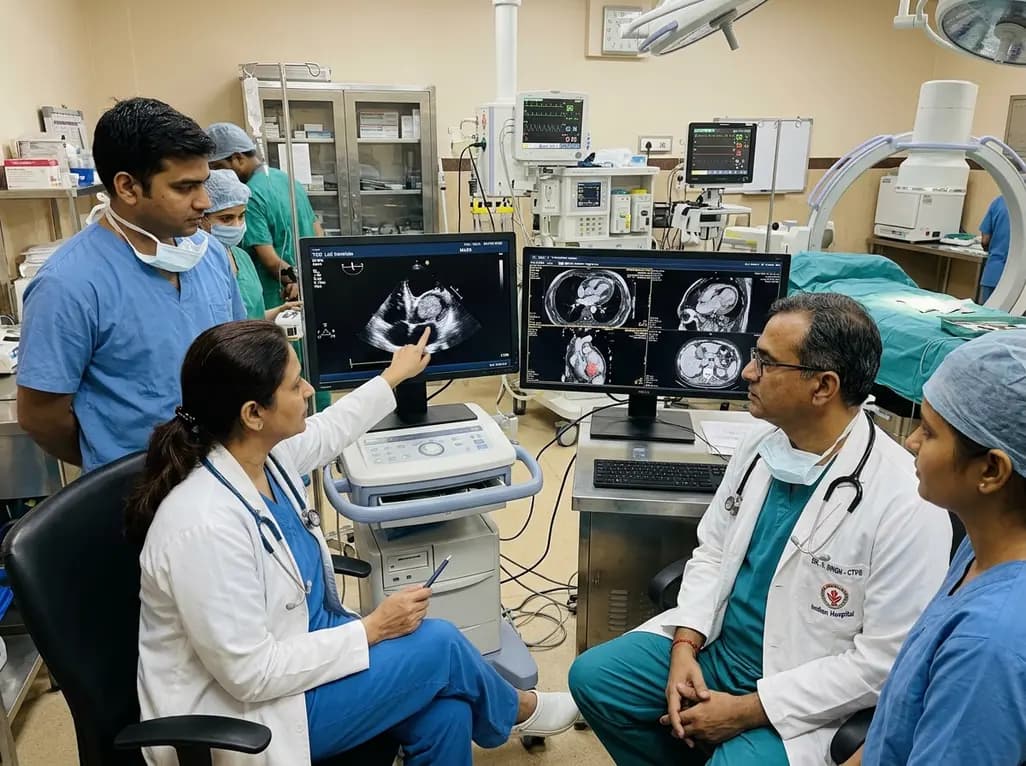
A rare case of an asymptomatic left ventricular hemangioma highlights the vital role of multimodal imaging in differentiating vascular tumors from thrombus. Complete surgical resection under transesophageal echocardiography guidance prevents thromboembolism and delivers optimal outcomes.
Today

A landmark study evaluates long-term quality of life in adolescents and adults with brachial plexus birth injury. Severe functional limitation and limited access to care significantly worsen outcomes, underscoring the urgent need for persistent, multidisciplinary management across adult healthcare transitions.
Today

An analysis of 1,000 posts by macro- and mega-influencers on Instagram and TikTok revealed that 78.5% contained nutrition misinformation, while only 24% of creators held valid credentials. This article examines the clinical risks of viral dietary fads and provides actionable guidance for healthcare professionals.
Today
