.webp&w=384&q=75)

Loading, please wait...
Loading, please wait...

Emergency departments manage acute medical emergencies alongside severe behavioural disturbances every single day. Recently, clinicians have observed a steady increase in presentations involving behaviours of concern across acute settings. Patients exhibiting acute agitation, severe distress, or violent tendencies place frontline staff at significant risk of physical harm. Furthermore, these episodes compromise the emotional well-being of healthcare professionals and adjacent patients. Triage teams frequently encounter volatile scenarios driven by substance toxicity, acute psychosis, or systemic medical delirium. Therefore, emergency departments require standardized clinical mechanisms to identify imminent danger rapidly. Without structured assessment protocols, staff often rely on subjective impressions to gauge escalating aggression. Consequently, early warning signs frequently go unnoticed until severe physical confrontation occurs. Implementing objective risk assessment pathways is essential for maintaining safety in high-stress environments. In addition, prompt identification enables teams to initiate de-escalation strategies before physical restraint becomes necessary. Frontline clinicians must balance patient dignity with institutional security in every challenging encounter. Consequently, hospital systems are turning toward digital workflows to streamline behavioral evaluations. Electronic documentation standardizes clinical communication across multidisciplinary teams during critical handovers.
To address these acute care challenges, investigators introduced the electronic Behavioural Assessment Tool across four busy emergency departments. This innovative digital aid supports emergency nurses in identifying risks and directing targeted care plans. Specifically, the tool guides clinicians through structured behavioural observations directly within the electronic health record. Rather than relying on separate paper documentation, the tool embeds critical safety parameters into routine nursing workflows. Clinicians can evaluate fluctuating levels of agitation, verbal hostility, and physical restlessness in real time. Consequently, the digital tool prompts timely non-pharmacological interventions and early environmental modifications. Researchers established a rigorous multi-method design to evaluate the implementation of this electronic platform. They conducted a retrospective quantitative descriptive analysis spanning three months alongside a comprehensive nursing survey. This dual approach allowed researchers to measure actual documentation frequency while exploring subjective clinician experiences. In addition, the investigative team evaluated how effectively the tool captured data for involuntarily detained psychiatric patients. Understanding user acceptability is vital because clinical software must never impede critical emergency workflows. Thus, the evaluation sought to determine both operational barriers and clear drivers of successful uptake.
The quantitative descriptive findings revealed impressive uptake across the participating emergency departments during the evaluation period. Overall, nursing staff successfully completed 743 electronic assessments across the four facilities over three months. This substantial documentation volume indicates that nurses readily integrated the software into routine patient assessments. Notably, the study captured critical data regarding individuals admitted under legal involuntary detention orders. Among 724 involuntarily detained patients managed during the study period, nurses completed assessments for 512 individuals. Therefore, the implementation achieved a compliance rate of 70.7% in this exceptionally vulnerable subgroup. Involuntary detention often coincides with acute agitation, severe persecutory delusions, or suicidal crisis. As a result, structured behavioural tracking provides vital legal and clinical documentation for involuntary patients. When nurses consistently record behavioural trends, attending physicians can tailor sedation protocols and surveillance levels safely. Furthermore, continuous tracking minimizes catastrophic safety events such as attempted absconding or unanticipated violence. However, approximately 29% of detained individuals did not receive an electronic assessment. This gap highlights persistent operational hurdles that prevent universal completion in high-acuity environments. Emergency leadership must examine these systemic oversights to guarantee comprehensive coverage for all at-risk patients.
The survey component garnered responses from 93 emergency nurses, representing a response rate of 33.2%. Through their qualitative feedback, nurses identified twelve distinct implementation facilitators and eight significant operational barriers. Encouragingly, 78.5% of respondents confirmed that the electronic interface was intuitive and easy to navigate. In addition, 87.1% of surveyed nurses expressed clear intentions to continue utilizing the digital assessment tool. Nurses appreciated how digital prompts guided individualized care planning and facilitated rapid documentation. Nevertheless, several systemic obstacles significantly impeded consistent software utilization across clinical shifts. For instance, 65.6% of participating nurses cited pervasive time scarcity as a major barrier to routine completion. Similarly, 51.6% of respondents emphasized that inadequate staffing levels compromised their ability to conduct detailed assessments. Moreover, nurses reported that suboptimal physical emergency department layout restricted safe behavioural observation and documentation. When clinical zones lack privacy or dedicated space, managing volatile patients becomes exponentially harder. Therefore, electronic aids alone cannot compensate for depleted staffing ratios or overcrowded department corridors. Healthcare administrators must address these environmental limitations to foster sustained digital adoption among busy frontline clinicians.
These findings offer critical insights for emergency clinicians, hospital administrators, and psychiatric teams managing volatile presentations. Structured digital assessments empower healthcare personnel to shift from reactive restraint toward proactive, compassionate de-escalation. By detecting escalating distress early, clinicians can introduce calming measures, sensory accommodations, or timely oral medications. Consequently, departments can decrease the frequency of physical restraints and prevent injuries to nursing personnel. In Indian emergency casualty units, where overcrowding and family presence create high-tension environments, structured tools can prevent violent flashpoints. Recent national guidelines emphasize stringent security and objective workplace safety frameworks for healthcare staff. Standardized behavioural tools provide objective clinical data that supports legal compliance and institutional transparency. However, successful technological integration requires hospital leadership to invest in adequate nurse-to-patient staffing ratios. Furthermore, institutions must deliver robust continuous training so that rotating clinical staff understand assessment rubrics. Hospital planners should also optimize architectural layouts by creating designated, low-stimulation quiet assessment areas within casualty departments. Ultimately, combining intuitive digital technology with appropriate infrastructural resources elevates safety for both staff and vulnerable patients.
Behaviours of concern encompass observable actions that place patients, staff, or visitors at risk of immediate harm. In emergency departments, these manifestations include verbal hostility, physical aggression, severe psychomotor agitation, self-harm attempts, and active absconding behaviour. Clinicians observe these behaviours across diverse clinical presentations, including acute psychiatric decompensation, severe substance intoxication, and metabolic delirium. Standardizing the assessment of these warning signs enables healthcare teams to intervene promptly with non-coercive measures before escalation occurs.
Digital documentation establishes structured clinical surveillance for involuntarily detained individuals experiencing intense psychological crisis. By embedding behavioral rubrics directly into electronic health records, nursing staff can track fluctuating agitation levels and response to calming interventions in real time. This timely data allows physicians to make judicious medication choices while reducing inappropriate physical restraint. Furthermore, objective digital records create robust legal documentation that validates compliance with psychiatric care regulations and patient protection mandates.
Overcoming workflow barriers requires institutional leadership to balance clinical workloads and optimize the emergency care environment. Hospitals must implement adequate nurse-to-patient ratios to ensure staff possess sufficient time for detailed behavioral documentation. Additionally, organizations should deliver recurring simulation training to increase clinician confidence in navigating digital systems. Finally, administrators must design dedicated, low-stimulation observation areas within casualty departments, enabling nurses to assess agitated patients safely without interrupting rapid emergency resuscitation workflows.
Disclaimer: This content is for informational and educational purposes only. It is not intended to provide medical advice, diagnosis, or treatment. Healthcare professionals should make decisions based on their clinical judgment. Refer to the latest local and national guidelines for clinical practice.
References

Read summarized clinical updates, watch expert medical content, and earn CME certifications right from your smartphone.
Open your smartphone camera to scan and install.





A multi-methods study evaluates the implementation of an electronic Behavioural Assessment Tool (EDBAT) in emergency departments, highlighting uptake rates in involuntary detentions, facilitators, and staffing barriers.
Today
Elevated serum HIF-1α levels correlate significantly with MELD scores and independent risk of hepatic decompensation, highlighting the biomarker's emerging diagnostic and prognostic utility in chronic liver disease.
Today

A ten-year cohort study of ABU case logs reveals that URPS fellowship training significantly drives higher annual case volumes, advanced surgical complexity, and increased female representation in pelvic floor reconstruction, underscoring the vital need for structured subspecialty training.
Today
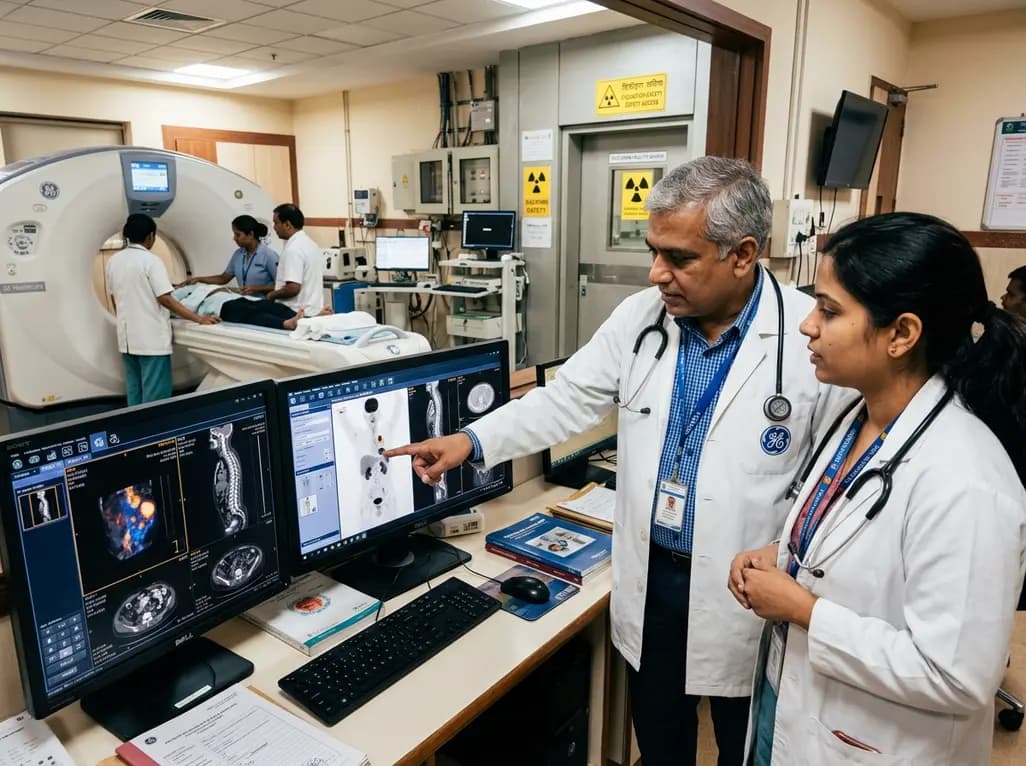
GE HealthCare has agreed to acquire Sofie Biosciences in a 945 million dollar all-cash transaction. The deal secures global rights to the investigational pan-cancer tracer FAPI-74 and expands cyclotron manufacturing infrastructure to accelerate precision theranostics and clinical molecular imaging workflows.
Today

Posttraumatic pisotriquetral instability is a rare wrist injury causing severe hypothenar pain and weakness. Explore clinical examination, imaging, and pisiformectomy.
Today

India's food safety authority has cracked down on high-caffeine beverages sold under stimulant branding, prompting legal challenges from major beverage corporations. This review examines FSSAI regulations, cardiac and metabolic complications, pediatric risks, and actionable counseling strategies for physicians.
Today
