.webp&w=384&q=75)

Loading, please wait...
Loading, please wait...

Chronic liver disease remains a significant clinical burden worldwide. Evaluating biomarker dynamics provides vital prognostic insights during cirrhosis progression. Recent investigations highlight the role of HIF-1α in liver cirrhosis as an indicator of hepatic stress. Furthermore, hypoxia-inducible factor-1α regulates how parenchymal tissues adapt to oxygen deprivation. Consequently, circulating levels directly reflect microvascular failure and structural parenchymal collapse.
Hepatic architecture changes dramatically during chronic parenchymal injury. Furthermore, progressive fibrosis disrupts sinusoidal blood flow and limits oxygen delivery. Hepatocytes and stellate cells experience severe microenvironmental hypoxia as fibrous septa expand. In response, cells stabilize the hypoxia-inducible factor-1α protein subunit. Under normoxic conditions, prolyl hydroxylases rapidly degrade this protein. However, severe tissue hypoxia suppresses hydroxylase activity. Consequently, HIF-1α translocates into the nucleus and dimerizes with the beta subunit. This transcriptional complex triggers the expression of angiogenic and fibrogenic genes. For example, it directly stimulates vascular endothelial growth factor. In addition, persistent pathway activation drives myofibroblast differentiation. Therefore, sustained tissue hypoxia accelerates extracellular matrix accumulation. Over time, these molecular events worsen sinusoidal capillarization. Thus, evaluating systemic levels of this transcription factor offers direct insight into intrahepatic hypoxic injury.
A well-designed cross-sectional study evaluated circulating HIF-1α concentrations across varying stages of chronic liver disease. Specifically, the study cohort included thirty-one patients with decompensated cirrhosis and thirty-nine patients with compensated disease. In addition, researchers enrolled twenty healthy individuals as controls. The investigators measured serum concentrations using a standardized enzyme-linked immunosorbent assay. The resulting biochemical data demonstrated striking differences among cohorts. Patients with decompensated cirrhosis exhibited median serum levels of 313.5 pg/mL. In contrast, patients with compensated cirrhosis presented with a median value of 165.0 pg/mL. Meanwhile, healthy control subjects displayed a median concentration of only 70.3 pg/mL. Furthermore, statistical analysis confirmed that these elevation gradients were highly significant. These progressive increments indicate that systemic hypoxic markers increase alongside functional liver impairment. Additionally, the quantitative leap between compensated and decompensated states reflects escalating vascular stress. Consequently, serum measurements accurately capture this clinical transition.
Clinicians routinely depend on the Model for End-Stage Liver Disease score to quantify hepatic dysfunction. Notably, the study revealed a robust positive correlation between serum HIF-1α levels and MELD scores. Patients with higher MELD calculations consistently demonstrated marked biomarker elevations. Furthermore, statistical analyses linked elevated levels to worsening bilirubin and international normalized ratios. Conversely, circulating concentrations correlated negatively with serum albumin measurements. These biochemical associations reflect both impaired synthetic capacity and worsening excretory failure. Moreover, multivariate logistic regression demonstrated that serum HIF-1α independently predicted hepatic decompensation. Receiver operating characteristic analyses further highlighted strong discriminative accuracy. Specifically, the biomarker exhibited high diagnostic sensitivity and specificity for differentiating decompensated from compensated cirrhosis. Therefore, circulating concentrations directly mirror the decompensation cascade. Clinicians can thus appreciate how molecular hypoxic stress aligns with validated bedside scoring systems.
The transition from compensated to decompensated cirrhosis involves profound hemodynamic alterations. Splanchnic vasodilation and effective hypovolemia compromise systemic perfusion over time. In addition, intrahepatic resistance increases due to architectural remodeling and microvascular thrombosis. Consequently, sinusoidal endothelial cells lose their fenestrations. This capillarization process severely impairs nutrient and oxygen exchange between hepatocytes and sinusoidal blood. Furthermore, bacterial translocation from the gut promotes systemic inflammation. This inflammatory state induces additional oxidative stress and cellular hypoxia. Therefore, the failing liver enters a vicious cycle of ischemia and tissue injury. Serum HIF-1α appears in peripheral circulation as hepatocytes experience worsening hypoxic stress. Notably, elevated levels indicate that cellular mechanisms cannot overcome intrahepatic ischemia. As a result, patients develop overt clinical decompensation, including ascites and encephalopathy. Circulating hypoxic markers therefore provide a direct window into this microcirculatory collapse.
Chronic liver disease represents an enormous healthcare challenge across India. Viral hepatitis, alcohol-associated liver disease, and steatotic liver disease cause widespread hepatic morbidity. Consequently, Indian gastroenterologists manage large volumes of cirrhotic patients at diverse stages of progression. Early identification of impending decompensation remains essential in resource-constrained settings. Furthermore, access to organ transplantation remains limited to select tertiary centers. Clinicians require reliable, minimally invasive markers to prioritize interventions. Serum ELISA testing offers a practical approach for quantifying disease activity. In addition, serial biomarker assessments could enhance risk stratification alongside traditional MELD scores. Primary care physicians and hepatologists could detect occult deterioration before overt clinical failure occurs. For instance, rising levels might prompt aggressive management of portal hypertension or early transplant evaluation. Therefore, integrating hypoxic biomarkers into routine evaluation could substantially improve patient monitoring and clinical outcomes.
The discovery of elevated hypoxic signaling opens promising avenues for targeted therapies. Currently, clinicians manage cirrhosis primarily through supportive care and complication prevention. However, targeted molecular interventions could modify underlying pathophysiological pathways. Researchers are actively evaluating small molecules that modulate the hypoxia-inducible factor pathway. Inhibiting maladaptive pro-fibrotic signaling might attenuate hepatic scar progression. Conversely, controlled angiogenic responses could theoretically improve sinusoidal perfusion. Furthermore, future longitudinal studies must evaluate whether serial measurements predict clinical survival. Researchers should also determine if serum levels fluctuate after successful interventions, such as portal decompression procedures. In addition, validating these findings across diverse demographic groups remains necessary. Longitudinal trials will establish precise cutoff values for bedside decision-making. Consequently, hypoxic pathway research holds substantial potential to transform chronic liver disease management into proactive intervention.
Progressive fibrosis disrupts the hepatic microvasculature and reduces sinusoidal blood flow. Consequently, hepatocytes and hepatic stellate cells experience severe chronic hypoxia. Under normal conditions, cells degrade the protein rapidly. However, low oxygen levels suppress this degradation, causing the protein to accumulate and translocate to the cell nucleus. Over time, continuous parenchymal injury and capillarization release significant amounts of the protein into the systemic circulation, which elevates measurable serum concentrations.
The biomarker demonstrates a strong positive correlation with the MELD score because both reflect the degree of end-stage liver dysfunction. Higher MELD scores indicate worsening coagulopathy and bilirubin clearance, which stem from extensive parenchymal damage. Furthermore, severe liver failure intensifies intrahepatic ischemia and microvascular thrombosis. Consequently, higher circulating levels correspond directly to advanced organ failure, making the protein an accurate independent marker of hepatic decompensation and overall clinical disease severity.
Currently, laboratories measure the protein primarily in clinical research settings using ELISA kits. Although the biomarker demonstrates strong diagnostic accuracy for distinguishing decompensated from compensated cirrhosis, standardized clinical assays and validated decision thresholds are not yet widely available. Therefore, clinicians must continue using established tools like the MELD score and Child-Pugh classification. However, future multicenter clinical trials could soon establish standardized cutoffs, enabling routine clinical adoption in hepatology practice.
Disclaimer: This content is for informational and educational purposes only... Refer to the latest local and national guidelines for clinical practice.
References

Read summarized clinical updates, watch expert medical content, and earn CME certifications right from your smartphone.
Open your smartphone camera to scan and install.





Elevated serum HIF-1α levels correlate significantly with MELD scores and independent risk of hepatic decompensation, highlighting the biomarker's emerging diagnostic and prognostic utility in chronic liver disease.
Today

A ten-year cohort study of ABU case logs reveals that URPS fellowship training significantly drives higher annual case volumes, advanced surgical complexity, and increased female representation in pelvic floor reconstruction, underscoring the vital need for structured subspecialty training.
Today
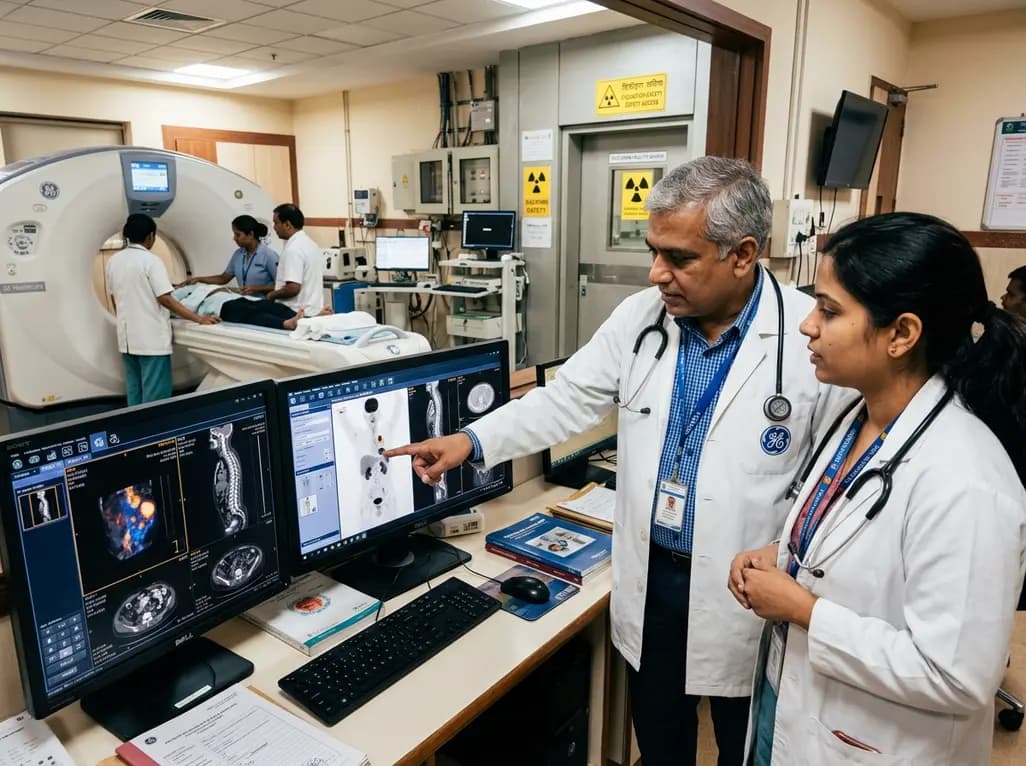
GE HealthCare has agreed to acquire Sofie Biosciences in a 945 million dollar all-cash transaction. The deal secures global rights to the investigational pan-cancer tracer FAPI-74 and expands cyclotron manufacturing infrastructure to accelerate precision theranostics and clinical molecular imaging workflows.
Today

Posttraumatic pisotriquetral instability is a rare wrist injury causing severe hypothenar pain and weakness. Explore clinical examination, imaging, and pisiformectomy.
Today

India's food safety authority has cracked down on high-caffeine beverages sold under stimulant branding, prompting legal challenges from major beverage corporations. This review examines FSSAI regulations, cardiac and metabolic complications, pediatric risks, and actionable counseling strategies for physicians.
Today
