.webp&w=384&q=75)

Loading, please wait...
Loading, please wait...

The management of Animal African Trypanosomiasis prevalence remains a significant challenge for livestock producers across sub-Saharan Africa. Specifically, this vector-borne disease, caused by protozoan parasites of the genus Trypanosoma, continues to hinder economic growth in rural communities. Consequently, researchers conducted a cross-sectional study from November to December 2024 to evaluate the current status of the disease in Busia County, Kenya. This region is particularly vulnerable due to its environmental conditions, which favor the proliferation of tsetse flies. Furthermore, the disease manifests through debilitating symptoms in cattle, including chronic anemia, reduced milk production, and high mortality rates if left untreated. Therefore, accurate surveillance is vital for protecting the livelihoods of local farmers. The study focused on seven villages, randomly selecting 762 cattle to assess the spatial distribution of the parasite. By integrating geospatial tools, the research team aimed to provide a detailed map of infection hotspots. This approach is essential because traditional surveillance often fails to capture the intricate dynamics between the vector and the host. Ultimately, the findings offer a foundation for more effective, evidence-based interventions in the region.
To achieve a comprehensive understanding of the disease, the research team utilized sophisticated geospatial analysis alongside traditional entomological surveys. Specifically, they deployed 60 tsetse odor-baited biconical traps across diverse landscapes, including thickets and areas along streams. These traps were strategically placed in Funyula, Butula, and Teso North subcounties to estimate the abundance and density of the tsetse fly population. Moreover, the use of geographical information systems (GIS) allowed the scientists to correlate fly density with environmental variables. This methodology is superior to random sampling because it highlights the specific micro-habitats where transmission risk is highest. Consequently, the data revealed that certain riverine areas act as significant reservoirs for the vector. Interestingly, tsetse flies in the genus Glossina show a strong preference for humid environments, which are prevalent in Busia County. By mapping these infestations, the researchers could identify precisely where cattle are most likely to encounter infected flies. Furthermore, the study emphasized that tsetse distribution is not uniform, necessitating a targeted approach to vector control. This geospatial perspective ensures that resources are allocated to the most critical areas, thereby maximizing the impact of control programs.
The clinical screening of 762 cattle provided critical data on the actual Animal African Trypanosomiasis prevalence within the study area. Specifically, the researchers reported an overall prevalence rate of 6.82%, with a 95% confidence interval ranging from 5.2% to 8.80%. This figure indicates a persistent level of infection despite ongoing control efforts in the region. Furthermore, the study identified multiple species of trypanosomes, with Trypanosoma vivax emerging as the most dominant. This particular species was reported at a prevalence of 4.72%, a finding that was statistically significant with a p-value of 0.006. Consequently, the high frequency of T. vivax suggests that mechanical transmission by other biting flies might also play a role in the disease's ecology. Moreover, the identification of species is crucial because different trypanosomes respond differently to available trypanocidal drugs. Therefore, understanding the species composition helps veterinarians tailor their treatment protocols more effectively. Interestingly, the study also utilized the quantitative buffy coat technique, which offers higher sensitivity than traditional smear microscopy. This technological choice ensured that low-level infections were not overlooked during the screening process. Overall, these results underscore the need for continuous monitoring to prevent large-scale outbreaks among livestock.
In addition to identifying the presence of parasites, the research team closely monitored hematological parameters to assess the health impact on the cattle. Specifically, they determined the packed cell volume (PCV) values for all screened animals. PCV is a vital indicator of anemia, which is a hallmark clinical sign of trypanosomiasis. Consequently, the researchers observed a clear correlation between infection status and lower PCV levels. Furthermore, animals with clinical symptoms often exhibited significantly reduced productivity and poor body condition scores. This relationship highlights the physiological toll that Trypanosoma parasites exert on their hosts. Moreover, measuring PCV serves as a practical field-based diagnostic tool for identifying animals that require urgent medical attention. Importantly, the study found that even subclinical infections can lead to a gradual decline in hematocrit levels, which eventually impacts the animal's growth and reproduction. Therefore, incorporating PCV measurements into routine surveillance provides a more holistic view of the disease burden. Additionally, the researchers noted that cattle with chronic anemia are more susceptible to other opportunistic infections, further complicating the clinical picture. These findings emphasize that the economic impact of the disease extends far beyond direct mortality, affecting the long-term viability of dairy and beef production.
The study went beyond simple prevalence counts by analyzing the specific factors that increase an animal's risk of infection. Specifically, the researchers found that age, grazing system, and breed are significant determinants of disease susceptibility. For instance, older cattle often showed higher infection rates, possibly due to longer periods of exposure to tsetse-infested environments. Furthermore, the grazing system played a pivotal role; cattle that grazed in communal areas or near forested thickets faced a much higher risk than those kept in zero-grazing units. Consequently, the movement of animals through known fly habitats significantly increases the likelihood of a tsetse bite. Moreover, breed differences were evident, with some local breeds showing slightly higher resilience compared to imported exotic breeds. Therefore, selecting for trypanotolerant traits could be a sustainable long-term strategy for local farmers. Interestingly, the socio-economic status of the livestock owners also influenced the levels of care and prevention implemented. Thus, educational programs focusing on risk reduction are essential for the community. By understanding these diverse risk factors, health officials can develop more nuanced control strategies that address the specific behaviors and environments of the local farming population.
The findings from Busia County strongly support the implementation of a One Health approach to manage trypanosomiasis effectively. Specifically, this strategy involves the integration of veterinary medicine, entomology, and environmental science to tackle the disease from multiple angles. Furthermore, the geospatial data suggests that vector control must be coordinated with animal treatment programs to be successful. Consequently, local authorities should focus on clearing thickets and improving riverine management to reduce tsetse breeding sites. Moreover, the high Animal African Trypanosomiasis prevalence indicates that current drug use may need review, especially regarding potential resistance issues. Therefore, fostering collaboration between researchers and the farming community is vital for sustaining any progress made. Additionally, the study serves as a reminder that zoonotic risks, though low in this specific survey, must always be monitored to protect human health. Ultimately, the successful control of AAT will lead to improved food security and economic stability in Western Kenya. The research underscores that only through comprehensive, data-driven strategies can the cycle of infection be broken once and for all.
The quantitative buffy coat (QBC) technique is a highly sensitive diagnostic method used to detect trypanosomes in blood samples. Unlike standard thick and thin smears, the QBC concentrates the parasites in a specific layer of the centrifuged blood, making them much easier to identify under a microscope. Consequently, this technique is essential for detecting low-level or subclinical infections that might otherwise be missed. This ensures that infected animals receive timely treatment before the disease progresses.
The grazing system is a primary risk factor because it determines the level of contact between cattle and tsetse flies. Animals in communal grazing systems often travel long distances, frequently entering riverine areas or thickets where tsetse flies reside. Furthermore, high-density grazing areas can facilitate the mechanical transmission of parasites by other biting flies. In contrast, zero-grazing systems significantly limit vector exposure, thereby reducing the overall incidence of infection within the herd.
Trypanosoma vivax often shows higher prevalence in certain regions because it can be transmitted both biologically by tsetse flies and mechanically by other biting insects like stable flies. This dual transmission capability allows the parasite to persist even in areas where tsetse fly density is relatively low. Furthermore, T. vivax is known for its ability to rapidly adapt to different hosts and environments. Its dominance in Busia County highlights the complexity of controlling this specific parasite species effectively.
Disclaimer: This content is for informational and educational purposes only and does not constitute medical or veterinary advice. The information provided is based on a specific geospatial study and may not reflect the situation in all regions. Refer to the latest local and national guidelines for clinical practice.
References
Burudi SS et al. Geospatial Analysis of Tsetse Infestation and Animal African Trypanosomiasis in Busia County, Kenya. J Parasitol Res. 2026 undefined undefined. doi: 10.1155/japr/2532768. PMID: 42472070.
Adungo et al. Tsetse distribution, trypanosome infection rates, and small-holder livestock producers' capacity enhancement for sustainable tsetse and trypanosomiasis control in Busia, Kenya. PMC. 2020. 7531245.
Ngongolo K et al. Assessing Risk Factors for Trypanosome Infections in Cattle in Wildlife Interface Areas in Northern Tanzania. ClinMed International Library. 2020. doi: 10.23937/2474-3658/1510078.
"
Read summarized clinical updates, watch expert medical content, and earn CME certifications right from your smartphone.
Open your smartphone camera to scan and install.





A cross-sectional study in Busia County, Kenya, reveals a 6.82% prevalence of Animal African Trypanosomiasis (AAT) among cattle. Using geospatial analysis and quantitative buffy coat techniques, researchers identified key risk factors and species distribution to improve targeted vector control strategies.
3 months ago

Failing to account for competing events like mortality in longitudinal geriatric studies produces biased risk estimates and misleading inferences. This review highlights key methodological principles, insights from the Precipitating Events Project, and practical approaches for clinical research appraisal.
Today

A study in JAMIA Open shows lightweight open-source reasoning LLMs achieve up to 95% sensitivity and accelerate evidence synthesis screening by nearly twentyfold, presenting a cost-effective, scalable AI solution for biomedical research and systematic reviews.
Today
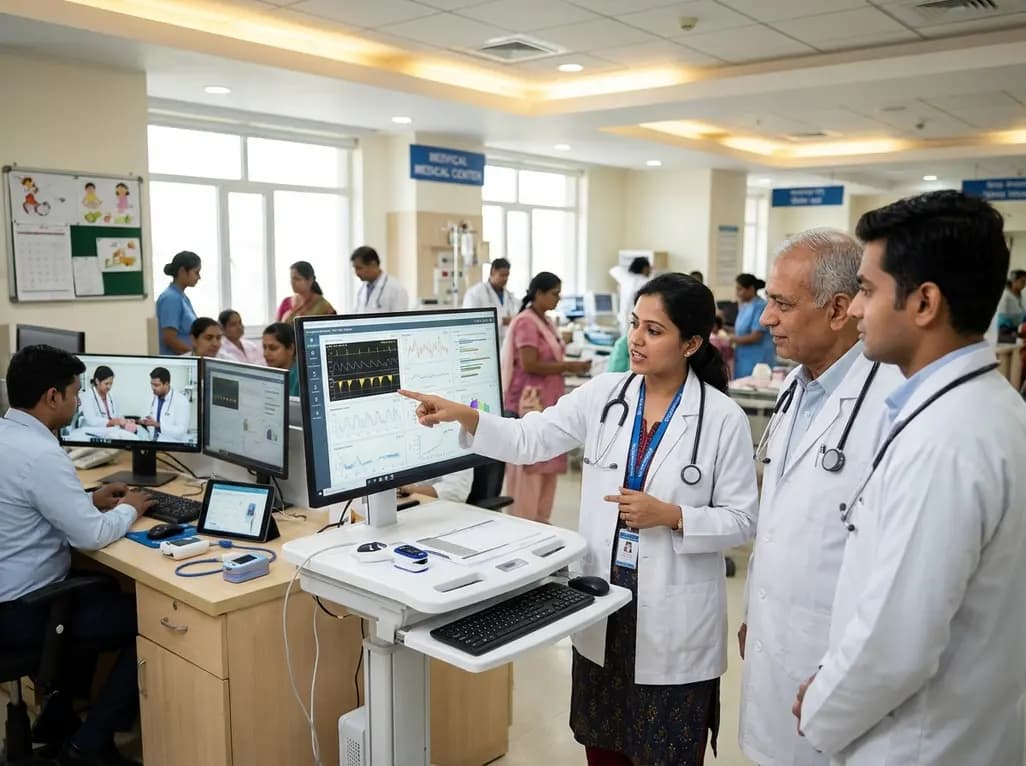
A landmark study details how an enterprise pediatric remote patient management model expanded from a single cardiology pilot to 16 diverse specialty programs by combining centralized digital operations with specialty clinical leadership.
Today

A comparative review of tension band wiring and intramedullary screw fixation in thumb metacarpophalangeal arthrodesis, evaluating union rates, hardware complications, and clinical outcomes.
Yesterday

A breakthrough ultrathin multimodal sensor decouples physical hemodynamic monitoring from disposable electrochemical calibration, achieving long-term wearable glucose prediction with 81.36% accuracy and a 9.12% MARD. This offers a robust, drift-free solution for outpatient metabolic surveillance.
Today
