.webp&w=384&q=75)

Loading, please wait...
Loading, please wait...

Recently, Delhi Health Minister Pankaj Kumar Singh reviewed several municipal health proposals. Specifically, he ordered a comprehensive action plan to implement anaemia screening for all age groups. This initiative aims to strengthen public healthcare delivery systems, focusing heavily on vulnerable populations like schoolchildren and women. Additionally, the government will deploy technology-driven interventions to achieve better community health outcomes.
During the review meeting, the minister carefully evaluated multiple strategies for maternal and child healthcare. For instance, discussions centered on introducing direct benefit transfer-based incentives for immunisation and Vitamin A supplementation. Consequently, this model will encourage families to complete essential vaccination schedules. Furthermore, the administration plans to strengthen management systems for Severe Acute Malnutrition (SAM) to save critical lives. Consequently, health officials will closely monitor post-delivery and post-abortion contraception continuation rates.
To address high anaemia rates among school kids, the department will draft a detailed screening plan under the Anaemia Mukt Bharat guidelines. Specifically, the government evaluated a pilot study comparing non-invasive and conventional invasive haemoglobin estimation methods. Therefore, medical teams can choose the most efficient diagnostic technology for field deployments. Moreover, the state intends to expand these digital solutions across all districts. Consequently, this approach will streamline early detection and therapeutic interventions for thousands of citizens.
Another key proposal involves establishing a model Integrated Nutrition Centre at Sardar Vallabh Bhai Patel Hospital. Indeed, this centre will combine standard medical care with AYUSH services, including Yoga. Therefore, patients can access holistic treatment under one roof. In addition, the minister directed officials to secure support through the National AYUSH Mission. Finally, the state will facilitate linkages with the existing Institutional Ethics Committee (IEC) framework. Consequently, this system will support local hospitals conducting research under ICMR guidelines.
Q1: What is the main goal of Delhi's new anaemia screening initiative?
The primary goal is to establish a comprehensive action plan for universal screening across all age groups, particularly targeting vulnerable groups like schoolchildren under the Anaemia Mukt Bharat initiative.
Q2: What innovative technologies are under consideration for anaemia detection?
The government recently reviewed a pilot study comparing non-invasive haemoglobin estimation methods with conventional invasive procedures. Consequently, these digital tools may support faster, pain-free field diagnostics.
Q3: How does the government plan to integrate traditional medicine?
Indeed, Delhi plans to establish a model Integrated Nutrition Centre at Sardar Vallabh Bhai Patel Hospital. This centre will provide AYUSH services, such as Yoga, alongside modern nutritional interventions.
Disclaimer: This content is for informational and educational purposes only. It does not constitute medical advice or replace professional judgment. Refer to the latest local and national guidelines for clinical practice.
References

Read summarized clinical updates, watch expert medical content, and earn CME certifications right from your smartphone.
Open your smartphone camera to scan and install.





Delhi Health Minister Pankaj Kumar Singh has ordered a comprehensive action plan for universal anaemia screening alongside several key nutrition initiatives...
5 months ago
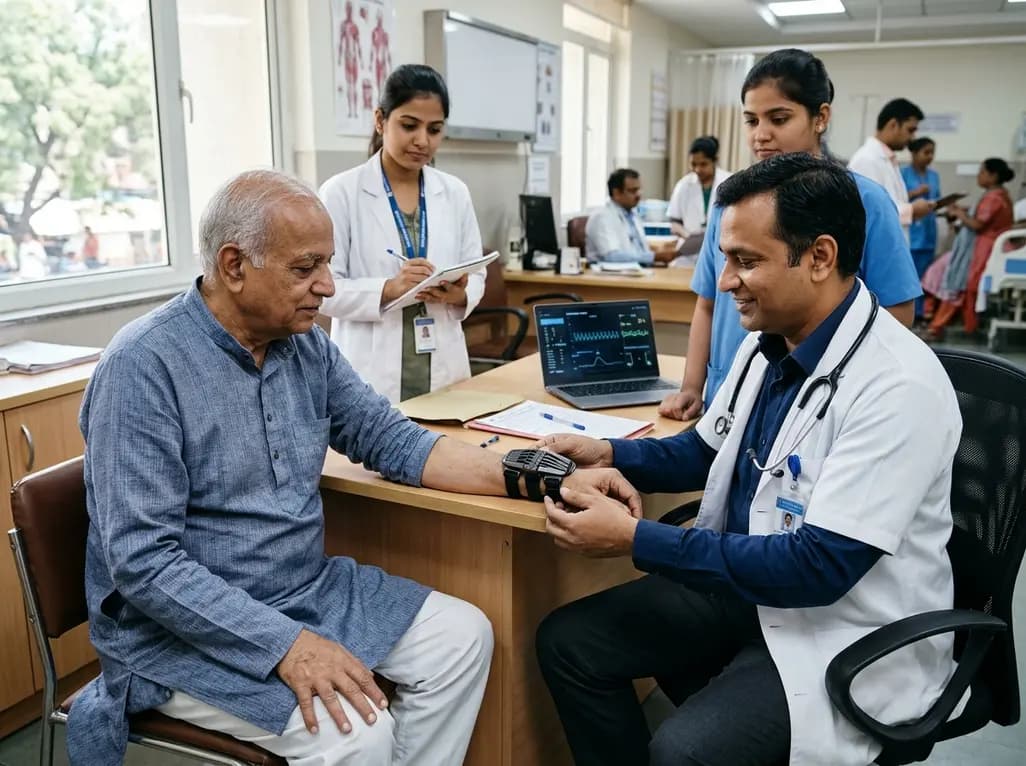
The TREM-AB open-label pilot study evaluated a wearable passive nonlinear vibration absorber for essential tremor. The Nonlinear Energy Sink bracelet reduced clinical Fahn-Tolosa-Marin tremor scores by 32.1% and electrophysiological tremor power by 49.2% with no adverse effects reported.
Today

A study in JAMIA Open shows lightweight open-source reasoning LLMs achieve up to 95% sensitivity and accelerate evidence synthesis screening by nearly twentyfold, presenting a cost-effective, scalable AI solution for biomedical research and systematic reviews.
Today
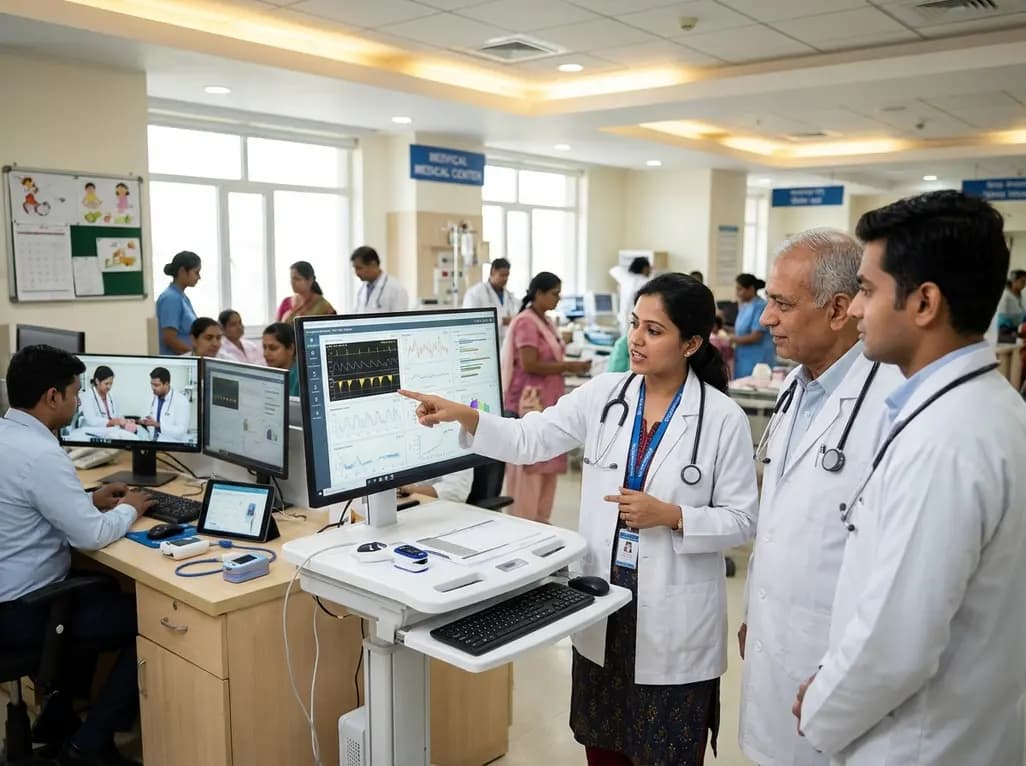
A landmark study details how an enterprise pediatric remote patient management model expanded from a single cardiology pilot to 16 diverse specialty programs by combining centralized digital operations with specialty clinical leadership.
Today

A comparative review of tension band wiring and intramedullary screw fixation in thumb metacarpophalangeal arthrodesis, evaluating union rates, hardware complications, and clinical outcomes.
Today
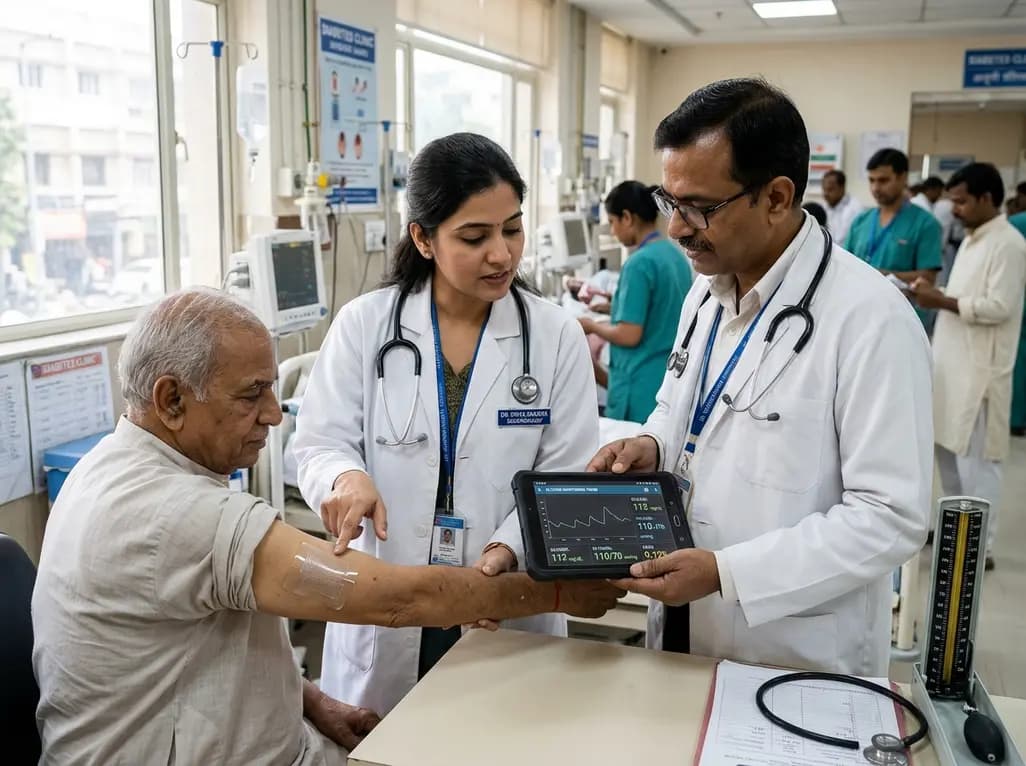
A breakthrough ultrathin multimodal sensor decouples physical hemodynamic monitoring from disposable electrochemical calibration, achieving long-term wearable glucose prediction with 81.36% accuracy and a 9.12% MARD. This offers a robust, drift-free solution for outpatient metabolic surveillance.
Today
