

Loading, please wait...
Loading, please wait...

Social determinants fundamentally influence health trajectories during childhood and youth. Recently, an observational study investigated how childhood socio-economic position influences adolescent substance use across three historical British cohorts. By harmonizing data across fifty years, researchers tracked evolving patterns in tobacco, alcohol, cannabis, and other illicit drugs. Notably, the study revealed contrasting socio-economic gradients across substances. While poverty consistently magnified tobacco risk, higher affluence correlated with increased alcohol consumption. Therefore, understanding these dynamics allows physicians to identify vulnerable youths more effectively. Because adolescent experimentation often sets lifelong health trajectories, clinical teams must recognize these social gradients during routine wellness evaluations.
To investigate longitudinal trends, researchers analyzed data from three major United Kingdom birth cohorts. These included the 1970 British Cohort Study, the Avon Longitudinal Study of Parents and Children, and the Millennium Cohort Study. Together, these cohorts represented more than 23,000 adolescents. Furthermore, the investigative team applied latent class analysis to classify socio-economic position. This statistical technique combined parental education, occupational prestige, home ownership, and material resources into distinct latent classes. Consequently, the investigators avoided relying on single indicators of economic background. The team regressed adolescent smoking, drinking, and drug experimentation against these derived classes. Importantly, the relationship between socio-economic background and addictive behaviors did not remain identical over time. Qualitative differences emerged across cohorts, reflecting shifting cultural norms, changing retail availability, and progressive public health legislation. Thus, the findings demonstrate that adolescent risk behaviors respond dynamically to broader societal transformations.
Among all evaluated substances, cigarette smoking demonstrated the most persistent socio-economic gradient across cohorts. In every generation, adolescents in the most disadvantaged latent class showed significantly higher odds of smoking. For example, in the 1970 cohort, disadvantaged adolescents faced an odds ratio of 1.42 for smoking initiation. However, this inequality widened substantially in later generations. Specifically, in the Avon cohort, disadvantaged youth had an odds ratio of 2.86 for smoking. Several compounding mechanisms explain this persistent health disparity. First, disadvantaged teenagers face greater psychosocial stressors and economic strain. Consequently, many turn to nicotine as an accessible coping mechanism. Second, higher parental smoking rates in lower-income households frequently normalize tobacco use. In addition, retail outlets historically concentrated in distressed neighborhoods. Therefore, clinicians must prioritize proactive nicotine screening for economically vulnerable youth, providing non-judgmental counseling before chronic nicotine dependence becomes established.
In sharp contrast to tobacco trends, alcohol consumption displayed an inverse socio-economic pattern. Across both the 1970 and millennial cohorts, adolescents from disadvantaged classes were less likely to drink. Furthermore, disadvantaged youth consumed alcohol less frequently than their more privileged peers. Most notably, disadvantaged adolescents in the Millennium Cohort Study showed significantly lower odds of binge drinking, with an odds ratio of 0.34. Consequently, higher socio-economic position acted as a distinct risk factor for heavy alcohol use. Multiple cultural and financial factors drive this affluent drinking paradox. For instance, wealthier parents often maintain higher household alcohol stocks, facilitating adolescent access. Moreover, affluent youth frequently possess greater disposable allowances to purchase alcohol independently. In addition, social norms within affluent peer networks often celebrate weekend drinking. Therefore, healthcare providers must not assume that affluence shields youth from substance harms. Instead, physicians should routinely evaluate alcohol intake across all socio-economic backgrounds.
The study revealed nuanced patterns regarding cannabis and other illicit substances. Interestingly, illicit drug use did not demonstrate statistically significant relationships with socio-economic classes across most cohorts. In both the 1970 cohort and the Millennium Cohort Study, cannabis experimentation remained comparable across economic strata. However, the Avon Longitudinal Study presented an exception, showing that socio-economic inequalities in illicit drug use peaked in that group. Epidemiologists believe that shifting drug markets in the 1990s contributed to this temporary peak. Beyond that period, illicit substance experimentation appeared largely independent of parental socio-economic standing. Consequently, factors like peer networks, individual sensation-seeking, and neighborhood availability exert greater influence than household wealth. For mental health professionals and primary care doctors, this finding carries vital diagnostic importance. Clinicians cannot rely on socio-economic stereotypes when assessing drug risks. Instead, healthcare teams must evaluate any adolescent who presents with declining academic performance, abrupt behavioral shifts, or emotional distress.
These longitudinal insights highlight the need for tailored clinical approaches in adolescent medicine. First, clinicians should implement universal screening protocols during routine visits. Validated instruments like the CRAFFT screening tool help doctors detect risk early, removing personal biases. Second, pediatricians and family physicians must recognize substance-specific vulnerabilities. While economically disadvantaged youth require intensive support against tobacco initiation, affluent adolescents need clear guidance regarding binge drinking hazards. Furthermore, doctors should incorporate brief motivational interviewing techniques during outpatient encounters. Clinicians can provide empathetic, confidential guidance to help adolescents understand personal health risks. In addition, engaging families remains essential for successful preventive care. Doctors should discuss parental modeling, household alcohol access, and healthy stress-management practices with caregivers. For Indian clinicians, these findings emphasize the importance of addressing both urban affluent experimentation and rural socioeconomic disadvantage. Ultimately, multi-level clinical interventions and evidence-based public health policies protect vulnerable youth from long-term addictive disorders.
Disadvantaged childhood environments frequently expose adolescents to heightened psychosocial stress, higher household smoking prevalence, and targeted commercial marketing. In addition, families facing financial distress often experience reduced access to recreational alternatives and preventative healthcare resources. Consequently, teenagers in these environments frequently utilize tobacco as an accessible coping mechanism to manage chronic tension. Healthcare professionals must therefore deliver early, non-judgmental nicotine screening and tailored cessation support to interrupt persistent generational cycles of tobacco dependence.
Adolescents from affluent families often have greater financial autonomy and disposable allowances, which directly facilitates the purchase of commercial alcohol. Furthermore, higher-income households frequently demonstrate permissive cultural attitudes toward recreational social drinking, which inadvertently normalizes heavy alcohol intake. In addition, social gatherings within affluent peer groups often center on drinking as an accepted marker of status. Clinicians must consequently screen youth across all socio-economic strata, dispelling the myth that wealth protects adolescents against substance abuse.
The CRAFFT screening tool is widely recommended by pediatric and psychiatric associations globally for adolescent substance evaluation. This validated questionnaire assesses riding in cars with impaired drivers, using substances to relax, using substances alone, forgetting things, peer pushback, and getting into trouble. In addition, the brief ASSIST-Y questionnaire offers structured risk stratification. Primary care physicians should administer these screening tools confidentially during annual adolescent physical examinations to facilitate prompt motivational counseling.
Disclaimer: This content is for informational and educational purposes only and does not constitute medical advice or establish a doctor-patient relationship. Qualified healthcare providers should evaluate individual circumstances and exercise their clinical judgment. Refer to the latest local and national guidelines for clinical practice.
References

Read summarized clinical updates, watch expert medical content, and earn CME certifications right from your smartphone.
Open your smartphone camera to scan and install.





A landmark study across three UK birth cohorts shows that childhood disadvantage consistently elevates smoking risk, while affluent adolescents show higher alcohol intake. Explore the clinical and public health implications of socio-economic gradients on youth substance use trajectories.
Today
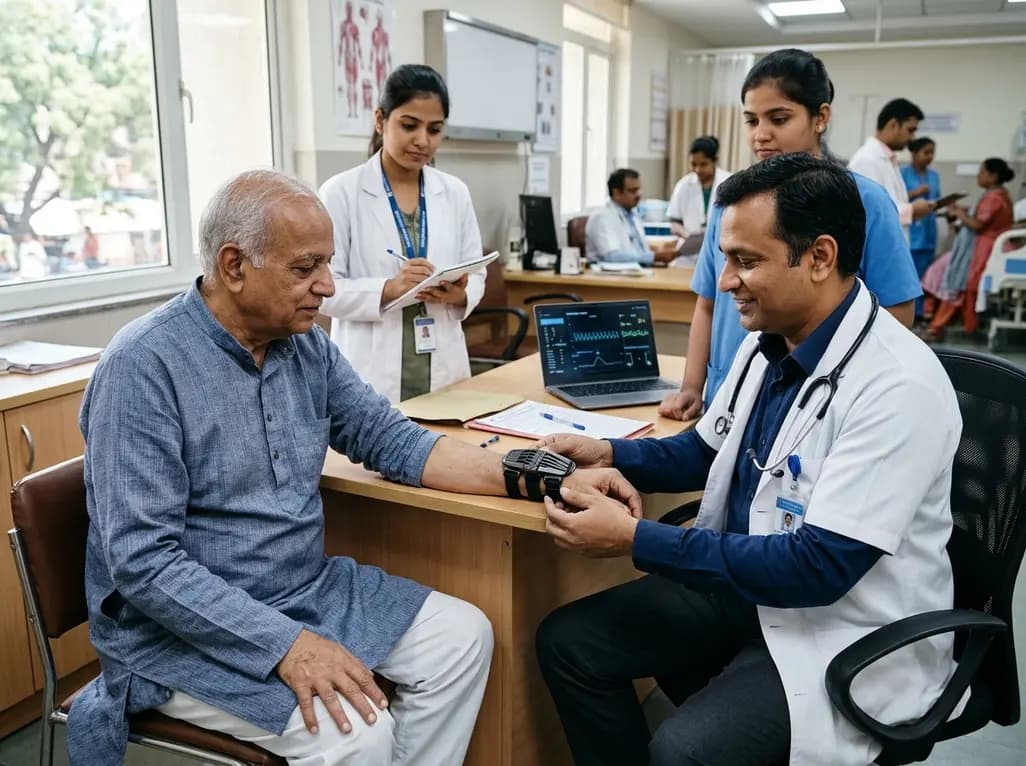
The TREM-AB open-label pilot study evaluated a wearable passive nonlinear vibration absorber for essential tremor. The Nonlinear Energy Sink bracelet reduced clinical Fahn-Tolosa-Marin tremor scores by 32.1% and electrophysiological tremor power by 49.2% with no adverse effects reported.
Today

A study in JAMIA Open shows lightweight open-source reasoning LLMs achieve up to 95% sensitivity and accelerate evidence synthesis screening by nearly twentyfold, presenting a cost-effective, scalable AI solution for biomedical research and systematic reviews.
Today
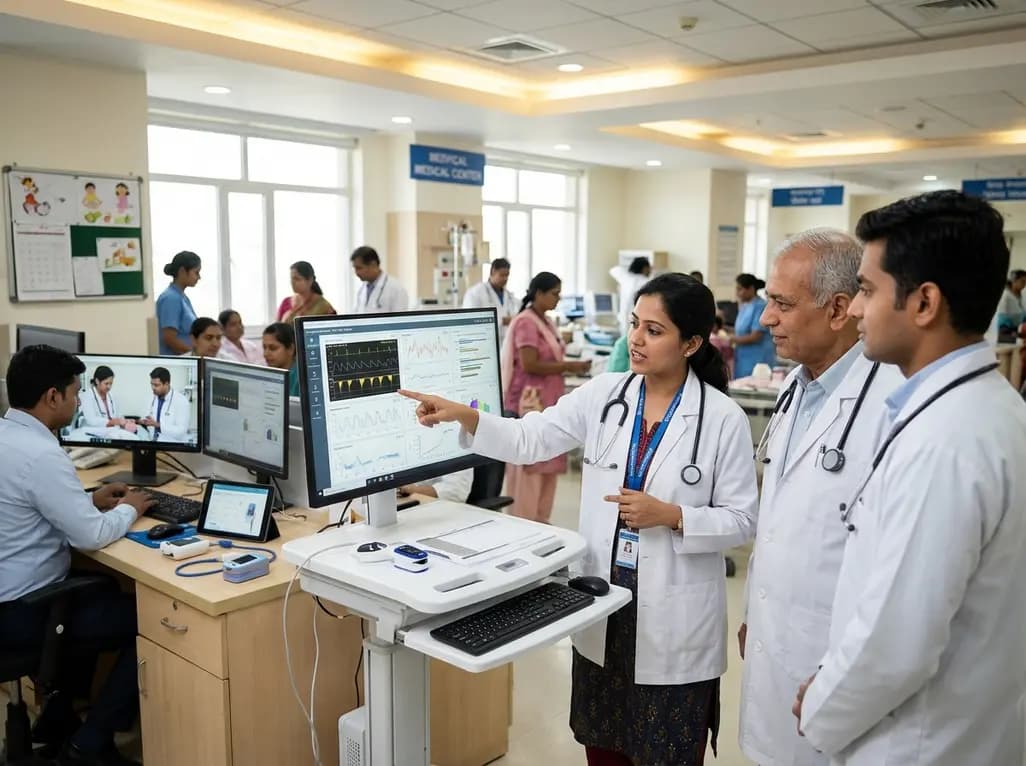
A landmark study details how an enterprise pediatric remote patient management model expanded from a single cardiology pilot to 16 diverse specialty programs by combining centralized digital operations with specialty clinical leadership.
Today

A comparative review of tension band wiring and intramedullary screw fixation in thumb metacarpophalangeal arthrodesis, evaluating union rates, hardware complications, and clinical outcomes.
Today
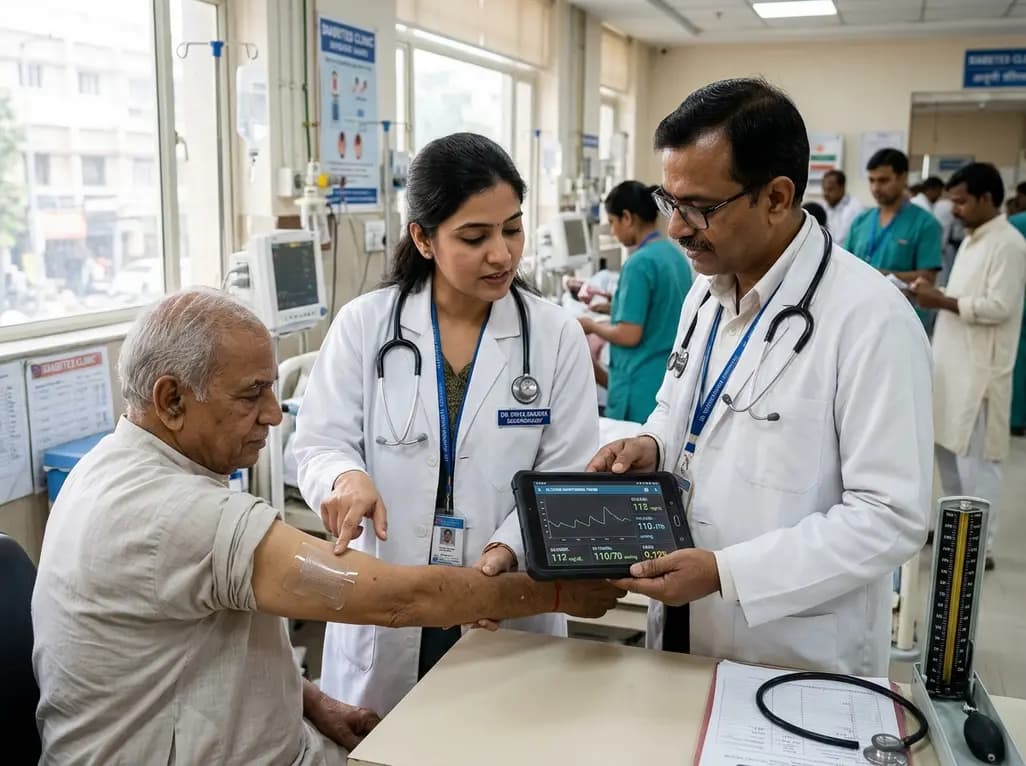
A breakthrough ultrathin multimodal sensor decouples physical hemodynamic monitoring from disposable electrochemical calibration, achieving long-term wearable glucose prediction with 81.36% accuracy and a 9.12% MARD. This offers a robust, drift-free solution for outpatient metabolic surveillance.
Today
