.webp&w=384&q=75)

Loading, please wait...
Loading, please wait...

The United States government has announced the cessation of its Zimbabwe health aid following the collapse of high-stakes bilateral negotiations. For years, Washington served as the primary donor for the nation's public health sector. However, talks for a new $367 million five-year deal ended abruptly this week. Consequently, health officials now face the daunting task of winding down established programs.
The primary friction point involved comprehensive access to sensitive medical data. Zimbabwean authorities rejected the US proposal because it required sharing virus samples and epidemiological information. Nick Mangwana, the government spokesperson, stated that the US failed to offer reciprocal data sharing. Furthermore, the Zimbabwean government sought guarantees for access to medical innovations derived from their data. Without such assurances, officials felt the nation was merely providing raw materials for foreign scientific discovery.
The withdrawal of support threatens several key public health initiatives. Currently, approximately 1.2 million Zimbabweans receive HIV treatment through US-supported programs. The funding also covered tuberculosis, malaria, and maternal health services. Additionally, the recent rollout of lenacapavir, a long-acting HIV prevention drug, now faces an uncertain future. Experts warn that abrupt funding cuts could lead to treatment interruptions and increased drug resistance.
This development reflects a broader change in US global health strategy. Under a new \"America First\" framework, the administration has moved away from multilateral organizations like the WHO. Instead, it pursues individual bilateral agreements with specific conditions. While sixteen other African nations have signed these new pacts, Zimbabwe remains a notable exception. These deals often require recipient countries to increase their own domestic health spending significantly.
Q1: Why did the Zimbabwe health aid negotiations collapse?
Talks failed primarily due to disagreements over sensitive data sharing and national sovereignty. The Zimbabwean government sought reciprocal access to medical innovations and data, which the US proposal did not guarantee.
Q2: How many Zimbabweans are currently supported by US HIV programs?
Approximately 1.2 million men, women, and children currently receive HIV treatment through US-supported health programs in the country.
Q3: What other health programs are impacted by this decision?
Beyond HIV treatment, the withdrawal affects programs dedicated to tuberculosis, malaria, maternal and child health, and disease outbreak preparedness.
Disclaimer: This content is for informational and educational purposes only. It does not constitute medical advice or replace professional judgment. Refer to the latest local and national guidelines for clinical practice.
References

Read summarized clinical updates, watch expert medical content, and earn CME certifications right from your smartphone.
Open your smartphone camera to scan and install.





The US ends health aid to Zimbabwe after talks on a $367M deal fail over data sharing. The move affects 1.2M people on HIV treatment and several health prog...
7 months ago
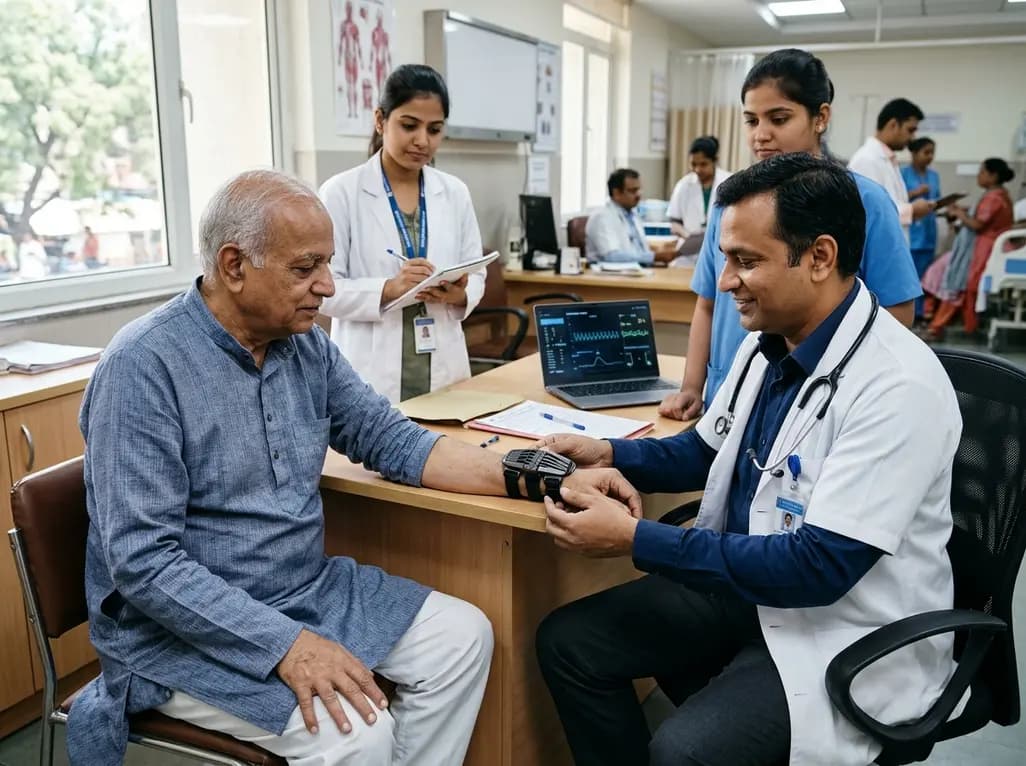
The TREM-AB open-label pilot study evaluated a wearable passive nonlinear vibration absorber for essential tremor. The Nonlinear Energy Sink bracelet reduced clinical Fahn-Tolosa-Marin tremor scores by 32.1% and electrophysiological tremor power by 49.2% with no adverse effects reported.
Today
A population-based study of 20,928 children reveals that small vulnerable newborns face sex-divergent mental capital outcomes at ages 6-7: term SGA girls show higher behavioral difficulties and lower resilience, while preterm non-SGA boys experience increased behavioral problems.
Today
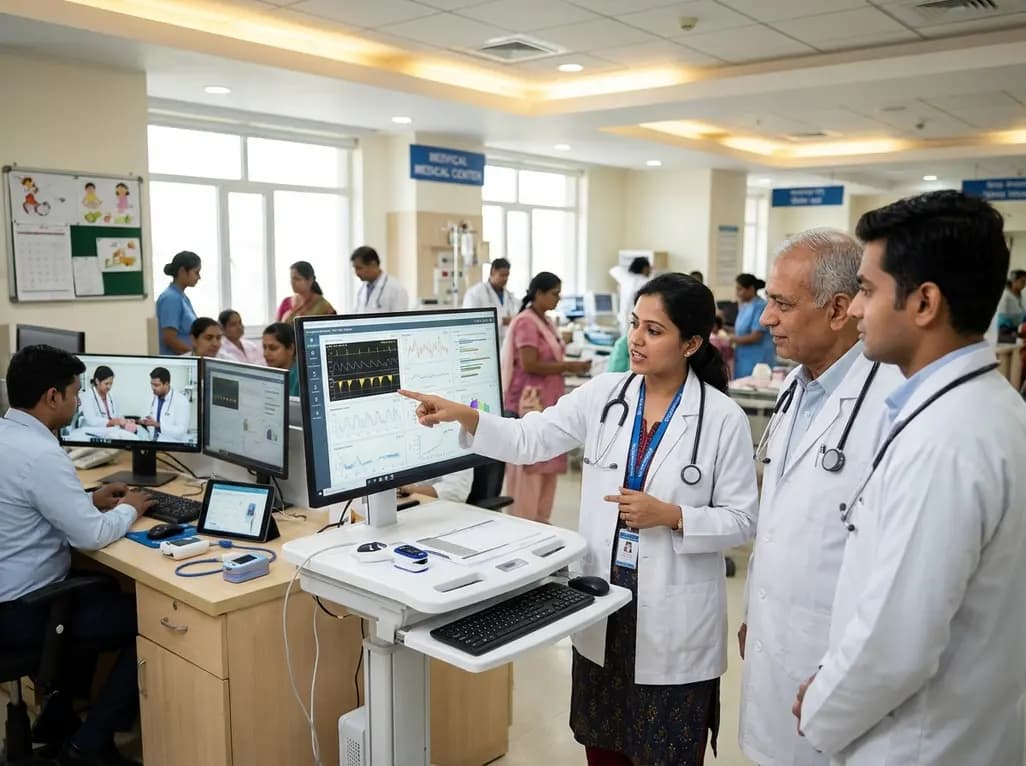
A landmark study details how an enterprise pediatric remote patient management model expanded from a single cardiology pilot to 16 diverse specialty programs by combining centralized digital operations with specialty clinical leadership.
Today

A comparative review of tension band wiring and intramedullary screw fixation in thumb metacarpophalangeal arthrodesis, evaluating union rates, hardware complications, and clinical outcomes.
Today
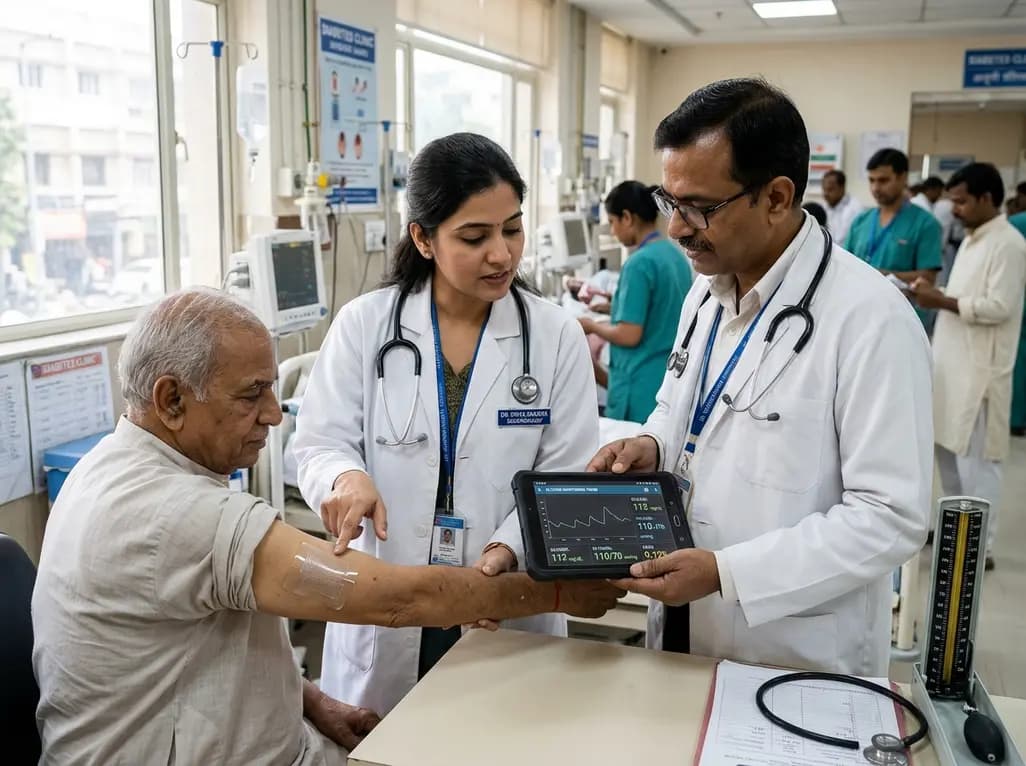
A breakthrough ultrathin multimodal sensor decouples physical hemodynamic monitoring from disposable electrochemical calibration, achieving long-term wearable glucose prediction with 81.36% accuracy and a 9.12% MARD. This offers a robust, drift-free solution for outpatient metabolic surveillance.
Today
