.webp&w=384&q=75)

Loading, please wait...
Loading, please wait...
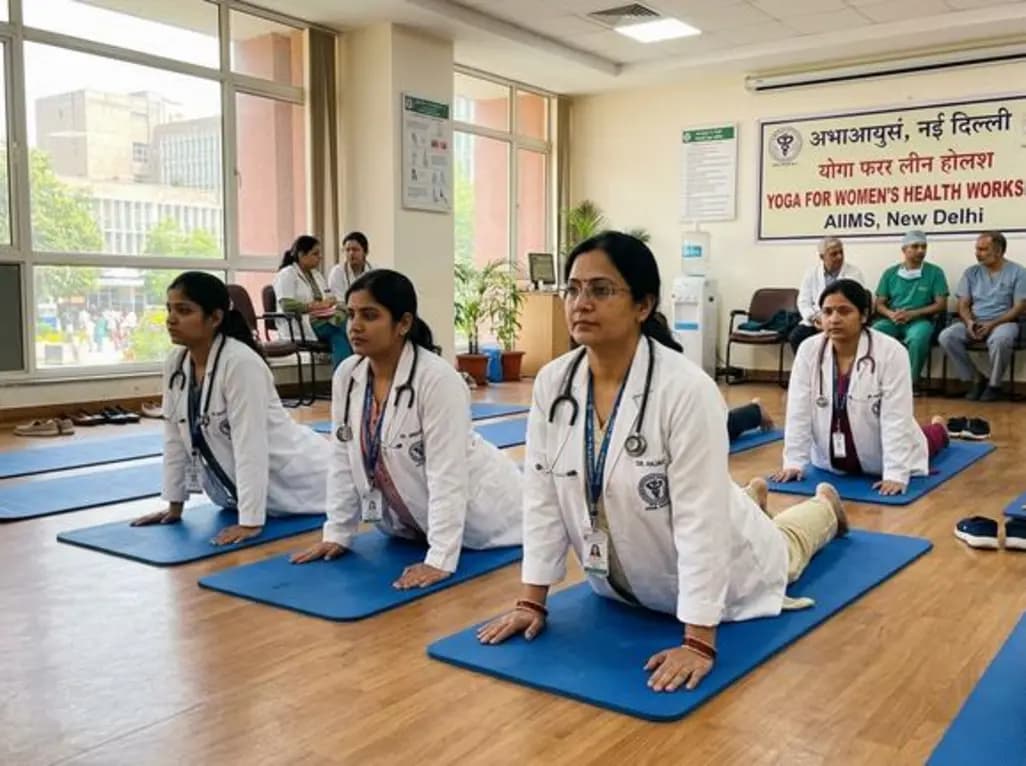
Polycystic ovary syndrome (PCOS), recently renamed polyendocrine metabolic ovarian syndrome (PMOS), affects millions of women worldwide. Fortunately, clinical research from the All India Institute of Medical Sciences (AIIMS) highlights the power of yoga for PMOS. Specifically, two breakthrough studies demonstrate that mind-body intervention offers therapeutic benefits far beyond simple weight management. Therefore, clinicians should consider incorporating structured yoga programs into standard treatment protocols.
During the 12-week supervised program, participants engaged in regular yoga, pranayama, and meditation sessions. Consequently, the researchers observed a marked improvement in metabolic and hormonal profiles. Specifically, the results showed substantial reductions in body weight, waist circumference, and testosterone levels. Furthermore, the intervention significantly lowered low-density lipoprotein (LDL) cholesterol and improved overall menstrual regularity. These systemic changes help address the underlying abnormalities of the condition.
According to Professor Rima Dada of AIIMS, PMOS is a complex metabolic disorder. Consequently, it increases the long-term risk of diabetes, fatty liver disease, and cardiovascular complications. However, advanced laboratory analyses revealed that yoga modifies the genetic pathways driving these risks. Specifically, yoga improved the expression of genes related to insulin sensitivity, lipid metabolism, and systemic inflammation. Additionally, these biological changes directly target the oxidative stress that drives metabolic dysfunction.
In addition to metabolic benefits, the studies reported an encouraging trend in fertility. Specifically, out of 16 participants struggling with long-standing infertility, seven conceived during or shortly after the program. While pregnancy was not a predefined clinical outcome, these findings are highly promising. Therefore, larger clinical trials are necessary to confirm these reproductive benefits. In conclusion, yoga offers a safe, low-cost, and non-pharmacological addition to standard care.
Q1: What is PMOS, and how does it relate to PCOS?
Polycystic Ovary Syndrome (PCOS) was recently renamed Polyendocrine Metabolic Ovarian Syndrome (PMOS) in 2026 to reflect its broader systemic impact on multiple endocrine and metabolic systems, rather than just the ovaries.
Q2: How long was the yoga intervention in the AIIMS study, and what did it include?
The supervised AIIMS program lasted for 12 weeks. It combined regular sessions of physical yoga postures, pranayama (controlled breathing), and meditation.
Q3: Did the AIIMS study observe any positive impact on fertility?
Yes, the researchers reported an encouraging fertility trend. Out of 16 participants with long-standing infertility, seven conceived during the 12-week program or within three months of completing it.
Disclaimer: This content is for informational and educational purposes only. It does not constitute medical advice or replace professional judgment. Refer to the latest local and national guidelines for clinical practice.
References

Read summarized clinical updates, watch expert medical content, and earn CME certifications right from your smartphone.
Open your smartphone camera to scan and install.





A recent study led by AIIMS Delhi reveals that a 12-week structured yoga program can significantly improve hormonal levels, menstrual regularity, and insulin sensitivity in women with Polyendocrine Metabolic Ovarian Syndrome (PMOS), proving its efficacy as a therapeutic adjunct beyond simple weight loss.
4 months ago

Review how tailored exercise programs benefit frail older patients with heart failure. Explore pathophysiological mechanisms, individualized training prescriptions, and strategies to overcome adherence barriers in clinical practice.
Today

Leucine Rich Bio has introduced South Asia's first comprehensive vaginal microbiome test, BugSpeaks. By profiling microbial dysbiosis, pathogens, and antimicrobial resistance, this next-generation diagnostic platform provides clinicians with deeper insights into recurrent infections, fertility, and reproductive health.
Today

In high-risk pulmonary embolism complicated by severe anemia and active uterine bleeding, systemic thrombolysis is contraindicated. Large-bore aspiration thrombectomy provides rapid hemodynamic rescue without fibrinolysis, supported by inferior vena cava filter placement and multidisciplinary critical care.
Today

This comparative study evaluates posterior labral tears with and without glenohumeral instability, highlighting distinct demographic patterns, MRI underestimation in stable shoulders, and successful arthroscopic repair outcomes.
Today

A clinical study demonstrates that early intervention with tocilizumab, either as monotherapy or bridged with corticosteroids, achieves significant proptosis reduction and resolves active inflammation in treatment-naive thyroid eye disease.
Today
