

Loading, please wait...
Loading, please wait...

Diagnostic paradigms in female urogenital health are currently undergoing a significant technological transformation. Historically, clinicians relied on wet mounts and standard cultures to evaluate symptomatic vaginal discharge and pelvic discomfort. However, these traditional diagnostic tools frequently fail to identify fastidious anaerobic species or polymicrobial communities. To bridge this critical diagnostic gap, genomics pioneer Leucine Rich Bio has introduced BugSpeaks in India. This novel vaginal microbiome test evaluates complex local microenvironments across South and Middle East Asia. Consequently, healthcare providers can now assess microbial ecosystems with unprecedented molecular resolution.
Routine gynecological evaluations have historically depended on traditional culture methodologies and microscopic criteria such as Amsel criteria or Nugent scoring. While these approaches provide immediate insights for common acute presentations, they exhibit substantial diagnostic shortcomings. For example, standard culture techniques struggle to isolate delicate anaerobic microorganisms that thrive within complex polymicrobial biofilms. Furthermore, traditional Petri dish cultures cannot quantify the relative abundance of commensal versus pathogenic organisms accurately. As a result, diagnostic investigations frequently miss underlying non-albicans species, fastidious anaerobes, and subclinical dysbiosis patterns.
Moreover, standard cultures provide virtually no data on the molecular virulence factors or protective capabilities of local flora. Beneficial bacteria, particularly hydrogen peroxide-producing lactobacilli, maintain vaginal physiological balance by sustaining a low acidic pH. When standard cultures report non-specific flora, clinicians must frequently choose empiric broad-spectrum antibiotic therapies. Unfortunately, widespread empiric prescribing often disrupts commensal bacterial communities further and triggers recurrent infections. Therefore, modern clinical practice demands advanced diagnostic platforms that overcome these cultural limitations. High-throughput sequencing modalities provide this precision by capturing the entire genetic landscape of the local microbial niche directly from clinical swabs.
The BugSpeaks vaginal microbiome test leverages next-generation sequencing and advanced metagenomic algorithms to map urogenital microflora. Unlike conventional targeted assays that examine single organisms, this comprehensive approach sequences genomic material across entire microbial communities. Therefore, the diagnostic output captures bacterial, fungal, and eukaryotic profiles simultaneously from a single patient sample. The resulting platform delivers an exhaustive clinical assessment organized across eight dedicated diagnostic sections. Specifically, the analytical report evaluates dysbiosis, reproductive fertility indices, sexually transmitted infection risk, and menopausal transitional shifts.
Additionally, the platform analyzes predictive mucosal pH, functional biochemical secretions, systemic gut-vagina cross-talk, and comprehensive antimicrobial resistance markers. High-throughput sequencing isolates microbial DNA directly from clinical swabs, bypassing the need for viable cell growth in synthetic laboratory media. Consequently, clinicians receive accurate quantitative relative abundances for fastidious taxa such as Prevotella, Megasphaera, and Atopobium vaginae. Furthermore, bioinformatic algorithms benchmark individual profiles against population-specific reference datasets from Asian cohorts. This comparative scoring architecture enables specialists to pinpoint subtle functional disruptions before clinical symptoms manifest severely. Ultimately, this genomic framework provides objective biochemical data to guide personalized therapeutic strategies.
A healthy lower genital tract relies on the protective dominance of specific Lactobacillus species, such as Lactobacillus crispatus. These beneficial microorganisms produce lactic acid, bacteriocins, and biosurfactants that actively inhibit foreign pathogens. However, when competitive lactobacilli populations decline, diverse opportunistic anaerobes rapidly proliferate and cause vaginal dysbiosis. Clinical studies confirm that this dysbiotic state strongly correlates with recurrent bacterial vaginosis, trichomoniasis, and elevated susceptibility to sexually transmitted infections. Furthermore, persistent subclinical inflammation damages the cervical epithelial barrier and alters mucosal immunity significantly.
Consequently, reproductive medicine specialists now recognize the vaginal microbiome as a pivotal factor in fertility outcomes. For instance, high microbial diversity and non-lactobacillus dominance correlate with unexplained implantation failure during in vitro fertilization cycles. Similarly, pathogenic biofilms can ascend into the upper reproductive tract, elevating the risk of chronic endometritis and pelvic inflammatory disease. In pregnant patients, unmanaged dysbiosis represents a well-established risk factor for preterm labor, chorioamnionitis, and premature rupture of membranes. Therefore, detailed taxonomic profiling allows obstetricians and gynecologists to identify microbial risk signatures early. Early therapeutic correction with targeted probiotics or tailored antimicrobials can substantially optimize reproductive outcomes and preserve mucosal barrier integrity.
The mucosal immune system operates through interconnected biological networks, and the gut-vagina axis plays an increasingly recognized role. Clinical evidence demonstrates that intestinal microflora actively influence distal mucosal tissues through circulating metabolites, short-chain fatty acids, and immunomodulatory cytokines. Furthermore, gastrointestinal reservoirs frequently harbor bacteria that can migrate across perineal tissues to colonize the urogenital tract. The BugSpeaks diagnostic platform examines this systemic connection to explain why certain patients experience intractable or recurrent urogenital infections. Consequently, gynecologists can evaluate whether recurrent bacterial vaginosis stems from an underlying gastrointestinal dysbiosis reservoir.
Additionally, the test evaluates local functional secretions and predictive pH dynamics across the mucosal epithelial layer. Estrogen fluctuations during menopausal transitions directly dictate glycogen availability, which healthy lactobacilli require to synthesize protective lactic acid. As circulating estrogen levels decrease during perimenopause and menopause, vaginal pH rises, allowing pathogenic anaerobes to colonize vulnerable tissues. Thus, profiling metabolic secretions alongside microbial composition allows clinicians to differentiate between primary infectious vaginitis and genitourinary syndrome of menopause. By understanding these functional secretory parameters, clinicians can prescribe targeted hormone therapies or specific prebiotics instead of repeated antimicrobial rounds.
Empiric antimicrobial prescription remains a persistent clinical challenge in outpatient gynecological practice across India and worldwide. Patients with non-specific vulvovaginal complaints frequently receive repetitive courses of metronidazole, clindamycin, or broad-spectrum antifungals without definitive culture confirmation. Unfortunately, this repetitive therapeutic pattern drives the selection of multidrug-resistant pathogens and promotes stubborn polymicrobial biofilms. The incorporation of antimicrobial resistance profiling within the metagenomic report directly addresses this global healthcare challenge. By identifying specific resistance genes, the assay enables practitioners to practice rational, evidence-based antimicrobial stewardship.
Furthermore, molecular identification distinguishes between simple colonization and active dysbiosis, preventing unnecessary antibiotic courses in asymptomatic patients. When medical intervention becomes necessary, physicians can select precise therapeutic agents that eliminate pathogenic invaders while sparing delicate commensal lactobacilli. Additionally, the test supports the rational selection of targeted biotherapeutics and strain-specific probiotics to restore microbial homeostasis sustainably. Regular follow-up evaluations also allow clinicians to monitor mucosal recolonization and confirm complete biofilm eradication. Ultimately, this targeted diagnostic model reduces therapeutic failures, minimizes healthcare costs, and protects the global armamentarium of antimicrobial medications against escalating resistance.
Q1: How does a vaginal microbiome test differ from a standard culture or wet mount?
Traditional wet mounts and culture techniques detect only living organisms that survive synthetic growth media, often missing fastidious anaerobic bacteria. In contrast, a genomic vaginal microbiome test utilizes high-throughput next-generation sequencing. This technology identifies all bacterial and fungal DNA directly from the swab. Consequently, it provides clinicians with an exhaustive taxonomic breakdown, quantitative relative abundances, and active resistance profiles that standard laboratory cultures consistently overlook.
Q2: Why is profiling the vaginal microbiome clinically valuable during fertility treatments?
A balanced microbiome dominated by protective Lactobacillus species creates an optimal biochemical environment for embryonic implantation. Conversely, high microbial diversity and anaerobic dysbiosis trigger local mucosal inflammation and alter cervical mucus properties. Research indicates that pathogenic microbes can ascend into the uterine cavity, causing subclinical endometritis and reducing IVF success rates. Therefore, pre-treatment microbial testing allows clinicians to treat dysbiosis proactively and improve pregnancy outcomes.
Q3: How does the gut-vagina axis influence recurrent urogenital infections in women?
The gastrointestinal tract serves as an anatomical and immunological reservoir for microbial organisms that can colonize the perineum and vagina. Furthermore, gut microbiota produce circulating systemic metabolites and immunoglobulins that regulate mucosal barrier integrity throughout the urogenital tract. When gut dysbiosis persists, it repeatedly seeds opportunistic pathogens into the lower reproductive tract. Thus, assessing both microbial axes enables physicians to address systemic root causes rather than treating superficial symptoms repeatedly.
Disclaimer: This content is for informational and educational purposes only. It does not constitute medical advice or replace professional judgment. Refer to the latest local and national guidelines for clinical practice.
References

Read summarized clinical updates, watch expert medical content, and earn CME certifications right from your smartphone.
Open your smartphone camera to scan and install.





Leucine Rich Bio has introduced South Asia's first comprehensive vaginal microbiome test, BugSpeaks. By profiling microbial dysbiosis, pathogens, and antimicrobial resistance, this next-generation diagnostic platform provides clinicians with deeper insights into recurrent infections, fertility, and reproductive health.
Today

Review how tailored exercise programs benefit frail older patients with heart failure. Explore pathophysiological mechanisms, individualized training prescriptions, and strategies to overcome adherence barriers in clinical practice.
Today
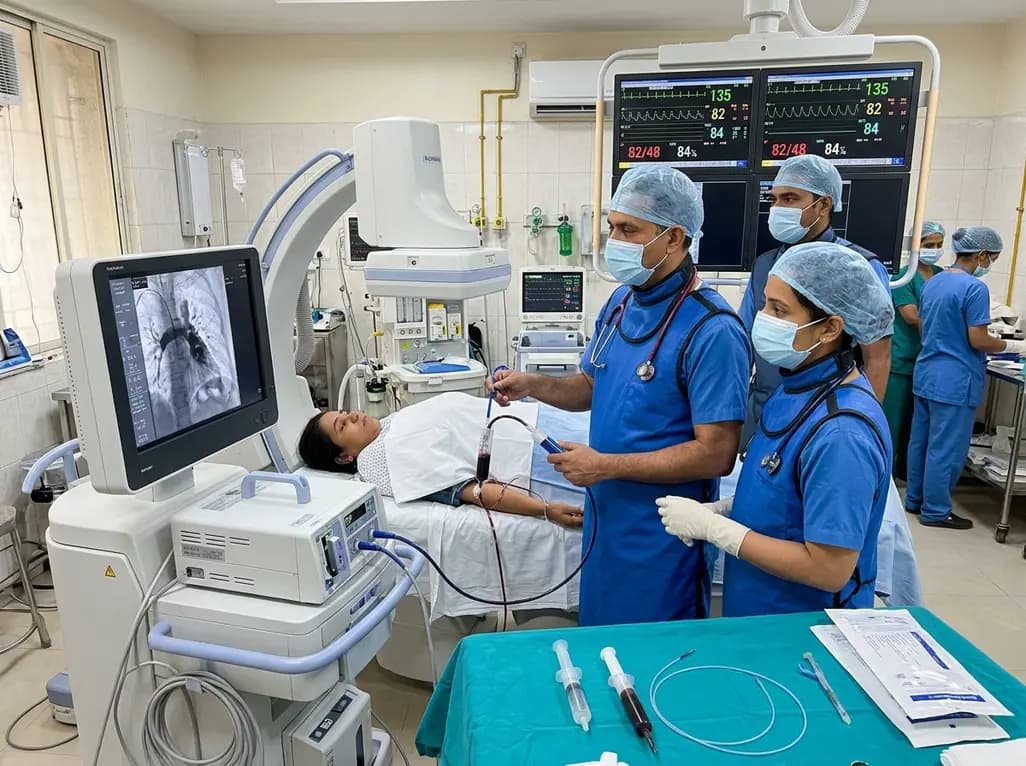
In high-risk pulmonary embolism complicated by severe anemia and active uterine bleeding, systemic thrombolysis is contraindicated. Large-bore aspiration thrombectomy provides rapid hemodynamic rescue without fibrinolysis, supported by inferior vena cava filter placement and multidisciplinary critical care.
Today

This comparative study evaluates posterior labral tears with and without glenohumeral instability, highlighting distinct demographic patterns, MRI underestimation in stable shoulders, and successful arthroscopic repair outcomes.
Today

A clinical study demonstrates that early intervention with tocilizumab, either as monotherapy or bridged with corticosteroids, achieves significant proptosis reduction and resolves active inflammation in treatment-naive thyroid eye disease.
Today
