.webp&w=384&q=75)

Loading, please wait...
Loading, please wait...
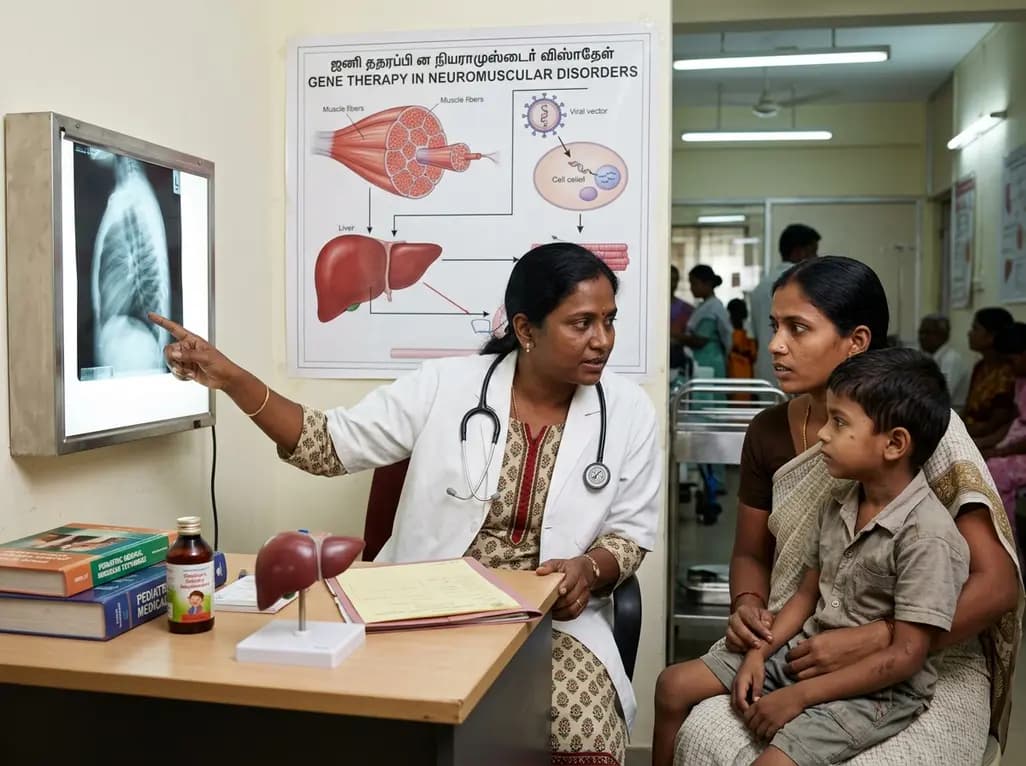
X-linked myotubular myopathy represents one of the most severe congenital myopathies diagnosed in neonates and young infants. The condition arises from pathogenic loss-of-function variants in the MTM1 gene on the X chromosome. This critical gene encodes myotubularin, which functions as a specialized lipid phosphatase. Specifically, myotubularin dephosphorylates phosphatidylinositol 3-phosphate and phosphatidylinositol 3,5-bisphosphate within intracellular membranes. Consequently, myotubularin deficiency disrupts essential membrane trafficking, endosomal regulation, and organelle structure. Affected male infants typically present at birth with profound hypotonia, marked generalized muscle weakness, and respiratory failure. Therefore, most affected neonates require prompt endotracheal intubation and mechanical ventilatory assistance. In addition, severe bulbar involvement frequently impairs swallowing, necessitating long-term gastrostomy tube feeding. Historically, clinicians viewed this devastating disorder as an exclusively skeletal muscle condition. Because of profound respiratory muscle failure, approximately fifty percent of affected children die before age two. However, emerging clinical investigations demonstrate that loss of myotubularin compromises multiple organ systems beyond skeletal muscle. Neurologists and pediatric specialists now recognize systemic pathological consequences across multiple non-contractile tissues.
While profound motor weakness dominates the initial presentation, clinicians increasingly observe complex extra-muscular pathology in surviving patients. Notably, hepatobiliary complications have emerged as a primary non-muscle phenotype in children with myotubularin deficiency. Registry analyses indicate that more than half of affected boys exhibit baseline liver abnormalities. These signs include intermittent cholestasis, elevated serum transaminases, gallstones, and abnormal liver ultrasound findings. Furthermore, hepatic peliosis, a rare vascular condition characterized by blood-filled cystic spaces, occurs in several long-surviving patients. Pathologists also report progressive portal fibrosis and architectural distortion in hepatic biopsy specimens. Consequently, liver dysfunction poses an ongoing risk for unexpected clinical decompensation. Researchers initially attributed these hepatic complications solely to chronic hypoxia, severe malnutrition, or prolonged parenteral nutrition. However, recent molecular investigations confirm that myotubularin plays an essential, cell-autonomous role within hepatocytes and cholangiocytes. Without functional myotubularin, hepatic cells cannot properly organize vesicular transport networks or regulate bile acid secretion. Therefore, pre-existing subclinical hepatobiliary fragility represents an intrinsic disease feature rather than a secondary complication.
The therapeutic landscape for this lethal congenital condition shifted dramatically with the advent of recombinant adeno-associated virus vectors. Investigators developed AT132, an investigational AAV8 vector engineered to deliver functional human MTM1 cDNA under a muscle-specific promoter. Clinical data from the phase 1/2 ASPIRO trial demonstrated unprecedented, transformative clinical improvements in treated boys. Specifically, treated patients achieved major neuromuscular milestones, including independent head control, sitting unsupported, and standing. Remarkably, sixteen of twenty-four treated boys successfully achieved complete independence from continuous mechanical ventilation. Nevertheless, this remarkable clinical success coincided with devastating and unexpected safety setbacks. At the higher vector dose, four older and heavier boys developed progressive hepatobiliary failure and tragically died. Consequently, regulatory authorities placed the clinical trial on an immediate clinical hold. Careful post-mortem evaluations revealed severe cholestasis, widespread canalicular microvilli loss, and systemic bacterial sepsis. Importantly, all patients who suffered fatal outcomes possessed pre-existing hepatobiliary disease prior to infusion. Thus, the clinical trial underscored how systemic high-dose viral capsids can overwhelm an already compromised hepatic parenchyma.
To uncover why high vector loads triggered lethal toxicity, laboratory researchers turned to innovative preclinical disease models. Earlier murine knockout models failed to capture hepatotoxicity because standard laboratory conditions masked subtle liver vulnerabilities. However, recent zebrafish models lacking myotubularin demonstrated severe canalicular trafficking defects and impaired bile flux. Specifically, myotubularin directly associates with Rab11 endosomes to traffic essential canalicular transporters, including the bile salt export pump. In addition, groundbreaking preclinical studies identified crucial environmental modifiers of hepatic injury in myotubularin deficiency. Researchers discovered that modified dietary formulations combined with systemic AAV8 administration rapidly precipitated severe cholestatic injury in mice. Because most children with severe myopathy rely exclusively on specialized enteral formula feedings, nutritional factors strongly impact hepatocyte metabolism. When massive AAV vector capsids enter liver tissue, hepatocytes face intense intracellular stress and proteasome activation. Furthermore, pre-existing bile acid accumulation synergizes with viral capsid-induced stress, culminating in cellular necrosis. Consequently, safe clinical translation demands a comprehensive understanding of how diet, underlying genetics, and vector biology intersect.
Moving forward, the medical community must refine therapeutic paradigms to ensure both exceptional neuromuscular efficacy and hepatobiliary safety. First, clinical protocols must establish rigorous hepatic exclusion criteria and exhaustive baseline profiling before gene replacement. Clinicians must utilize advanced liver elastography, serum bile acid quantification, and frequent ultrasound examinations to monitor liver integrity. Second, vector engineers are actively developing novel viral capsids with enhanced skeletal muscle tropism and reduced hepatic sequestration. By de-targeting the liver, lower systemic doses can achieve therapeutic muscle transduction without triggering massive hepatocyte injury. In addition, alternative delivery platforms, such as lipid nanoparticles encapsulating modified messenger RNA, offer promising non-viral pathways to restore myotubularin. Furthermore, small molecule therapeutics such as dynamin inhibitors could provide supportive benefits by partially restoring canalicular membrane dynamics. Multidisciplinary care teams consisting of pediatric neurologists, hepatologists, intensivists, and geneticists must coordinate every stage of patient management. Therefore, ongoing clinical registries will play an indispensable role in defining the natural history of hepatic disease in this population. Ultimately, through these rigorous scientific efforts, safe and curative therapies remain within reach.
Loss of functional myotubularin disrupts essential endosomal trafficking pathways within hepatocytes and cholangiocytes. This lipid phosphatase regulates phosphatidylinositol metabolism, which maintains bile canaliculus architecture and transporter localization. Consequently, myotubularin deficiency impairs normal bile salt export pump trafficking to the canalicular membrane. This defect causes progressive intrahepatic cholestasis, portal fibrosis, and increased susceptibility to metabolic injury, proving that liver pathology is an inherent feature rather than a secondary complication.
Four patients tragically died from progressive hepatobiliary dysfunction and systemic sepsis after receiving high-dose systemic AAV8 vector therapy. These children were older, heavier, and received higher total viral loads while possessing pre-existing subclinical hepatobiliary disease. When massive vector capsids accumulated in already fragile hepatocytes, overwhelming intracellular organelle stress occurred. Consequently, severe canalicular breakdown, worsening cholestasis, and immune activation triggered catastrophic liver failure, highlighting the vulnerability of diseased hepatic parenchyma to viral load.
Researchers are developing next-generation viral vectors with enhanced muscle tropism and reduced hepatic uptake to lower necessary systemic vector doses. Furthermore, scientists are exploring non-viral delivery modalities, including lipid nanoparticles, to deliver functional messenger RNA directly to tissues. Clinicians must also establish rigorous baseline liver screening, including transient elastography and bile acid profiling. Finally, optimizing patient diet and closely managing formula compositions can mitigate metabolic hepatocyte stress, significantly improving gene therapy safety margins.
Disclaimer: This content is for informational and educational purposes only and should not be considered medical advice or relied upon for clinical practice. Clinicians must apply their independent professional judgment, and patients should consult their healthcare provider. Refer to the latest local and national guidelines for clinical practice.
References

Read summarized clinical updates, watch expert medical content, and earn CME certifications right from your smartphone.
Open your smartphone camera to scan and install.





X-linked myotubular myopathy is a severe congenital neuromuscular disease. While advancing AAV gene therapies offer motor improvements, fatal liver failure in trials highlights intrinsic hepatobiliary disease. Understanding liver involvement and diet is vital for safe clinical translation.
last month

Novel diimide and hydrazone scaffolds, particularly compound #C4, synergistically reactivate latent HIV-1 when combined with JQ1 or PKC activators. Demonstrating donor-matched proviral transcription ex vivo and non-canonical signaling, these findings advance shock and kill strategies toward reservoir eradication.
Today

A cross-sectional study reveals that maternal RSV vaccination coverage reached only 43.7% in Argentina, with maternal vaccine knowledge being the sole independent predictor of uptake. Clinicians play a crucial role in eliminating informational and structural barriers to optimize infant health.
Today

Review how tailored exercise programs benefit frail older patients with heart failure. Explore pathophysiological mechanisms, individualized training prescriptions, and strategies to overcome adherence barriers in clinical practice.
Yesterday

This comparative study evaluates posterior labral tears with and without glenohumeral instability, highlighting distinct demographic patterns, MRI underestimation in stable shoulders, and successful arthroscopic repair outcomes.
Yesterday

A clinical study demonstrates that early intervention with tocilizumab, either as monotherapy or bridged with corticosteroids, achieves significant proptosis reduction and resolves active inflammation in treatment-naive thyroid eye disease.
Yesterday
