.webp&w=384&q=75)

Loading, please wait...
Loading, please wait...
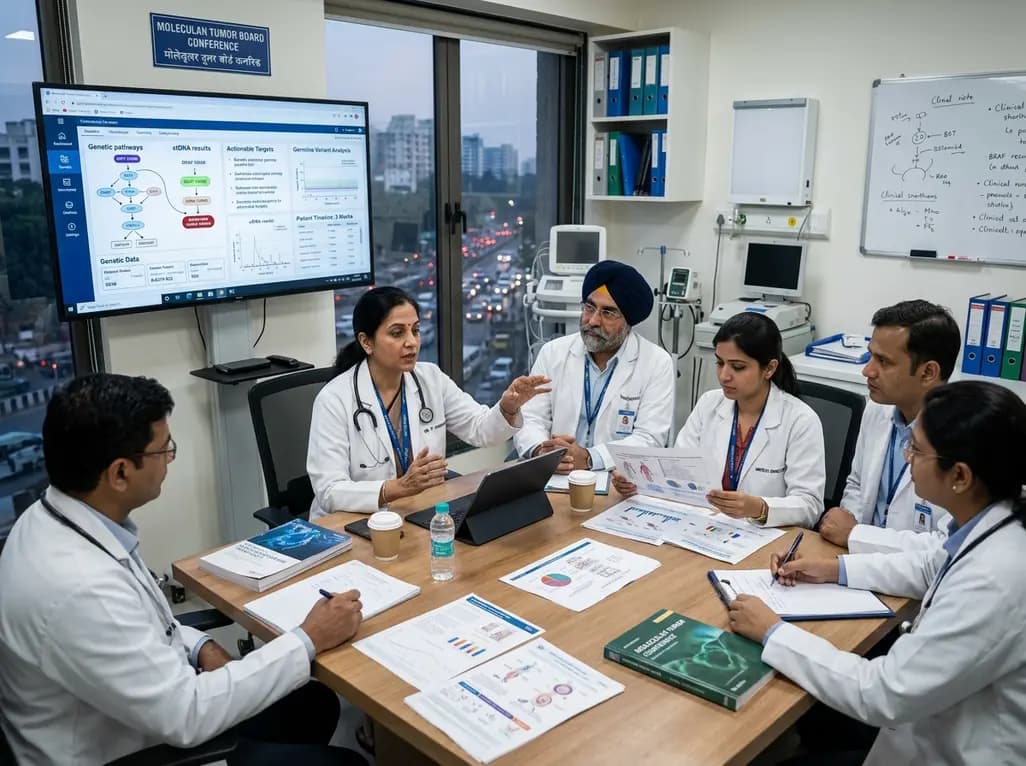
Modern precision oncology relies heavily on high-throughput genomic diagnostics and multidisciplinary collaboration. Consequently, molecular tumor boards have emerged as indispensable platforms for translating complex genomic alterations into individualized patient management. While academic comprehensive cancer centers historically pioneered these genomic workflows, decentralized clinical settings are demonstrating remarkable efficiency. Integrating high-volume genetic counseling alongside advanced liquid biopsy diagnostics expedites clinical decision-making. Therefore, examining private-sector models offers critical insights for clinicians aiming to expand precision oncology access.
Historically, clinicians evaluated cancer patients primarily through anatomical staging and tissue histopathology. However, the advent of next-generation sequencing has shifted contemporary oncology toward molecularly directed therapies. Molecular tumor boards provide the multidisciplinary expertise required to interpret intricate genomic alterations, such as rare point mutations, fusions, and copy-number changes. These panels bring together medical oncologists, clinical geneticists, molecular pathologists, and bioinformaticians. As a result, tumor boards ensure that genomic findings translate into clinically actionable prescriptions rather than ambiguous diagnostic data. Furthermore, they evaluate whether targeted therapies, off-label regimens, or clinical trials represent the best therapeutic strategy for refractory disease. Recent real-world evidence indicates that community-based molecular boards achieve diagnostic accuracy and therapeutic matching rates comparable to major tertiary academic institutions.
Protracted waiting times for cancer genetic assessments represent a significant bottleneck in oncology care. Patients referred for hereditary risk evaluation often face extensive administrative and clinical delays in public health systems. In contrast, streamlined private oncogenetics programs demonstrate that focused operational pathways can substantially compress these diagnostic intervals. For instance, recent longitudinal data tracking over 10,000 consultations showed a median wait time of only three weeks for a first consultation, whereas national averages often reach ten weeks. Furthermore, this accelerated throughput directly impacts therapeutic sequencing. When surgeons and oncologists receive germline data quickly, they make more timely decisions regarding neoadjuvant chemotherapy, targeted poly-ADP ribose polymerase inhibitors, or risk-reducing bilateral surgeries. Rapid turnaround also reduces anxiety among newly diagnosed patients and their at-risk family members.
Identifying hereditary cancer predisposition fundamentally alters screening intervals, surgical planning, and therapeutic selection. In high-volume specialized settings, dedicated oncogenetic workflows yield high diagnostic returns. Clinical cohorts evaluate families with suspected hereditary breast and ovarian cancer syndromes using comprehensive multigene germline panels. Interestingly, real-world registries demonstrate mutation detection rates between 11% and 16%, outperforming traditional public averages of approximately 8.8%. This elevated diagnostic yield highlights the benefit of rigorous pre-test probability scoring and dedicated counseling protocols. In addition, early detection of deleterious alterations in BRCA1, BRCA2, PALB2, and mismatch repair genes allows clinicians to initiate cascade testing across asymptomatic relatives. Consequently, structured private oncogenetic programs deliver substantial public health value by preventing subsequent malignancies through proactive surveillance protocols.
Circulating tumor DNA analysis has revolutionized disease monitoring and genomic profiling for patients with advanced solid tumors. Because obtaining repeated tissue biopsies is often invasive or clinically unfeasible, liquid biopsies offer a minimally invasive alternative for genomic characterization. Among large cohorts of patients undergoing cell-free DNA profiling, approximately 40% exhibit clinically actionable alterations. Moreover, nearly 28% of these alterations fall under the European Society for Medical Oncology Scale for Clinical Actionability of Molecular Targets tier I. This high proportion demonstrates that liquid biopsy reliably detects alterations directly matched to approved targeted therapies. Additionally, circulating tumor DNA reveals secondary resistance mutations that emerge during tyrosine kinase inhibitor therapy. Molecular tumor boards systematically review these dynamic blood-based findings to adjust treatment lines promptly before macroscopic radiographic progression occurs.
A critical advantage of comprehensive molecular profiling lies in the intersection between somatic tumor sequencing and constitutional genetics. High-depth somatic sequencing frequently detects variants that may actually represent unsuspected germline alterations. In structured private practice frameworks, molecular tumor boards establish systematic triggers to reflexively refer patients for confirmatory constitutional testing. For example, when circulating tumor DNA assays show high variant allele frequencies in cancer predisposition genes, clinicians immediately initiate formal genetic counseling. Real-world implementation shows that this coordinated mechanism identifies unsuspected pathogenic germline variants in approximately 2.7% of tested patients. Consequently, bridging somatic testing with hereditary genetics provides dual clinical utility. It guides current systemic anticancer therapy while simultaneously identifying hereditary cancer syndromes that require familial cascade screening.
The lessons derived from private oncogenetics frameworks hold tremendous relevance for Indian clinical practice. In India, private healthcare facilities deliver the vast majority of tertiary oncology care, catering to diverse socioeconomic populations. However, widespread genomic testing frequently occurs without standardized multidisciplinary review, leading to underutilized genomic reports or inappropriate drug choices. By establishing institutional or regional molecular tumor boards, Indian oncologists can democratize precision medicine across tier-1 and tier-2 cities. Furthermore, adopting rapid-turnaround ctDNA panels addresses local logistical barriers related to inadequate archival tissue retrieval. Digital tumor board platforms can connect remote community practitioners with molecular pathologists and geneticists in central hubs. Ultimately, integrating structured genetic counseling with molecular boards ensures equitable, cost-effective, and guideline-concordant targeted therapies across the subcontinent.
Molecular tumor boards evaluate genomic variants using validated evidence frameworks, such as the ESMO Scale for Clinical Actionability of Molecular Targets. They review the patient’s clinical history, prior lines of systemic therapy, and organ performance status. Subsequently, board members evaluate available prospective clinical trial data, regulatory drug approvals, and ongoing clinical studies. This systematic process ensures clinicians prioritize matched targeted therapies with proven survival advantages before considering off-label options.
Circulating tumor DNA provides a minimally invasive, rapid method for assessing somatic tumor genomics from peripheral blood. It overcomes tissue accessibility challenges, captures spatial tumor heterogeneity, and tracks emerging resistance mutations in real time. Consequently, molecular tumor boards leverage liquid biopsy results to identify actionable tier-1 alterations quickly, helping medical oncologists alter therapeutic regimens promptly when patients develop resistance to frontline targeted agents.
Somatic sequencing assays analyze tumor DNA or circulating cell-free DNA, which contain both somatic and constitutional variants. When an assay detects a high variant allele frequency in recognized cancer predisposition genes, it suggests a potential germline origin. Therefore, molecular tumor boards trigger secondary constitutional validation via blood or saliva sampling, confirming whether the alteration is inherited and warranting cascade familial testing.
Disclaimer: This content is for informational and educational purposes only and does not constitute professional medical advice, diagnosis, or treatment. Always consult qualified healthcare providers and refer to the latest local and national guidelines for clinical practice.
References
Toledano D et al. [Oncogenetics and molecular tumor boards in private practice: Specificities and perspectives]. Bull Cancer. 2026 Sep 09. doi: undefined. PMID: 42716872.
Luchini C, et al. Molecular Tumor Boards in Clinical Practice. Trends Cancer. 2020;6(9):738-744. doi: 10.1016/j.trecan.2020.05.008.
Mosele F, et al. Recommendations for the use of next-generation sequencing (NGS) for patients with metastatic cancers: a report from the ESMO Precision Medicine Working Group. Ann Oncol. 2020;31(11):1491-1505. doi: 10.1016/j.annonc.2020.07.014.

Read summarized clinical updates, watch expert medical content, and earn CME certifications right from your smartphone.
Open your smartphone camera to scan and install.





Explore real-world data showing how private oncogenetics and molecular tumor boards achieve 3-week consult turnaround, high ctDNA actionability, and vital germline variant detection, enhancing individualized cancer care and familial risk assessment.
last month

A retrospective cohort study of 7,716 ICU patients from the MIMIC-IV database demonstrates that Gradient Boosting Decision Trees significantly outperform traditional SOFA scores in predicting in-hospital mortality among patients with sepsis and diabetes, with SHAP analysis providing clinical interpretability.
Today

A prenatal case highlights severe glutaric acidemia type II presenting as bilateral hyperechoic cystic kidneys at 18 weeks. Whole-exome sequencing revealed a novel homozygous ETFDH frameshift variant, demonstrating the power of rapid genetic testing in fetal renal anomalies.
Today
This article reviews the forensic and clinical complexities of acute myocarditis arising on left ventricular hypertrophy in children, highlighting early diagnostic red flags and multidisciplinary postmortem autopsy protocols.
Today

This comparative study evaluates posterior labral tears with and without glenohumeral instability, highlighting distinct demographic patterns, MRI underestimation in stable shoulders, and successful arthroscopic repair outcomes.
Yesterday

A clinical study demonstrates that early intervention with tocilizumab, either as monotherapy or bridged with corticosteroids, achieves significant proptosis reduction and resolves active inflammation in treatment-naive thyroid eye disease.
Yesterday
