.webp&w=384&q=75)

Loading, please wait...
Loading, please wait...
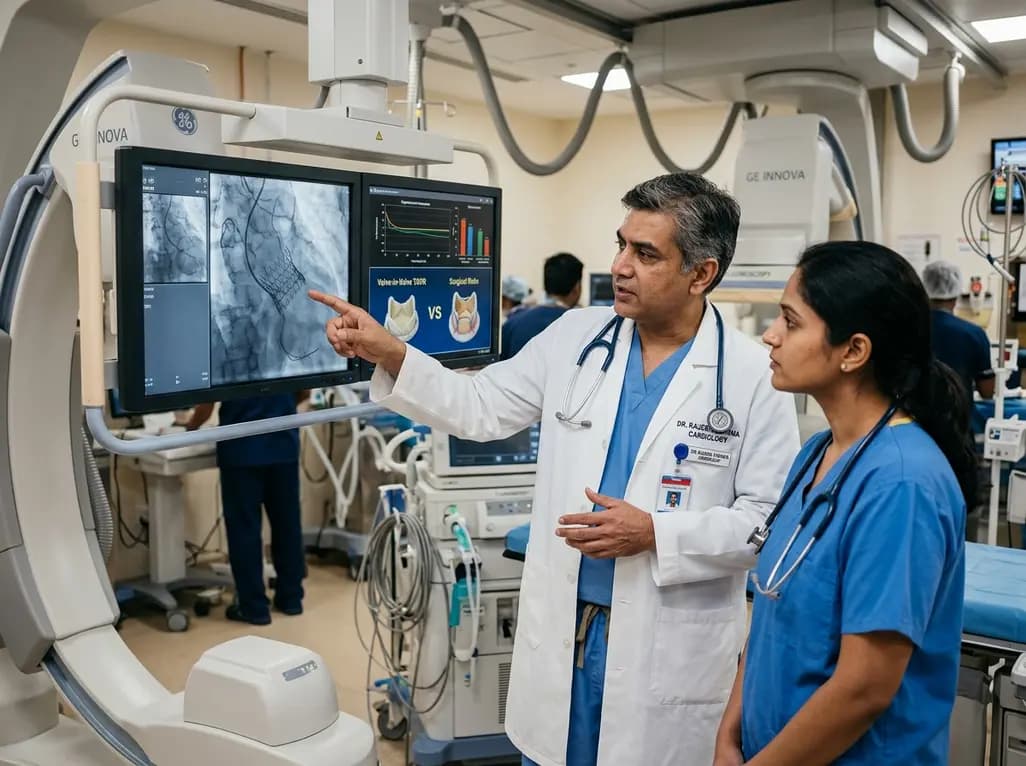
Bioprosthetic aortic valve replacement provides excellent hemodynamic relief, but structural valve degeneration remains an inevitable long-term complication. Consequently, clinicians frequently face difficult management decisions when biological prostheses fail. When evaluating ViV-TAVR vs redo-SAVR, heart teams must balance surgical invasiveness against procedural nuances. Historically, redo surgical aortic valve replacement served as the definitive benchmark. However, transcatheter valve-in-valve implantation provides a minimally invasive alternative that avoids repeat sternotomy. A comprehensive propensity score-matched meta-analysis provides pivotal clarity on perioperative safety and mid-term survival.
Surgical bioprostheses deteriorate over time due to calcification, leaflet tearing, and mechanical wear. As life expectancy increases, cardiologists encounter degenerated surgical valves more frequently in daily practice. Redo open-heart surgery carries substantial perioperative morbidity. Extensive mediastinal adhesions, patent coronary bypass grafts, and fragile aortic root tissues drastically increase operative complexity. In addition, many elderly patients present with multiple systemic comorbidities, including chronic kidney disease and pulmonary impairment. Therefore, reoperative sternotomy poses significant hazards, including major hemorrhage, prolonged mechanical ventilation, and prolonged intensive care stays. Transcatheter valve-in-valve implantation has transformed this landscape by delivering an expandable prosthetic valve within the failing surgical ring. This catheter-based strategy bypasses cardiopulmonary bypass entirely. Thus, interventional cardiologists can treat high-risk patients who cannot endure repeat open operations. Nevertheless, clinical decision-makers require robust comparative data to weigh the relative benefits of each approach. Propensity score-matched analyses help eliminate confounding baseline characteristics, delivering balanced comparisons between both therapeutic modalities.
The updated meta-analysis evaluated thirteen propensity score-matched cohort studies encompassing 16,223 patients to directly compare both strategies. Among these individuals, 8,463 received transcatheter valve-in-valve therapy, while 7,760 underwent conventional reoperative surgery. Across a weighted mean follow-up of 16.6 months, the pooled data demonstrated striking early survival advantages. Specifically, transcatheter intervention achieved a 53 percent reduction in short-term all-cause mortality compared to reoperation. Patients undergoing catheter-based intervention recovered faster and left the hospital substantially sooner. In contrast, surgical patients required longer hospitalizations and prolonged intensive care observation. The early survival benefit remained consistent across diverse matched cohorts, highlighting the safety profile of percutaneous delivery. Furthermore, the less invasive approach significantly reduced thirty-day cardiovascular mortality. Although mid-term mortality rates converged over extended observation, the early survival gains underscore the immediate protective value of avoiding repeat cardiopulmonary bypass. Consequently, these robust findings establish transcatheter valve-in-valve intervention as a formidable first-line option for vulnerable cohorts experiencing structural valve degeneration.
Beyond early survival, the meta-analysis revealed distinct procedural profiles between the two interventional strategies. Transcatheter implantation dramatically reduced the incidence of major life-threatening bleeding and blood transfusion requirements. Because clinicians avoid mediastinal dissection, systemic inflammatory responses and postoperative coagulopathy remain minimal. Similarly, transcatheter delivery yielded significantly lower rates of postoperative acute kidney injury, reducing the need for temporary renal replacement therapy. Conversely, reoperative surgery demonstrated certain hemodynamic advantages over the transcatheter approach. Transcatheter valves expand inside an unyielding rigid surgical frame, which can restrict effective orifice area. Consequently, patients receiving catheter-based valves experienced higher residual transvalvular gradients and a greater incidence of severe patient-prosthesis mismatch. In contrast, surgeons can completely excise the degenerated device and perform surgical root enlargement when anatomically necessary. Therefore, redo surgery consistently achieved superior post-procedural hemodynamics. Clinicians must weigh the immediate safety benefits of lower bleeding against the physiological impact of residual transvalvular gradients.
Although transcatheter intervention demonstrates procedural safety, specific anatomical pitfalls require meticulous pre-procedural planning. Coronary artery obstruction represents a devastating complication unique to valve-in-valve procedures. When the transcatheter valve expands, it displaces the bioprosthetic leaflets outward toward the coronary ostia. If the distance between the surgical frame and coronary arteries remains narrow, coronary blood flow can diminish abruptly. Therefore, multidisciplinary teams must perform rigorous pre-procedural multislice computed tomography to evaluate sinus of Valsalva dimensions and coronary takeoff heights. In selected high-risk anatomies, operators use advanced leaflet modification techniques to prevent coronary compromise. Meanwhile, conduction disturbances remain an important clinical endpoint. Fortunately, the meta-analysis found comparable rates of new permanent pacemaker implantation between the two modalities. Unlike primary transcatheter procedures where native calcification exerts pressure on the conduction system, the pre-existing surgical stent shield buffers the atrioventricular node. Consequently, heart teams can confidently pursue catheter intervention without creating excessive pacemaker dependency.
The clinical choice between transcatheter and surgical management requires tailored evaluation by a collaborative heart team. Clinicians should reserve redo surgery for younger, active patients with low operative risk and small baseline surgical valves. In these individuals, surgical valve explantation and root enlargement optimize valve hemodynamics and preserve long-term functional capacity. Furthermore, patients with concurrent severe coronary artery disease, extensive infective endocarditis, or multiple paravalvular leaks benefit significantly from comprehensive surgical revision. On the other hand, elderly individuals and patients with elevated surgical risk derive tremendous benefit from transcatheter intervention. The significant reductions in short-term mortality, stroke, and systemic complications make the percutaneous approach exceptionally compelling for frail adults. Moreover, emerging leaflet fracture techniques and low-profile expandable transcatheter valves continue to reduce residual gradient issues. As technical expertise deepens and device engineering improves, catheter-based therapy will likely expand into broader patient subsets. Ultimately, individualized anatomical evaluation and multidisciplinary consensus remain paramount for delivering optimal cardiovascular care.
Not every patient can safely undergo transcatheter intervention. Favorable outcomes depend heavily on baseline surgical valve size and coronary anatomy. Patients with small baseline prostheses face elevated risks of severe patient-prosthesis mismatch. Furthermore, low coronary ostial takeoffs create substantial risks for fatal coronary obstruction. Therefore, comprehensive multidetector computed tomography remains essential to verify coronary clearance and ensure adequate internal dimensions before undertaking transcatheter valve deployment.
Patient-prosthesis mismatch occurs when an implanted valve delivers an effective orifice area that is too small for the patient body surface area. Consequently, higher residual transvalvular gradients persist post-procedure. Although mismatch does not compromise immediate survival, elevated gradients can accelerate secondary leaflet degeneration, hinder left ventricular hypertrophy regression, and worsen heart failure symptoms over extended follow-up periods, especially in younger, physically active individuals.
Redo surgical replacement becomes preferable when patients possess small surgical sewing rings that preclude adequate transcatheter hemodynamics without severe mismatch. Additionally, surgeons favor redo operations when active infective endocarditis requires radical debridement, when paravalvular regurgitation stems from annular detachment, or when patients require concomitant multi-vessel surgical coronary revascularization or aortic root enlargement to ensure excellent long-term hemodynamic outcomes.
Disclaimer: This content is for informational and educational purposes only... Refer to the latest local and national guidelines for clinical practice.
References
Ebrahimi P et al. Transcatheter vs Surgical Replacement of Degenerated Bioprosthetic Aortic Valve: A Meta-Analysis of Propensity-Score-Matched Studies. Heart Lung Circ. 2026 Sep 09. doi: undefined. PMID: 42716866.
Sá MPBO, Van den Eynde J, Simonato M, et al. Valve-in-Valve Transcatheter Aortic Valve Replacement Versus Redo Surgical Aortic Valve Replacement: An Updated Meta-Analysis. JACC Cardiovasc Interv. 2021;14(2):211-220.
Spaziano M, Sawaya FJ, Pilgrim T, et al. Transcatheter aortic valve implantation versus redo surgery for failing surgical aortic bioprostheses: a multicentre propensity score analysis. EuroIntervention. 2017;13(10):1149-1156.

Read summarized clinical updates, watch expert medical content, and earn CME certifications right from your smartphone.
Open your smartphone camera to scan and install.





A meta-analysis of 13 propensity score-matched studies shows ViV-TAVR delivers lower early mortality and reduced bleeding compared to redo-SAVR for degenerated bioprosthetic aortic valves, though long-term hemodynamics warrant careful anatomical and patient-centered evaluation.
last month

Review how tailored exercise programs benefit frail older patients with heart failure. Explore pathophysiological mechanisms, individualized training prescriptions, and strategies to overcome adherence barriers in clinical practice.
Today

Recent clinical studies reveal maternal autoantibodies targeting IL-1RA as potential triggers for preterm labor, opening avenues for targeted cytokine therapies. Concurrently, new perioperative findings show inhaled cannabis increases propofol requirements during upper endoscopy compared to oral edible consumption.
Today

In high-risk pulmonary embolism complicated by severe anemia and active uterine bleeding, systemic thrombolysis is contraindicated. Large-bore aspiration thrombectomy provides rapid hemodynamic rescue without fibrinolysis, supported by inferior vena cava filter placement and multidisciplinary critical care.
Today

This comparative study evaluates posterior labral tears with and without glenohumeral instability, highlighting distinct demographic patterns, MRI underestimation in stable shoulders, and successful arthroscopic repair outcomes.
Today

A clinical study demonstrates that early intervention with tocilizumab, either as monotherapy or bridged with corticosteroids, achieves significant proptosis reduction and resolves active inflammation in treatment-naive thyroid eye disease.
Today
