.webp&w=384&q=75)

Loading, please wait...
Loading, please wait...
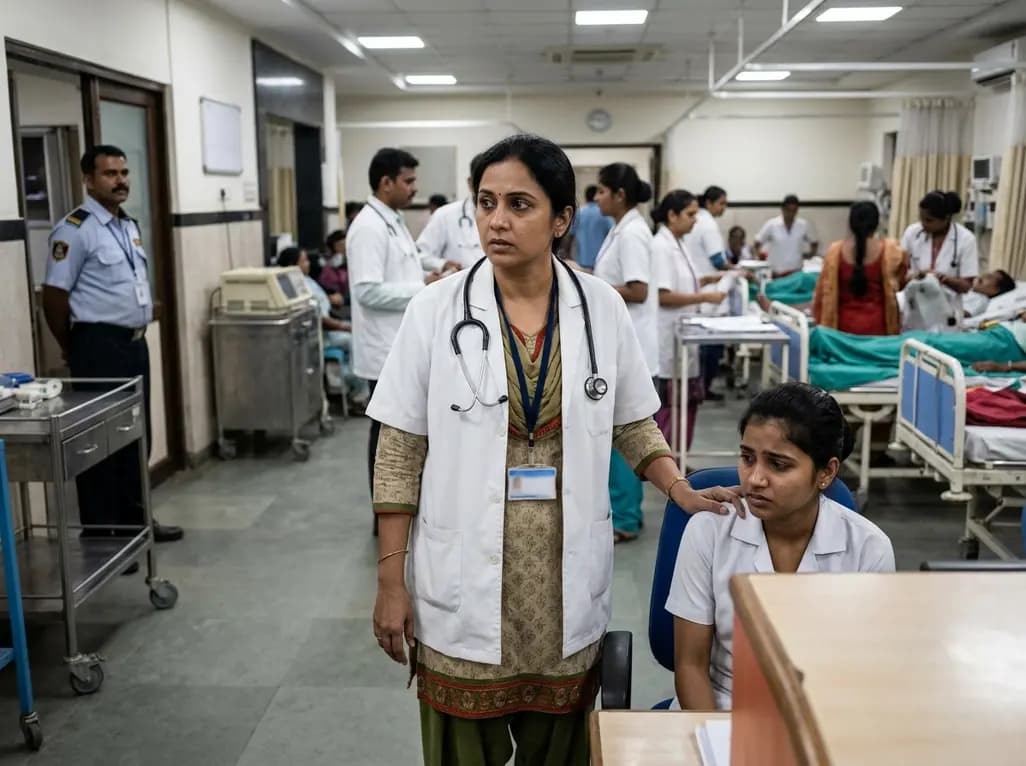
Workplace violence in healthcare has emerged as a pervasive and deeply concerning global challenge. It affects every nation and touches almost every occupational category within the medical field. Statistics consistently show that the health sector alone accounts for more than one-third of all workplace violence incidents worldwide. This phenomenon is not merely an occupational hazard but a systemic crisis that undermines the integrity of healthcare delivery. When clinicians face aggression, the safety of patients and the stability of the entire health system are compromised. Addressing workplace violence in healthcare requires a multidimensional understanding of its root causes, ranging from institutional failures to societal frustrations. Specifically, researchers are now focusing on identifying unique risk factors that vary across different geographical and clinical settings. By examining these nuances, policymakers can develop evidence-based interventions tailored to protect those on the front lines of patient care.
A recent cross-sectional study conducted in the public hospitals of Addis Ababa, Ethiopia, provides a stark look at the magnitude of this issue. Notably, the study revealed that nearly 60% of healthcare professionals had experienced at least one form of workplace violence within the previous year. This included physical assault, verbal abuse, bullying, or sexual harassment. The findings underscore that certain demographics and professional roles are significantly more vulnerable. For instance, female professionals were 1.5 times more likely to face aggression compared to their male counterparts. Moreover, pharmacists and those starting their shifts in emergency departments were identified as being at an elevated risk. Interestingly, the study highlighted that routine direct physical contact with patients significantly increased the odds of experiencing violence. These data points suggest that workplace violence in healthcare is not a random occurrence but is often tied to the intensity and nature of the clinical interaction.
In India, the landscape of workplace violence in healthcare reflects many of the same challenges seen globally, though often exacerbated by local systemic pressures. National surveys by the Indian Medical Association have suggested that up to 75% of doctors in India have faced some form of physical or verbal abuse during their careers. Consequently, the Indian medical fraternity has frequently protested for better protection laws and safer working environments. Factors such as long waiting times, overcrowding in public hospitals, and the high cost of private care often boil over into patient dissatisfaction and subsequent aggression. Furthermore, the lack of a standardized security protocol across all states means that residents and junior doctors in tertiary care centers are frequently left exposed. Just as seen in the Ethiopian study, female staff in India face distinct risks, including sexual harassment and intimidation, which often go underreported due to social stigma or fear of professional repercussions.
The impact of workplace violence in healthcare extends far beyond the immediate physical or verbal injury. Victims often suffer from long-term psychological distress, including post-traumatic stress disorder, chronic anxiety, and depression. Furthermore, such trauma leads to a significant decrease in job satisfaction and high rates of professional burnout. In a clinical sense, this environment fosters the practice of defensive medicine, where doctors may order excessive tests or avoid high-risk cases to protect themselves from potential liability or physical harm. This shift in practice ultimately harms the patient and increases the financial burden on the healthcare system. Moreover, witnessing violence against colleagues can create a climate of fear that diminishes the morale of the entire staff. Therefore, the emotional toll of an aggressive environment is a major driver behind the global shortage of healthcare workers, as many choose to leave the profession prematurely.
Addressing the surge of workplace violence in healthcare requires robust legal protections and proactive organizational strategies. In India, while many states have enacted Medical Protection Acts, the enforcement remains inconsistent and often lacks the necessary teeth to deter offenders. Recently, discussions around the Bharatiya Nyaya Sanhita and specific central protection bills have aimed to create more stringent penalties for those who assault medical staff. However, legislation is only one part of the solution. Hospitals must also implement structural changes, such as restricting visitor access, installing surveillance systems, and providing de-escalation training for all employees. Additionally, establishing a clear and confidential reporting system is vital. When staff members see that their reports lead to tangible action and institutional support, they are more likely to come forward. Ultimately, a culture of zero tolerance for violence must be embedded within the institutional identity of every hospital and clinic.
To move forward, a collaborative approach involving government bodies, hospital administrators, and healthcare associations is essential. Policy reforms should focus on improving the doctor-patient ratio and ensuring adequate infrastructure to reduce the systemic frustrations that lead to violence. Notably, improving communication skills among healthcare professionals can help in managing the expectations of patients and their relatives. Training programs that focus on empathy and crisis management have shown promise in reducing the frequency of verbal altercations. Moreover, public awareness campaigns are necessary to re-establish the social contract between the community and healthcare providers. It is crucial for the public to understand that a safe environment for doctors is a prerequisite for high-quality medical care. By prioritizing the safety of the workforce, we ensure that the healthcare system remains resilient and capable of meeting the needs of the population.
Gender plays a significant role in the type and frequency of violence experienced by healthcare professionals. Research consistently shows that female staff are more likely to experience verbal abuse, bullying, and sexual harassment compared to men. This increased vulnerability is often linked to societal gender biases and the perceived power imbalance in clinical settings. Consequently, organizations must develop gender-sensitive safety protocols and provide specific support systems to protect female clinicians from targeted aggression.
In India, healthcare professionals are primarily protected by state-specific Medical Protection Acts, which categorize violence against medical staff as a cognizable and non-bailable offense. Additionally, the Bharatiya Nyaya Sanhita contains provisions to punish assault and criminal intimidation. However, there is an ongoing demand for a comprehensive central law to ensure uniform protection across the country. These legal frameworks aim to provide a deterrent effect and ensure that perpetrators are prosecuted swiftly to maintain hospital safety.
Reporting is the foundation of institutional safety, as it allows administrators to identify high-risk areas and allocate security resources effectively. Unfortunately, many incidents go unreported because of a perceived lack of institutional support or fear that reporting might negatively impact one's career. When healthcare workers feel that reporting will not lead to meaningful change, they tend to normalize the abuse. Therefore, hospitals must simplify reporting mechanisms and demonstrate a clear commitment to taking disciplinary or legal action against offenders.
Disclaimer: This content is for informational and educational purposes only... Refer to the latest local and national guidelines for clinical practice.
References
Butta BF et al. Workplace violence and associated factors among healthcare professionals in public hospitals of Addis Ababa, Ethiopia: a cross-sectional study. BMC Health Serv Res. 2026 Jul 15. doi: 10.1186/s12913-026-15126-5. PMID: 42458501.
Sharma A et al. Workplace violence among health-care providers working in a tertiary care hospital: A study from Central India. ResearchGate. 2026.
Singh S et al. Impact of violence against medical professionals: An online survey of medical practitioners in India. Natl Med J India. 2026. DOI: 10.25259/NMJI_23_2024.
World Health Organization. Preventing violence against health workers. 2024. Available from: https://www.who.int/activities/preventing-violence-against-health-workers.

Read summarized clinical updates, watch expert medical content, and earn CME certifications right from your smartphone.
Open your smartphone camera to scan and install.





Workplace violence remains a critical global issue affecting over half of healthcare professionals. Recent studies highlight that female staff and emergency departments are at highest risk. Understanding these factors is essential for creating safer environments and implementing effective legal protections.
3 months ago

Following regulatory scrutiny from FSSAI regarding promotional representations and lean muscle preservation claims, Dr. Reddy's Laboratories and Nestlé Health Science are currently reviewing the branding and marketing strategy for their joint nutritional supplement Celevida GLP+.
Today

Demanding exhaustive hormonal profiling can inadvertently discourage clinical studies involving females. Methodological standards must align with the specific scientific question to expand, not restrict, equitable evidence for women.
Today

The Directorate General of Health Services directs Indian states to halt the hazardous reuse and reprocessing of single-use medical devices. Discover regulatory implications under the Drugs and Cosmetics Act, critical infection risks, legal liabilities, and operational changes required across clinical specialties.
Today
A novel calcium polyphosphate coacervate enables injectable bone implants with in situ hierarchical porosity via phase separation and gas foaming, significantly enhancing cell proliferation, energy metabolism, and osteogenic differentiation for minimally invasive bone defect repair.
Today

India is advancing preventive healthcare by integrating genomics, artificial intelligence, and quantum technologies. With the SANGAM programme sequencing one million Indian genomes, clinicians can unlock personalized therapies, detect cardiometabolic risks early, and curb the burden of diabetes and heart disease.
Today
