

Loading, please wait...
Loading, please wait...
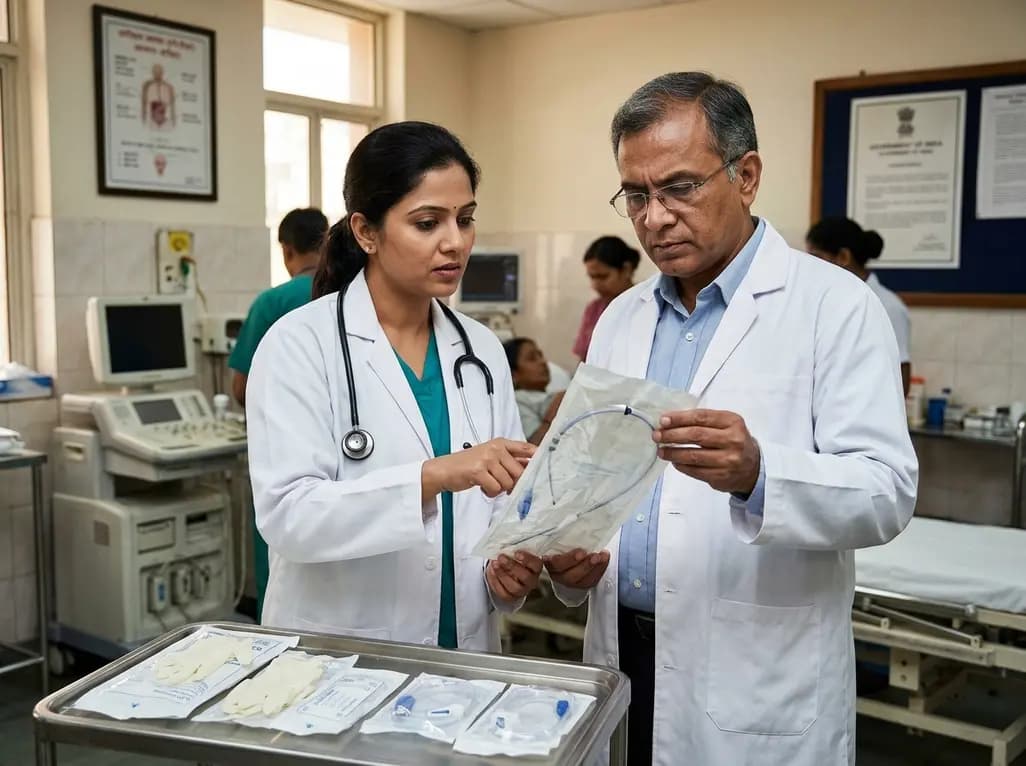
The Directorate General of Health Services (DGHS) under the Ministry of Health and Family Welfare recently issued a pivotal circular. This directive mandates an immediate nationwide ban on the reprocessing and reuse of single-use medical devices across all healthcare facilities. Both public institutions and private corporate hospitals must comply immediately. Historically, many centers routinely reprocessed disposable consumables to curb overhead expenses. However, health authorities have now prohibited this custom due to alarming clinical and ethical hazards. Consequently, state licensing authorities must inspect clinical establishments and penalize violators promptly. Healthcare administrators and practicing clinicians must understand the far-reaching medical and legal ramifications of this crucial national directive.
The central government issued this stringent order after regulatory surveys revealed alarming irregularities in private and corporate hospitals. Specifically, investigators found that surgical teams routinely resterilized and reused disposable products originally labeled for one-time administration. Furthermore, these facilities frequently billed patients or government reimbursement schemes for the full cost of brand-new consumables. Therefore, the DGHS condemned this practice as an egregious compromise of medical ethics and financial integrity.
The directive directly addresses state health secretaries, municipal drug controllers, and the Drug Controller General of India. In addition, regulators must conduct unannounced facility inspections to guarantee full compliance across all departments. The circular unequivocally clarifies that clinicians must use disposable surgical supplies solely according to original equipment manufacturer guidelines. Consequently, any unapproved reprocessing strips the manufacturer of product liability. If an adverse event occurs, total legal liability shifts directly onto the operating surgeon and the healthcare facility. Medical organizations like the Association of Indian Medical Device Industry strongly welcomed this definitive policy move. Ultimately, the directive seeks to establish an uncompromising safety culture that places patient welfare above institutional profit margins.
The prohibition addresses profound microbiological and structural hazards that directly threaten surgical patients. Primarily, single-use medical devices feature intricate lumens, delicate micro-hinges, and porous polymer matrices. These micro-architectures harbor organic debris, biofilm, and blood components that conventional hospital sterilization cannot eliminate. Therefore, chemical reprocessing often fails to eradicate persistent bloodborne pathogens, such as Hepatitis B, Hepatitis C, and HIV. Moreover, bacterial endotoxins can withstand standard autoclave cycles, precipitating severe systemic pyrogenic reactions and acute sepsis.
Beyond lethal microbiological hazards, structural degradation poses severe procedural dangers. Repeated exposure to chemical sterilants, ethylene oxide gas, or thermal cycles rapidly weakens polymers and metallic alloys. Consequently, catheters develop micro-fractures, guidewires lose tensile stiffness, and balloon systems suffer unpredictable rupture during endovascular inflation. For example, a damaged coronary or cerebral catheter can fracture intravascularly, necessitating emergency surgical retrieval. Furthermore, dull single-use trocars and cutting tools increase local tissue trauma, elevating post-operative inflammation and healing intervals. Clinicians must recognize that no standard hospital decontamination protocol can restore the original structural tolerances guaranteed by factory cleanroom manufacturing. Thus, utilizing pristine disposables remains the only reliable defense against preventable iatrogenic morbidity.
Reusing disposable medical equipment constitutes a direct transgression of multiple Indian statutory frameworks. First, the practice breaches the Medical Devices Rules of 2017, which mandate strict adherence to manufacturer labeling. Second, non-compliance violates the Drugs and Cosmetics Act of 1940 by distributing adulterated or substandard medical hardware. Additionally, establishments violate the Clinical Establishments Act of 2010, which prescribes mandatory infection control benchmarks and patient safety standards. Therefore, healthcare providers can no longer treat device reuse as a benign institutional discretion.
Furthermore, device repurposing exposes doctors to catastrophic medicolegal liability. In medical malpractice litigation, consumer dispute forums and civil courts examine adherence to manufacturer guidelines. If a reused device snaps or introduces an infection, the treating surgeon cannot defend the complication as an accepted procedural hazard. Instead, the court will likely treat deliberate off-label reuse as actionable clinical negligence. Moreover, billing an unsuspecting patient for a resterilized device constitutes consumer fraud and unfair commercial trade practice. As a result, hospitals face severe penal action, including immediate cancellation of operational licenses and criminal prosecution. Medical practitioners must proactively refuse to reuse single-use consumables, protecting both patient lives and their professional registrations.
The DGHS specifically highlighted five clinical domains where unauthorized device reprocessing occurs most frequently. These specialties include interventional cardiology, nephrology, surgical oncology, neurosurgery, and cardiothoracic vascular surgery. In interventional cardiology, teams often resterilize electrophysiology mapping catheters, balloon dilatation catheters, and snare devices. Similarly, nephrology units frequently reprocess dialyzers, blood tubing lines, and central venous access kits. In neurosurgery and surgical oncology, operating staff routinely reuse ultrasonic aspirator tips, specialized drill burrs, and bipolar forceps.
Historically, administrators justified this reprocessing by arguing that it reduced overall procedural costs for economically vulnerable patients. However, this economic rationale creates a dangerous false economy. Specifically, treating a hospital-acquired bloodborne infection or managing an intraoperative device failure requires protracted intensive care stays. Consequently, the catastrophic clinical sequelae of device failure vastly eclipse the initial savings achieved through reprocessing. Moreover, international studies demonstrate that managing surgical site infections incurs immense costs for health systems. Healthcare institutions must therefore restructure procedural packages through bulk procurement negotiation rather than compromising consumable integrity. In doing so, hospitals ensure equitable patient access while strictly maintaining global therapeutic safety standards.
To comply with the DGHS directive, healthcare leadership must initiate comprehensive institutional reforms immediately. First, hospital infection control committees must conduct a sweeping audit of all departmental inventories. Administrators must eliminate unauthorized reprocessing workflows within Central Sterile Services Departments and operating theater complexes. Furthermore, inventory control teams must update hospital software systems to bar the duplicate logging of single-use serial numbers. In addition, hospitals should formulate robust disposal workflows complying with Bio-Medical Waste Management Rules to prevent illicit salvage and resale.
Simultaneously, clinical leadership must educate surgical consultants, resident trainees, and perioperative nursing teams regarding their statutory obligations. Every clinician must have the administrative authority to reject compromised or previously opened disposable items without professional reprimand. Moreover, healthcare centers must establish transparent procurement committees to negotiate ethical pricing with medical device manufacturers. Standardizing equipment acquisitions lowers unit costs, mitigating the financial pressure to reprocess consumables. Ultimately, clinical excellence relies on unwavering fidelity to proven patient safety protocols. By eliminating device reuse entirely, Indian hospitals affirm their enduring dedication to reliable, ethical, and world-class surgical care.
Q1: Why has the DGHS prohibited the reuse of single-use medical devices in Indian hospitals?
The DGHS prohibited device reuse because the practice threatens patient safety, compromises infection control, and breaches legal statutes. Single-use devices possess fragile architectures that harbor bloodborne pathogens and endotoxins despite cleaning. Furthermore, repeated sterilization degrades tensile strength, increasing intraoperative breakage risks. In addition, hospitals often improperly billed patients for reused hardware. Consequently, the central government enforced this ban to eliminate cross-infections, uphold clinical ethics, and ensure strict regulatory adherence across healthcare facilities.
Q2: What specific statutory frameworks make reprocessing disposable items illegal in India?
Reprocessing disposable devices violates the Medical Devices Rules of 2017, which mandate adherence to original manufacturer instructions. Additionally, it infringes the Drugs and Cosmetics Act of 1940 by distributing potentially adulterated or compromised therapeutic devices. The practice also breaches the Clinical Establishments Act of 2010 regarding minimum healthcare safety standards. Consequently, violators face immediate regulatory penalties, cancellation of facility operating licenses, and severe tort liability in civil courts for demonstrable clinical negligence.
Q3: How should hospitals manage procedural costs without reusing expensive single-use consumables?
Hospitals should optimize procedural expenses through bulk institutional procurement, competitive tendering, and direct partnerships with medical device manufacturers. Furthermore, healthcare administrators must recognize that reprocessing creates an expensive false economy. Treating devastating healthcare-associated infections or managing intraoperative mechanical failures drastically inflates hospitalization expenses. Therefore, establishing transparent, volume-based pricing models allows hospitals to safeguard institutional margins while offering affordable, high-quality interventions without ever compromising fundamental patient safety standards.
Disclaimer: This content is for informational and educational purposes only. It does not constitute medical advice or replace professional judgment. Refer to the latest local and national guidelines for clinical practice.
References

Read summarized clinical updates, watch expert medical content, and earn CME certifications right from your smartphone.
Open your smartphone camera to scan and install.





The Directorate General of Health Services directs Indian states to halt the hazardous reuse and reprocessing of single-use medical devices. Discover regulatory implications under the Drugs and Cosmetics Act, critical infection risks, legal liabilities, and operational changes required across clinical specialties.
Today

Explore vital recurrent stroke predictors in lacunar stroke patients managed with intensive blood pressure lowering. This analysis examines trial findings from SPS3 to uncover residual vascular risks, metabolic factors, and targeted secondary prevention strategies for high-risk neurological patients.
Today
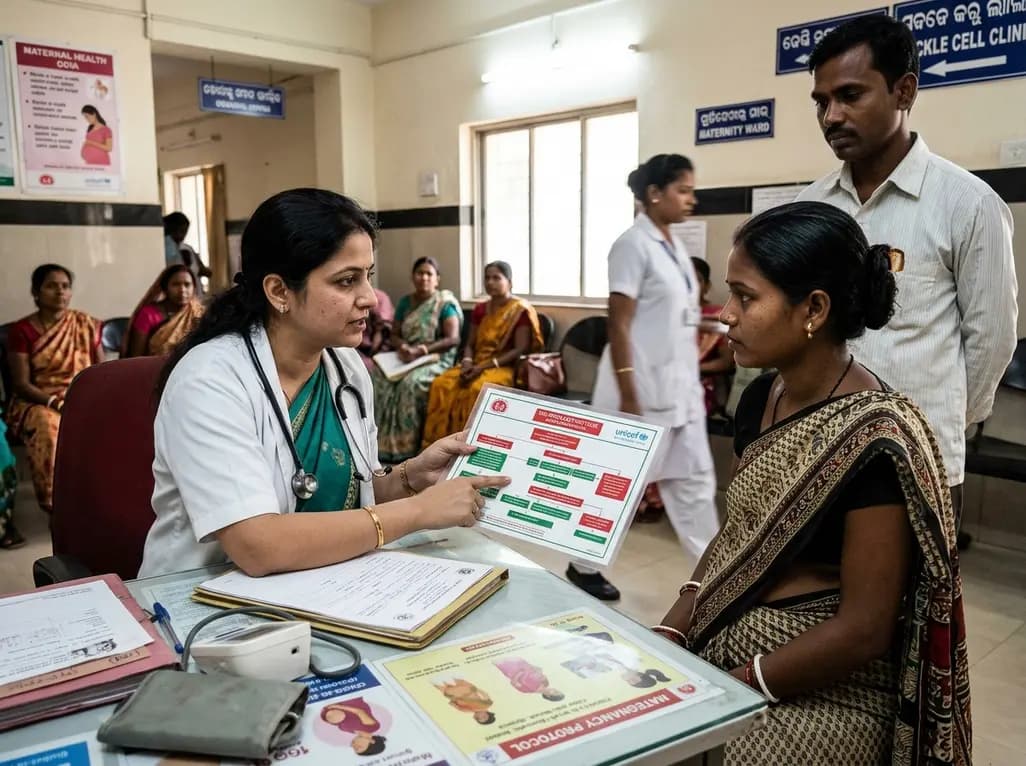
Odisha has established India's first state-level clinical protocol specifically tailored for pregnant women with sickle cell disease. Developed with NHM and UNICEF, the framework provides structured antenatal screening, crisis mitigation, standardized referral pathways, and specialized interdisciplinary care.
Today

Mitochondria-targeted nanoparticles self-assembled from EGCG and L-glutamic acid effectively restore mitochondrial homeostasis, suppress synovial inflammation, and attenuate chondrocyte senescence in osteoarthritis, offering a promising disease-modifying nanotherapy.
Today

India is advancing preventive healthcare by integrating genomics, artificial intelligence, and quantum technologies. With the SANGAM programme sequencing one million Indian genomes, clinicians can unlock personalized therapies, detect cardiometabolic risks early, and curb the burden of diabetes and heart disease.
Today
