.webp&w=384&q=75)

Loading, please wait...
Loading, please wait...

Cell division is one of the most fundamental processes in human biology, but it occasionally breaks down in unexpected ways. When a cell copies its DNA but fails to split, it results in a condition called whole genome duplication. This cellular error can trigger aging, lead to genetic instability, and drive cancer progression. Consequently, understanding how these abnormal cells survive is a major area of oncological research.
To examine how cells survive this genetic doubling, researchers at Hokkaido University analyzed cell division errors. Specifically, the team focused on two main pathways that trigger whole genome duplication. The first pathway is cytokinesis failure, where the cell completes almost the entire division process. However, the cell fails to complete the final physical split of the cytoplasm. The second pathway is mitotic slippage, which occurs when a cell enters mitosis but exits prematurely. Consequently, the chromosomes do not separate correctly before the cell exits the cycle. Both routes leave the cell with twice the normal amount of DNA, yet their biological outcomes are vastly different.
Using advanced live-cell imaging and chromosome-specific labeling, the scientific team tracked the post-duplication behavior of these cells. Interestingly, cells arising from cytokinesis failure showed high genetic stability and superior survival rates. In contrast, cells produced through mitotic slippage exhibited highly uneven chromosome distribution and much lower survival. This discrepancy occurs because cytokinesis failure maintains a relatively balanced chromosome distribution. On the other hand, mitotic slippage leads to severe genetic imbalance. This genomic skewing reduces the cell's ability to survive subsequent divisions. Furthermore, when scientists experimentally restored proper chromosome separation in slipping cells, their viability improved dramatically.
These findings have significant implications for cancer treatment and tumor prevention. Because whole genome duplication is highly prevalent in cancer cells, understanding this survival mechanism is vital. Moreover, some traditional cancer therapies can accidentally trigger genome doubling in surviving tumor cells. These surviving polyploid cells may continue to multiply, which potentially drives cancer recurrence. Therefore, targeting chromosome separation processes during treatment could help destroy abnormal cells before they multiply. Ultimately, this therapeutic strategy might prevent resistant cancer cells from surviving and driving disease progression.
Q1: What is whole genome duplication?
Whole genome duplication is a cellular condition where a cell successfully replicates its DNA but fails to complete division, leaving it with double the normal amount of genetic material.
Q2: Why do cells survive cytokinesis failure better than mitotic slippage?
Cells surviving cytokinesis failure maintain balanced chromosome organization. Conversely, cells undergoing mitotic slippage suffer from highly uneven chromosome separation, creating a severe genetic imbalance that reduces viability.
Disclaimer: This content is for informational and educational purposes only. It does not constitute medical advice or replace professional judgment. Refer to the latest local and national guidelines for clinical practice.
References

Read summarized clinical updates, watch expert medical content, and earn CME certifications right from your smartphone.
Open your smartphone camera to scan and install.





New research reveals how whole genome duplication via cytokinesis failure or mitotic slippage dictates cell survival, offering fresh insights into cancer....
4 months ago
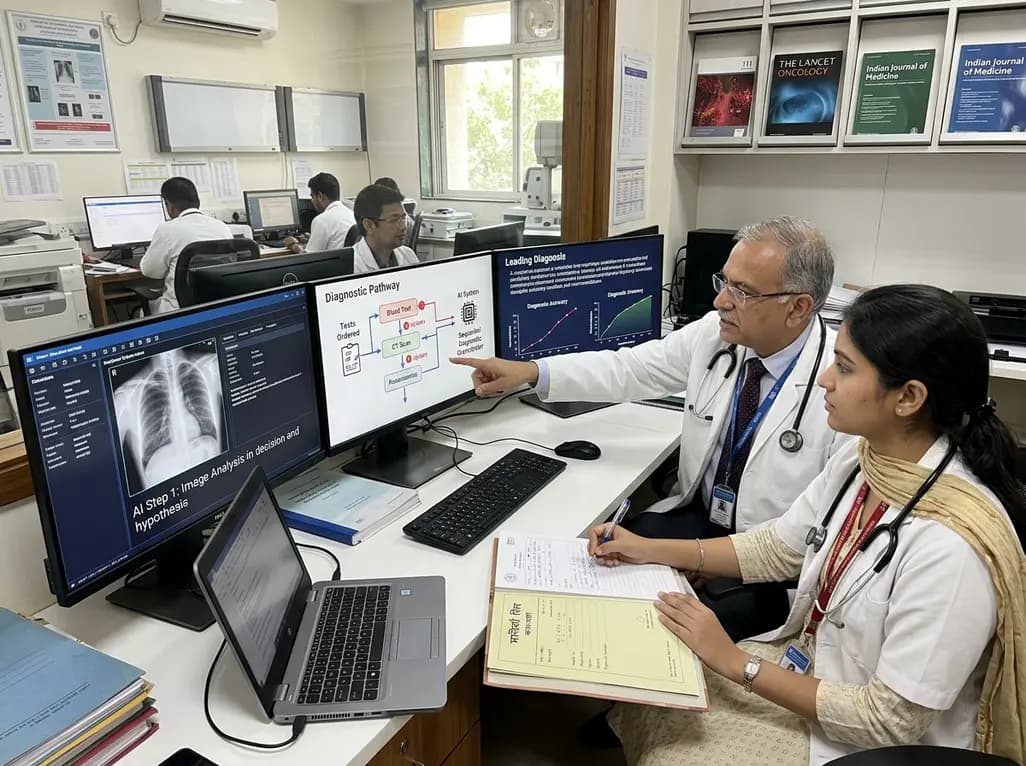
A breakthrough peer-reviewed study demonstrates that a sequential AI diagnosis system can mirror real-world clinical reasoning. By ordering stepwise tests and updating hypotheses dynamically, this multi-agent orchestrator achieved superior diagnostic accuracy while reducing investigative costs.
Today

A prenatal case highlights severe glutaric acidemia type II presenting as bilateral hyperechoic cystic kidneys at 18 weeks. Whole-exome sequencing revealed a novel homozygous ETFDH frameshift variant, demonstrating the power of rapid genetic testing in fetal renal anomalies.
Today

Review how tailored exercise programs benefit frail older patients with heart failure. Explore pathophysiological mechanisms, individualized training prescriptions, and strategies to overcome adherence barriers in clinical practice.
Yesterday

This comparative study evaluates posterior labral tears with and without glenohumeral instability, highlighting distinct demographic patterns, MRI underestimation in stable shoulders, and successful arthroscopic repair outcomes.
Yesterday

A clinical study demonstrates that early intervention with tocilizumab, either as monotherapy or bridged with corticosteroids, achieves significant proptosis reduction and resolves active inflammation in treatment-naive thyroid eye disease.
Yesterday
