.webp&w=384&q=75)

Loading, please wait...
Loading, please wait...
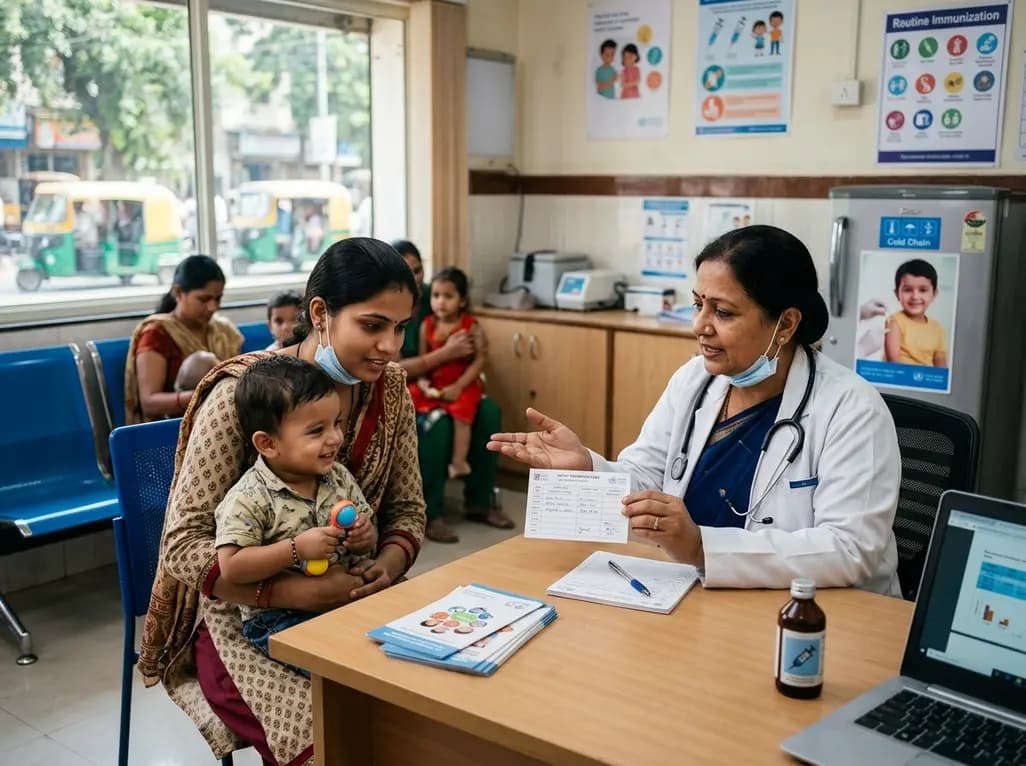
Public health authorities face persistent misinformation regarding pediatric immunizations, which complicates clinical counseling and community outreach. A comprehensive fifteen-year systematic review by the World Health Organization has officially reaffirmed that there is no scientific evidence supporting a vaccine autism link. Consequently, this decisive confirmation dismantles long-standing myths that have compromised immunization coverage across multiple continents. International health experts examined extensive peer-reviewed data to evaluate the safety profile of routine pediatric formulations. In addition, healthcare professionals now possess updated, high-quality evidence to reassure hesitant families during routine primary care consultations. Maintaining robust childhood vaccination schedules remains essential to prevent debilitating communicable diseases in growing populations.
The controversy surrounding childhood vaccines emerged in 1998 following a publication led by Andrew Wakefield. Specifically, that flawed study suggested that the measles, mumps, and rubella vaccine triggered autism spectrum disorders. Subsequently, the medical journal The Lancet fully retracted the paper after investigators uncovered widespread falsification of data and grave ethical violations. However, the unfounded narrative had already gained widespread traction among anxious parents. Over the following decades, political debates and social media echo chambers amplified these unproven assertions. Recently, debates resurfaced in the United States when executive actions questioned pediatric vaccination schedules and preservative safety. Nevertheless, independent scientific bodies consistently refute these claims. Global health authorities emphasize that early developmental indicators frequently coincide with the scheduled timing of early childhood immunizations. Therefore, parents may mistakenly conflate coincidental developmental milestones with vaccine administration. Clinicians must recognize these psychological drivers of vaccine hesitancy to guide sensitive conversations effectively.
The WHO Global Advisory Committee on Vaccine Safety conducted an extensive systematic assessment evaluating research published between January 2010 and August 2025. During this thorough review, investigators examined thirty-one primary research studies and five meta-analyses. Furthermore, the committee evaluated twenty-one narrative reviews to capture all relevant safety outcomes. Most importantly, the methodologically rigorous studies involving large pediatric cohorts showed no causal relationship between vaccines and neurodevelopmental conditions. In contrast, the sparse studies reporting a positive link suffered from severe methodological flaws, very low certainty of evidence, and high risks of bias. Meta-analyses that pooled data from multiple international registries consistently found zero elevated risk. The global panel also assessed potential biological mechanisms, finding no plausible pathways by which modern antigens disrupt neurological development. As a result, the committee reinforced its previous historical conclusions from 2002, 2004, and 2012 with even greater epidemiological certainty.
Critics of childhood immunization often focus on formulation components, particularly organomercury compounds and mineral adjuvants. For decades, activists claimed that thiomersal, an ethylmercury-based preservative, contributed directly to neurological impairment. Therefore, the WHO panel evaluated sixteen targeted primary studies and specific meta-analyses on thiomersal exposure. Notably, the high-quality evidence demonstrated that thiomersal in multi-dose vials does not induce autism spectrum disorder. Ethylmercury clears rapidly from the human body and does not accumulate like toxic methylmercury. Additionally, the committee evaluated long-term epidemiological data regarding aluminum adjuvants used to enhance immune responses. A nationwide Danish registry study tracking children across two decades confirmed no association between trace aluminum exposure and neurodevelopmental outcomes. Consequently, the global panel concluded that trace preservatives and standard immunological adjuvants remain completely safe for pediatric administration. Healthcare providers can confidently assure families that vaccine constituents undergo thorough pharmacological testing before clinical deployment.
Epidemiological records show an apparent increase in autism spectrum disorder diagnoses across several countries over recent decades. However, the World Health Organization cautions clinicians and public health leaders against attributing this upward trend to childhood immunization. Instead, significant expansions in diagnostic criteria within psychiatric manuals explain most of this documented rise. Furthermore, modern screening instruments allow developmental pediatricians to identify milder presentations that previous clinicians frequently overlooked. Community awareness programs and school-based developmental evaluations have also dramatically increased referral rates among young children. Thus, broader definitions and proactive screening create a statistical artifact of higher prevalence rather than a true epidemiological disease outbreak. Genetic research continues to demonstrate that autism is primarily a heritable condition involving complex polygenic architecture. Environmental factors acting during early prenatal development may play minor roles, but postnatal immunizations do not contribute to pathogenesis.
The findings from the World Health Organization carry immense practical significance for clinical practice and public health across India. India has committed substantial resources toward achieving measles-rubella elimination by the end of 2026. Through the National Zero Measles-Rubella Elimination Campaign, the Union Health Ministry aims to vaccinate all children up to five years of age with two potent doses. Recent government data show that first-dose coverage reached an impressive 98.6 percent nationwide. However, isolated vaccine hesitancy fueled by imported online misinformation could undermine these hard-won community gains. When parents delay or decline the measles-rubella shot, herd immunity drops and deadly outbreaks can quickly re-emerge. Primary care physicians, pediatricians, and community health workers serve on the frontline of parental education. By leveraging authoritative WHO data, Indian clinicians can proactively reassure families, counter misleading digital rumors, and ensure high completion rates for the universal immunization schedule.
Q1: Why do some parents still believe that childhood vaccines cause autism?
Parents often encounter persistent misinformation that originated from a fraudulent 1998 study. In addition, autism spectrum symptoms typically become noticeable between twelve and twenty-four months of age. Because this developmental window coincides with standard pediatric immunization schedules, parents often mistake a purely temporal coincidence for causation. Extensive global research confirms that childhood vaccines do not trigger neurodevelopmental regression.
Q2: Does the preservative thiomersal pose any neurodevelopmental risk to young children?
High-quality scientific studies confirm that thiomersal does not cause autism spectrum disorders or cognitive impairments. Thiomersal contains ethylmercury, which breaks down rapidly and exits the body far faster than environmental methylmercury. Furthermore, most routine childhood vaccines in industrialized countries no longer use thiomersal, yet autism rates did not decline following its removal from pediatric formulations.
Q3: How should clinicians respond when parents express hesitation about the MMR vaccine?
Clinicians should listen empathetically to parental worries without judgment and explain the overwhelming epidemiological evidence that supports vaccine safety. Specifically, doctors should highlight that rigorous reviews involving millions of children confirm no causal link with autism. Clinicians must also remind parents that avoiding vaccination exposes children to severe, life-threatening complications from measles, mumps, and rubella infections.
Disclaimer: This content is for informational and educational purposes only. It does not constitute medical advice or replace professional judgment. Refer to the latest local and national guidelines for clinical practice.
References

Read summarized clinical updates, watch expert medical content, and earn CME certifications right from your smartphone.
Open your smartphone camera to scan and install.





A rigorous 15-year World Health Organization review reaffirms that childhood immunizations and preservative agents like thiomersal do not cause autism spectrum disorder. Explore critical clinical insights, epidemiological evidence, and public health implications for India's routine immunization program.
Today

Over 60 international public health researchers have advised FSSAI to mandate front-of-pack warning labels for any packaged product high in even one critical nutrient: sugar, saturated fat, or sodium. This reform counters phased rollouts to accelerate consumer protection and address India's chronic disease burden.
Today

A comprehensive meta-analysis of over 278,000 women demonstrates that maternal atopic dermatitis significantly increases risks of premature rupture of membranes and low birth weight. Discover essential clinical insights on disease mechanisms, serial antenatal growth monitoring, and safe therapeutic interventions.
Today

A comprehensive single-center analysis reveals that slow pathway ablation for AVNRT in octogenarians maintains high acute procedural success (98.1%) but carries significantly higher complication rates compared to younger cohorts, underscoring the need for careful risk-benefit evaluation.
Today

Apollo Global Management is in talks to acquire Johnson & Johnson's DePuy Synthes orthopedics unit in a potential $20 billion transaction. This comprehensive analysis reviews the MedTech restructuring, product lines in joint reconstruction, ongoing legal issues, and key implications for global orthopedic surgery.
Today
A cross-sectional study reveals that elevated METS-IR is independently associated with higher myopia odds in adolescents, showing biological synergy with obesity and highlighting the need for metabolic screening in pediatric eye care.
Today
