

Loading, please wait...
Loading, please wait...

Environmental toxicologists and maternal health experts increasingly recognize that atmospheric particulate matter poses profound risks to fetal health. Specifically, maternal exposure to wildfire smoke in pregnancy has emerged as a significant public health concern across the globe. Recent epidemiological investigations indicate that fine inhalable particulates from combustion sources alter developmental trajectories in utero. Consequently, healthcare providers must understand these environmental hazards to safeguard vulnerable expectant mothers and their developing children.
A landmark population cohort investigation published in JAMA Pediatrics evaluated approximately 893,212 mother-child dyads enrolled in the United States Medicaid program. The researchers tracked children born between 2007 and 2014 through early childhood to monitor neurodevelopmental diagnoses. Using advanced geospatial modeling, investigators estimated maternal residential exposure to fine particulate matter measuring 2.5 micrometers or smaller in aerodynamic diameter. Importantly, the authors isolated wildfire-attributable fine particulate concentrations from other background ambient industrial pollutants. Their statistical analysis demonstrated that every 0.75-microgram-per-cubic-meter increase in average wildfire particulate concentration across gestation increased the hazard of an autism diagnosis by 30 percent before age eight. Furthermore, while typical urban ambient particulate matter also increased risk, wildfire emissions exhibited substantially stronger developmental associations. Interestingly, the cohort showed no statistically significant association between combustion smoke and attention-deficit/hyperactivity disorder, indicating distinct vulnerability pathways. Nevertheless, the study remains observational and cannot prove direct causality. The authors also acknowledged that Medicaid cohorts encompass specific socioeconomic vulnerabilities. However, the sheer size of the sample provides persuasive evidence that inhaled combustion particulates disrupt sensitive biological windows during gestation.
Gestational timing plays a pivotal role in toxicological vulnerability. Notably, the study revealed that the strongest correlation occurred when maternal exposure happened during the second and third trimesters. After the fifteenth gestational week, the fetal central nervous system undergoes intensive synaptogenesis, axonal migration, and neural circuit refinement. During these later trimesters, disruption of fundamental developmental milestones can lead to persistent structural and functional neurodevelopmental variations. When fine combustion particles enter maternal airways, they evade primary respiratory defenses and reach terminal alveoli. Consequently, these foreign particulates trigger extensive pulmonary inflammation that quickly overflows into systemic maternal circulation. Additionally, circulating pro-inflammatory mediators such as interleukin-6 and tumor necrosis factor-alpha cross the choriodecidual interface. This systemic inflammatory cascade may impair placental perfusion and breach the immature fetal blood-brain barrier. Furthermore, sustained neuroinflammation in the fetal cerebrum can disrupt microglial pruning, altering synaptic density in critical cortical structures. Therefore, maternal exposure during mid-to-late gestation appears uniquely harmful to long-term neurocognitive development.
Wildfire smoke presents distinct chemical hazards compared to ordinary urban vehicular smog. Biomass combustion generates complex mixtures of polycyclic aromatic hydrocarbons, carbon monoxide, volatile organic compounds, and heavy trace metals. Moreover, wildfires burn at extreme temperatures that aerosolize organic materials, producing ultra-fine particles capable of deep alveolar penetration. Because wildfire smoke frequently travels thousands of miles, atmospheric aging occurs during transit. Atmospheric oxidation often increases the free radical generation potential of traveling smoke plumes. Consequently, communities far away from visible flames still inhale high concentrations of chemically reactive aerosols. Simultaneously, parallel toxicological discoveries in environmental science emphasize how microscopic particles exert cellular injury. For instance, recent scientific reports in the journal Nature demonstrated that microplastic fragments undergo spontaneous electron transfers when contacting aqueous biological fluids. This interface generates destructive reactive radicals, proving that non-organic micro-particles directly induce cellular damage. Similarly, the unique surface chemistry of wildfire particles stimulates profound oxidative stress in living tissues. Therefore, clinicians must treat biomass smoke as an exceptionally reactive toxicological hazard rather than standard urban dust.
Obstetricians, pediatricians, and family physicians must integrate environmental health screening into routine clinical discussions. Currently, many prenatal care plans overlook atmospheric pollution hazards, leaving pregnant women unprepared during episodic air emergencies. Therefore, clinicians should proactively instruct patients on interpreting regional Air Quality Index reports. When local air monitoring stations indicate elevated particulate pollution, expectant mothers must curtail unnecessary outdoor exertion. Furthermore, women residing in fire-prone or biomass-burning regions should establish clean-air spaces within their domestic residences. High-efficiency particulate air filtration units substantially lower indoor fine particulate burdens. If outdoor travel becomes unavoidable during heavy haze events, patients should wear properly fitted N95 or FFP2 respirators. Ordinary cloth masks or loose surgical covers fail to filter fine sub-micron particulates effectively. In addition, healthcare providers should identify high-risk pregnancies, such as those complicated by asthma or gestational hypertension, for closer surveillance. Ultimately, proactive counseling empowers mothers to reduce avoidable particulate inhalations during critical gestational trimesters.
Addressing environmental neurodevelopmental risks demands coordinated public health initiatives alongside individual clinical counseling. Municipal health authorities must modernize warning systems to ensure ambient air notifications reach vulnerable populations rapidly. Moreover, regional urban planning should prioritize clean indoor public shelters equipped with certified industrial air filtration. Ongoing research must also explore the precise biomolecular cascades linking particulate inhalation to epigenetic alterations in fetal neural tissues. Meanwhile, healthcare facilities must train medical staff to recognize emerging environmental hazards, including combustion smoke and microplastic ingestion. Comprehensive environmental monitoring programs will illuminate how cumulative toxic exposures influence pediatric psychiatric epidemiology. By uniting rigorous laboratory findings with robust clinical guidance, the medical community can better shield future generations from ubiquitous airborne threats.
Q1: Why does wildfire smoke pose a greater risk than routine urban air pollution?
Wildfire smoke contains highly concentrated biomass combustion products, including volatile organic chemicals, polycyclic aromatic hydrocarbons, and fine particulates. Because biomass burns at extreme temperatures, it produces high surface-reactivity particles. These tiny particles travel vast distances and penetrate deep into maternal alveolar spaces. Consequently, they provoke heightened systemic inflammation and oxidative stress compared to standard vehicular emissions, generating greater biological disruption during pregnancy.
Q2: During which gestational period is smoke exposure most concerning for neurodevelopment?
The observational data identified the second and third trimesters, particularly after fifteen weeks of gestation, as the most vulnerable period. During these stages, the fetal brain undergoes rapid synaptogenesis, microglial specialization, and neural pathway arborization. Transplacental inflammatory signals and maternal oxidative stress during this sensitive window can disrupt critical neural connections, increasing the likelihood of subsequent neurodevelopmental diagnoses.
Q3: What practical actions should pregnant women take during air quality alerts?
Pregnant women should monitor regional air quality indices daily and remain indoors with windows sealed during pollution spikes. Running certified HEPA indoor air purifiers significantly diminishes domestic fine particulate levels. If outdoor exposure is unavoidable, expectant mothers should utilize tightly fitted N95 or equivalent respirators rather than standard cloth masks. Additionally, discussing environmental risks with prenatal clinicians ensures prompt management of respiratory symptoms.
Disclaimer: This content is for informational and educational purposes only. It does not constitute medical advice or replace professional judgment. Refer to the latest local and national guidelines for clinical practice.
References

Read summarized clinical updates, watch expert medical content, and earn CME certifications right from your smartphone.
Open your smartphone camera to scan and install.





A nationwide cohort study published in JAMA Pediatrics reveals that maternal exposure to wildfire fine particulate matter, especially in late pregnancy, is linked to an elevated risk of childhood autism. Clinicians should evaluate ambient air quality risks and provide proactive protective counseling to mothers.
Today

With packaged goods giant HUL backing FSSAI's proposed front-of-pack red warning labels for foods high in fat, sugar, and salt, India takes a major step toward curbing non-communicable diseases. Learn how clearer nutrition disclosures empower clinicians, inform consumer choices, and drive dietary reform.
Today
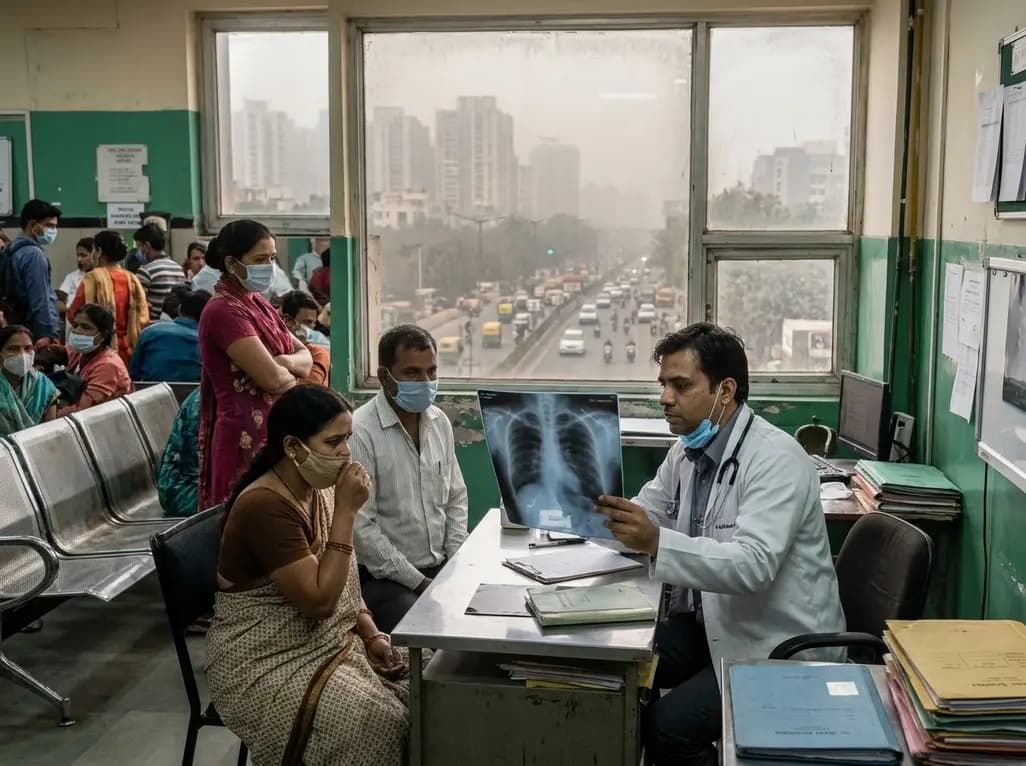
With India still adhering to 2009 air pollution benchmarks, the delayed NAAQS revision exposes populations to fine particulate matter far exceeding global safety limits. Clinicians face surging cardiopulmonary morbidity, emphasizing the urgent need for stringent, health-centered regulatory thresholds nationwide.
Today

Modern 3D anthropometry reveals that pediatric leg growth ceases years before spinal elongation, exposing the clinical illusion of the classical Anderson-Green model. Learn how segmental growth dissociation improves surgical timing for epiphysiodesis in adolescent leg length discrepancy.
2 days back

A meta-analysis of 18 studies reveals that bariatric surgery does not significantly alter circulating homocysteine levels, regardless of follow-up duration. Clinicians must maintain vigilance over post-surgical micronutrient supplementation to prevent hyperhomocysteinemia.
2 days back
