.webp&w=384&q=75)

Loading, please wait...
Loading, please wait...
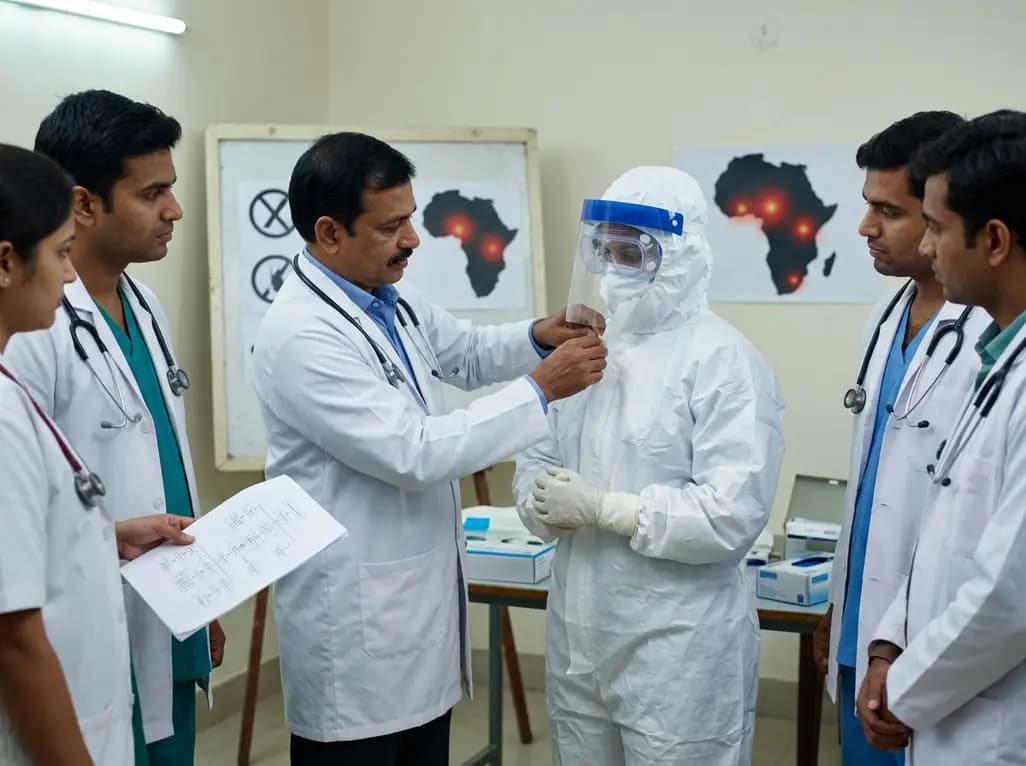
The World Health Organization (WHO) and the Africa CDC have unveiled a new joint strategy. Specifically, they launched a six-month WHO Ebola plan to combat the escalating outbreak in Central Africa. Consequently, international agencies are rallying resources to stop the transmission of this deadly disease.
Historically, the Democratic Republic of the Congo (DRC) has faced multiple health crises. However, the current situation represents the country's 17th Ebola outbreak. It began in May 2026 and quickly spread to neighboring Uganda. Thus, the WHO declared it a public health emergency of international concern.
Furthermore, health authorities are struggling to bring the epidemic under control because it went undetected for weeks. Currently, there are 381 confirmed cases in Congo and 62 confirmed deaths. Meanwhile, Uganda has recorded 19 cases and two deaths. Therefore, this outbreak is already the fourth biggest on record.
The six-month joint strategy requires $518 million to execute its objectives from June to November. Fortunately, donors have pledged $315.8 million, although health leaders require additional funding. The plan focuses on several critical public health interventions.
First, it aims to scale up cross-border surveillance and enhance border screening. Second, the initiative will deploy rapid response teams and establish secure treatment centers. Additionally, health workers will focus on contact tracing and community engagement to build local trust. Indeed, engaging with local communities is vital for successful containment.
Unlike previous outbreaks driven by the Zaire strain, this outbreak involves the rare Bundibugyo ebolavirus strain. Importantly, there is currently no approved vaccine or specific antiviral treatment for this pathogen. Consequently, clinicians must rely entirely on early supportive care to improve patient outcomes.
In addition, diagnostic testing poses a significant challenge. Standard Ebola tests initially failed to detect this specific strain. Furthermore, laboratories experience major delays in delivering results, which often take a week or more. As a result, health workers find it difficult to isolate cases promptly. Therefore, medical professionals worldwide must stay informed about these diagnostic and clinical hurdles.
Q1: What is the main goal of the WHO Ebola plan?
The joint WHO and Africa CDC plan aims to control the spread of the Bundibugyo Ebola strain. Specifically, it focuses on cross-border surveillance, rapid response, treatment, and community engagement over six months.
Q2: Why is the Bundibugyo strain more difficult to manage?
Unlike the common Zaire strain, the Bundibugyo strain has no approved vaccines or targeted antiviral therapies. Additionally, standard diagnostic tests initially failed to identify it, which delayed outbreak containment efforts.
Q3: How much funding does the WHO Ebola plan require?
The total cost of the six-month plan is $518 million. Currently, donors have pledged approximately $315.8 million, but health leaders require additional resources to cover the deficit.
Disclaimer: This content is for informational and educational purposes only. It does not constitute medical advice or replace professional judgment. Refer to the latest local and national guidelines for clinical practice.
References

Read summarized clinical updates, watch expert medical content, and earn CME certifications right from your smartphone.
Open your smartphone camera to scan and install.





The World Health Organization has launched a $518 million emergency plan to control Congo's 17th Ebola outbreak, driven by the rare Bundibugyo strain....
4 months ago

As monsoon seasons elevate arboviral disease threats, Tamil Nadu has initiated an ICMR-monitored evaluation of the tetravalent dengue vaccine in Tenkasi district. Clinicians emphasize clinical monitoring, public prevention, and high-quality early pediatric care to reduce disease morbidity across endemic regions.
Today

Leucine Rich Bio has introduced South Asia's first comprehensive vaginal microbiome test, BugSpeaks. By profiling microbial dysbiosis, pathogens, and antimicrobial resistance, this next-generation diagnostic platform provides clinicians with deeper insights into recurrent infections, fertility, and reproductive health.
Today

Review how tailored exercise programs benefit frail older patients with heart failure. Explore pathophysiological mechanisms, individualized training prescriptions, and strategies to overcome adherence barriers in clinical practice.
Today

This comparative study evaluates posterior labral tears with and without glenohumeral instability, highlighting distinct demographic patterns, MRI underestimation in stable shoulders, and successful arthroscopic repair outcomes.
Today

A clinical study demonstrates that early intervention with tocilizumab, either as monotherapy or bridged with corticosteroids, achieves significant proptosis reduction and resolves active inflammation in treatment-naive thyroid eye disease.
Today
