

Loading, please wait...
Loading, please wait...
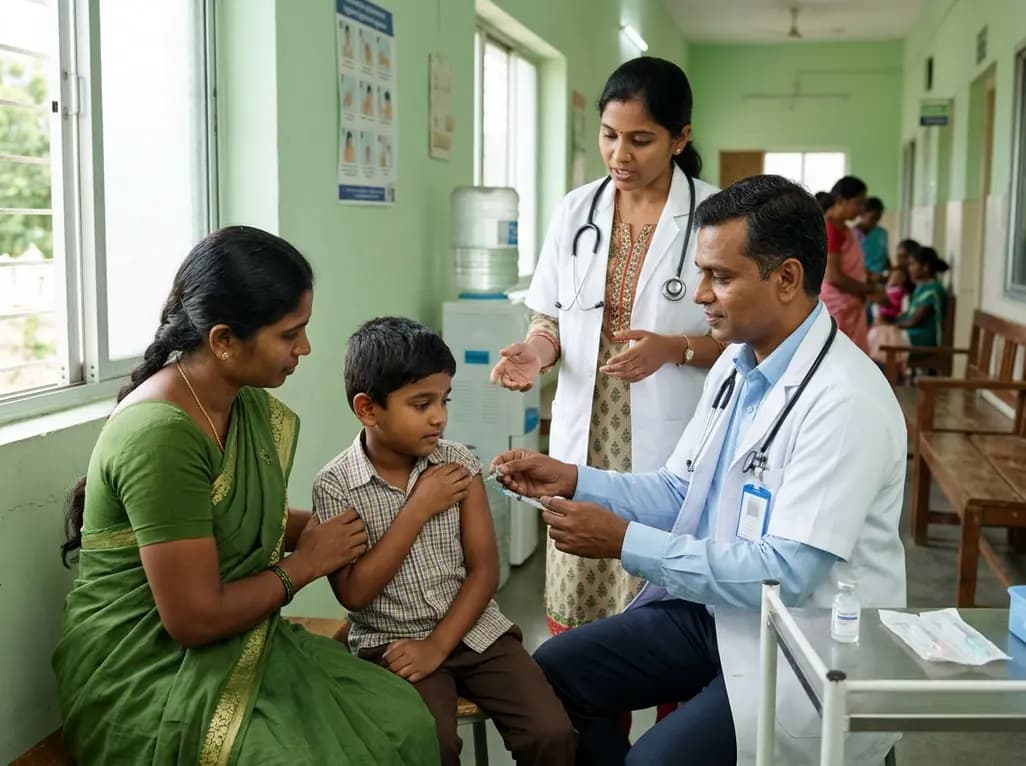
A pioneering dengue vaccine pilot study has officially commenced in Tamil Nadu, marking a historic milestone in India's vector-borne disease control strategy. Specifically, the state government initiated this targeted evaluation in the high-incidence area of Kadayanallur within Tenkasi district. Overseen by the Indian Council of Medical Research, the clinical rollout aims to measure real-world performance under local epidemiological conditions. Indeed, dengue fever remains a recurrent clinical burden across the country, especially following intense seasonal monsoons. Consequently, public health leaders, infectious disease specialists, and primary care physicians are watching this rollout closely. Therefore, investigators hope to define a structured path toward broader immunisation across other endemic states. Furthermore, the initiative reflects an expanding commitment to evidence-based preventive interventions against acute arboviral infections nationwide.
Health officials deliberately selected Kadayanallur in Tenkasi district because the municipality consistently experiences substantial dengue transmission during monsoon peaks. Therefore, evaluating the intervention in this hyperendemic setting provides realistic operational data for clinicians and policymakers. The project focuses on Qdenga, an approved live-attenuated tetravalent vaccine manufactured by Takeda. Scientists from the National Institute of Epidemiology under the Indian Council of Medical Research lead the protocol surveillance. In addition, researchers are examining how Indian community demographics influence serological responses across multiple age cohorts. Two doses administered three months apart comprise the primary immunization schedule. Brazil has already integrated this vaccine candidate into its national public health immunisation programme with demonstrable success. Furthermore, forty international regulatory authorities and the World Health Organization have evaluated its safety profile. In India, the Central Drugs Standard Control Organisation approved its use for individuals aged four to sixty years. However, longitudinal field data remain necessary to confirm durability against co-circulating local viral strains. If the Tenkasi initiative demonstrates substantial community benefit, the state will expand coverage to other vulnerable districts. Ultimately, findings from this pilot will inform national immunization panels seeking reliable interventions against severe arboviral morbidity.
The vaccine candidate demonstrates impressive real-world efficacy, conferring between 80 and 90 percent protection against severe dengue manifestations and hospital admissions. Consequently, widespread adoption could alleviate severe strain on critical care infrastructure during seasonal epidemics. The tetravalent formulation stimulates durable neutralizing antibodies against all four circulating dengue virus serotypes. Nevertheless, physicians understand that clinical efficacy can vary based on individual baseline serostatus. For instance, individuals with prior dengue exposure often exhibit stronger secondary antibody titers following vaccination. Conversely, seronegative recipients require careful longitudinal monitoring to confirm comprehensive protection against all four serotypes. Clinical investigators in Kadayanallur are assessing whether the vaccine prevents classical plasma leakage, severe thrombocytopenia, and shock syndrome. In addition, the study assesses local and systemic reactogenicity among vaccinated individuals over prolonged observational windows. Most reported adverse events in global clinical trials were mild, including localized injection-site soreness, low-grade pyrexia, and transient myalgia. Therefore, Indian researchers anticipate similar tolerability profiles in local populations. Moreover, rigorous documentation of adverse events will strengthen community trust throughout the trial period. Continuous post-marketing surveillance will guarantee that healthcare providers maintain confidence in candidate safety while documenting rare clinical events.
Although current regional case numbers remain relatively stable, public health authorities emphasize that the forthcoming monsoon creates immense epidemiological vulnerability. Heavy rainfall frequently produces pervasive water stagnation, which directly accelerates the breeding of Aedes aegypti mosquitoes. Therefore, clinical vigilance must remain elevated across primary, secondary, and tertiary healthcare facilities. Specifically, state officials have urged citizens to eliminate household breeding sites through disciplined vector abatement. Moreover, physicians repeatedly emphasize the dangers of self-medication during acute febrile episodes. Unsupervised ingestion of non-steroidal anti-inflammatory drugs like ibuprofen or diclofenac significantly elevates hemorrhagic complications in dengue patients. Thus, patients presenting with sudden fever, severe headache, retro-orbital pain, or arthralgia require immediate formal triage. Clinicians should prioritize early hematocrit surveillance, platelet monitoring, and judicious fluid resuscitation rather than empirical remedies. In addition, community health workers must actively debunk ineffective domestic remedies, such as arbitrary herbal preparations. Prompt medical consultation remains the cornerstone of reducing avoidable dengue mortalities across endemic communities. Furthermore, emergency departments must establish standardized triage protocols to manage rapid surges of suspected arboviral cases.
Beyond vector-borne disease management, regional health dialogues emphasize holistic approaches to child development and preventive pediatric care. Early nutritional status directly influences lifelong immunological resilience and neurodevelopmental trajectories. For instance, exclusive breastfeeding for the first six months of life provides essential bioactive immunoglobulins and essential nutrients. Health leaders stressed that psychological nourishment proves equally vital for developing children. Specifically, clinicians observe that unconditional parental acceptance fosters optimal cognitive and emotional growth during formative years. Furthermore, healthcare communicators must dismantle societal stigma surrounding developmental delays in pediatric cohorts. Families often struggle to navigate rehabilitation services due to fragmented geographic access and economic burdens. Therefore, pediatricians must guide parents toward validated early intervention programmes rather than merely counting routine diagnostic camps. Timely speech therapy, occupational interventions, and sensory training significantly alter long-term developmental outcomes when instituted early. In addition, healthcare facilities must integrate developmental screening into routine childhood immunization visits. Consequently, early therapeutic engagement ensures that children with neurodevelopmental challenges achieve optimal functional independence. By aligning adequate infancy nutrition with structured developmental support, clinical systems build stronger foundations for pediatric health throughout the country.
Emerging technological innovations, including artificial intelligence, increasingly intersect with public health communication and clinical reporting. Modern AI platforms can rapidly translate extensive epidemiology datasets, such as National Family Health Survey reports, into accessible regional languages. Furthermore, digital automation assists public health teams in tracking disease trends across vulnerable districts. However, medical professionals and journalists must implement strict ethical boundaries when handling clinical data. Diagnostic suggestions from machine learning algorithms represent theoretical hypotheses rather than verified clinical conclusions. Therefore, treating physicians must independently confirm all computational predictions before implementing therapeutic regimens. In addition, algorithmic confidence scores cannot substitute for rigorous peer-reviewed empirical evidence. Media organizations must also safeguard pediatric privacy by avoiding synthetic imagery of children facing developmental challenges. Indeed, no automated tool can replicate the clinical intuition and compassionate empathy required during direct patient evaluations. Transparent attribution of digital tools protects professional integrity while preserving essential trust between the healthcare community and the general public. Consequently, health authorities encourage responsible technological adoption that prioritizes patient dignity, scientific rigor, and clinical accountability.
Q1: What is the primary purpose of the dengue vaccine pilot study in Tamil Nadu?
The primary purpose of the initiative in Kadayanallur is to evaluate the real-world safety, operational feasibility, and immunological effectiveness of the Qdenga vaccine under Indian epidemiological conditions. By monitoring vaccine performance in a high-burden area, researchers from the Indian Council of Medical Research can generate robust local evidence. This valuable data will ultimately guide health authorities regarding broader national rollouts.
Q2: What level of protection does the evaluated dengue vaccine candidate demonstrate?
Clinical data indicate that the two-dose tetravalent vaccine candidate provides between 80 and 90 percent protection against severe disease complications and dengue-related hospitalizations. While mild breakthrough infections can still occur, the substantial reduction in severe plasma leakage, internal hemorrhage, and circulatory collapse helps alleviate significant strain on critical care units and emergency departments during seasonal monsoon outbreaks.
Q3: Why do clinicians advise strictly against self-medication during acute febrile illness?
Clinicians strongly advise against self-medication because arbitrary antipyretic choices can trigger severe hemorrhagic consequences during active dengue infection. Ingesting non-steroidal anti-inflammatory drugs exacerbates platelet dysfunction and increases gastrointestinal bleeding risks. Patients presenting with acute pyrexia, severe retro-orbital headache, and muscle pain must receive formal clinical evaluation, serial platelet counts, and structured hydration protocols under professional medical supervision.
Disclaimer: This content is for informational and educational purposes only. It does not constitute medical advice or replace professional judgment. Refer to the latest local and national guidelines for clinical practice.
References

Read summarized clinical updates, watch expert medical content, and earn CME certifications right from your smartphone.
Open your smartphone camera to scan and install.





As monsoon seasons elevate arboviral disease threats, Tamil Nadu has initiated an ICMR-monitored evaluation of the tetravalent dengue vaccine in Tenkasi district. Clinicians emphasize clinical monitoring, public prevention, and high-quality early pediatric care to reduce disease morbidity across endemic regions.
Today

Leucine Rich Bio has introduced South Asia's first comprehensive vaginal microbiome test, BugSpeaks. By profiling microbial dysbiosis, pathogens, and antimicrobial resistance, this next-generation diagnostic platform provides clinicians with deeper insights into recurrent infections, fertility, and reproductive health.
Today
Review how tailored exercise programs benefit frail older patients with heart failure. Explore pathophysiological mechanisms, individualized training prescriptions, and strategies to overcome adherence barriers in clinical practice.
Today

This comparative study evaluates posterior labral tears with and without glenohumeral instability, highlighting distinct demographic patterns, MRI underestimation in stable shoulders, and successful arthroscopic repair outcomes.
Today
A clinical study demonstrates that early intervention with tocilizumab, either as monotherapy or bridged with corticosteroids, achieves significant proptosis reduction and resolves active inflammation in treatment-naive thyroid eye disease.
Today
