.webp&w=384&q=75)

Loading, please wait...
Loading, please wait...
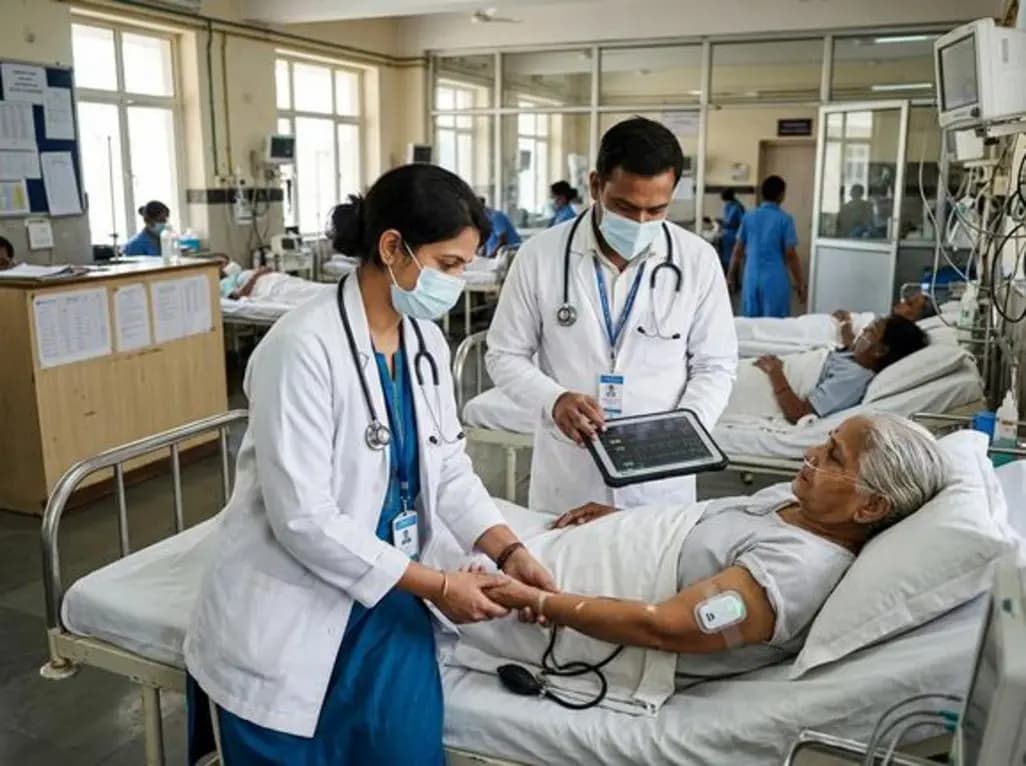
The introduction of wearable monitoring systems has marked a significant shift in managing hospitalized patients, particularly during the COVID-19 pandemic. These devices provide continuous data on heart rate, respiratory rate, and oxygen saturation. Researchers recently evaluated how such technology integrates into standard ward care. Interestingly, the study focused not just on patient outcomes but also on the practical impact on nursing workflows and manual vital sign measurements (MVSMs).
Transitioning from periodic checks to real-time data flow provides a safety net for clinicians. Consequently, medical teams can identify physiological decline much earlier than traditional methods allow. Furthermore, the integration of these systems helps manage high patient volumes in isolation wards. Notably, this technology ensures that high-risk patients remain under a digital watchful eye between manual rounds.
Clinical settings often rely on intermittent manual checks, which may miss sudden physiological declines. Wearable monitoring systems bridge this gap by offering a real-time dashboard of patient vitals. In this study, patients spent over 30% of their time with vitals above the threshold for escalation. This high frequency of instability underscores the need for constant vigilance. Therefore, continuous monitoring serves as an essential supplement to bedside care.
One major finding was the relationship between technology and manual observation. Although one might expect wearables to reduce manual checks, the opposite often occurred for unstable patients. When the Early Warning Score (EWS) was high, nurses performed MVSMs more frequently. Therefore, wearable monitoring systems appear to prompt earlier clinical intervention rather than replacing it. However, the study did not find significant changes in hospital length of stay or mortality rates. This suggests that while monitoring enhances detection, further integration is needed to improve long-term outcomes.
For healthcare providers in India, the adoption of such systems is growing rapidly. Many leading hospitals now partner with technology firms to implement AI-powered monitoring in cardiac and isolation wards. These tools are particularly valuable in resource-limited settings where nurse-to-patient ratios are high. Moreover, the integration with digital health initiatives like the Ayushman Bharat Digital Mission (ABDM) supports better data continuity. Clinicians should view these systems as a \"force multiplier\" that directs attention where it is most needed.
No, they do not replace manual checks. Instead, they often prompt more frequent manual assessments when the system detects physiological instability, acting as a triage tool for nursing staff.
While particularly beneficial for patients with respiratory conditions like COVID-19, they are increasingly used in cardiac wards and post-surgical recovery to monitor for early signs of deterioration.
Disclaimer: This content is for informational and educational purposes only. It is not intended as medical advice or to replace professional healthcare judgment. Refer to the latest local and national guidelines for clinical practice.
References
Vollam S et al. Clinical Evaluation of a Real-Time Wearable System for Monitoring In-Hospital Ambulatory Patients With COVID-19: Retrospective Data Study. JMIR Med Inform. 2026 Jun 22. doi: 10.2196/81304. PMID: 42329684.
Medgate Today. The Rise Of Remote Patient Monitoring In India's Healthcare System Transforming Care Beyond Hospital Walls. June 2026.
Grand View Research. Remote Patient Monitoring System Market Size Report, 2033. Published June 2026.

Read summarized clinical updates, watch expert medical content, and earn CME certifications right from your smartphone.
Open your smartphone camera to scan and install.





A retrospective study highlights the role of wearable monitoring systems in tracking COVID-19 patients, showing increased manual vital sign checks for unstable patients despite no change in overall clinical outcomes.
4 months ago

As monsoon seasons elevate arboviral disease threats, Tamil Nadu has initiated an ICMR-monitored evaluation of the tetravalent dengue vaccine in Tenkasi district. Clinicians emphasize clinical monitoring, public prevention, and high-quality early pediatric care to reduce disease morbidity across endemic regions.
Today

A comparative cohort study evaluates vNOTES vs TLH hysterectomy for benign conditions, demonstrating shorter operative duration, faster return to daily activities, and equivalent female sexual function scores without increased dyspareunia.
Today

Review how tailored exercise programs benefit frail older patients with heart failure. Explore pathophysiological mechanisms, individualized training prescriptions, and strategies to overcome adherence barriers in clinical practice.
Today

This comparative study evaluates posterior labral tears with and without glenohumeral instability, highlighting distinct demographic patterns, MRI underestimation in stable shoulders, and successful arthroscopic repair outcomes.
Today

A clinical study demonstrates that early intervention with tocilizumab, either as monotherapy or bridged with corticosteroids, achieves significant proptosis reduction and resolves active inflammation in treatment-naive thyroid eye disease.
Today
