.webp&w=384&q=75)

Loading, please wait...
Loading, please wait...

Monitoring fetal heart activity through a fetal phonocardiogram (fPCG) provides critical insights for the early detection of cardiac anomalies. However, clinicians often face significant hurdles because background noise and powerline disturbances frequently degrade these non-invasive signals. To address this, recent research highlights fetal phonocardiography denoising using a WaveAtom-based architecture. This multiscale approach effectively enhances signal clarity by isolating the subtle sounds of the fetal heart from complex maternal artifacts.
The proposed methodology utilizes a multiscale frequency-time analysis to process raw acoustic data. Specifically, researchers employ a statistical envelope based on the Hilbert transform alongside moving-average smoothing to achieve robust peak detection. Furthermore, the system uses physiological gating to differentiate maternal and fetal heart rate (HR) streams. By applying predefined rate intervals, the architecture accurately distinguishes fetal peaks even in medical signal augmentation scenarios. Consequently, this method manages fine-grained oscillatory features that often baffle conventional filtering techniques.
Experts evaluate the performance of this denoising system using rigorous metrics like the Signal-to-Noise Ratio (SNR), Root Mean Square Error (RMSE), and correlation coefficients. Because fetal monitoring in resource-constrained settings in India often encounters high ambient noise, these advancements are particularly vital. Moreover, the ability to maintain signal integrity while removing dynamic artifacts ensures more reliable diagnostic outcomes. Therefore, implementing such robust denoising frameworks could significantly reduce the incidence of missed fetal cardiac anomalies during routine prenatal care.
The WaveAtom approach uses multiscale frequency-time analysis to separate fine-grained oscillatory heart sounds from background noise. This ensures that fetal heart rate features remain clear for diagnostic interpretation.
Common noise sources include maternal heart sounds, respiratory artifacts, uterine movements, and external environmental disturbances or powerline interference.
Disclaimer: This content is for informational and educational purposes only and does not constitute medical advice, diagnosis, or treatment. Always seek the advice of your physician or other qualified health provider with any questions you may have regarding a medical condition. Refer to the latest local and national guidelines for clinical practice.
References
1. Kurian MT et al. WaveAtom based denoising approach for enhancing non-invasive fetal phonocardiography signal analysis. Biomed Phys Eng Express. 2026 Feb 16. doi: 10.1088/2057-1976/ae462e. PMID: 41698241.
2. Islam N, Saha S, et al. Clinical Significance of Fetal Echocardiography in Diagnosing Congenital Cardiac Anomalies: An Experience From Eastern India. J Radiol Clin Imaging. 2023;6:107-117.
3. Indian Institute of Science Fetal Heart Sound Database (IIScFHSDB). PhysioNet. 2022. doi: 10.13026/h1y2-6m19.

Read summarized clinical updates, watch expert medical content, and earn CME certifications right from your smartphone.
Open your smartphone camera to scan and install.





Researchers introduce a WaveAtom-based denoising architecture to improve non-invasive fetal phonocardiography by filtering artifacts and enhancing signal qu...
8 months ago

A landmark 12-year longitudinal study highlights significant reductions in opioid prescribing for nonspecific low back pain following clinical guidelines and prescription monitoring systems, emphasizing non-opioid multimodal pain care.
Today
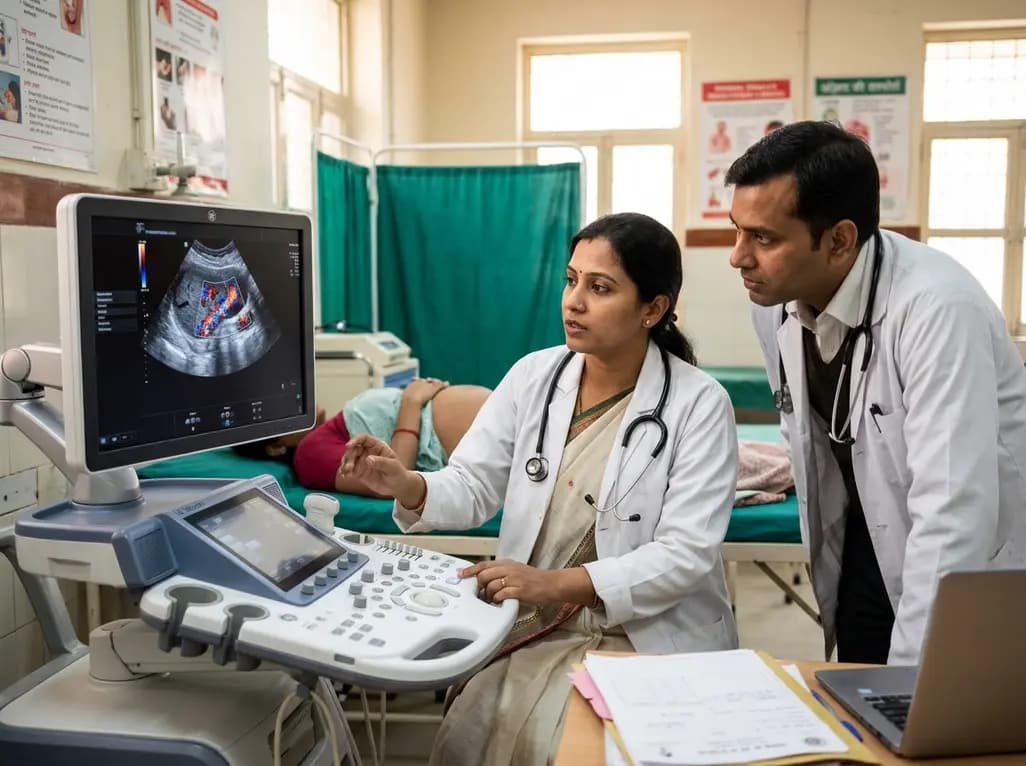
A study in Ultrasound in Obstetrics & Gynecology shows that quantitative vascularization of the anterior fornix/cervix with transvaginal ultrasound reliably identifies placenta accreta spectrum and predicts severe intraoperative hemorrhage, offering vital objective risk stratification.
Today
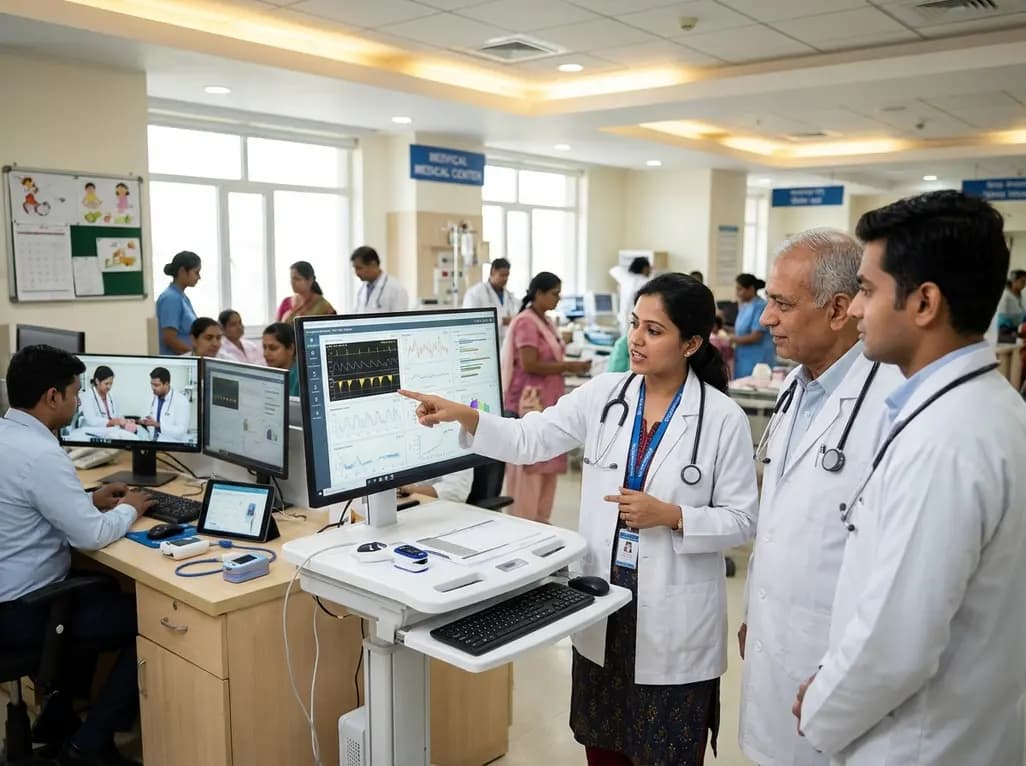
A landmark study details how an enterprise pediatric remote patient management model expanded from a single cardiology pilot to 16 diverse specialty programs by combining centralized digital operations with specialty clinical leadership.
Yesterday
A breakthrough study shows that 3D-planned corrective osteotomy successfully resolves distal radioulnar joint instability in pediatric diaphyseal forearm malunions. The precise osseous realignment eliminates chronic wrist pain and restores joint function without requiring secondary soft-tissue reconstruction.
Today
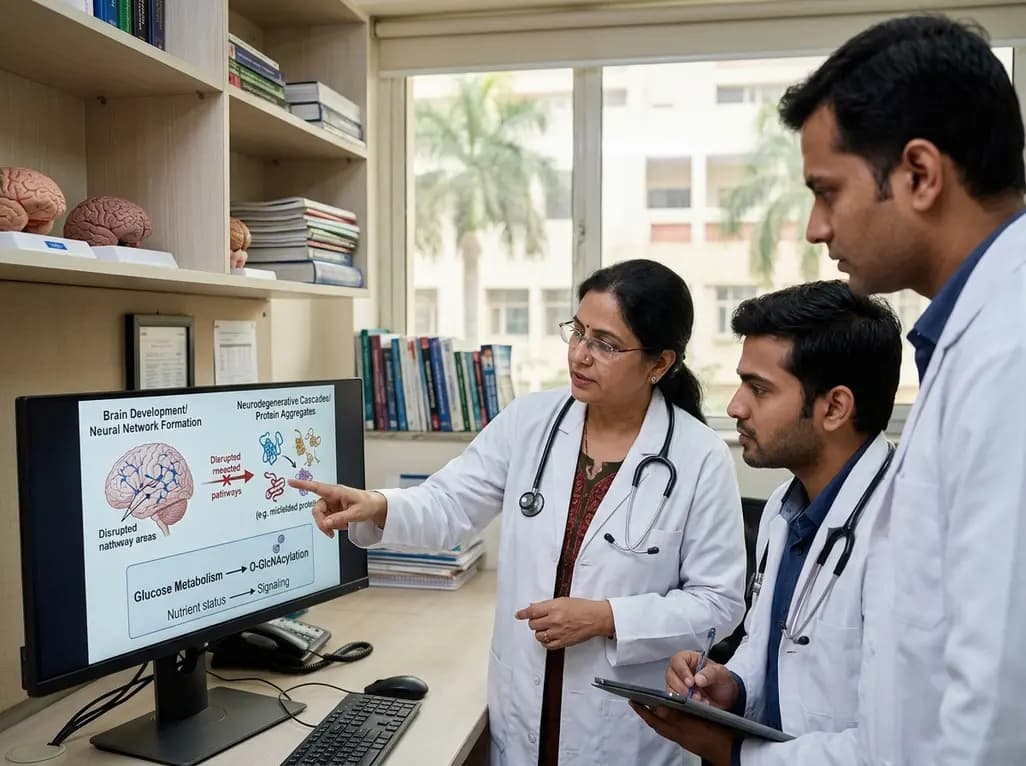
Protein O-GlcNAcylation couples cellular nutrient status to vital neuronal functions. This review explores how disrupted O-GlcNAc cycling drives both neurodevelopmental delays and neurodegenerative cascades, positioning metabolic post-translational modifications as therapeutic targets in clinical neurology.
Today
