

Loading, please wait...
Loading, please wait...

Managing acute and subacute nonspecific low back pain presents a major challenge across clinical practice. Historically, clinicians frequently initiated opioid therapy during initial consultations. However, accumulating evidence demonstrates that opioids yield limited functional benefit while introducing considerable dependency risks. A longitudinal evaluation spanning 2012 through 2024 analyzed how evolving federal recommendations and state monitoring systems influenced analgesic choices. This extensive investigation provides critical insights for healthcare practitioners seeking evidence-based pain management strategies.
Researchers evaluated 31,940 patients presenting with new-onset nonspecific low back pain over twelve years. Overall, only 6.5% of these patients received an opioid prescription within six months of diagnosis. Prescribing odds declined steadily by 2.7% per quarter across the twelve-year observation period. Furthermore, statistical modeling identified two pivotal change points in 2015 and 2018. These temporal shifts coincided directly with national guideline releases and mandatory state prescription monitoring mandates. Consequently, the study captured an overarching cultural and clinical pivot toward cautious opioid stewardship. Prior to these interventions, physicians initiated opioids far more routinely for acute spinal discomfort. In contrast, modern practice reflects heightened scrutiny regarding dosage strength and treatment duration. Specifically, high-dose regimens exceeding 50 morphine milligram equivalents witnessed substantial reductions across clinics. Therefore, the trajectory demonstrates durable progress in curbing aggressive opioid utilization for mechanical spinal pain.
The investigation highlighted notable variations between emergency department and outpatient environments. Emergency clinicians historically faced intense pressure to provide rapid, acute relief during initial presentations. As a result, emergency department patients experienced higher baseline prescribing rates, reaching 16.5% compared to 5.8% in non-emergency settings. However, emergency departments also demonstrated the most dramatic early transformation. In mid-2015, emergency prescribing dropped precipitously by 54.2%, falling from 27.4% to 12.2%. Following this sharp decline, rates plateaued, indicating an immediate institutional correction. Conversely, non-emergency clinics exhibited a more gradual response. Outpatient departments achieved a 42.8% reduction in late 2018, coinciding with mandatory prescription database integration. This divergence shows that fast-paced acute care settings can alter behaviors rapidly under targeted protocols. Meanwhile, longitudinal primary care practices require systemic reinforcement to adjust therapeutic habits. Ultimately, both environments demonstrated that clear institutional benchmarks diminish unnecessary opioid starts.
Voluntary clinical guidelines provide foundational educational principles, yet mandatory regulatory frameworks often drive decisive prescribing reductions. The Centers for Disease Control and Prevention published guidelines that altered professional perceptions regarding opioid efficacy. These recommendations emphasized non-pharmacologic interventions and non-opioid medications as first-line defenses. Furthermore, state governments introduced mandatory prescription drug monitoring programs. These digital registries required prescribers to review patient dispensing histories before issuing controlled substances. Because physicians faced legal accountability and clinical transparency, high-risk co-prescriptions declined sharply. In addition, real-time tracking alerted clinicians to potential doctor shopping or accidental overdose vulnerabilities. Together, voluntary recommendations and statutory monitoring created complementary pressure. Guidelines offered the clinical rationale, while monitoring databases enforced procedural diligence. Consequently, physicians shifted from reactive narcotic analgesia to structured conservative protocols. This dual mechanism demonstrates that clinical education works best when accompanied by systematic regulatory oversight.
Decreasing opioid use requires robust alternatives that effectively control acute lumbar discomfort. International clinical guidelines strongly advocate non-pharmacologic care as the primary initial approach. Superficial heat application, early mobilization, and tailored physical therapy provide rapid symptomatic relief for acute lumbar strains. Moreover, clinicians should actively reassure patients about the self-limiting nature of uncomplicated spinal pain. When pharmacological agents become necessary, non-steroidal anti-inflammatory drugs represent the standard first-line therapy. Paracetamol provides an acceptable adjunct, particularly when contraindications restrict oral anti-inflammatory drugs. Additionally, short courses of muscle relaxants offer symptomatic assistance during severe acute spasms. Physicians should avoid combining sedatives like benzodiazepines with analgesics due to compounding respiratory risks. For subacute and chronic symptoms, active rehabilitation, core stabilization, and cognitive behavioral interventions yield durable benefits. In contrast to opioids, these conservative therapies restore physical function without escalating dependence risks.
The findings provide valuable clinical guidance for healthcare practitioners operating across India. In Indian outpatient and emergency clinics, low back pain constitutes one of the most frequent mechanical presentations. Although access to potent opioids remains legally regulated under the Narcotic Drugs and Psychotropic Substances Act, weaker opioids like tramadol face widespread overprescription. Furthermore, fixed-dose combinations containing paracetamol and mild opioids frequently enter daily regimens without systematic duration limits. Overreliance on early opioid analgesics fosters tolerance and conceals secondary spinal pathology. Therefore, Indian physicians should establish clear institutional protocols prioritizing physical therapy, lifestyle modification, and scheduled non-opioid medications. Clinicians must also conduct rigorous evaluations to exclude red flag signs before initiating any pharmacological therapy. If tramadol becomes strictly necessary for refractory acute pain, doctors should prescribe the lowest effective dose for under five days. Ultimately, digitized prescription tracking and diligent patient education will protect patients from long-term adverse events.
Clinicians should reserve opioids exclusively for severe, disabling acute low back pain that fails to respond to evidence-based non-pharmacologic and non-opioid pharmacologic treatments. Prior to initiating opioids, physicians must evaluate baseline risk factors for addiction, assess medical contraindications, and establish explicit functional goals. If prescribed, therapy should utilize immediate-release formulations at the lowest effective dose for no more than three to five days, followed by scheduled clinical reassessment.
Non-steroidal anti-inflammatory drugs represent the primary pharmacological treatment for acute back pain because they relieve inflammation and spinal discomfort effectively. Paracetamol provides a suitable alternative for individuals who have gastrointestinal, cardiovascular, or renal contraindications to anti-inflammatory agents. Additionally, clinicians may prescribe short courses of non-sedating muscle relaxants when painful muscular spasms accompany acute mechanical strain. Combining these medications with early physical mobilization consistently achieves superior functional outcomes without causing tolerance or chemical dependence.
Prescription drug monitoring programs give clinicians real-time digital visibility into a patient's historical controlled substance dispensations across various health facilities. This objective data helps prescribers identify dangerous polypharmacy, including concurrent benzodiazepine and opioid prescriptions, which elevate accidental overdose risk. Furthermore, access to monitoring databases encourages physicians to adhere to evidence-based prescribing guidelines, substantially reducing high-dose narcotic initiations. Ultimately, these electronic systems foster safer clinical decision-making while encouraging appropriate multidisciplinary pain referrals.
Disclaimer: This content is for informational and educational purposes only and is not intended as medical advice. Healthcare professionals should exercise clinical judgment, and patients should consult their physicians. Refer to the latest local and national guidelines for clinical practice.
References

Read summarized clinical updates, watch expert medical content, and earn CME certifications right from your smartphone.
Open your smartphone camera to scan and install.





A landmark 12-year longitudinal study highlights significant reductions in opioid prescribing for nonspecific low back pain following clinical guidelines and prescription monitoring systems, emphasizing non-opioid multimodal pain care.
Today

A study in Ultrasound in Obstetrics & Gynecology shows that quantitative vascularization of the anterior fornix/cervix with transvaginal ultrasound reliably identifies placenta accreta spectrum and predicts severe intraoperative hemorrhage, offering vital objective risk stratification.
Today
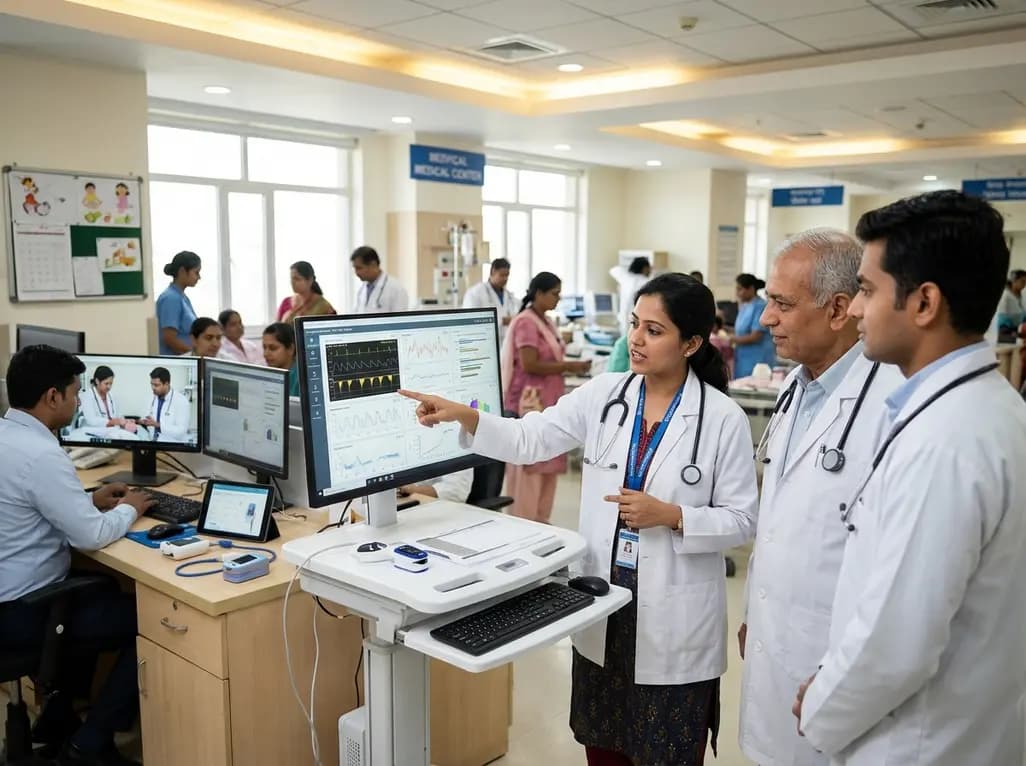
A landmark study details how an enterprise pediatric remote patient management model expanded from a single cardiology pilot to 16 diverse specialty programs by combining centralized digital operations with specialty clinical leadership.
Yesterday

Peripheral nerve injuries present clinical challenges due to regenerative mismatches between sensory and motor neurons. This review explores cutting-edge tissue-engineered nerve grafts designed as central-peripheral signal relays to overcome denervation atrophy and restore functional motor-sensory recovery.
Today

Protein O-GlcNAcylation couples cellular nutrient status to vital neuronal functions. This review explores how disrupted O-GlcNAc cycling drives both neurodevelopmental delays and neurodegenerative cascades, positioning metabolic post-translational modifications as therapeutic targets in clinical neurology.
Today
