.webp&w=384&q=75)

Loading, please wait...
Loading, please wait...
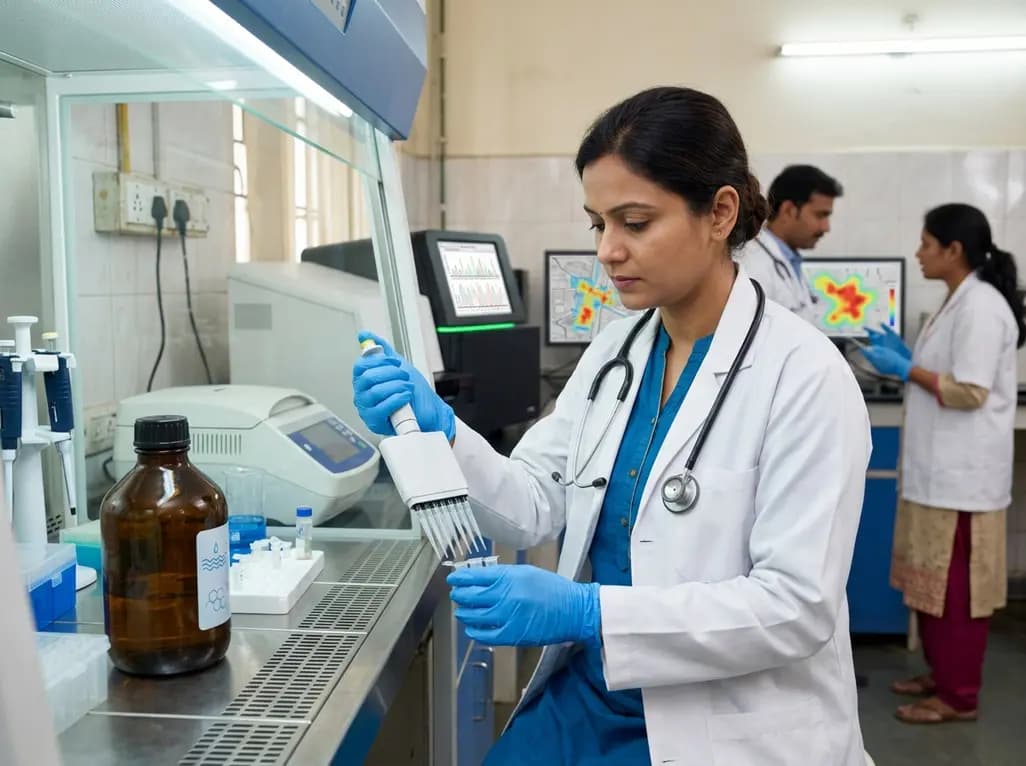
Cancer remains a leading cause of global mortality. Unfortunately, the burden of this disease is often unequally distributed. Factors such as unequal exposure to carcinogens and limited healthcare access drive these disparities. Traditional surveillance systems often struggle with long latencies and reporting biases. Consequently, there is an urgent need for innovative tools to improve geospatial monitoring. Wastewater surveillance for cancer presents a transformative approach to tracking population-level risk factors and disease prevalence.
Wastewater contains a wealth of biological information shed by communities. Researchers have identified several candidate targets that indicate cancer risk. Specifically, oncoviruses like Human Papillomavirus (HPV) and Hepatitis B can be monitored in effluent. Furthermore, chemical carcinogens and specific oncogenes provide insights into environmental exposures. Because these markers appear in wastewater before clinical diagnoses, they serve as early warning signals for public health officials. This allows for more targeted screening efforts in high-risk areas.
Integrating wastewater data into existing epidemiology infrastructure enhances decision-making. Moreover, this method bypasses the need for individual participation in initial surveys. Therefore, it offers a more equitable snapshot of community health, especially in underserved regions of India. By predicting future burdens, authorities can allocate resources more effectively for diagnosis and treatment. In addition, this proactive stance helps in evaluating the success of prevention policies over time.
While the potential is significant, this technological expansion requires careful ethical oversight. Protecting community privacy is paramount when analyzing collective genetic data. Scientists must also standardize methodologies to ensure accurate quantification across different regions. Addressing these research needs will be critical for the sustainable implementation of wastewater-based cancer epidemiology.
Traditional methods rely on individual diagnosis and reporting, which often involves a time lag. Wastewater surveillance provides near real-time, population-level data by detecting biomarkers shed in sewage, offering a broader view of community risk.
Currently, researchers can detect oncoviruses (like HPV and HBV), bacterial carcinogens, oncogenes, and chemical metabolites. These markers reflect both the presence of cancer-causing agents and the biological signals of the disease itself.
While India established robust wastewater networks for SARS-CoV-2 during the pandemic, the transition to cancer surveillance is still in the research and pilot phases. Experts advocate for scaling these existing systems to include non-communicable diseases.
Disclaimer: This content is for informational and educational purposes only. It does not constitute professional medical advice, diagnosis, or treatment. Always seek the advice of your physician or other qualified healthcare provider with any questions you may have regarding a medical condition. Refer to the latest local and national guidelines for clinical practice.
References
Healy HG et al. Wastewater Surveillance to Inform Cancer Epidemiology and Evidence-Based Interventions. Environ Sci Technol. 2026 Jun 04. doi: 10.1021/acs.est.6c01391. PMID: 42239995.
Maresso AW et al. Study is first to detect, track multiple cancer-causing viruses in wastewater. Baylor College of Medicine News. 2026 May 26.
Holm R et al. Using wastewater for population-level colorectal cancer surveillance: a future research agenda. J Epidemiol Community Health. 2026 Mar 17. doi: 10.1136/jech-2025-224253.
"
Read summarized clinical updates, watch expert medical content, and earn CME certifications right from your smartphone.
Open your smartphone camera to scan and install.





Wastewater surveillance of cancer targets like oncoviruses and carcinogens offers a proactive way to inform screening and public health policies....
4 months ago

As monsoon seasons elevate arboviral disease threats, Tamil Nadu has initiated an ICMR-monitored evaluation of the tetravalent dengue vaccine in Tenkasi district. Clinicians emphasize clinical monitoring, public prevention, and high-quality early pediatric care to reduce disease morbidity across endemic regions.
Today

A comparative cohort study evaluates vNOTES vs TLH hysterectomy for benign conditions, demonstrating shorter operative duration, faster return to daily activities, and equivalent female sexual function scores without increased dyspareunia.
Today

Review how tailored exercise programs benefit frail older patients with heart failure. Explore pathophysiological mechanisms, individualized training prescriptions, and strategies to overcome adherence barriers in clinical practice.
Today

This comparative study evaluates posterior labral tears with and without glenohumeral instability, highlighting distinct demographic patterns, MRI underestimation in stable shoulders, and successful arthroscopic repair outcomes.
Today

A clinical study demonstrates that early intervention with tocilizumab, either as monotherapy or bridged with corticosteroids, achieves significant proptosis reduction and resolves active inflammation in treatment-naive thyroid eye disease.
Today
