.webp&w=384&q=75)

Loading, please wait...
Loading, please wait...

Pediatric NAT recognition is a critical skill for emergency clinicians because delayed diagnosis often leads to high morbidity and mortality. Traditional training methods frequently fail to address the emotional and cognitive complexities of real-world abuse cases. Consequently, a new proof-of-concept study evaluated a multimodal curriculum that integrates virtual reality (VR) and high-fidelity simulation. This innovative approach aims to bridge the gap between theoretical knowledge and real-world clinical decision-making.
Researchers examined a national course covering 13 core competency domains for child abuse. Participants engaged in immersive VR scenarios that simulated the high-pressure environment of a pediatric emergency department. Furthermore, results showed that all participating clinicians met the feasibility benchmarks for the training program. Most importantly, follow-up surveys conducted one month later revealed significant improvements in clinician confidence across all domains.
Moreover, the integration of VR allows healthcare providers to practice difficult clinical assessments in a safe yet realistic setting. For instance, learners can navigate the interpersonal challenges of reporting suspected abuse to authorities or families. This experiential learning model successfully addresses the nuances of child maltreatment that standard lectures might overlook. Therefore, implementing such simulation-based training could significantly improve early detection rates in emergency settings.
VR simulations create a high-stakes clinical environment without risking actual patient safety. Additionally, these digital tools provide standardized experiences that ensure every clinician receives consistent, high-quality training. As technology continues to evolve, VR will likely become a cornerstone of pediatric trauma education. This shift promises to empower frontline providers, ultimately leading to better outcomes and protection for vulnerable children.
Clinicians should look for unexplained bruising, posterior rib fractures, and injuries that are inconsistent with the provided history. Maintaining a high index of suspicion is vital in every pediatric trauma case to ensure early intervention.
VR provides immersive, high-fidelity scenarios that mimic the emotional and cognitive demands of real-life clinical practice. This method improves retention and helps clinicians master complex interpersonal tasks, such as discussing suspected abuse with caregivers.
Disclaimer: This content is for informational and educational purposes only. It is not intended to be a substitute for professional medical advice, diagnosis, or treatment. Always seek the advice of your physician or other qualified health provider with any questions you may have regarding a medical condition. Refer to the latest local and national guidelines for clinical practice.
References

Read summarized clinical updates, watch expert medical content, and earn CME certifications right from your smartphone.
Open your smartphone camera to scan and install.





A proof-of-concept study shows that immersive VR simulation significantly improves pediatric clinicians' recognition and reporting of non-accidental trauma ...
5 months ago

Following regulatory scrutiny from FSSAI regarding promotional representations and lean muscle preservation claims, Dr. Reddy's Laboratories and Nestlé Health Science are currently reviewing the branding and marketing strategy for their joint nutritional supplement Celevida GLP+.
Today
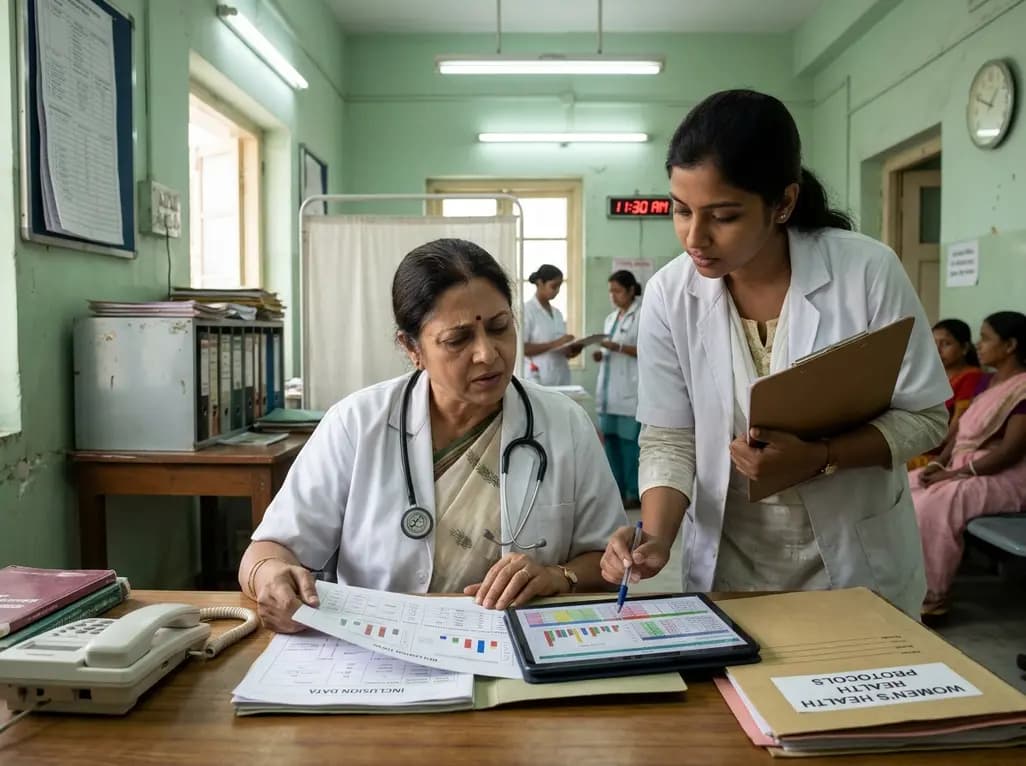
Demanding exhaustive hormonal profiling can inadvertently discourage clinical studies involving females. Methodological standards must align with the specific scientific question to expand, not restrict, equitable evidence for women.
Today

The Directorate General of Health Services directs Indian states to halt the hazardous reuse and reprocessing of single-use medical devices. Discover regulatory implications under the Drugs and Cosmetics Act, critical infection risks, legal liabilities, and operational changes required across clinical specialties.
Today
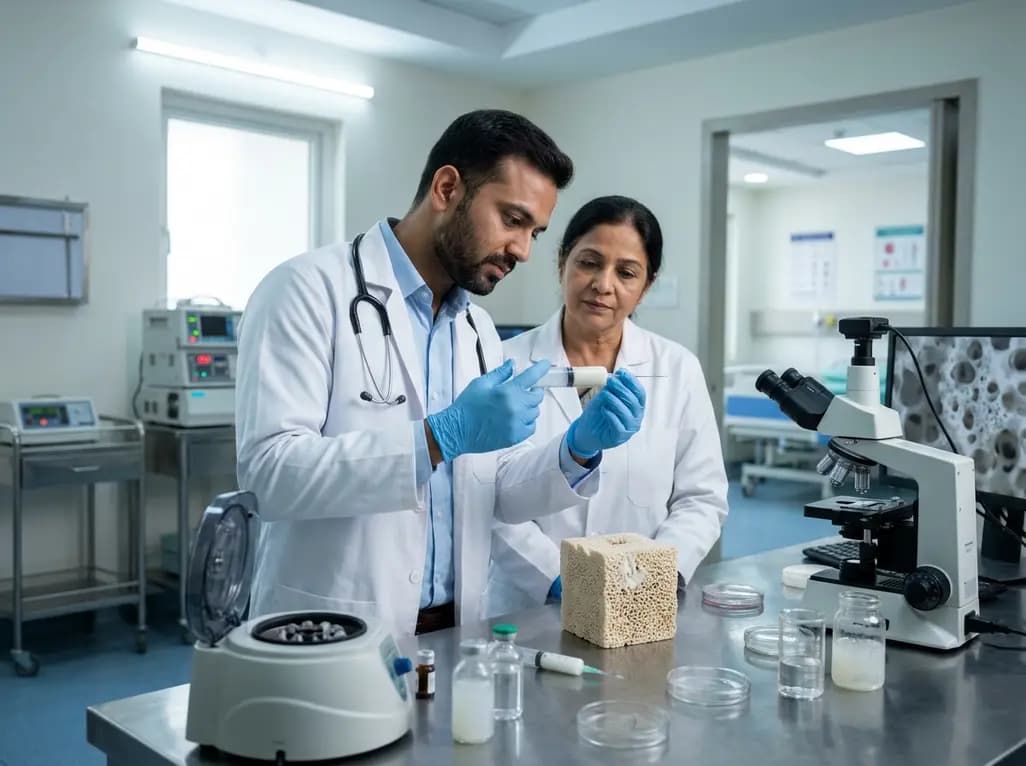
A novel calcium polyphosphate coacervate enables injectable bone implants with in situ hierarchical porosity via phase separation and gas foaming, significantly enhancing cell proliferation, energy metabolism, and osteogenic differentiation for minimally invasive bone defect repair.
Today

India is advancing preventive healthcare by integrating genomics, artificial intelligence, and quantum technologies. With the SANGAM programme sequencing one million Indian genomes, clinicians can unlock personalized therapies, detect cardiometabolic risks early, and curb the burden of diabetes and heart disease.
Today
