

Loading, please wait...
Loading, please wait...

Clinicians recognize that persecutory delusions impose substantial distress and functional disability on individuals with psychotic disorders. While standard cognitive behavioral therapy for psychosis offers meaningful symptom relief, clinical responses often vary considerably among patients. Recently, VR-CBT for paranoia has emerged as a transformative therapeutic approach. This digital intervention delivers realistic, interactive simulations of everyday social situations. Consequently, patients can explore challenging interactions in a safe, controlled setting under continuous therapist guidance.
Furthermore, virtual environments allow clinicians to observe behavioral responses directly in real time. Patients confront perceived threats without relying on maladaptive defenses, thereby testing their beliefs effectively. Traditional psychological treatments often rely on retrospective recall or clinic-based discussions. In contrast, virtual simulations create immediate opportunities to challenge cognitive biases and persecutory threats. Therefore, immersive technology bridges the gap between traditional clinical settings and dynamic daily life experiences. As a result, digital health innovations represent a critical evolution in evidence-based psychiatric care.
The TOPIC-VR trial evaluated whether virtual reality-assisted therapy outperforms traditional cognitive behavioral therapy for psychosis. In this secondary investigation, investigators analyzed data from eighty-one participants diagnosed with a psychotic spectrum disorder. Researchers randomized these participants to receive up to sixteen structured sessions of either standard cognitive behavioral therapy or virtual reality-assisted treatment. In addition, the research protocol evaluated clinical outcomes at post-treatment using both standardized questionnaires and the experience sampling method.
Moreover, researchers conducted exploratory moderation analyses to identify which patient characteristics predict preferential treatment outcomes. The research team evaluated clinical variables, including baseline safety behaviors, paranoia severity, and social anxiety levels. Concurrently, they examined demographic factors such as patient age, biological sex, and employment status. Because the analyses were exploratory, the investigators did not apply statistical corrections for multiple comparisons. Nevertheless, these detailed evaluations offer crucial preliminary insights into personalized psychiatric treatment allocation for complex clinical populations.
The primary finding revealed that baseline momentary safety behaviors significantly moderated therapeutic response across treatment groups. Specifically, individuals who reported elevated baseline safety behaviors achieved substantially greater benefits from virtual reality therapy than from standard interventions. This moderation effect emerged consistently across both standardized paranoia scales and momentary real-world assessments. In contrast, patients with low baseline safety behaviors experienced comparable improvements in both treatment arms.
Notably, safety behaviors include common defensive actions such as avoiding eye contact, scanning for exits, or maintaining physical distance. Although patients utilize these defensive tactics to reduce acute anxiety, such actions paradoxically maintain paranoia. Consequently, these behaviors prevent individuals from discovering that expected social dangers do not occur. In standard therapy, practitioners struggle to address subtle in-the-moment defensive reactions occurring outside the consulting room. Conversely, virtual reality provides therapists with full visual access to patient actions, allowing direct behavioral corrections during ongoing simulations.
In addition to defensive behaviors, baseline paranoid ideation severity moderated momentary paranoia outcomes. Specifically, patients presenting with higher baseline paranoia demonstrated superior clinical gains in the virtual reality group. When individuals face intense persecutory anxiety, traditional office-based verbal challenges may feel too abstract or insufficiently convincing. Furthermore, severe distress often impedes the cognitive restructuring techniques that traditional cognitive behavioral therapy requires.
However, immersive virtual reality provides objective, observable proof of environmental safety. By systematically dropping defensive reactions within realistic virtual scenarios, patients gather immediate disconfirmatory evidence. Thus, immersive exposure delivers potent experiential learning that counteracts severe persecutory ideation more effectively than verbal dialogue alone. Interestingly, other clinical characteristics, including baseline social anxiety, did not demonstrate significant moderating effects. Therefore, the unique advantages of immersive exposure appear specifically tied to threat beliefs and defensive mechanisms rather than generalized affective distress.
These moderator analyses highlight an important shift toward precision psychiatry and individualized care. Historically, mental health systems have applied standardized cognitive behavioral therapy protocols uniformly across psychotic disorders. However, heterogeneous symptom profiles produce divergent outcomes, leaving many patients with residual persecutory symptoms. Consequently, understanding specific moderators allows clinicians to match individual patients to the most effective therapeutic modality.
Specifically, clinicians should systematically assess momentary safety behaviors and delusion intensity during initial evaluations. If a patient exhibits prominent avoidance behaviors and severe paranoia, referral for virtual reality-assisted therapy represents an evidence-supported strategy. Furthermore, this targeted allocation maximizes treatment efficacy while conserving healthcare resources. Standard therapy remains effective for patients with mild symptom profiles and minimal defensive behaviors. Therefore, implementing routine baseline profiling ensures that each patient receives optimal, timely care tailored to their distinct behavioral profile.
While these exploratory outcomes provide promising clinical direction, physicians must consider several methodological caveats. Because these moderation analyses lacked statistical adjustments for multiple comparisons, larger confirmatory trials remain essential. In addition, future investigations should evaluate whether personalized treatment allocation leads to durable, long-term functional recovery. Researchers also need to assess whether these targeted benefits persist across extended follow-up intervals beyond post-treatment assessments.
Furthermore, deploying virtual reality equipment in routine psychiatric services requires investment in therapist training and digital infrastructure. Clinicians must acquire technical confidence to deliver immersive scenarios without causing unintended sensory discomfort or technophobia. Fortunately, ongoing technological developments continue to make hardware more accessible, lightweight, and cost-effective. As healthcare centers integrate specialized digital platforms, stratified care pathways will increasingly become standard practice. Ultimately, precision psychological interventions will improve quality of life and social participation for individuals navigating psychotic disorders.
Momentary safety behaviors comprise active defense tactics that patients deploy during perceived social threats. Specifically, these actions include avoiding eye contact, maintaining physical distance, checking surroundings, or wearing sunglasses to evade scrutiny. Consequently, while these maneuvers temporarily reduce distress, they preserve persecutory beliefs by blocking natural corrective disconfirmatory learning.
Virtual reality enables clinicians to construct immersive, fully controlled social environments tailored to distinct distress triggers. Consequently, therapists can directly prompt patients to drop avoidance maneuvers in simulated public spaces. Furthermore, real-time exposure provides immediate disconfirmatory evidence, accelerating safety learning and symptom reduction far more effectively than traditional imaginal techniques.
Sociodemographic variables did not moderate therapeutic response between the two treatment modalities. Specifically, participant age, biological sex, and employment status showed no significant interaction with symptom reduction. Therefore, clinicians can confidently recommend immersive therapy across diverse adult demographics, focusing their allocation criteria on clinical presentation rather than patient background.
Disclaimer: This content is for informational and educational purposes only and does not constitute medical advice, diagnosis, or treatment. Healthcare professionals should exercise their independent clinical judgment when interpreting or applying this information. Clinical management must be tailored to individual patient needs, considering institutional protocols and available resources. Refer to the latest local and national guidelines for clinical practice.
References

Read summarized clinical updates, watch expert medical content, and earn CME certifications right from your smartphone.
Open your smartphone camera to scan and install.





Secondary analyses from the TOPIC-VR trial show that VR-CBT for paranoia significantly benefits patients exhibiting elevated momentary safety behaviors and severe baseline paranoia compared to standard CBTp, highlighting key pathways for personalized psychiatric care.
Today

Ambient digital scribes promise effortless medical documentation, but a critical sociotechnical commentary reveals that AI alters rather than eliminates charting work. Discover how shifting cognitive burdens, oversight risks, and workflow redesign impact clinical safety and healthcare practice.
Today

A new comparative study demonstrates that intraoperative imprint cytology achieves 96.6% diagnostic accuracy in ovarian tumours, outperforming frozen section in sensitivity for borderline lesions and offering an accessible, rapid alternative for resource-constrained surgical centres.
Today

Thoracic aortic aneurysm lacks etiologic medical therapy. A new study reveals that targeting specific αV integrins with Cilengitide attenuates TGF-β and mechanotransduction pathways, effectively limiting pro-fibrotic remodeling and aortic bulb dilation in both syndromic and sporadic disease models.
Today
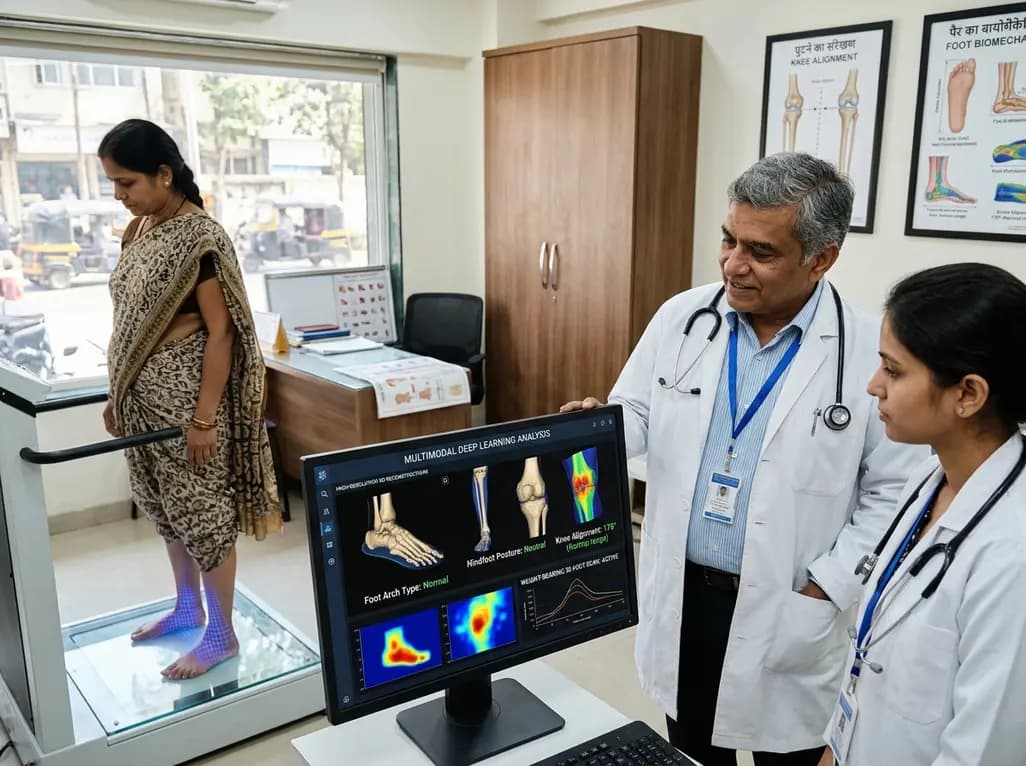
A multimodal deep learning framework utilizing weight-bearing 3D foot scans accurately screens lower-limb alignment, including arch type, hindfoot posture, and knee alignment, offering an accessible, radiation-free alternative to radiography for early biomechanical triage.
Today

A real-world retrospective study demonstrates that combining intravitreal ranibizumab with focal/grid macular laser significantly improves visual acuity and central macular thickness compared to laser monotherapy in patients with center-involved diabetic macular edema.
Today
